

News
Lenovo Berths in Nigeria launches 7 Smartphone portfolio


Lenovo, global leader in PC manufacturing is adding the Nigerian market to its expanding territories with a promise to be “innovative and compete very aggressively’ to establish its foothold in Africa’s emerging ICT market with the launch of seven (7) smartphone models in a market already awash with several brands.
The PC maker which faced a backlash following its acquisition of googles’ unviable Motorola Mobility unit for $2.9million said coming to Nigeria is a strategic investment move aimed at expanding its African business operation.
Graham Braum, general manager, Lenovo Africa, said Nigeria remains a very strategic market not only in Africa, but in its Middle East and Africa (MEA) operation. He believes the firm is in Nigeria for the long haul.
“We’re not here for a short stay; it is for the long haul. In this wise, we’ll be engaging in a number of innovative engagements with critical sectors of the Nigerian economic spectrum including the universities and others connected with the IT market ecosystem,” said Braum.
He added that “we’re not just coming here with devices; we’re coming here with innovations.”
Concurring, Shashank Sharma, director of Operation, MEA region, said although it could be argued that Lenovo had taken time to enter the Nigerian market when others seems to have made huge footholds, there was still enough room for more players.
“Nigeria is not a small or ordinary market and you cannot ignore it. We want to have a lasting footprint in this market. We will start by investing heavily in our local channels and distribution partners. There is also a whole lot of innovation in healthcare, education/intellectual capital that we bring into the market,” said Sharma.
Sharma noted that Nigerian consumers will be the first in African to get their hands on the seven models, including the flagship Vibe X smartphone. Each Lenovo smartphone is designed with specific customer needs in mind, the portfolio offers a range of carefully considered design innovations and functionality that fits every style, personality and need.
The Lenovo smartphones will be available at major retail-outlets first week of March 2014. The range includes entry-level devices, such as the A369i, A516, A680, and A859; the stylish S650 and S930; and the picture perfect and sleek Vibe X. All Lenovo smartphones will come with a one year local warranty.
Braum stated that “with more than 120 million mobile subscribers, Nigeria represents a strategic market for Lenovo’s smartphone business. Smartphones are fast becoming a primary platform for work, entertainment and social networking for consumers and we are thrilled to announce the launch of our exciting line-up in Nigeria. Innovation is in Lenovo’s DNA; our team strives to deliver ground-breaking devices with distinct, elegant design. Today’s launch marks the first time customers in Nigeria can purchase Lenovo smartphones locally and we are excited to see the market’s reaction.”
IDC forecasts smartphone shipments worldwide to reach 1.5 billion by 2017, with smartphone shipment dominated by emerging markets.
“Smartphone penetration in Nigeria is one of the highest in the world,” Braum added. “Our goal is to be one of the top five smartphone vendors in Nigeria in the very near future. We believe this a reality as our product range caters to a wide variety of individual needs and we have partnered with the best in the industry to help us achieve our goal.”
While Lenovo is one of the top 5 smartphone vendor and second smartphone vendor in China, according to IDC, it continues to protect its PCs business, rapidly scaling innovation to attack smartphone and tablet markets to become a PC Plus leader.
Most recently, IDC reported that Lenovo is the second PC vendor in Nigeria with 13.2 percent market share and with 597 percent year to year growth.
“While the PC market still represents a $200 billion opportunity and offers substantial opportunity for profitable growth, most of the new growth will be in the PC Plus market, which includes tablets, smartphones, and other smart connected devices and the broader portfolio of cloud, services and infrastructure hardware – such as storage and servers – that are critical to powering the PC Plus era,” Braum concluded.


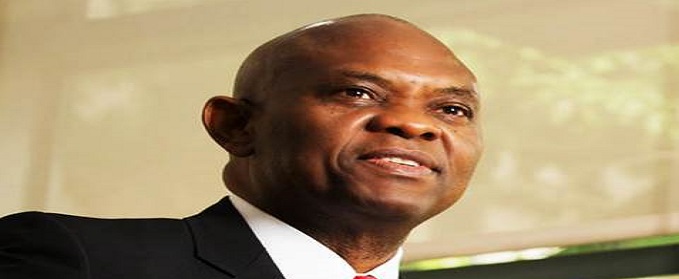
Tony Elumelu, Nigerian businessman and philanthropist, has warned about the growing dangers of artificial intelligence misuse after an AI-generated video falsely showed him promoting a forex and cryptocurrency trading platform.

Tony Elumelu,
The founder of Tony Elumelu Foundation revealed this in a post on his X account on Monday, explaining that the video appeared highly convincing but was entirely fabricated.
In the post, he also tagged Elon Musk, X owner, and Nigeria’s Federal Ministry of Communications, Innovation and Digital Economy while calling for stronger safeguards against the misuse of artificial intelligence.
“A few days ago, my team flagged an AI-generated video of me endorsing a forex and crypto platform.
“It looked and sounded remarkably real, but it was completely fake. This incident highlights a growing and serious threat to digital trust,” he wrote.
He stressed that he has no affiliation with any cryptocurrency or foreign exchange trading platforms.
“For the avoidance of doubt, I am not associated with any crypto or forex trading platforms.
“My commitment to inclusive prosperity has always been through long-term investments, building sustainable businesses, and empowering entrepreneurs,” he said.
While acknowledging the transformative potential of artificial intelligence, Elumelu urged African youths to embrace the technology responsibly and use it to develop scalable solutions.
“I strongly believe in the potential of AI. It is a defining technology of our time, and African youth must be at the forefront of adopting it to build scalable solutions. We cannot afford to be left behind in the global tech race,” he added.
The business leader, however, warned that rapid technological advancement also presents risks if not properly regulated.
“But the flip side of rapid innovation is the risk of abuse. The ease with which identities can now be cloned to deceive the public is alarming.
“Policymakers and regulators must act now to establish safeguards and hold those using it to scam innocent people accountable,” he said.
Elumelu also urged the public to remain vigilant and protect themselves from digital fraud.
“We must create a safe digital environment where true innovation can thrive without being overshadowed by fraud. Protect your hard-earned money, stay alert, and let us continue to build the Africa we deserve,” he said.


By Solomon Yaji
Kashifu Inuwa, the Director-General of the National Information Technology Development Agency (NITDA), has emphasised the critical role teachers play in driving Nigeria’s digital transformation, noting that classrooms will be central to shaping the country’s technology-driven future.

Inuwa made the remark during a stakeholders’ dialogue organised by the Development of Educational Action Network Initiative (DEAN) in Abuja.
Speaking on the theme “Nigeria’s Current Digital Landscape: Our Reality and Its Practical Connection to Education,” the NITDA DG, who was represented by the agency’s Director of Stakeholder Management and Partnerships, Dr. Aristotle Onumo, said the rapid expansion of the digital economy is reshaping the education sector and redefining the role of teachers in modern learning environments.
He explained that while digital technologies have created unprecedented access to information and opportunities for students, they also present challenges that require guidance and responsible use.
According to him, teachers must go beyond the traditional role of knowledge transmission to become mentors who help students navigate the digital world safely and responsibly.
“Teachers are no longer just instructors; they are now guides who help students identify credible information, avoid harmful online content, and develop responsible digital behaviour,” he said.
Inuwa added that educators must cultivate critical thinking among students while equipping them with the skills needed to thrive in an increasingly technology-driven society.
He reaffirmed NITDA’s commitment to advancing digital literacy nationwide through initiatives such as the Digital Literacy for All programme and partnerships with educational institutions aimed at strengthening teachers’ digital capacity.
The NITDA boss stressed that empowering teachers with digital skills is vital to preparing Nigerian students for the future workforce and ensuring the country remains competitive in the global digital economy.
Nigeria is currently pursuing an ambitious digital literacy agenda, targeting 70 per cent digital literacy by 2027 as part of broader efforts to build a knowledge-driven economy powered by innovation and technology.
Earlier in his remarks, the Executive Director of DEAN Initiative, Semiye Michael, said the workshop was designed to re-engineer teachers’ capacity in line with the realities of the digital economy.
“We need to strengthen teachers’ competence and provide them with access to the necessary digital infrastructure,” Michael said, adding that the engagement would help shape policies that support technology-driven learning in Nigerian schools.
He described the workshop as an “awesome experience,” noting that ideas generated during the session would be consolidated into a policy guide for the ministry and other relevant agencies.
Michael further noted that strengthening teachers’ digital capacity would be vital to enhancing Nigeria’s competitiveness in the global knowledge economy.
The event attracted key stakeholders from the Federal Ministry of Education, Nigerian Communications Satellite Limited (NIGCOMSAT), as well as private sector experts.


A new Amnesty International poll exposes stark public distrust in Nigeria’s judiciary, with nearly 97% of respondents believing judges face external influence and lack independence in their duties.

Amnesty International
Shared on social media by Amnesty International Nigeria, the poll asked if Nigerian judges operate freely. An overwhelming majority answered “No,” with only a tiny fraction expressing confidence amid fears of pressure from political actors or powerful interests.
Judicial independence underpins democratic governance, enabling impartial rulings based on law alone. In Nigeria, doubts have intensified after controversial decisions in high-stakes political cases.
While not a scientific survey, the findings echo civil society demands for reforms to boost transparency, accountability, and trust. Advocates stress that bolstering court autonomy is vital for upholding the rule of law and citizens’ rights nationwide.

Crypto Transactions Hit $96Bn in Nigeria -SEC

PwC Warns Nigeria Telcos of AI Fraud Risks

Lawyer Drags FG Court over Controversial Health Data Sharing Agreement with US

Elumelu Tags Elon Musk, Disowns AI-Generated Scam Video

FG Determined to Protect Rights, Privacy Online- NITDA

Kaspersky Discovers New Phishing Campaign Exploiting Google Tasks Notifications to Steal Corporate Credentials

esentry 2025 Report Shows Healthcare, Financial Services and Telecoms as Staging Grounds for Increased Cyberattacks in Africa

AfDB, UNDP Launch $10Bn AI Initiative for Africa

Mutual Benefits Assurance Settles ₦5.9bn Claims in January 2026

MultiChoice Suspends Yearly DStv Price Hike as Canal+ Pushes Growth




 Telecom3 days ago
VDT Communications Achieves Two Prestigious Certifications ISO /IEC 27001:2022, ISO/IEC 27032:2023 Reinforcing its Leadership in Broadband Service Provision

 E-Financial2 days ago
CBN Rolls Out New Rules for Safer Instant Payments, More Customer Control

 News2 days ago
NIMMME Inaugurates Engr. Michael Orekyeh as 13th National Chairman in Abuja

 Telecom2 days ago
MTN Nigeria Races Ahead in Fibre Broadband Market

 E-Financial2 days ago
CBN Tightens BVN Rules to Curb Fraudulent Banking Transactions

 E-Financial2 days ago
Nova Bank Appoints Jude Anele as Managing Director/CEO

 E-Business2 days ago
Tech Expert Unveils BAT-BOT AI App to Curb Fake News ahead of 2027 Elections

 Broadcasting14 hours ago
Spotify’s Loud & Clear Report Reveals Over ₦60Bn Revenue for Nigerian Artists in 2025