

Telecom
Leo Stan Ekeh Highlights Nigeria’s Tech Potential @France–Nigeria Investment Forum

By Tolu Aderemi-Cole
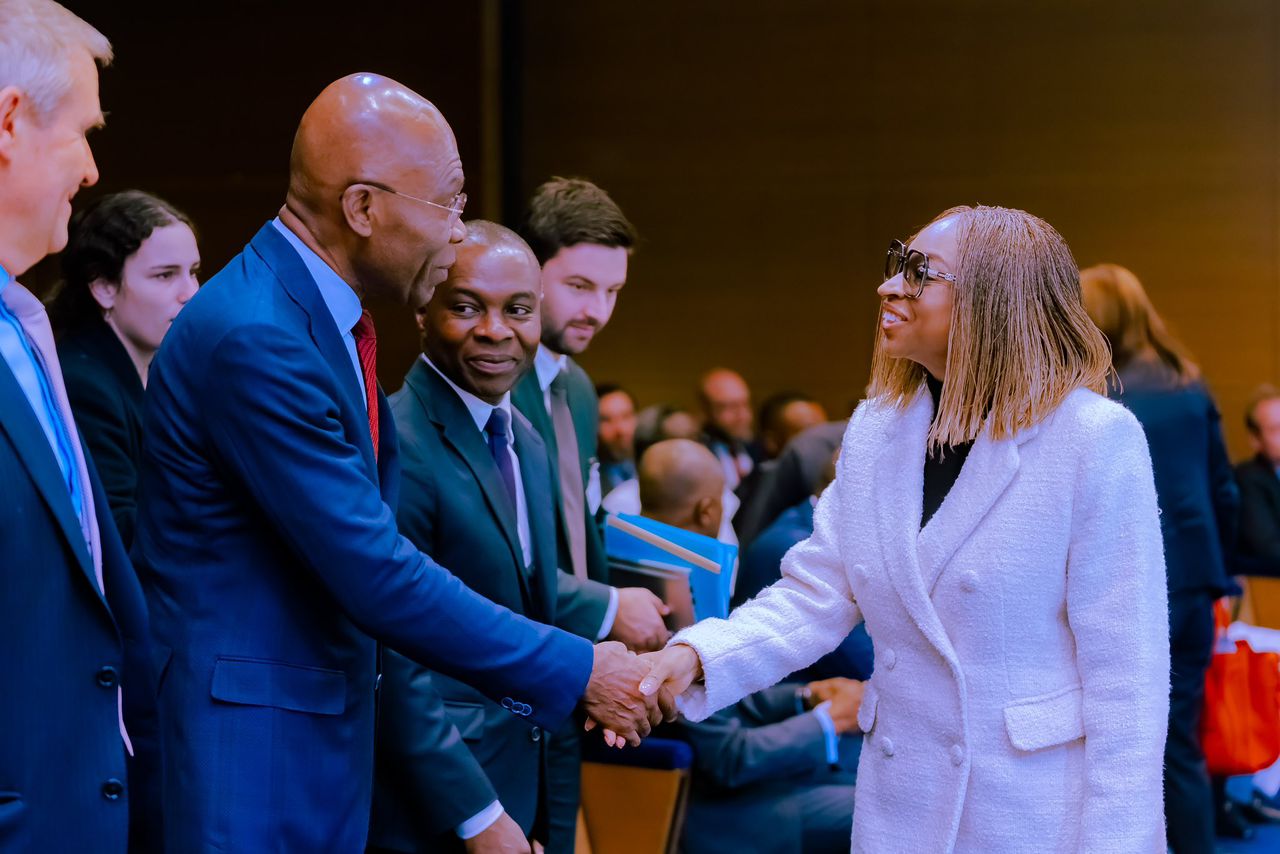
This year’s France–Nigeria Investment Forum, a major highlight of President Bola Tinubu’s visit to France, ended on a sound note and was mutually rewarding for both countries.

For some of us who have attended a few such forums in the past, this year’s edition stands out as the best from a Nigerian perspective, especially because of the organization and selection of relevant, successful Nigerian entrepreneurs who attended.
Though it was a government-to-government outing, the event was largely driven by the private sector, including experienced foreigners who functioned as moderators. In the past, the Nigerian government would showcase CEOs of companies that foreign investors found it difficult to connect with.
Also, this year, Nigeria’s leading women CEOs were presented to the French and global investment communities. I was impressed with the confidence Dame (Dr.) Adaora Umeoji, the CEO of Zenith Bank, Dr. Owen Omogiafor and Jumoke Oduwole, the Honourable Minister of Industry, Trade and Investment exhibited during their respective presentations. This is good for the Tinubu administration and the Nigeria economy and in tandem with emerging global trends where women have been raising the bar in entrepreneurship and leadership.
However, what was exceptional to me as a Nigerian UK-based property investor, was the presentation of Dr. Leo Stan Ekeh, Chairman of Zinox and Konga Group as he was introduced.
He gave a completely different perspective to the event, speaking with confidence on the technology capacity of Nigeria to support foreign investors. He assured the foreign investors of the existence of world-class IT professionals in their thousands who are available to support these investors.
He pleaded with French investors to invest in the educational sector and partner with some Nigerian educational institutions to produce graduates who may become global citizens in the corporate world. It was a great eye-opener for the packed hall as he personally gave an example of what his companies have done in the tech sector for French companies in Nigeria over 30 years ago. Most of these companies had their CEOs present at the event.
Ekeh’s confidence was infectious, and you could gauge the impact of his audacious presentation from the faces of both the foreigners and Nigerians in the audience. I am sure there are many companies with the profile of Zinox and Konga Group that are yet to be showcased to the world.
People left the hall very impressed. Though I was unable to reach him as he had a few persons engaging him, and I left immediately after his presentation, I spent time on Google to check out this Nigerian who presented the Nigerian technology roadmap over 30 years back.
One of his most impactful impressions in his presentation was when he said that you cannot anticipate future investments anywhere in the world without technology as your enabler.
Google revealed a lot about this humble Africa’s leading tech icon. It was a great expose for a Nigerian who pioneered many tech initiatives on the continent. Very touching was what led him to transition Nigeria from analogue petrol dispensing pumps at filling stations to today’s digital dispensing pumps when he was cheated at a petrol station, amongst others.
His profile also mentioned how he lost over $28m in one swoop on an AI and Robotics investment that failed after he acquired the largest warehouse in the city of Lagos to install the intelligent, high-end project over eight years ago.
As I was travelling back to UK, I was reflecting on opportunities that abound in Nigeria. Today, we celebrate Elon Musk, the world’s richest man who has an African background but who made his money outside Africa, but I wager that Musk could not have made as much money if he had stayed back in Africa. Never!
Ekeh’s reason for not hitting the jackpot is that he is operating out of a very limited Nigeria economy with structural challenges and several infrastructural deficits.
The young Minister of Technology and Digital Economy Dr. Bosun Tijani, should be encouraged to produce more Dr. Ekehs to guarantee the future of Nigeria.
Ekeh in his narration talked about how as a young man he returned to Nigeria over 37 years ago with a vision to launch what he called ‘Digital Democracy’ by digitalising elections and electoral processes in the country. He also narrated his effort at consolidation of data through digital census to guide planning and investments to achieve his ambition of promoting Nigeria to the status of an economy the world can trust.
He may have achieved his vision for digital elections with massive tech deployment which his company handled, but I am not sure how he could achieve a trusted economy where 80% of successful persons in the country are in oil and gas, cement, road construction, all brutally controlled by government both directly and vicariously.
Tech is the present and the future, and the Nigerian government must be intentional by patronising and helping to grow indigenous players to ensure they remain competitive on the global stage. I must say that I am proud of Dr. Ekeh and his achievements as a serial tech entrepreneur. His work inspires confidence in Nigeria’s potential. However, the next two years will be pivotal in proving that this progress can be sustained.


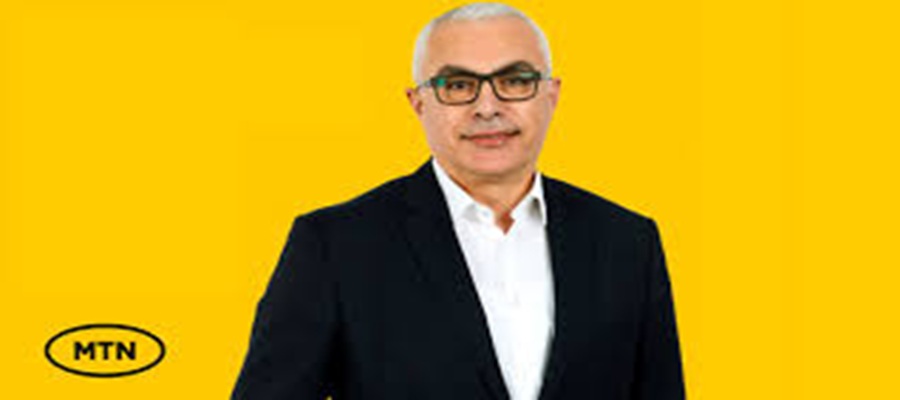
Mazen Mroue, a non-executive director at MTN Nigeria Communications Plc, has resigned effective February 27, 2026, to prioritise other responsibilities within the MTN Group, the company announced in a Nigerian Exchange Limited (NGX) filing.

MTN Nigeria
The notice, signed by company secretary Uto Ukpanah, stated: “This is to enable Mr. Mroue to focus on other priorities within MTN Group Limited. The Board wishes to express its appreciation to Mr. Mroue for his immense service to MTN Nigeria and wishes him success in his future endeavours.”
Mroue joined MTN Nigeria’s board on June 1, 2022, bringing over 28 years of telecom experience. A veteran MTN executive, he previously served as CEO of MTN Uganda and MTN Liberia, non-executive director at MTN Cyprus, and held leadership roles at MTN Ghana.
Since February 2022, he has been MTN Group’s Chief Technology and Information Officer, overseeing technology strategy and governance. Earlier, as MTN Nigeria’s COO from August 2018 to January 2022, he also sat on the MTN Nigeria Foundation board.
The exit follows MTN Nigeria’s stellar 2025 results, posting a ₦1.70 trillion profit before tax—reversing a ₦550.3 billion loss in 2024 driven by forex woes—marking one of the telco’s strongest rebounds.

Google has rolled out support for Yorùbá and Hausa languages in its AI-powered Search features—AI Overviews and AI Mode—enabling millions of Nigerians to get quick answers, summaries, and conversational web exploration in their mother tongues.

The update forms part of Google’s push to cover 13 African languages, including Afrikaans, Akan, Amharic, Kinyarwanda, Afaan Oromoo, Somali, Sesotho, Kiswahili, Setswana, Wolof, and isiZulu, selected based on high search activity across the continent.
Now, a Kano student can ask complex questions in Hausa, while an Ibadan trader seeks business tips in Yorùbá—both receiving culturally nuanced AI responses via text or voice on Android, iOS, or web.
Taiwo Kola-Ogunlade, Google’s West Africa Communications Manager, said: “Building truly global Search requires nuanced local understanding. With Gemini-powered AI, we’ve made advanced capabilities relevant in Yorùbá and Hausa, so Nigerians converse naturally with Search in their mother tongues.”
To use: Open the Google app, tap AI Mode, and query in Hausa or Yorùbá for personalised guidance—breaking language barriers and making technology reflect Nigeria’s diverse identity.
MultiChoice is closing its continental streaming platform Showmax after 11 years, notifying subscribers Thursday of the board’s decision to discontinue the service in the near future to refocus on sustainable digital offerings.

MultiChoice
The email assured no immediate disruption: “You can continue streaming as usual, and no action is required from you at this time.” Showmax, launched in South Africa in 2015 and expanded across Africa, offered movies, series, documentaries, and sports to rival Netflix and others amid rising online entertainment demand.
The shutdown follows Canal+’s approved takeover of MultiChoice last year, with the French giant offering ZAR 125 per share for remaining stakes.
The deal mandates HDP ownership boosts, local content investment, and splitting MultiChoice’s SA broadcasting arm into an independent entity to meet regulations.
MultiChoice prioritised subscribers during the transition, promising advance notice on timelines.
Showmax’s exit signals consolidation pressures in Africa’s cut-throat streaming market, where global players dominate despite local content strengths.

GCR Affirms Afreximbank’s International Scale Ratings of A, A2

SmartCash Launches ‘No Be Cho Cho Cho’ Campaign to Boost Digital Banking in Nigeria

MTN Nigeria Non-Executive Director Mazen Mroue Quits to Focus on Group Role

Google Adds Yorùbá, Hausa to AI Search, Boosting Access for Millions of Nigerians

MultiChoice Shuts Down Showmax After 11 Years Amid Streaming Wars

Dr. Cairo Ojougboh Foundation Bolsters Nigeria’s Education Drive with ₦2.7m Student Support

Kaspersky Brings more Transparency to Threat Detection with New Hunt Hub

NDPC Commits to Balancing Data Privacy, Protection Information

PwC Reveals AI Scaling Gap Slows Africa’s Digital Transformation

Firm Reviews the Evolution of Phishing Threats in 2025




 E-Financial2 days ago
NRS Targets N40trillion in Tax, Royalty Revenue in 2026

 E-Financial2 days ago
SEC Revokes Registration of Kensington Agro Trading Limited

 General News2 days ago
Purple Woman 3.0 Is Back, to Empower Women in Tech this IWD 2026

 News2 days ago
EFCC Arraigns Two FSDH Bank Officials Over $307k, €50k Fraud

 Telecom2 days ago
Konga Launches ‘Berekete Sales’ with Up to 50% Discounts Across Major Categories
 E-Business2 days ago
NDPC, 60 DPAs Collaborate on Enforcing Privacy Rights in the Use of Al

 General News2 days ago
NCDC Raises Alarm over Lassa Fever Ravaging 18 States in Nigeria

 E-Financial1 day ago
Binance Cuts Illicit Activity Exposure by 96%, Leads Global Crypto Compliance Push