

Broadcasting
Luxury Travel is Heating Up in 2023: Here Are 4 Reason Why

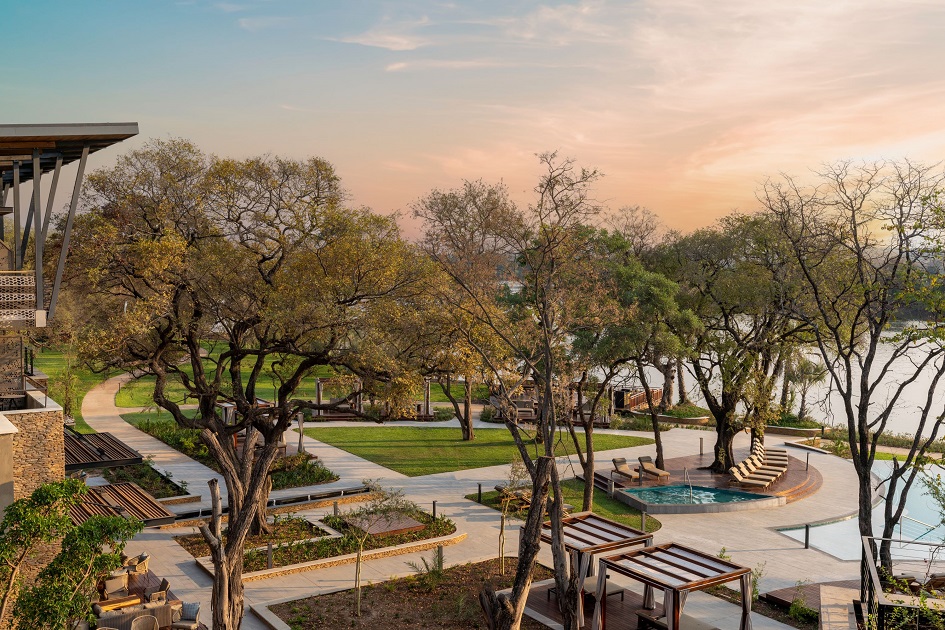
Trends indicate that luxury tourism and travel around the world will see considerable growth from 2023 onwards. This as both local but predominantly international travellers with a sense of adventure look to explore new sights with the addition of added pampering, care and all the finishings.

Research shows that, globally, travellers are keen to spend more on trips than ever before due to a long period in which no travel was possible.
Interestingly, it’s not only well-heeled executives and the like looking for luxury travel. Trends indicate that middle-class travellers are increasingly interested in spending more money on travel as they carve out itineraries that lean towards ‘premium leisure’.
To unpack this phenomenon more, Shaun Wheeler of the newly opened Radisson Blu Mosi-Oa-Tunya, Livingstone Resort, Zambia, gives insight into why this type of travel is back in demand.
Long, luxurious stays

Entrepreneurs, executives and leaders at the top of their industries are increasingly opting for longer self-care holidays that include not only holistic attention to body, mind and spirit, but also experiences that allow guests to dive deeper into a destination.
“Guests no longer want a quick in-and-out holiday,” notes Wheeler. “They want to stay for longer so they can truly enjoy their downtime in a destination. And a hotel such as ours is perfectly positioned to meet these needs. Not only do guests of Radisson Blu Mosi-Oa-Tunya, Livingstone Resort get to enjoy the resort itself, but we are located close to some of the top attractions in Zambia such as Victoria Falls and the historic city of Livingstone, making it easy for guests to see the best that the country has to offer during their stay.”
Complete disconnection
Life is busy enough and those opting for a luxury holiday want to feel as though they are far away from the hustle and bustle of everyday life.
Wheeler explains: “Luxury holidays are increasingly popular. This type of break allows guests to disconnect from everyday life. At a luxury resort or hotel, guests are able to choose from a range of activities that will almost force them to disconnect from the pressures of the day-to-day. For example, we give guests the chance to immerse themselves in unique on and off the river adventure activities, from Victoria Falls bridge activities, water rafting, canoeing and game drives to helicopter rides, river cruises and more.”
Five-star experiences away from the crowds
As a result of the pandemic, travellers are considering options they haven’t looked at before – and tending towards remote destinations away from the madding crowds and destinations that they have all seen before.
“Unless you’re visiting specifically to see Victoria Falls, Zambia is still a rather niche destination for many global travellers,” says Wheeler. “This is all good news for exclusive resorts such as ours. Unless you live in Southern Africa, Zambia can feel a bit exotic for your every-day Western traveller who might have a different idea of the country in mind before they get here. Once here, however, and once they experience our resort, they see that this is luxury travel at its finest. You are able to enjoy a holiday here and feel as though you are in an undiscovered location.”
It’s about doing something different
In a world where everyone has London and New York City on their ’must-see ‘ lists, there’s something to be said for those who venture to uncommon destinations. And luxury travellers know this. Being able to say that you’ve been to a top destination that is almost a best-kept secret makes travellers feel as though they are part of an exclusive club.
Wheeler concludes: “While luxury travel is about enjoying the finer things in life, it’s also great to be able to say we’ve been somewhere our friends and family have not. And what better location than a top luxury resort in Zambia? Not only do visitors get that five-star treatment, but they get to snap the Instagram photos their friends don’t have and they get the bragging rights, too!”


Mrs. Clementine Wamba, head, Digital Switch Over (DSO) at the National Broadcasting Commission (NBC), has stressed the need for broadcasting stations and practitioners nationwide to work towards meeting the 2028 global deadline for the switch over.

She made the call in her presentation titled, “DSO Big Picture: Free TV Audience Measurement and the Evolving Media Landscape”, at the 2026 NBC South West Summit held in Ibadan.
Wamba harped on the need for practitioners to adopt DSO in the transmission of news and other programmes in order to meet future challenges, stating that any country that fail to align with the DSO by 2028 will be shut out of practice.
This development, according to her, may result in job losses and other consequences that could hinder the growth of the industry in Nigeria, noting that Free TV is tailored towards the DSO, with provision for many channels in contrast to the age-long analogue system.
According to her, “The Digital Switch Over is a technological improvement on the age-long analogue style of broadcasting in the country. With the adoption of the DSO, practitioners will be in tune with global practice of broadcast journalism.
“Also, its benefits include efficient use of spectrum, changing of industry landscape, more access to national development programmes and better viewing experience.”


National Broadcasting Commission (NBC) has said that Nigerians will no longer pay annual Digital Access Fees under the renewed Digital Switch Over (DSO) project.

Charles Ebuebu, director-general, NBC, disclosed this in an exclusive interview with the News Agency of Nigeria (NAN) on Wednesday in Abuja,
Ebuebu said viewers only need to purchase an approved decoder and satellite dish which cost below N20,000 to enjoy free television permanently.
“Previously, users paid an annual digital access fee of about N1,500, described as an administrative charge.
“The new system removes that annual fee. It provides free access to free-to-air television channels without any payment.
“Premium channels will be introduced later. Viewers who want those additional channels will be able to access them through paid services.
“Nigerian content on free-to-air channels remains free to watch. Unlike Pay TV, this platform does not require monthly subscriptions for its basic service,” he said
Ebuebu said approved decoders for the FreeTV will cost less than N20,000 and authorised sales outlets will soon be announced.
He urged Nigerians to wait for official information on approved dealers for the DSO decoders, warning that unauthorised sellers are exploiting growing public demand.
He reiterated that people only need a free-to-air decoder, along with a satellite dish instead of the old antenna system to receive the DSO signal.
“Once the equipment is installed, viewers can access all available channels across the country without paying any subscription fees,” he stressed
The DG dismissed claims by some retailers that there are different categories of decoders sold at varying prices, stressing that such sellers are not authorised by the commission.
According to him, the NBC will soon publish the list of approved dealers, official prices, and locations where genuine decoder boxes and accessories can be purchased.
The NBC boss said the DSO project is designed not only to improve television broadcasting but also to stimulate economic growth by creating jobs, attracting investment, and opening up opportunities for businesses that support the broadcasting industry.
Ebuebu noted that content producers and broadcasters stand to benefit significantly from the nationwide reach of the DSO platform.
Unlike the previous system, where many stations had limited regional audiences, he said the new platform will make their channels available to viewers across Nigeria.
He added that the introduction of audience measurement technology will provide scientific and reliable data on television viewership.
Ebuebu added that audience measurement technology will give advertisers greater confidence in placing adverts and enable broadcasters to demonstrate the true size and reach of their audiences nationwide.
Uchenna Mbunabo, Nigerian filmmaker, has raised concerns over the alleged unauthorised broadcast of Nollywood films by some Ghanaian television stations, calling on Ghana’s National Film Authority (NFA) to strengthen the enforcement of copyright laws.

Uchenna Mbunabo, Nigerian filmmaker
Mbunabo made the remarks during a conversation with James Gardiner, deputy CEO of the National Film Authority (NFA) of Ghana.
He questioned whether it was permissible for television stations in Ghana to download Nigerian movies from YouTube and air them without obtaining permission from the producers.
“I noticed that Ghanaian TV stations, the way they are stealing our films and showing them for free with impunity. Is it legalised in your country for TV stations to go on YouTube, download people’s sweat and show it for free?”
According to Mbunabo, some Ghanaian television stations have been downloading newly released Nollywood films from YouTube and broadcasting them without authorisation, depriving producers of revenue generated through the platform.
He also stated that he had not witnessed Nigerian television stations engaging in similar practices and questioned what measures Ghana was taking to protect filmmakers’ intellectual property.
Responding to the concerns, Gardiner acknowledged that the issue exists and said the National Film Authority had begun engaging relevant stakeholders to address it.
He disclosed that the NFA has held discussions with the Ministry of Communications, the National Communications Authority (NCA) and the National Media Commission (NMC) on improving copyright enforcement.
Gardiner explained that while Ghana has copyright laws, enforcement remains challenging because many television stations now operate digitally and may not have physical offices within the country.
“There are copyright laws, but they are not effective because a lot of the TV stations don’t have offices. Most of them are now digital, so they operate from anywhere. They can even have a Ghanaian TV station but be operating from Austria simply because it is digital.”
He added that authorities are considering a new licensing framework that would require broadcasters to undergo a fresh licensing process to improve monitoring and enforcement.
According to Gardiner, television stations found guilty of illegally broadcasting copyrighted content would be required to compensate affected producers through fines.
He added that repeat offenders could face suspension of their broadcasting licences, while a third violation could result in the revocation of their licences.
Although he did not provide a specific timeline, Gardiner said the reforms were already underway and expressed hope that significant progress would be seen next year.
Mbunabo welcomed the proposed measures but urged the National Film Authority to expedite the process, stating that unauthorised broadcasts continue to affect filmmakers’ ability to recover production costs through legitimate distribution channels such as YouTube.
He also stressed that his comments were not directed at Ghana’s film industry, noting that he has worked with several Ghanaian actors over the years and supports collaborations between Nollywood and Ghallywood.

Dangote Refinery’s Private Placement Reportedly Hits $2.5Bn

FG, UNODC Plan National Strategy against Organized Crime

EFCC Busts NIS Visa Overstay Racket, Uncovers N700m in an Account

CBN to Monitor Every Dollar with FXBT, Forex Tracker

NCC, NDLEA Partner to Fight Piracy and Drug Trafficking

NRC, Ponzi Scheme Collapses Resulting Loss of Billions of Naira

NASENI Moves to Digitize CCB’s 5m Assets Declaration and Operations

Lebara Nigeria Launches Lebara Play, Africa’s First Telecom-Owned Micro-Drama Platform

CANAL+ Partners Samsung to Pre-Load DStv Stream on New Samsung TVs In Nigeria, Other African Countries

Tokenization, Blockchain Technology will Transform Financial Institutions – IMF




 News3 days ago
Court Orders Final Forfeiture of 48 Properties Linked to Former AGF Abubakar Malami

 News3 days ago
ValueJet Expands Fleet with Boeing Aircraft, Targets Wider African Network

 Telecom3 days ago
Helios Towers Secures $29m Facility to Expand Across Africa
 News22 hours ago
EFCC Busts NIS Visa Overstay Racket, Uncovers N700m in an Account

 News3 days ago
Court Grants Former CCT Chairman Danladi Umar N100m Bail Over EFCC Charges

 E-Financial3 days ago
First Securities Brokers Empowers Nigerians to Trade in the Stock Market with the Launch of FirstInvest App

 Telecom3 days ago
NCC Begins Stakeholder Consultation on MVNO Business Rules

 Broadcasting3 days ago
NBC Scraps Annual Digital Access Fee on DSO