

Telecom
MainOne Chooses Minkels to Enhance Position in Data Centre Market


Minkels, part of the publicly traded company Legrand (NYSE Euronext Paris: LR), has been chosen as data centre supplier for premier West African connectivity and data centre solutions company, MainOne.
MainOne blazed a trail in Africa with its undersea fibre optic cable connecting West Africa to Europe and the construction of West Africa’s largest commercial Tier III+ data centre, MDXi.
MainOne observed a strong market demand for a world class, carrier-neutral co-location data centre in Nigeria in 2012.
According to Ms. Funke Opeke, CEO of MainOne: “The market demand rapidly outstripped the co-location space in our landing station and necessitated the construction of a purpose built Tier III facility with 600 rack capacity. We developed the Lekki data centre (MDXi) over 24 months and launched in January 2015 to keep up with customer demand.”
MainOne, in search of best of breed solutions, conducted a global search for a more flexible Cold Aisle Containment System (CAC) to accommodate the various needs of their global customers with racks of varying widths and heights.

“We considered manufacturing in China to meet our specifications and also direct purchase from various OEMS. A global evaluation followed: all top industry players, custom CAC vendors and local manufacturers were evaluated to provide racks, Cold Aisle Containment, PDUs and accessories for customers at our data centre. Minkels met our requirement to provide a Cold Aisle Containment solution: flexible concerning rack width and height, able to accommodate a free standing 47U solution, and lend itself to caging. In addition, Minkels has the technical ability to understand our requirements and quickly make custom engineering modifications based on experience with many of our global customers.”
MainOne has successfully deployed the Cold Aisle Containment solution and custom support frames to meet the requirements of their international co-location customers who will be deploying their server racks shortly.
“As the premier Data centre in West Africa, it is important we lead in innovation, professionalism and delivery of world-class solutions. Our partnership with Minkels ensures our ability to respond to customers with different technical requirements and volumes. Feedback from our customers is that they are impressed with the Minkels CAC and it makes the decision and process of co-locating with us easier. Given the success of this first-of-its-kind custom CAC deployment, we are in early discussions exploring the possibility to partner in the further deployment of Minkels solutions across MainOne’s MDXi data centres to ensure we remain very competitive in a dynamic and growing market.”
Christiaan van Terheijden, CEO of Minkels, is also delighted with the partnership with MainOne: “We are very proud that MainOne has selected Minkels as their data centre supplier. We see MainOne as a company that knows how to drive Internet use across the West African region. MainOne invests heavily in growing the broadband ecosystem in West Africa. This benefits both inhabitants as Internet enabled business models across the region. We are more than happy to be part of that development.”



Starbase Technologies has launched Yolly, a new social entertainment platform designed to reward users for watching, streaming and creating content while promoting wholesome digital engagement.

Starbase Technologies
The company said the platform was developed to redefine participation in the digital economy by enabling viewers, creators and brands to earn value from meaningful online interactions.
According to Starbase Technologies, Yolly introduces a reward system powered by Stars, its native digital rewards currency, which users accumulate through activities such as watching videos, live streaming and creating content.
The company said the initiative was built on the belief that everyone contributing to the digital ecosystem should have the opportunity to benefit from the value they help generate.
Unlike conventional social media platforms where monetisation is often restricted to creators with large followings, Yolly allows creators to begin earning from their first stream without meeting follower thresholds.
The platform also provides emerging creators with features including gifting, Boosts and a Founder Creator badge to help them grow their communities from the outset.
Viewers are also eligible to earn Stars through the platform’s Watch+ feature, which rewards users for watching content from their first session.
For brands, the company said Yolly offers an alternative to traditional impression-based advertising by providing verified engagement metrics, real-time performance dashboards and brand safety controls to improve campaign measurement and audience interaction.
Speaking on the launch, the Head of Business at Yolly, Emeka Okenwa, said the platform was designed to create a more inclusive and rewarding creator economy.
He said the rewards ecosystem prioritises wholesome content and genuine community engagement rather than content driven solely by algorithms or viral trends.
“The platform has been developed on the premise that the future of the creator economy should be more inclusive, more rewarding and built around genuine communities rather than algorithms alone,” Okenwa said.
He added that Yolly was created to encourage family-friendly content while providing viewers, creators and brands with a trusted environment to connect, create and grow.
According to the company, the platform features content across entertainment, sports, lifestyle, education, technology and live events.
Starbase Technologies said the launch forms part of its broader vision of connecting creators and innovators through technology solutions that expand opportunities within the global digital economy.

Court filings in multiple legal disputes arising from the 2023 acquisition of Pan African Towers have raised questions about corporate governance, board oversight and executive independence, with the company’s Board Chairman, Adefolarin Ogunsanya, featuring prominently in the proceedings.

The disputes, currently before Nigerian courts, stem from the acquisition of Pan African Towers by Development Partners International (DPI), Verod Capital Growth Fund III LP and African Development Partners International LLP.
According to documents filed before the Federal High Court, former Chief Executive Officer of Pan African Towers, Azeez Amida, played a central role in identifying and engaging prospective investors after the company’s shareholders decided to sell the business.
The filings stated that negotiations led by Amida culminated in the acquisition, which was later recognised as the African Deal of the Year.
However, less than three years after the transaction, the acquisition has become the subject of three separate court cases challenging aspects of its governance and implementation.
According to the court filings, a proposed Management Incentive Plan (MIP) formed part of the negotiations leading to the acquisition.
Amida alleged that he informed prospective investors that management would retain a minimum five per cent equity stake following the acquisition, an arrangement he said distinguished the successful consortium from competing bidders.
The pleadings further alleged that the consortium accepted the proposal through the MIP and related term sheets.
Among the exhibits before the court is an email attributed to Ogunsanya forwarding a document titled “PAT – MIP analysis.xlsx,” described as an analysis of the proposed incentive scheme.
According to the claimant, the proposed equity participation could have generated returns exceeding 30 million U.S. dollars, but the arrangement was allegedly not implemented after the acquisition.
He is consequently seeking damages exceeding 30 million dollars in a separate action before the Federal High Court.
The filings further alleged that governance dynamics changed significantly after the acquisition, with shareholder representatives and board members becoming increasingly involved in operational matters ordinarily handled by executive management.
The defence claimed that disagreements arose over procurement processes and commercial negotiations, including sourcing decisions involving companies in which some directors allegedly had interests.
The filings identify Ogunsanya as one of the directors involved in those discussions.
The allegations remain disputed and are yet to be determined by the court.
Another issue raised in the defence concerns the company’s financial approval procedures.
According to the filings, following the appointment of a new Chief Financial Officer (CFO), Amida deliberately withdrew from final expenditure approvals because of governance concerns.
The defence maintained that expenditures subsequently challenged in the litigation were processed through the company’s established approval procedures, involving reviews by relevant departments and final authorisation by the CFO.
It also argued that the CFO responsible for the approvals remains employed by the company and has since been promoted.
The defence further contended that the disputed hospitality, investor engagement and related business expenses passed through internal approval processes and were reflected in the company’s audited financial statements before becoming the subject of litigation.
Internal emails, approval workflows, WhatsApp communications and financial records have been listed among the evidence expected to be presented during the trial.
The court filings also noted that Ogunsanya participated in negotiations surrounding the Management Incentive Plan, signed an October 2024 query issued to Amida before a Mutual Separation Agreement and later declined a request for an amicable settlement in a separate matter before the National Industrial Court.
Amida further alleged that a subsequent Federal High Court action instituted by Pan African Towers was retaliatory and intended to exert pressure in connection with his earlier legal action against DPI, Verod and other parties involved in the acquisition.
The allegations remain contested, and the parties are expected to present their respective cases before the courts.
As of the time covered by the filings, the defendants had not filed substantive defences to some of the claims referenced by the claimant.
The matters remain pending before the courts, and no judicial determination has yet been made on the merits of the allegations.
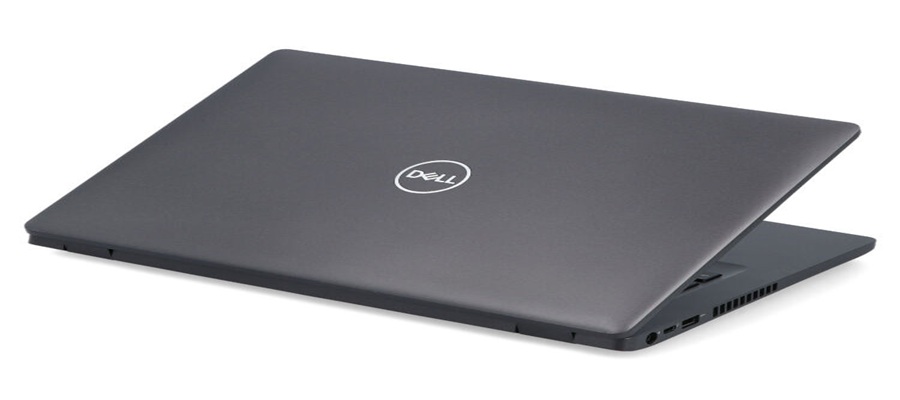
MENXTT TECH NG, a Lagos-based technology company, has launched an initiative to make quality Dell laptops more affordable for Nigerians through flexible payment plans and extended warranty support.

The company said the initiative was aimed at helping students, entrepreneurs, professionals and small businesses acquire reliable computing devices despite rising technology costs.
According to the company, customers can now purchase premium pre-owned Dell Latitude, Dell Precision and Dell Inspiron laptops at competitive prices, with selected models available under staggered payment arrangements.
The laptops, it said, are designed to meet the needs of users ranging from students and office workers to architects, engineers, software developers, graphic designers and video editors.
Speaking on the initiative, the Co-Founder of MENXTT TECH NG, Mr Anthony Emeka Nwosu, said access to quality technology should not be limited by financial constraints.
“A laptop is no longer a luxury; it is an essential tool for education, business and career development.
“Unfortunately, many people are forced to settle for unreliable devices because of the high cost of new laptops.
“At MENXTT TECH NG, we want to bridge that gap by providing durable Dell business laptops at affordable prices, backed by a full one-year warranty and flexible payment plans.
“We want every student, entrepreneur, freelancer and business owner to have access to technology that helps them succeed,” he said.
Nwosu explained that every laptop undergoes comprehensive testing before delivery and comes with a one-year warranty, an original charger, a complimentary laptop bag, Windows 11 operating system and Microsoft Office Suite pre-installed.
He added that the company, an authorised Bitdefender Antivirus reseller in Nigeria, also installs genuine Bitdefender security software on every system to protect customers against cyber threats.
According to him, customers requiring additional productivity tools can also have licensed Foxit PDF software installed on their devices.
Nwosu said the flexible payment option was introduced in response to prevailing economic realities, enabling customers to spread payments over an agreed period.
He noted that the arrangement would make it easier for students, startups and growing businesses to acquire quality computers without placing excessive pressure on their finances.
Beyond laptop sales, the company provides information technology consultancy, computer repairs, software licensing, cybersecurity solutions and digital transformation services to organisations across Nigeria.
He reaffirmed the company’s commitment to supporting Nigeria’s digital economy by making dependable computing devices and enterprise technology solutions more accessible to individuals and businesses.
According to him, the initiative reflects MENXTT TECH NG’s vision of combining affordability, quality products and professional after-sales support to help more Nigerians participate in the country’s expanding digital ecosystem. (NAN)

SERAP Asks Tinubu to Probe Alleged N6.79Bn Missing Police Funds, Firearms

FCT Court Awards Ex-Customers N15m against Stanbic IBTC over Data Privacy Breach

CBN Exposes over 13,000 BVNs Tied to Fraud as Banks Tighten Security

Atte, Nigerian Develops AI Algorithm for Hair Transplants

Dare Tackles Onaiyekan over Criticism of Tinubu, Says Economic is Working

NRC, Ponzi Scheme Collapses Resulting Loss of Billions of Naira

EFCC Busts NIS Visa Overstay Racket, Uncovers N700m in an Account

From Scarcity to Scale: What Africa Can Learn from India’s Agricultural Transformation

Tokenization, Blockchain Technology will Transform Financial Institutions – IMF

BON Establishes Six Ad Hoc Committees to Modernize Broadcasting




 Broadcasting2 days ago
Davido Shares Past Suicidal Thoughts, Drops Oriadé Album

 E-Business2 days ago
How Temu Helped a Madagascan Vanilla Family Business Sell Direct to Consumers Across Europe

 General News2 days ago
MTN Nigeria Posts N707.5bn H1 Profit, Declares N26 Interim Dividend

 General News2 days ago
Gavi Okays $500m for Vaccines, PHCs in Nigeria

 News2 days ago
Cisco Explores AI for Nigeria Farmers

 News2 days ago
AfCFTA Urges Africa to Stop Exporting Raw Materials

 E-Business2 days ago
82% of Organizations Concerned about AI Risks Even as Adoption Accelerates – Survey Reveals

 General News2 days ago
Police Uncover Fake Diplomatic Number Plate Syndicate in Abuja