

General News
Major Fuel Scarcity Looms as Oil & Gas Workers Down Tools


Nigerians may be thrown into a fresh round of acute fuel shortage this Christmas season as oil and gas workers today begun a nationwide indefinite strike to protest the inability of the government to properly maintain the nation’s four refineries and reduce pump prices of petroleum products in line with the slump in global prices of crude oil.
Elsewhere, Major Oil Marketers Association of Nigeria (MOMAN) also said it will go on strike following the refusal of the Petroleum Products Pricing Regulatory Agency (PPPRA) to release the approval for the first quarter fuel importation.
But oil and gas workers under President of Petroleum and Natural Gas Senior Staff Association (PENGASSAN) in a statement said that the strike was also to force the government to evolve new strategies to combat pipeline vandalisation and crude oil theft that have impacted negatively on the nation’s economy and employment opportunities in the country.
National Union of Petroleum and Gas Workers of Nigeria (NUPENG) its sister body said that it will down tools today over the sack of Mrs. Elo, national zonal secretary of PENGASSAN, Port Harcourt zone.
According to PENGASSAN, the other reasons for the strike include delay in the passage of the Petroleum Industry Bill (PIB), global crude oil prices slump, non -implementation of the Nigeria Oil and Gas Industry Content Development, (NOGICD), Act to reflect Nigerians in management positions and expatriate quota law, and the appalling state of access roads to refineries and oil depots and facilities.

PENGASSAN, said insecurity all over the country that has led to the death of their members; appointments in government agencies in disregards to succession planning; compulsory deduction from workers’ salaries for the National Housing Fund, NHF, casualisation and contract staffing and unfair labour practices by companies and government agencies also forms part of their grievances.
Major Oil Marketers Association of Nigeria on the other hand, said its members were now on the edge over the inability of the PPPRA to release the importation approval.
Comrade Achese Igwe, national president of NUPENG, speaking at Okrika, Rivers State yesterday, said that there would be no going back on the action until the zonal secretary is re-instated.
Igwe said that the decision of the management of Total Nigeria to sack the PENGASSAN Zonal Secretary in Port Harcourt was unacceptable, adding that the strike notice was not a threat but would commence today. He also stated that the union would graduate the processes.
He said: “The truth is that we cannot fold our hands to see these foreign investors coming with punitive measures in our country. We are embarking on strike because we have driven our processes to a level.
“We are saying, reinstate this woman. She was elected by the people to serve the people. But all of a sudden, you said no because she was elected as a woman; that the only thing you can do is to sack her and then you queried her. You begin to tell her that she must go on leave of absence. Fine, you offered a leave of absence but the union needs to sit down and X-ray the impact of that. But the next thing we saw was a sack.


Anambra State Government says it is exploring partnerships with the Federal Government and other stakeholders to extend digital connectivity to underserved rural communities across the state.

The Managing Director and Chief Executive Officer of the Anambra State ICT Agency, Mr Chukwuemeka Fred Agbata, disclosed this during a virtual media engagement with journalists on Thursday.
Agbata said rural connectivity remained a major challenge because telecommunications operators were often reluctant to invest heavily in communities where network deployment might not be commercially viable.
He said the state was willing to explore opportunities to leverage Federal Government infrastructure and the Universal Service Provision Fund (USPF) to extend connectivity to underserved communities.
“We understand what digital inclusion means because we are dealing directly with these communities,” Agbata said.
According to him, the objective is to ensure that rural residents are not excluded from the benefits of digital government and the wider digital economy simply because of where they live.
Agbata said the effort formed part of the state’s broader digital transformation agenda, which is targeting deeper digitalisation of government services and a more digitally enabled business environment by 2030.
He said the second phase of the agency’s digital transformation agenda would focus on e-governance, digital infrastructure, smart government and the use of emerging technologies to drive development.
“My core vision is that we would have digitised every single government entity in Anambra State,” he said.
The ICT boss said the digital transformation agenda would extend beyond government ministries, departments and agencies (MDAs) to businesses and residents across the state.
He said the agency was already developing websites for government MDAs and transforming them from mere information platforms into channels for delivering government services.
“We are building websites for all the MDAs. We are also automating them to be able to carry out services and give government support and government services through their websites,” he said.
Agbata said the initiative would reduce the need for citizens to physically visit government offices to access basic services.
He said the Smart Anambra platform had already demonstrated growing demand for remote access to government services.
According to him, the platform recorded about 14,000 visits between July 9 and July 29, averaging approximately 700 visits daily, despite limited publicity.
He said the data indicated that residents were interested in accessing government services online, including applications, permits and identification-related processes.
“What the data is already showing us is that we really need to build a system that allows people to actually get government services remotely,” Agbata said.
He explained that the objective was to allow residents to initiate processes online, complete forms remotely and only visit government offices where physical presence was eventually required.
This, he said, would reduce the time and cost citizens spend travelling to Awka or other government offices to access services.
Agbata said services in areas including hospitals, schools and other government processes were being connected to Smart Anambra.
Anambra Targets 2030 for Digital Government
Agbata said the state’s 2030 target was to deepen the digitalisation of government services and create an environment where businesses could increasingly operate within the formal digital economy.
He said the agency was working with the Ministry of Commerce to promote the formalisation of businesses, particularly SMEs and businesses operating in major markets.
“One of the biggest challenges that we have is that SMEs are not formalised enough,” he said, adding that the agency was exploring partnerships to address the challenge.
The ICT agency boss said the transformation would be gradual because major government initiatives required the necessary approvals and resources.
On the possibility of making Anambra completely paperless, Agbata disclosed that the State Executive Council was already operating a paperless system.
He, however, said the entire civil service might continue to operate a combination of digital and paper-based processes for some time because of the complexity of government operations.
“What might happen is a dual situation,” he said, adding that selected MDAs could be used as pilots for deeper digital transformation.
Agbata also disclosed that the Anambra State ICT Agency had commenced the deployment of a locally trained artificial intelligence (AI) system to automate its operations and explore applications in governance, revenue management and public-sector productivity.
He explained that the agency did not develop a frontier large language model from scratch because of the huge computing and financial resources required.
Instead, he said, it adopted an open-source model, modified it and was training it for specific local use cases.
“We have started doing our own local AI system. It is an open-source system, so we didn’t build our own frontier model. We basically looked at open source and modified it, and we are training it,” Agbata said.
He said the system had already been deployed to automate the agency’s operations end-to-end.
“We have used it to automate our agency end-to-end. Everything that we do now is currently automated,” he said.
Agbata said the agency was exploring how the model could be applied across other areas of government to improve productivity, address revenue leakages and strengthen governance.
He said the AI initiative formed a major part of what he described as the agency’s “2.0” phase following his reappointment by Gov. Chukwuma Soludo.
According to him, the second phase would build on achievements in infrastructure, capacity development, e-governance and smart government while placing greater emphasis on AI and emerging technologies.
Agbata also said the state’s free public Wi-Fi initiative remained operational, stressing that the programme was introduced before the electioneering period.
“The free Wi-Fi didn’t start as a political thing, a campaign thing. It started way before the campaigns,” he said.
He explained that the strategy was adjusted during the campaigns to enable residents to follow the governor’s activities and participate in live engagements while on the move.
According to him, existing Wi-Fi locations, including facilities at the state Secretariat, remain operational, although occasional downtime occurs, particularly during periods of adverse weather.
“There are downtimes now and then because with the rains and all of that, these things have their uptime and their downtimes, but it is still very much available,” he said.
He disclosed that there were currently no plans to establish additional Wi-Fi locations, noting that existing sites were still providing services.
Agbata said the state would continue to develop digital skills and education programmes, including Smart Schools and other capacity-development initiatives.
He also called for stronger collaboration among government, technology companies, telecommunications operators, local technology manufacturers and other stakeholders to accelerate the state’s digital transformation.
He cited the procurement of about 2,000 computers supplied by indigenous technology company, Zinox, as an example of the state’s engagement with local technology providers.
Agbata said the agency would remain open to partnerships capable of supporting Anambra’s technology agenda.
He said the ultimate objective was to build an Anambra where residents and businesses could increasingly interact with government digitally, while technology becomes a central driver of economic development across the state.

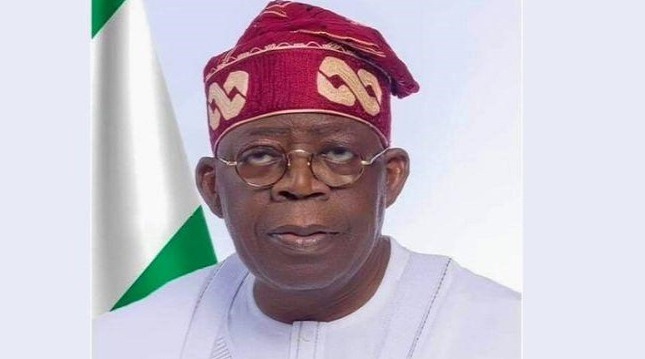
United States Government has said that Nigeria is not making significant progress in fiscal transparency, referencing gaps in the country’s budget disclosure, expenditure reporting, public procurement transparency and audit processes.

The assessment is contained in a report by the United States Department of State, which reviewed Nigeria’s fiscal transparency practices in its 2026 fiscal transparency report for countries published on Tuesday.
The report noted that the US government stated that Nigeria made some key fiscal documents available to the public, significant shortcomings remained in the disclosure of budgetary information and the management of public finances.
The report noted that “the government made its enacted budget and end-of-year report widely and easily accessible to the public, including online, but did not publish its executive budget proposal within a reasonable period.”
It also stated that while the Nigerian government had made information concerning the country’s debt obligations publicly available, its budget documents failed to provide a comprehensive picture of government revenues and expenditures.
“The government made information on debt obligations, including major state-owned enterprise debt, publicly available, but budget documents did not provide a substantially complete picture of the government’s revenues and expenditures, or break down expenditures to support executive offices in the budget,” the report stated.
The US government further raised concerns about discrepancies between Nigeria’s approved budget and the actual revenues and expenditures recorded during implementation.
It said, “Actual revenues and expenditures did not reasonably correspond to those in the enacted budget.”
The report also criticised the country’s supreme audit institution, stating that it did not meet international standards of independence and did not publish substantive reports, although it had access to the entire executed budget.
“The supreme audit institution did not meet international standards of independence or publish substantive reports but did have access to the entire executed budget,” it stated.
The assessment, however, acknowledged that Nigeria’s sovereign wealth fund had an adequate legal framework and disclosed information about its funding and the general approach to withdrawals.History
“The sovereign wealth fund had a sound legal framework and disclosed its source of funding and general approach to withdrawals,” the US government said.

The World Bank Group is supporting the expansion of Africa’s digital commerce infrastructure to help small businesses reach new markets, create jobs, and strengthen economic opportunities across the continent.

Through Jumia, Africa’s leading e-commerce platform, the investment is expected to enable approximately 60,000 local annual active sellers to participate more fully in the digital economy, support around 1,800 direct jobs, and create income-generating opportunities for more than 100,000 independent sales agents.
As digital commerce continues to grow across Africa, reliable access to online marketplaces, logistics networks, and digital payments are becoming increasingly important for entrepreneurs and small businesses seeking to expand beyond local markets. Strengthening this infrastructure can help firms increase sales, improve productivity, and connect consumers with a wider range of affordable goods and services.
To support this effort, the International Finance Corporation (IFC), the private sector arm of the World Bank Group, is investing US$25 million in equity in Jumia Technologies AG (Jumia), Africa’s largest public e-commerce platform. The investment will support Jumia’s next phase of growth across its core African markets, strengthening its integrated marketplace and logistics network.
By expanding access to digital commerce tools and services, the investment will help businesses grow, improve price transparency, and contribute to more inclusive and resilient private sector development across Africa.
“The support of the World Bank Group is a milestone for Jumia and for African e-commerce more broadly. It validates both the discipline we have brought to our business in recent years and the tangible impact our platform has on small businesses, jobs, and consumers across our eight markets. With partners like the IFC, we can accelerate the digital commerce infrastructure Africa needs” said Francis Dufay, CEO of Jumia.
“Jumia demonstrates how pan-African e-commerce platforms can expand economic opportunity at scale. Our investment supports the company’s next phase of growth while contributing to create jobs, digitizing supply chains and distributions channels and mobilizing private investment” said Farid Fezoua, Director for Equity, Funds, and Venture Capital at the International Finance Corporation, World Bank Group.

Airtel Nigeria Adds Over 1,000Cell Sites in Nationwide Expansion to Surpasses 17,000

MacOS Users Report More Cyber Threats than Windows Users – Survey Reveals

Mastercard, TeamApt Collaborate to Expand Digital Payments Across Africa

Access Holdings Sets New Benchmark in Nigeria’s Finance Talent Pipeline

Anambra Seeks Digital Inclusion in Rural Communities

EFCC Busts NIS Visa Overstay Racket, Uncovers N700m in an Account

Fact-Check: Elon Musk’s “Tesla Pi Phone” is Internet Rumor

NBC Tasks Broadcasting Stations over 2028 DSO Global Deadline

NBC Scraps Annual Digital Access Fee on DSO

Glo Sponsored African Voices to Feature Netflix’s “The Polygamist” Stars




 Telecom2 days ago
ipNX Joins Calls for Innovation-Friendly Ecosystem and Stronger Local Opportunities at Regenesys AI Summit

 E-Business2 days ago
NDPC Probes UNILAG, Lotus Bank, Hackerbella over Alleged Students’ Data Misuse

 E-Financial2 days ago
KudiWave Asks for Clarification over N750m Transfer from PalmPay Account

 News2 days ago
PalmPay Reinforces Commitment to Youth Empowerment on International Youth Day

 Telecom2 days ago
NCC Reports over 5,000 Fibre Cuts in 6 Months

 Telecom2 days ago
Google Selects Six Nigerian News Creators for Emerging Voices Growth Lab

 E-Financial2 days ago
Nigerians Borrow More to Buy Homes as Mortgage Demand Climbs – CBN

 General News2 days ago
NUPRC Warns of Counterfeit, AI-Generated Appointment Letters