

Telecom
Mart Networks Rallies Stakeholders to Deepen Commitment in Nigeria’s Tech Ecosystem

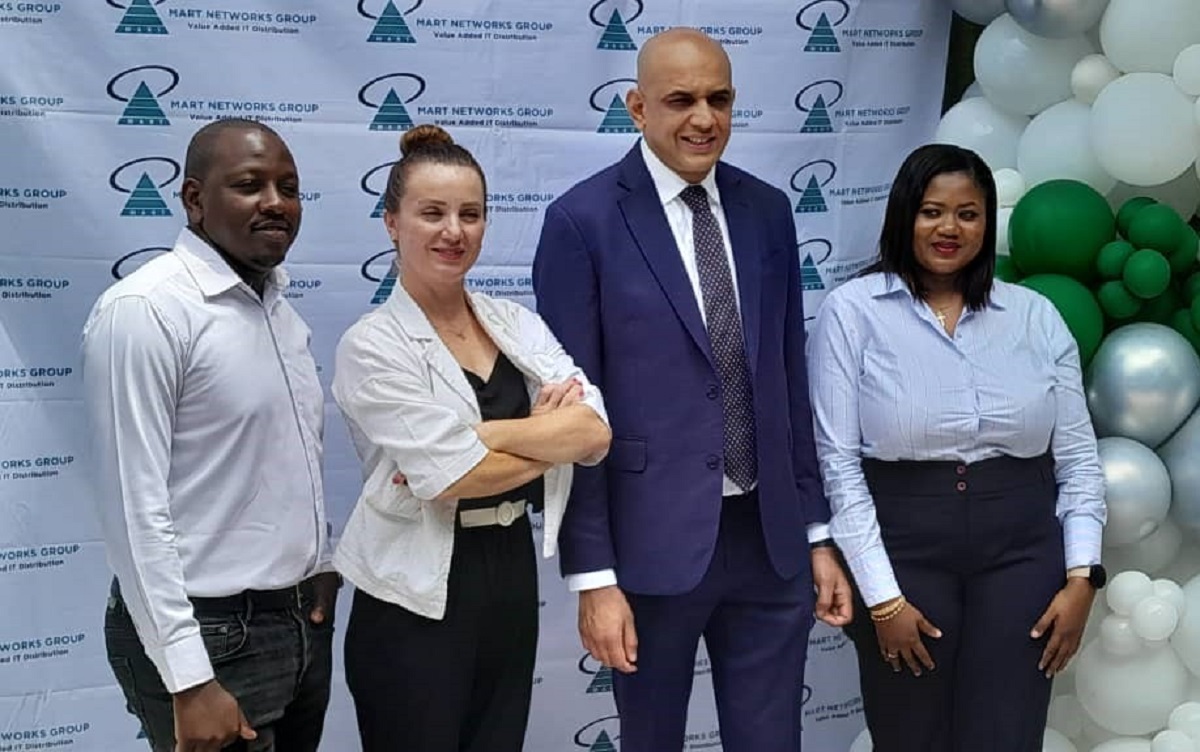
Mart Networks Group, a global value-added IT distributor, on Thursday convoked an international stakeholders conference for its partners and Original Equipment Manufacturers (OEMs) geared towards empowering local partners with the necessary skills and support that would ensure the successful implementation of its solutions in the Nigerian market.

L-R: Alex Nderitu, System Engineer, Roijie Networks; Peryan Aydas, Channel Manager, Mitel; Moiz Malooo Managing Director, Mart Networks Group; and Motunrayo Adigun, Sophos Product Manager, Mart Networks at the Stakeholders Conference tagged “Delivering Tomorrow’s Technology, Today” organised by Mart Networks Group in Lagos on Thursday.
Moiz Maloo, Managing Director of Mart Networks, speaking at the conference themed: “Delivering Tomorrow’s Technology, Today” reiterated the company’s focus on local talent development, technology transfer, and empowering Nigerian businesses with a comprehensive range of infrastructure and cybersecurity solutions.
The event held at Radisson Blu Hotel, Lagos highlighted the company’s dedication in knowledge transfer as well as showcasing its comprehensive solutions tailored to the Nigerian market.
Maloo emphasized the global nature of the business, with team members traveling from Europe, Asia, the Middle East, and Africa to engage with local partners and discuss the latest in technology offerings.
Operating in 10 countries, Mart Networks established its Nigerian base in 2013, focusing on the distribution of a wide array of technological infrastructure.
Maloo explained, “We sell various technologies, including data centre infrastructure, networking, cybersecurity, cloud solutions, and cloud solution training,” adding that the company also offers cutting-edge services such as compute, storage, hyper-converged infrastructure, video collaboration, and unified communication.
The event, aimed at strengthening relationships with local partners, saw product managers and technical engineers from across Europe, Asia, the Middle East, and Africa sharing their expertise, with these professionals providing insights into Mart Networks’ diverse product portfolio and its application in the Nigerian market.
“Our goal with this event is to showcase the full range of solutions we provide,” Maloo noted. “By sharing knowledge with local system integrators, we empower them to deliver even greater value to their customers in Nigeria.”
With a strong presence in Nigeria for over a decade, Mart Networks is reinforcing its role as a key enabler of digital transformation, offering essential tools and training to help Nigerian businesses thrive in the technology-driven future.
Maloo who reiterated the company’s commitment to technology transfer and local talent development as it continues to expand in Nigeria, highlighted the company’s investment in knowledge transfer and training, emphasizing the importance of understanding the products they sell and the local markets they operate in.
“We believe strongly in knowledge transfer. If you don’t know what you’re selling or how to use it, it’s very hard to implement, especially on our continent. That’s why we invest heavily in training and building a strong technical team to support our local partners,” Maloo said.
He stated that Mart Networks takes pride in being a Pan-African distributor, unlike many competitors that bring in talent from outside the region.
“We understand the culture and business here. Our entire team in Nigeria is Nigerian, just like in Kenya, Tanzania, and wherever we operate. We focus on nurturing local talent and adding value to the market.”
Despite the volatility of the Nigerian naira, which has been a challenge for many businesses, Mart Networks has adapted through strategic planning and partnerships.
As an importer of technology—mainly hardware not manufactured locally—the company has worked closely with banking partners to hedge against currency fluctuations. “We plan better, speak to our banking partners, and hedge funds to ensure we have access to dollars,” Maloo explained.
Reflecting on Mart Networks’ 11-year presence in Nigeria, Maloo noted the company’s steady growth since its entry into the market in 2013. “We’ve grown year on year, despite challenges, including the pandemic.
“Over the last 18 to 24 months, we have restructured, invested in more resources, and have faith in the Nigerian market,” he said, adding that comparing the first nine months of 2023 with the same period in 2022, the company has already seen growth, and Maloo is optimistic about the future.
“Nigeria is a very promising market with great potential. If the naira stabilizes further, the economy could be even stronger. We’re committed to being a part of that growth and continue investing in the market and its talent,” he said.
With a focus on empowering local partners, Mart Networks is poised for further expansion, helping to shape the future of IT infrastructure in Nigeria and beyond.
Meanwhile, IT Horizons, a leading IT systems integration company, has commended Mart Networks Group for its consistent support and long-standing partnership over the years.
Speaking at Mart Networks’ conference in Lagos, Stephen Asishana, Head of Sales and Business Development at IT Horizons, highlighted the crucial role Mart Networks has played in the company’s success since its inception 12 years ago.
“When we started on this journey, Mart Networks was one of the distributors that supported us, ensuring products were available at the right time, helping us fulfill our customers’ needs quickly,” said Asishana. “Our relationship has grown over the years as Mart Networks has expanded its portfolio, adding more brands, OEMs, and solutions. It’s truly a win-win relationship.”
Asishana who lauded the company’s commitment to engaging with its partners, not just through large-scale events like this, but with continuous interaction throughout the year, described the event as a key feature of Mart Networks’ annual calendar, which brings together local partners to showcase the distributor’s latest offerings.
“Mart Networks does this annually, but the great thing is that it’s not just a one-off. They stay in touch with partners throughout the year, constantly engaging us and providing insights into their products and services,” he added. “This event helps us as partners learn about the solutions they distribute, so we can pass that knowledge on to our customers.”
Asishana emphasized the significance of attending such events, noting that IT Horizons stands to benefit greatly by staying updated on the latest technological innovations. “Technology is always evolving, and events like this keep us informed about the latest trends. For us at IT Horizons, it opens our eyes to new possibilities, helping us identify solutions that can address the challenges faced by our customers.”
As the event progresses, IT Horizons expects to continue gaining valuable insights into cutting-edge technologies that can enhance their service offerings. “We know our customers’ pain points, and this event helps us discover solutions that can effectively address them,” Asishana concluded.
With a solid partnership and continued collaboration, IT Horizons and Mart Networks are poised to drive further innovation and deliver greater value to businesses across Nigeria.
In a related development, Sophos, a global leader in cybersecurity, has commended its long-standing partnership with Mart Networks Group during the distributor’s annual event, “Mart Day,” which brings together key partners, OEMs, and end users from across West Africa.
Sandra Nnadozie, Channel Account Manager for West Africa at Sophos, highlighted the importance of the event as an opportunity to strengthen relationships and showcase cutting-edge cybersecurity solutions.
“Mart Networks is our distributor in West Africa, covering Nigeria, Ghana, and other regions,” Nnadozie said. “Today’s event is a chance for us to meet with our partners and end customers, celebrate with Mart Networks, and continue building on the solid foundation we’ve developed over many years.”
Sophos’ relationship with Mart Networks spans well over a decade, not just in West Africa, but also in regions like East Africa and the UK. “We’ve had a very cordial relationship, working together for more than 15 to 20 years. It’s like family. The partnership continues to grow stronger year after year,” she added.
Nnadozie emphasized that the primary goal for Sophos at the event was to further solidify its relationship with Mart Networks while also promoting the importance of cybersecurity. “We’re here to spread the ‘gospel of cybersecurity.’ The future of cybersecurity lies in Managed Detection and Response (MDR), which helps organizations manage their cybersecurity infrastructure, especially in the absence of a dedicated security team,” she explained.
As organizations face increasing cyber threats, Sophos is focused on educating businesses about advanced cybersecurity solutions like MDR to prevent data breaches and security lapses.
Sophos’ presence at the event underscores its commitment to helping businesses in West Africa safeguard their operations against evolving cyber threats while reinforcing its partnership with Mart Networks. “We are here to show that we stand strongly beside them,” Nnadozie concluded.
With cybersecurity becoming an increasingly critical concern across industries, Sophos and Mart Networks continue to work together to provide comprehensive solutions, ensuring that businesses in West Africa are better equipped to defend against the threats of tomorrow.



Vitel Wireless, pioneer Mobile Virtual Network Operator (MVNO) licensed by the Nigerian Communications Commission (NCC), has launched an audacious “data that never expires” campaign designed to address consumer pain points in the market.

Kenneth Nwabueze, Chairman and CEO of Vitel Wireless
Fast-depleting data is a major issue for mobile users, particularly in Nigeria, with numerous complaints against network providers alleging that data plans exhaust prematurely.
But Vitel Wireless said it is now addressing the situation after extensive engagement with Nigerian consumers, particularly young people and small businesses.
Kenneth Neabueze, chairman of Vitel Wireless, said “What we’re saying to Nigerians is this, you buy the data, and you keep the data for as long as you want. There’s no more. You bought 2GB for two days, and it expires. If you buy that data under our scheme, it stays with you forever,” he said.
He added that the model promotes transparency and cost efficiency. “So it’s saving us money, it’s giving us transparency, and it’s giving us the ability to have control over how we spend and use our data,” he stated.
He noted that the concept was inspired by research into the everyday challenges Nigerians face.
“We talked to students who would tell us that in the middle of doing a project, they would be told that the data had expired, and we asked, ‘ How do we innovate?” We have analysed it, and we know, given the current economic conditions in Nigeria, you should buy the data with discounts of almost 40 per cent, and that’s why we are transparent”
The company has also unveiled a suite of products and services aimed at redefining connectivity, including its flagship Vitel Xphone.
The company explained that its services are available via both physical SIMs and eSIMs, with the 0712 number offering global use.
According to the firm, users can retain existing mobile numbers or migrate seamlessly, while enjoying nationwide coverage across all 36 states and the Federal Capital Territory with full GSM services including voice, SMS, USSD, and mobile data.
Chudi Nwabueze, chief operating officer of Vitel Wireless, described the firm as a technology telecom focused on innovation beyond traditional voice and data services.
“We’re coming in with a lot of innovation to activate applications and create tools that people can use in their businesses, homes, and daily lives,” he said.
He added that eSIM technology allows users to operate multiple lines on compatible devices, while introducing a range of digital solutions aimed at enhancing communication, safety, and business operations, anchored by its flagship Xphone.
Hence, the platform combines GSM and VoIP technologies to deliver seamless voice, video, and messaging services, along with cost-saving benefits and nationwide connectivity.
It is complemented by the Oga App, which enables real-time staff monitoring, automated payroll, and performance tracking to improve organisational efficiency.
Similarly, the network also rolled out SecureMe and Asset Tracker to address security and asset management needs.
While SecureMe provides GPS tracking and emergency alerts for personal and workplace safety, Asset Tracker helps businesses monitor and manage physical assets in real time.
Vitel Wireless noted that on pricing, challenged consumers to compare daily data costs across operators, while adding that the network offers discounts for higher volumes without imposing expiry limits.
Also speaking, Chinenye Adebayo, relationship partnership manager, outlined opportunities for Nigerians to join the company’s distribution network by visiting the website and becoming a mobile agent or sun-agents in any state.
The company noted that its offerings, including Close User Group (CUG) services and high-speed wireless network, are designed to provide integrated digital solutions for individuals and enterprises, as it seeks to position itself as a disruptive force in Nigeria’s telecom sector.

MTN Group delivered impressive financial and operational achievements for 2025, boosted by strong performances in MTN Nigeria and MTN Ghana, as well as solid earnings from MTN South Africa.

The three core markets of Africa’s largest mobile provider enhanced profitability, free cash flow, and shareholder dividends by 45%.
IT Web Africa reported that Ralph Mupita, group CEO and president, MTN, highlighted that the telecoms giant’s robust commercial momentum across key markets capped the final year of its Ambition 2025 strategy, while laying the foundation for a new long-term growth phase under Ambition 2030.
“The Group’s overall performance in 2025 was excellent. In the final year of our Ambition 2025 strategy, we were proud to have exceeded the 300 million customers milestone,” he said.
MTN revealed that it now serves more than 307 million voice subscribers, 172 million data users, and 70 million Mobile Money customers across 16 African markets, reflecting the continent’s growing demand for digital connectivity and financial services.
The operator credited its results to disciplined commercial execution and sustained investment in network infrastructure, with R38 billion spent during the year to expand capacity, improve coverage and enhance service quality.
The group reported that data traffic surged 27%, while average monthly data consumption per user climbed to 12.5GB, up from 10.8GB a year earlier, reflecting Africa’s fast-growing appetite for digital services.
Financially, the performance was driven by MTN’s largest markets.
In constant currency terms, MTN Nigeria grew service revenue by 54.9%, while MTN Ghana increased service revenue by 35.9%.
Meanwhile, MTN South Africa recorded 2% growth, demonstrating operational resilience in one of the continent’s most mature and competitive telecom markets.
MTN Group service revenue rose nearly a quarter to R218 billion, while earnings before interest, tax, depreciation and amortisation climbed to R98.5 billion, supported by R3.6 billion in expense efficiencies.
Mupita stressed that the strong results translated into robust free cash flow and improved return generation, allowing the board to declare a dividend of 500 cents per share, up from 345 cents the previous year.
“This comfortably exceeds the minimum dividend of 370 cents we had previously guided,” he said.
The group also announced a R6 billion share buyback programme as part of an enhanced shareholder remuneration framework aimed at delivering stronger long-term returns.
Alongside its results, MTN unveiled Ambition 2030, a strategy centred on three platforms, connectivity, fintech and digital infrastructure, as it seeks to capture the next wave of growth driven by data adoption and financial inclusion across Africa.
“We are hugely excited about Africa’s potential. We are well positioned to leverage our scale, footprint and brand leadership to capture the significant structural growth opportunities identified,” said Mupita.
Source: IT Web Africa

Association of Telephone, Cable TV, and Internet Subscribers of Nigeria (ATCIS) non-profit consumer rights group dedicated to protecting the rights, interests, and welfare of telecommunications subscribers, has urged the Federal Government to ensure safety of telecom consumers’ data hosted by government agencies.

Dr Sina Bilesanmi, president of the body stated this World Consumers Day in Lagos.
He alleged that said subscribers” data are being jeopardised by some of its agencies.
Bilesanmi urged government to ensure that every subscriber in Nigeria can use digital service without fear of physical, financial, or data-related harm.
The ACTIS president said safety in the telecommunication sector extends beyond physical hardware to include data privacy and protection from cyber fraud.
“We call for stricter enforcement by the Standard organization of Nigeria (SON) to eliminate substandard mobile devices and Cable Tv equipment that pose fire or electric hazards.
“We also want safe services from telecoms that are transparent – free from hidden charges and misleading advertisements”, he said.
He urged subscribers to utilize platforms like ACTIS as well as NCC and even FCCPC web portal when they encounter service failures.
He also tasked FG on hosting Nigerian Data Privacy in the country.
He said: “We ask for more robust surveillance and swifter penalties for entities that violate consumer safety standards. We admonish the subscribers to be aware and speak out, a vigilant consumer is a protected consumer.”

Vitel Wireless Lures Subscribers with “Data that Never Expires” Campaign

FG Deploys Technology, Approves $54m Drugs to Tackle Tuberculosis

BoI, MTN Foundation Launch N1Bn Fund for Women Entrepreneurs

Luno Launches First Crypto Prediction Market in Nigeria

NSIA Sign MoU with UK’s Asset Green Ltd to Develop $496M Integrated Dairy Livestock Production Platform in Nigeria

Kaspersky Discovers New Phishing Campaign Exploiting Google Tasks Notifications to Steal Corporate Credentials

esentry 2025 Report Shows Healthcare, Financial Services and Telecoms as Staging Grounds for Increased Cyberattacks in Africa

AfDB, UNDP Launch $10Bn AI Initiative for Africa

Mutual Benefits Assurance Settles ₦5.9bn Claims in January 2026

MultiChoice Suspends Yearly DStv Price Hike as Canal+ Pushes Growth




 Broadcasting2 days ago
Spotify’s Loud & Clear Report Reveals Over ₦60Bn Revenue for Nigerian Artists in 2025

 News2 days ago
Elumelu Tags Elon Musk, Disowns AI-Generated Scam Video

 Telecom2 days ago
PwC Warns Nigeria Telcos of AI Fraud Risks

 E-Financial2 days ago
CBN Relaxes Dormant Account Rules with Removal of Affidavit Requirement

 E-Financial2 days ago
Crypto Transactions Hit $96Bn in Nigeria -SEC

 E-Business2 days ago
FG Determined to Protect Rights, Privacy Online- NITDA

 E-Business2 days ago
Firm Warns of Malware Aiming to Steal Data from Individuals, Organisations in Nigeria

 News2 days ago
NITDA DG Appraised the Role of Teachers as Key to Nigeria’s Digital Transformation