

Telecom
Mastercard Report Reveals Top Travel Trends Shaping Africa in 2025


Mastercard Economics Institute (MEI) has released its annual Travel Trends 2025 report, revealing the latest consumer spending insights and motivation when it comes to travel.

Cross-border movement is often influenced by the most pressing economic factors of the moment, such as exchange rates and geopolitical tensions. However, these are not the only factors driving consumers’ travel spending decisions, including those in Africa. Personal and purpose-driven factors remain powerful even when economic uncertainty looms.
Building on the resilience of the global travel sector seen last year, the 2025 report highlights how destinations across the African continent are increasingly appealing to tourists and, creating additional opportunities for local markets to develop tourism.
“Africa is emerging as a global leader in purpose-driven travel, where nature, wellness, and culinary experiences are redefining the continent’s tourism landscape. These trends present a powerful opportunity to drive inclusive growth, support local economies, and position Africa as a key player in the future of global tourism,” said Mark Elliot, division president, Africa, Mastercard.
Whether drawn by Namibia’s wellness retreats, South Africa’s wilderness experiences or Morocco’s vibrant culinary scene, travelers are expanding their horizons beyond traditional hotspots.
“Tourism is playing an important role in Africa’s growth story. Travelers are increasingly drawn to the continent’s natural beauty, culinary diversity, and wellness experiences. While economic and geopolitical factors matter, the pursuit of meaningful, purpose-driven travel remains strong. The Mastercard Economics Institute’s report sheds light on how countries are tapping into this trend to attract visitors and boost local economies,” said Khatija Haque, chief economist EEMEA, Mastercard Economics Institute.
By exploring a full range of travel motivations, the report identifies the main themes shaping travel today:
Africa trends:
- Nature-fueled adventures: South Africa and Zambia dominate cross-border spending around national park areas. Spending around South Africa’s major national parks far outpaced that of other countries, with nearly a quarter of the cross-border spending occurring within these zones. Zambia is also highly ranked as an outdoor adventure destination.
- Culinary crossroads: Marrakech ranks highly on the foodie list with its median restaurant hosting tourists from many different countries, often to enjoy meals of tagine and b’stilla. Cape Town is also on the list, with its bobotie dish proving popular with visitors.
- Wellness in the wild: Africa is establishing itself as a global leader in wellness-centered travel as consumers prioritize rejuvenation and self-care. Namibia, South Africa and Botswana are among the top destinations for travelers seeking spa-style and nature-based retreats and immersive eco lodges. Kenya is also ranked among the top 20 destinations for wellness In the Mastercard Wellness Index 2025.
Other global trends:
- Spa, summit and savor: Personal passions and goals motivate travel choices. Adventure-seekers are heading to the Nordics, where Finland’s national parks account for 7.1% of cross-border spending in the country.
- Summer destination draws: The Asia-Pacific region commands the list of trending summer destinations. Flight booking data reveals the top global destinations gaining most momentum for June-September travel, relative to last year. Tokyo is the number one trending spot for summer 2025, followed by Osaka and then Paris.
- Fuelled by fans: Fans travel internationally to see their favorite teams and athletes play. Case in point? During Shohei Ohtani’s World Series debut, spending by Japanese visitors in Los Angeles surged by 91%, six times the broader cross-border boost.
- Money matters: Despite geopolitical tensions and fluctuating prices, the factors that motivate consumers to travel are often more complex than just economic. But currency depreciation can make certain destinations, like Japan, more attractive due to their better value for money.
- Wheeling and dealing closer to home: In general, business travelers favor longer trips within their own regions, driven by hybrid work models and geopolitical uncertainty. However, there are exceptions, with UK businesses spending a growing share of their travel budgets in Asia, Europe, the Middle East and Africa.
Mastercard is dedicated to helping the global tourism sector grow through market analysis and high-frequency, data-driven insights that enhance the travel experience. By empowering destinations and businesses to better understand evolving consumer trends, Mastercard is helping to shape a more connected and resilient future for travel across Africa.
You can view the full “Travel Trends 2025: Purpose-driven journeys” and other reports and insights from the Mastercard Economics Institute can be found here.


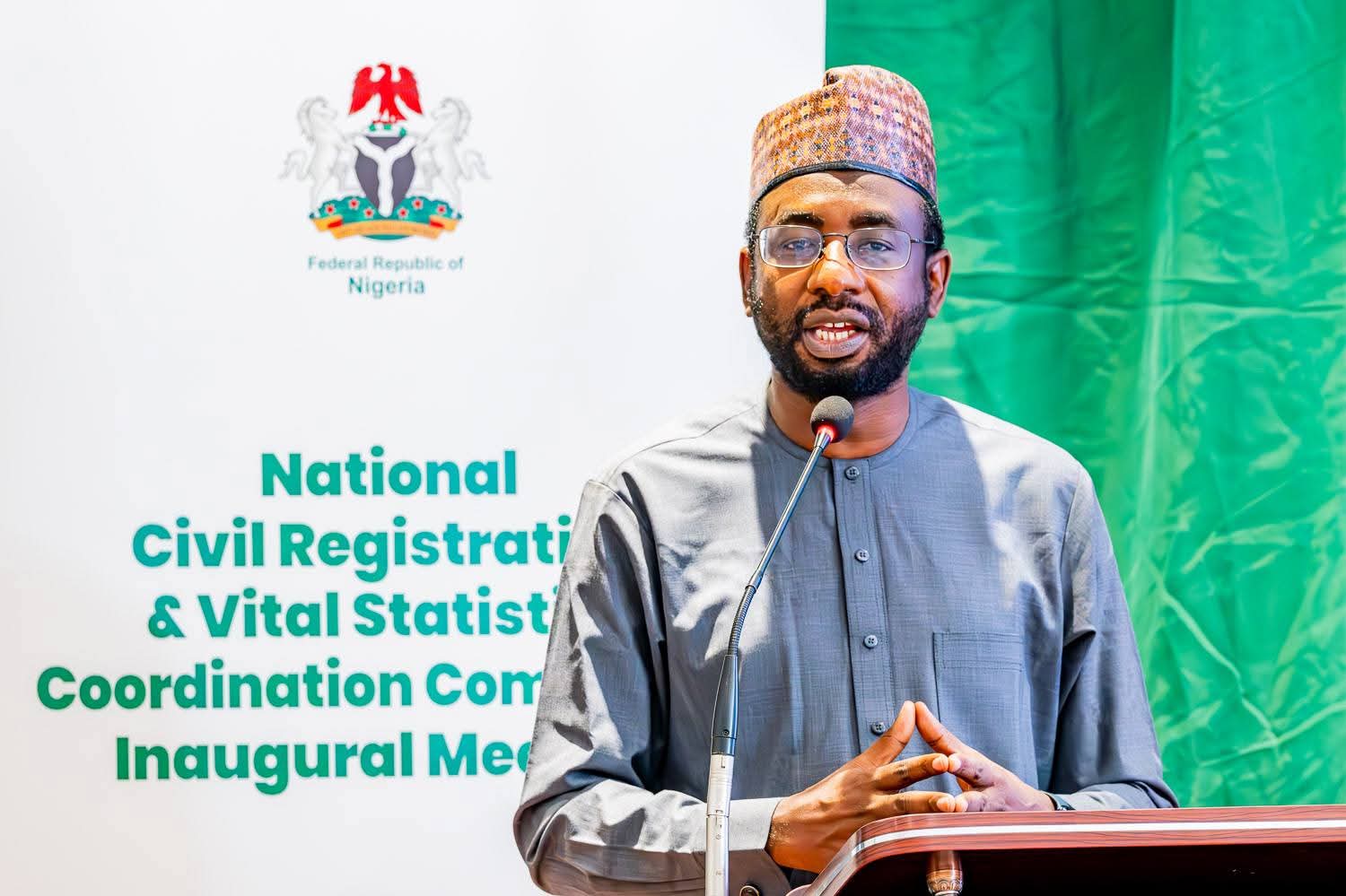
Mallam Kashifu Inuwa Abdullahi, Director-General of the National Information Technology Development Agency (NITDA), has called for a fundamental shift in Kano State’s economic strategy, urging stakeholders to embrace innovation, technology and collaboration as the drivers of growth in the 21st century.

Mallam Kashifu Inuwa Abdullahi, Director-General of the National Information Technology Development Agency (NITDA)
This is contained in a press statement e-authored by the Director of Corporate Communications & External Relations at NITDA, Hajia Hadiza Umar.
Speaking at the Kano Startup Weekend, Mallam Abdullahi acknowledged Kano’s long-standing reputation as the commercial nerve centre of Northern Nigeria and the wider Sahelian region, noting that its history of trade, enterprise and human capital provided a solid foundation for future growth.
Abdullahi emphasised that while these strengths powered Kano’s success for centuries, the modern economy now offered even greater opportunities through innovation and technology.
He described innovation as the process of transforming ideas into impactful solutions through commercialization, stressing that when ideas were effectively deployed, they created value, solved societal challenges and generated sustainable economic growth.
He noted that Kano’s large market, strategic location and vibrant entrepreneurial culture placed it in a strong position to take advantage of innovation-driven opportunities.
According to him, “Innovation is the process of taking an idea from inception to impact. Invention on its own is a cost centre, but when you commercialise an idea, when you turn it into a product or service that solves a real problem and creates value, that is when you begin to drive economic growth and inclusion.”
He noted that the state hosted numerous degree-awarding institutions across federal, state and private ownership, providing a strong base for human capital development.
However, the NITDA DG expressed concern that these institutions often operated in isolation from industry, with research outputs rarely translating into commercial or industrial applications.
He explained that innovation did not happen in silos and stressed the need for a strong, interconnected ecosystem that brought together academia, industry, startups, entrepreneurs and government.
According to him, universities should conduct research informed by industry needs, industries should leverage research to improve productivity and competitiveness, and startups should serve as the bridge that converted ideas into market-ready solutions.
The NITDA boss further encouraged entrepreneurs to leverage technology to build businesses that could grow beyond local markets, explaining that innovation-driven enterprises had the power to scale rapidly, create jobs and position Kano competitively at both national and global levels.
According to him, digital platforms and emerging technologies now made it easier for startups to reach wider markets and develop solutions that were previously unimaginable.
“You can start your business here in Kano, but your thinking must be global from day one. Technology has removed barriers. With the right skills and platforms, a startup in Kano can build solutions that serve not just Nigeria, but the world,” he noted.
Highlighting NITDA’s ongoing interventions, its Director-General outlined the Agency’s commitment to building national innovation capacity through targeted human capital development programmes.
He cited the Digital Literacy for All (DL4ALL) initiative, which aimed to equip Nigerians across all segments of society with essential digital skills, and the 3 Million Technical Talents (3MTT) programme, designed to produce a pipeline of globally competitive technical professionals in areas such as software development, data analysis and emerging technologies.
He said, “Through DL4ALL, we are ensuring that Nigerians at all levels have the basic digital skills needed to participate in the digital economy, while 3MTT is deliberately building a pipeline of globally competitive technical talents who can drive innovation, create jobs and attract investment.”
Abdullahi explained that these programmes were key pillars of President Bola Ahmed Tinubu’s Renewed Hope Agenda, which prioritised skills development, innovation, job creation and inclusive economic growth as pathways to national prosperity.
According to him, empowering Nigerians with digital and technical skills was essential for building a resilient economy capable of competing in the global digital landscape.
“President Tinubu’s Renewed Hope Agenda is about investing in people, empowering them with relevant skills and creating opportunities for inclusive growth.
“At NITDA, we are using digital skills and innovation as tools to translate that vision into real economic impact for Nigerians,” he said.
The NITDA boss urged all stakeholders in Kano to work together to build a functional innovation ecosystem that could unlock the state’s vast potential and expressed confidence that with the right mindset, strong collaboration and sustained investment in digital skills and innovation, Kano could reclaim its historic leadership role and emerge as a major innovation and entrepreneurship hub in Nigeria and beyond.


Bosun Tijani, minister of Communications, Innovation and Digital Economy, yesterday claimed that bandits and terrorists are able to communicate and coordinate their activities with ease because they exploit gaps in the country’s telecommunications network.

Bosun Tijani, minister of Communications, Innovation and Digital Economy,
Tijani, who spoke Politics Today, a Channels Television’s programme, on Friday, Tijani said the criminals exploit gaps in the country’s telecommunications network.
He also claimed the bandits use advanced technology to bounce calls across multiple towers in areas with poor connectivity.
“They weren’t using the normal towers; they bounced calls off multiple towers, which is why they favor areas that are largely unconnected,” he said.
When asked about reports that unregistered or fraudulently registered SIM cards are still in use despite the Bank Verification Number (BVN) and the National Identification Number (NIN)–Subscriber Identity Module linkage policies, Tijani said the issue is technically complex and the reports are not fully verified.
“Whether it’s fact or not, I do not know where you’re getting that from, and I do not know who has evidence that there are people with unregistered SIMs,” he added.
The minister stated that the federal government is investing in telecom towers in underserved regions, upgrading the country’s communication satellites to improve coverage, and expanding fiber-optic networks to strengthen the country’s digital infrastructure.
“If our towers are not working, our satellites will work. Nigeria is the only country in West Africa with communication satellites, and we are bringing new satellites to upgrade their capabilities,” Tijani said.
He added that these initiatives aim to ensure better connectivity for Nigerians while closing loopholes that criminals exploit, thereby enhancing national security.
The minister’s comments come amid rising concerns over insecurity in several parts of the North, where banditry, kidnapping, and terrorism have escalated in recent years.
There are also reports of bandits flaunting ransom payments on social media platforms such as TikTok, raising alarm among authorities and the public

Sophos, a global leader of innovative security solutions for defeating cyberattacks, has announced its best-ever results in the MITRE ATT&CK Enterprise 2025 Evaluation.

MITRE ATT&CK Enterprise 2025 Evaluation
Sophos XDR detected 100% of adversary behaviors (sub-steps)1 across two complex attack scenarios: Scattered Spider, which Sophos X-Ops tracks as GOLD HARVEST, a financially motivated cybercriminal collective, and Mustang Panda, which Sophos X-Ops tracks as BRONZE PRESIDENT, a People’s Republic of China (PRC) espionage group.
The Scattered Spider scenario included activity across Windows, Linux, and AWS cloud environments, and the Mustang Panda scenario focused on Windows only.
Further, Sophos achieved the highest-possible “Technique”-level rating for 86 out of 90 total sub-steps in the evaluation, by generating high-fidelity detections with details on execution, impact, and adversary behavior, providing clear who, what, when, where, how, and why insights.
Sophos XDR achieved:
- 100% detection coverage1 for all 90 adversary sub-steps across two complex attack scenarios across Windows, Linux, and AWS cloud environments
- Highest possible (“Technique”) ratings for 86 of 90 sub-steps, demonstrating deep visibility and actionable detections
- Highest possible (“Technique”) ratings for 61 out of 62 of sub-steps in the Scattered Spider scenario involving identity abuse, cloud exploitation, and data exfiltration
“Scattered Spider and Mustang Panda represent distinct threat profiles that challenge defenders in very different ways,” said Simon Reed, chief research and scientific officer, Sophos. “Achieving full detection coverage against both validates the accuracy and depth of Sophos’ analytics and demonstrates how the company’s AI-native XDR platform converts complex telemetry into clear, actionable intelligence, helping security teams detect, understand, and stop advanced attacks with confidence.
“Sophos’ consistently strong performance in these rigorous evaluations underscores the power and precision of our threat detection and response capabilities, and our commitment to stopping the world’s most sophisticated cyberthreats.
“Over the five years that Sophos has participated in ATT&CK Evaluations, we have continually invested in strengthening our platform, and that investment has translated into stronger results year after year – both in the evaluations, and in the security outcomes we deliver for our customers.”
These results demonstrate the power of the Sophos XDR platform to defend against sophisticated cyber threats. Every day, Sophos processes 223+ terabytes of telemetry in Sophos Central, generating 34+ million detections and automatically blocking 11+ million threats.
This scale of customer insights ensures that Sophos’ detections are being tested and improved to provide continuous protection while delivering stronger outcomes for organizations worldwide.
Understanding The Threat Actors
Sophos X-Ops has tracked GOLD HARVEST (Scattered Spider) since 2022, observing a loosely affiliated cybercriminal collective driven by both financial motives and a desire to elevate their reputations on underground forums.
Despite several arrests, operators and associates continue to launch high-profile attacks across the U.K. and U.S., at times partnering with major Russian-speaking ransomware groups.
Their sophisticated social engineering capabilities enable them to compromise even well-defended organizations, underscoring the importance of strong behavioral detections within modern security operations.
In parallel, Sophos X-Ops has monitored BRONZE PRESIDENT (Mustang Panda) for many years.
This long-running PRC espionage group conducts intelligence-led operations that align closely with priorities of China’s Ministry of State Security. Recent targeting includes activity against Tibetan communities surrounding the Dalai Lama’s 90th birthday, as well as intrusions on Thai government and military offices during periods of heightened regional tension.
BRONZE PRESIDENT remains one of the most active and persistent state-aligned threat actors operating today.
MITRE ATT&CK Evaluations are among the world’s most rigorous independent security tests.
They emulate the tactics, techniques, and procedures (TTPs) used by real-world adversaries to assess each participating vendor’s ability to detect, analyze, and articulate threats in alignment with the MITRE ATT&CK Framework.
These evaluations continually strengthen Sophos’ capabilities for the benefit of the organizations it protects. This was the seventh round of MITRE’s “Enterprise” ATT&CK Evaluation, a product-focused assessment designed to help organizations better understand how security operations solutions like Sophos EDR and Sophos XDR can help them defend against sophisticated, multi-stage attacks.
When evaluating EDR or XDR solutions, Sophos recommends reviewing MITRE ATT&CK Evaluations alongside other independent proof points.

Davido, Babajide Sanwo-Olu, Karl Toriola, Others To Be Honoured At The Most Influential People of African Descent Awards In Lagos

Union Bank Clinches Top Workplace Practice Honour at Sustainability Awards

Preventing Financial Crimes Amid Mounting Insecurity: Why Following the Money is Now a Survival Imperative

Supreme Court Clears Fidelity Bank in ₦225bn Sagecom Saga

Cellulant Taps Freddie Oduro to Lead Enterprise Payments Expansion in Ghana

Nigeria Records Highest Weekly Cyberattacks in Africa — Report

Hackers Breach Phones of Dangote and Otedola, Demand Ransom

Cyber Tsunami Hits Nigeria as Breaches Surge 1,047%, esentry Q3 Report Reveals

MTN Nigeria Has Invested Over ₦32.23 Billion in National Priorities Through Its Foundation

FG Lists Bank Charges Nigerians Will Stop Paying from January 2026




 Telecom3 days ago
Minister Claims Bandits Exploit Poor Network, Bounce Calls Off Multiple Towers

 E-Financial3 days ago
FIRS says MOU with DGFIP Won’t Compromise Nigeria Tax Data Sovereignty

 General News3 days ago
Top Nigerian Startups Secure Funding Boost @ iHatch Demo Day Awards

 Telecom3 days ago
Google.org Backs CyberSafe’s Resilio Africa to Shield 2m People from Cyber Threats

 Telecom3 days ago
CBN, NCC to Launch Short Code for Swift Consumer Complaint Resolution

 Broadcasting3 days ago
NCC Blocks Piracy Sites as Nollywood Faces Rising Digital Theft

 Broadcasting3 days ago
Four Must-Watch African Films Debut Free on Glo TV

 Telecom3 days ago
NASENI Launches FutureMakers to Inspire Innovation in Young Nigerians