

E-Financial
Mastercard to Enable Crypto Trading Capabilities in Banks


Mastercard has introduced Crypto Source, a new programme to enable financial institutions to bring secure crypto trading capabilities and services to their customers.

In a statement, the firm says the 2022 Mastercard New Payments Index reported that 29% of respondents globally hold crypto-currency as an investment, with another 65% indicating a preference for crypto-related services to be provided by their current trusted financial institution.
In partnership with regulated and licensed crypto custody providers, Mastercard’s financial institution partners will gain access to a suite of buy, hold and sell services for select crypto assets, augmented with proven identity, cyber, security and advisory services, says the financial services provider.
It adds the Crypto Source offering is complemented by Mastercard Crypto Secure to bring additional security to the crypto ecosystem and support card issuers in their compliance with complex regulations.
“At Mastercard, trust is our business. What we are announcing today is a connected approach to services that will help bring users safely and securely into the crypto ecosystem,” says Ajay Bhalla, president of cyber and intelligence at Mastercard.
“Our recent investments in this space, such as the acquisition of CipherTrace and Ekata, are providing us with a unique set of capabilities to help provide our customers and partners with the most technically advanced solutions available in the market.”
To support this programme, Bhalla says, Mastercard is expanding its partnership and work with Paxos Trust, a regulated blockchain infrastructure platform.
“The partnership aims for Paxos to provide crypto-asset trading and custody services on behalf of the banks, while Mastercard will leverage its technology to integrate those capabilities into banks’ interfaces, resulting in a seamless experience for the consumer.”
“Our commitment is simple – to explore crypto and the underlying digital assets technology to support consumer choice in payments,” says Jorn Lambert, chief digital officer at Mastercard.
“Today is an exciting step in our crypto journey that draws on the strengths of our global businesses, from open banking and identity verification, to analytics and fraud monitoring, to settlement solutions. We’re excited to build on our long-term partnership with Paxos – co-innovating to bring safe and secure technology to financial institutions.
“Our crypto product innovations will provide choice at scale and continue to bring one-of-a-kind opportunities to financial institutions as they seek to offer new, advanced services to their customers.”
“Mastercard has a powerful network of financial institutions around the world. This exciting offering developed by Paxos and Mastercard will give FIs [financial institutions] the fastest and most trusted way to offer safe, reliable crypto access for their consumers globally. We’re thrilled to partner with Mastercard to further accelerate the mainstream adoption of digital assets,” says Walter Hessert, head of strategy at Paxos.
Mastercard says over the past few years, it has been working alongside its customers and partners to bring new services and capabilities that help make crypto more accessible, safe and secure.
It notes these efforts have been complemented with the addition of new technologies through Finicity, Ekata, RiskRecon and CipherTrace.
According to the company, this combination of services provides eligible financial institutions the opportunity to directly manage crypto asset investments for consumers.
It notes Mastercard Crypto Source is currently being prepared for pilot programmes, and additional details on broader availability will be made available at a later date.


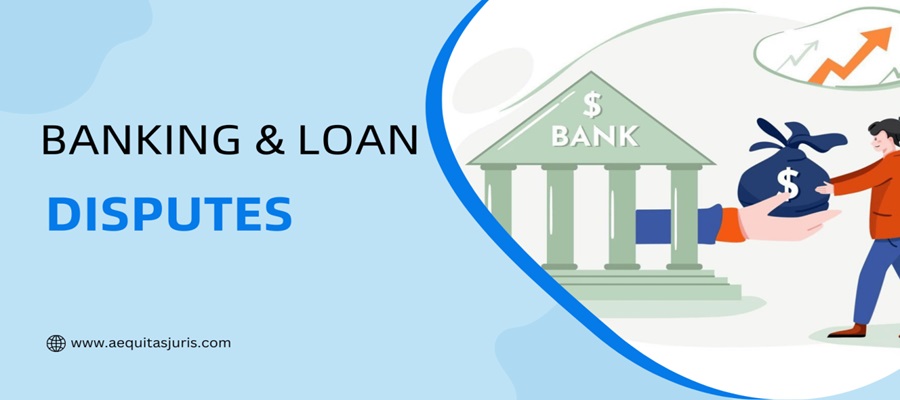
Central Bank of Nigeria (CBN) has released an exposure draft proposing the establishment of a 30-member Mediation and Dispute Resolution Panel (MDRP) aimed at strengthening consumer protection and boosting confidence in Nigeria’s financial system.

Pic credit….aequitasjuris.com
According to a circular signed by Paul Oluikpe, acting director of the Development Finance Advisory Department of the CBN, the establishment of the MDRP, is in furtherance of efforts to strengthen the financial ecosystem, ensure compliance with extant legislation, and enhance the efficiency of financial intermediation.
The draft guidelines and modalities for the operation of the MDRP are in line with the Secured Transactions in Movable Assets (STMA) Act, 2017, which established a MDRP as the first recourse for mediation and settlement over any civil dispute which may arise between the creditor and the grantor in the course of implementing the Act.
The act also mandates the Governor of the Bank to issue guidelines that will set out the modalities and regulate the Panel’s functioning, among others. The circular further noted that the “MDRP is intended to provide a specialised, cost-effective platform for resolving disputes arising from creation, perfection and enforcement of security interests in movable assets.
“The key objective of the MDRP guidelines is to establish a clear and standardised procedure for managing STMA-related disputes, while ensuring transparency, fairness and efficiency to bolster confidence in the secured transactions in movable assets system.”
According to the draft guideline, the CBN will “appoint 30 persons from whom panels shall be constituted, with each panel comprising 3 members.
The members shall serve on a rotational basis for an initial term of four years.
“Upon satisfactory performance, determined through an evaluation by the CBN, members may be reappointed for an additional term of four years. The tenure of members shall not exceed two terms of four years each, which need not be consecutive.
“Members shall be professionals with a minimum of 10 years of relevant experience in any of law, banking, finance, mediation, arbitration, alternative dispute resolution, or financial regulation. Members shall be persons of proven integrity, professional competence and sound judgement.”
Nigeria Deposit Insurance Corporation (NDIC) said that it has commenced the process of liquidating 89 closed Microfinance Banks (MFBs) and Primary Mortgage Banks (PMBs).

This followed their successful acquisition by new owners under the Purchase and Assumption (P&A) resolution model executed by the Corporation.
The corporation disclosed this in a statement on Wednesday, signed by Hawwau Gambo, head of Communication and Public Affairs.
It explained that the affected institutions were part of the 179 MFBs and four PMBs whose licences were revoked by the Central Bank of Nigeria (CBN), on May 22 and 23, 2023.
According to the corporation, under the P&A arrangement, 89 new eligible institutions were subsequently licensed by the CBN to assume the assets and liabilities of the defunct banks.
It noted that the new banks had since commenced operations under different names.
“To legally conclude the liquidation process, the NDIC, in its capacity as liquidator, will file applications at various divisions of the Federal High Court for orders of dissolution of the closed banks and its discharge as liquidator,” the statement said.
NDIC added that the move was in line with provisions of its enabling Act and other relevant laws guiding bank resolution in the country.
The corporation said the exercise would ensure proper closure of the defunct institutions while safeguarding financial system stability.
It reiterated its commitment to protecting depositors and sustaining public confidence in the banking sector.
The affected banks were located across several states, including Lagos, Anambra, Oyo, Kaduna, Kano and the Federal Capital Territory.
Nigeria’s economy is projected to grow at 4.1 per cent in 2026 and strengthen slightly to 4.3 per cent in 2027, even as the International Monetary Fund (IMF) warned that the ongoing Middle East conflict is clouding the global outlook.

The projections, contained in the IMF’s April 2026 World Economic Outlook released at the ongoing IMF/World Bank Spring Meetings in Washington DC, the United States, show a relatively stable trajectory for Nigeria despite rising external risks, particularly from energy market disruptions triggered by the war.
The IMF had earlier projected stronger growth of about 4.4 per cent in early January before the latest global shock, reflecting the impact of domestic reforms and improving macroeconomic conditions.
While Nigeria’s growth outlook remains steady, the IMF warned that countries like Nigeria face growing vulnerability from higher global energy prices, inflation pressures and tighter financial conditions.
The war, which has disrupted oil supply routes and pushed up fuel costs, is already feeding into domestic inflation and cost-of-living pressures.
Recent data show petrol and diesel prices have surged sharply since the conflict began, straining households and businesses.
Although higher crude prices may support government revenues, the broader macroeconomic impact remains mixed, with inflation and exchange rate pressures posing downside risks.
The IMF also cut global growth to 3.1 per cent in 2026, with only a modest recovery to 3.2 per cent in 2027 as the Middle East conflict disrupts trade and energy markets.
Emerging markets and developing economies, including Nigeria, are expected to grow at 3.9 per cent this year before recovering to 4.2 per cent in 2027, reflecting the uneven impact of the shock across regions.
Sub-Saharan Africa is projected to expand by 4.3 per cent in 2026 and 4.4 per cent in 2027, placing Nigeria slightly below the regional average but still among the stronger performers.
South Africa, the continent’s largest economy, continues to lag with growth forecast at one per cent in 2026, rising modestly to 1.3 per cent in 2027.
Among major economies, the U.S. is projected to grow by 2.3 per cent in 2026 before easing to 2.1 per cent in 2027, while China is projected to grow by 4.4 per cent and four per cent respectively.
India remains the fastest-growing major economy at 6.5 per cent through 2027, while the Euro Area continues to struggle with weak growth, particularly in Germany and France.
The IMF warned that many developing economies, particularly energy importers, remain vulnerable to rising costs and external shocks.
The IMF urged central banks to prioritise price stability, warning against easing policy prematurely in response to supply shocks. It stressed the need for clear communication and strong institutional independence.
On fiscal policy, the Fund cautioned against broad-based energy subsidies, describing them as costly and inefficient. It recommended a targeted and temporary support for vulnerable households, funded within existing budgets.
The IMF also warned against the use of trade restrictions to address external imbalances, noting that such measures tend to weaken output without resolving underlying issues. It called instead for coordinated global action to stabilise trade and restore energy supply chains.

MTN Suspends Data, Airtime Borrowing Service over New FCCPC Lending Rules

Nigeria Customs Deploys AI to Cover Revenue Leaks

Top 7 Reliable Virtual Cards for Running Ads in Nigeria

Nokia, Orange Partner on AI-native 6G Networks

NDPC Issues Critical Advisory as Hackers Target Nigeria’s Key Digital Systems

Kuda MFB Increases Kuda for Her Business Grants to ₦10 Million

Canal+ to Cut Jobs as Part Sweeping Restructuring

Nigeria tops global rankings for USDT, USDC ownership

NBC Boss Urges Content Ceators to Participate in DSO

NITDA Takes Over National Digital Architecture System




 General News3 days ago
Guinness Nigeria Surpasses ₦1Trillion Market Capitalisation, Signalling Strong Investor Confidence and Sustained Value Creation

 News3 days ago
CISA Asks NDPC, Police to Act on Alleged Data Breach by NIPSS

 Telecom3 days ago
Amazon Satellite to Challenge Starlink in Africa with Globalstar Acquisition

 E-Financial3 days ago
FG Investigates ‘Sharp Sharp’ Loan Operators over Alleged Privacy Violations

 News2 days ago
Lagos Targets Vulnerable Residents in Expanded Social Register

 News3 days ago
Kaspersky Reports Online Scam Exposure Remains Widespread Despite High Levels of Self-assurance

 E-Financial3 days ago
Ecobank Delivers Strong Results, Posts $801m in Pre-Tax Profit for 2025

 Broadcasting3 days ago
Fela Makes History as First African to be Inducted into Rock and Roll Hall of Fame