

Telecom
Meet Linda Yaccarinon, Newly Appointed CEO of Twitter


Linda Yaccarino, the newly appointed CEO of Twitter was previously NBC Universal’s top advertising sales executive, she was on Friday officially announced as the new CEO of Twitter by Elon Musk.
Musk, who acquired Twitter last fall, tweeted his excitement about Yaccarino joining the company and mentioned that she would primarily focus on business operations while he concentrates on product design and new technology. The goal is to transform the platform into an all-encompassing app called “X, the everything app.”
Yaccarino is expected to assume her role at Twitter by the end of June. Musk, on the other hand, will take on the positions of executive chair and CTO. His acquisition of Twitter was a result of a contentious back-and-forth with the board.
One of Yaccarino’s primary responsibilities will be to rebuild Twitter’s advertising business, which Musk claimed had suffered a significant decline of up to 50% after he acquired the company.
Advertisers have been cautious due to Musk’s unpredictable decisions in running Twitter and his reinstatement of previously banned accounts.
Yaccarino is known to hold conservative political views and had served on Donald Trump’s council on sports and nutrition during his presidency.
However, her imminent appointment as Twitter CEO caused a stir on “conspiracy Twitter” as right-wing users discovered her affiliation with the World Economic Forum (WEF), an organization they perceive negatively. Yaccarino had chaired the WEF’s Taskforce on the Future of Work.
After announcing Yaccarino’s hire, Musk commented that he believes people from both ends of the political spectrum will find her to be smart, fair, and reasonable.
This announcement followed Musk’s previous day’s announcement about hiring a new CEO without disclosing her name. Reports soon revealed that Yaccarino, NBCU’s chairman of global advertising and partnerships, was in talks for the Twitter CEO position. On Friday, prior to Musk’s confirmation, Yaccarino resigned from NBCU.
Musk had previously stated his intention to step aside as Twitter’s chief executive once he found a suitable replacement. However, he will retain full control of the social network and remain closely involved in its management.
Although Musk’s deal for Twitter was initially valued at $44 billion, he now values the company at $20 billion. He has recently renamed the company “X Corp.” as the parent organization of Twitter.
Yaccarino’s interest in Twitter stems from recognizing the opportunities within the platform. Lou Paskalis, a former senior marketing executive at Bank of America, mentioned that Twitter is likely selling advertising at significant discounts in exchange for volume commitments.
Before her tenure at NBCU, Yaccarino spent 20 years in ad sales and marketing roles at Turner, holding positions such as EVP/COO of advertising sales, marketing, and acquisitions.
Who is Linda Yaccarinon?
63-year-old Linda Yaccarino was born in New York City. She graduated from the University of Pennsylvania with a degree in economics, and she began her career in advertising at J. Walter Thompson.
Linda Yaccarino Career
Yaccarino began her career in the media industry in 1986, when she joined Young & Rubicam as an account executive.
She quickly rose through the ranks, and in 1996, she was named President of the agency’s New York office. In 2000, Yaccarino joined NBCUniversal as President of Advertising Sales. She was promoted to Chairman of Global Advertising and Partnerships in 2018.
She quickly rose through the ranks, and in 2011 she was named chairman of global advertising and partnerships.
In this role, she is responsible for all of NBCUniversal’s advertising sales, including for its broadcast networks, cable networks, and streaming services.
Under Yaccarino’s leadership, NBCUniversal’s advertising business has grown significantly. In 2022, the company generated $13 billion in ad revenue, making it one of the largest advertising sales organizations in the world.
Yaccarino has also been a vocal advocate for the media industry, and she has spoken out on a variety of issues, including the importance of diversity and inclusion in the workplace, the need for better measurement of advertising effectiveness, and the future of the media industry in the digital age.
Linda Yaccarino Personality
Yaccarino is perceived as a strong advocate for the advertising industry, and she has been a vocal critic of the way that digital platforms have disrupted the traditional advertising model. She has also been a leader in the development of new ways to measure the effectiveness of advertising.
In addition to her work in the advertising industry, Yaccarino is also a member of the World Economic Forum’s Global Agenda Council on the Future of Work. She is also a member of the board of directors of several companies, including the New York Stock Exchange and the National Association of Broadcasters.
Yaccarino is a highly respected leader in the advertising industry, and she is known for her intelligence, her creativity, and her passion for her work. She is a role model for women in business, and she is an inspiration to many.
She has been a strong advocate for the future of work, and she is committed to helping people prepare for the challenges and opportunities of the 21st century.
Linda Yaccarino has been recognized for her work by numerous organizations, including Adweek, The New York Times, and The Wall Street Journal.
Role at the World Economic Forum’s (WEF)

Yaccarino is also a member of the World Economic Forum’s (WEF) Global Future Council on the Future of Media, Entertainment and Culture. She is also a member of the WEF’s Board of Trustees. Yaccarino is a strong advocate for the role of media in society, and she believes that the media can play a vital role in shaping the future of the world.
Linda Yaccarino’s accomplishments
- She is the first woman to lead NBCUniversal’s advertising sales business.
- She has been named one of the most powerful women in business by Fortune magazine.
- She is a member of the World Economic Forum’s Global Future Council on the Future of Media, Entertainment and Culture.
- Linda Yaccarino is a strong advocate for the role of media in society.
She is also a member of the Board of Trustees of the University of Pennsylvania. She is a role model for women in business and an inspiration to many.
A Seasoned Ads Executive
Linda Yaccarino brings a wealth of experience to her new position. With an impressive background in advertising, she served as the chairman of global advertising and partnerships at NBCU for over a decade.
During her tenure, she achieved outstanding success, generating over $100 billion in sales according to her profile on the company’s website. Yaccarino’s expertise in the advertising industry is poised to play a crucial role in shaping Twitter’s monetization strategies and driving revenue growth.
Presidential Appointment
Yaccarino’s accomplishments extend beyond the corporate realm. Former U.S. President Donald Trump appointed her to the Presidential Council on Sports, Fitness, and Nutrition. This recognition highlights her ability to navigate diverse domains and collaborate with influential figures at the highest levels of government.
Spearheading COVID-19 Vaccination Campaigns
In the midst of the global COVID-19 pandemic, Yaccarino demonstrated her commitment to public health initiatives. She worked closely with the White House and Pope Francis to develop and execute impactful vaccination campaigns. Her collaboration with such prominent entities underscores her ability to navigate complex partnerships and address critical societal challenges.
A Woman With Experience
While specific details about Linda Yaccarino’s age remain private, reports suggest that she is approximately 60 years old. This wealth of experience brings a seasoned perspective to her new role, encompassing decades of professional achievements, industry insights, and a proven track record of success.



The Nigerian Communications Satellite Limited (NIGCOMSAT) has unveiled Accelerator Cohort 3.0 as part of efforts to strengthen Nigeria’s space technology ecosystem and support the growth of local startups.

The initiative will be a major highlight of the 2026 Nigerian Satellite Week scheduled to hold on March 30 and 31 in Abuja, where key players in the satellite and digital infrastructure sectors are expected to converge.
In a statement signed by Stephen Kwande, the Head of Corporate Communications, the company described the new accelerator as its most direct investment in building long-term competitiveness within Nigeria’s space economy.
According to NIGCOMSAT, the programme is designed to support early-stage ventures working across satellite applications, last-mile connectivity, agriculture, logistics and other areas where space-based technology can drive impact.
The company said previous cohorts of the accelerator had already contributed to developing innovative solutions and building the human capacity needed to position Nigeria for the next phase of the global space industry.
“With Cohort 3.0, we are making it clear that the accelerator is not a pilot project but a permanent feature of how Nigeria develops its space-tech companies,” the statement said.
NIGCOMSAT noted that the Nigerian Satellite Week has grown into a major platform for policy discussions, partnerships and investment in the sector.
The 2026 edition is expected to attract top government officials, defence leaders, development finance institutions and technology entrepreneurs from across Africa.
Jane Egerton-Idehen, managing director of NIGCOMSAT, said the event also marks two decades of Nigeria’s journey in the space economy.
“Twenty years ago, Nigeria took a bold step to secure its place in space. What we are seeing today is the result of consistent effort and vision,” she said.
She added that the company is focused on shaping the next phase of growth through innovation, partnerships and investment in local talent.
NIGCOMSAT also highlighted recent milestones, including a Low Earth Orbit connectivity partnership with Eutelsat, improved revenue performance and increased global recognition in satellite operations.
Other activities lined up for the event include a Startup Demo Day, where selected African startups will pitch their ideas to investors, and a stakeholders’ forum to discuss policies and infrastructure needed to scale Nigeria’s satellite economy.
The company said the initiative reflects the growing role of satellite technology in national development, particularly in areas such as communications, security and digital services.
NIGCOMSAT, established in 2006 and wholly owned by the Federal Government, provides satellite-based services including telecommunications, broadcasting and broadband across Nigeria and parts of Africa.
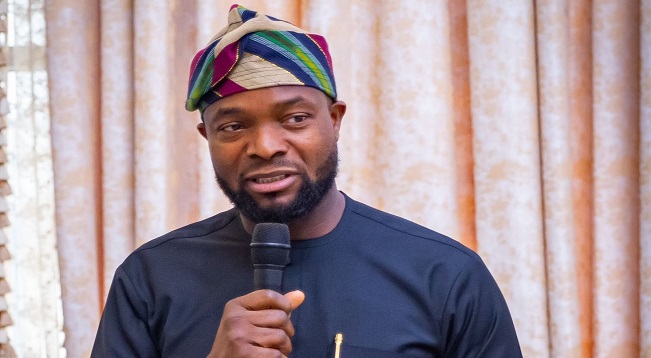
The Federal Government has unveiled a N12bn Digital Economy Research Fund aimed at strengthening evidence-based policymaking and supporting Nigeria’s long-term digital transformation agenda.

Dr. Bosun Tijani, the Minister of Communications, Innovation, and Digital Economy, disclosed this in a statement issued on Saturday, announcing the launch of an expression of interest for the National Digital Economy Research Clusters.
“Today my heart is filled with deep joy as we announce the Expression of Interest for the National Digital Economy Research Clusters, a N12bn research funding scheme designed to place ideas, evidence, and research at the centre of Nigeria’s digital transformation,” the minister said.
According to him, the programme is being funded under Project BRIDGE, a federal initiative to deploy 90,000 kilometres of fibre optic backbone infrastructure across Nigeria to expand connectivity and enable a modern digital economy.
“This programme is being funded under Project BRIDGE, our initiative to deploy 90,000km of fibre optic backbone infrastructure across Nigeria to expand connectivity and enable a modern digital economy,” he said.
The minister noted that as the government expands digital infrastructure nationwide, research-backed approaches are required to ensure inclusive benefits.
“As we deepen our digital infrastructure coverage, thoughtful, evidence-based approaches are required to be deployed in society to ensure everyone benefits from this significant investment,” he added.
He observed that digital policy decisions are often shaped by market forces and political cycles rather than rigorous research and long-term thinking. “Too often, the ideas shaping digital policy come predominantly from markets and political cycles rather than from research, evidence, and long-term thinking,” the statement said.
Under the initiative, six national research clusters will be established across key pillars of the digital economy, including connectivity and meaningful use; digital public infrastructure and government services; digital skills and human capital development; digital economy and jobs; online trust and consumer protection; as well as artificial intelligence and emerging technologies.
The clusters will be led by up to 36 professors drawn from Nigerian universities, working alongside international academic partners, with more than 200 researchers, including postdoctoral fellows and PhD candidates, expected to generate policy-relevant research.
“For me, the goal goes beyond research output. We are looking for better policies that lead to stronger institutions and a more prosperous society,” the minister said.
He described the initiative as one of the ministry’s most meaningful programmes, noting that it is intended to produce ideas that will outlast any single administration. “Because nations that lead the future are not simply those that deploy infrastructure; they are the ones that cultivate ideas,” he said.
The ministry invited academic and research institutions interested in participating to review the Terms of Reference released alongside the EOI and submit proposals to lead or collaborate within the national research clusters.
It added that a press conference would be held in the coming week to provide further details and engagement opportunities for vice-chancellors and research institutions across the country.
Nigerian Communications Commission (NCC) has directed Mobile Network Operators (MNOs) to compensate subscribers experiencing poor network service across the country.

The Commission said the directive was part of efforts to ensure that consumers are not made to bear the burden of service failures when operators fall short of required standards.
Under the new regulation, telecom operators will be required to provide compensation directly to affected subscribers for breaches of Quality of Service (QoS) Key Performance Indicators (KPIs).
According to the NCC, the compensation will be issued in the form of airtime credits, calculated based on subscribers’ average usage and their presence within specific Local Government Areas where service disruptions occur.
The Commission emphasised that telecommunications services remain critical to economic activities, social interactions, and access to digital opportunities, noting that poor service delivery negatively impacts productivity and public confidence.
It explained that while regulatory fines have traditionally been used to sanction operators, the new approach prioritises consumer protection and strengthens accountability within the telecommunications sector.
The NCC added that the measure would complement existing efforts to monitor service quality and enforce compliance with performance standards.
In addition, the Commission directed tower companies responsible for telecom infrastructure, such as network masts, to reinvest fines imposed on them into infrastructure upgrades with measurable outcomes.
The regulator reiterated its commitment to ensuring that operators invest in network resilience, expand capacity, and improve infrastructure to meet growing demand.
It also pledged to continue deploying regulatory mechanisms that promote fairness, transparency, and accountability across the industry, while ensuring that subscribers receive the quality of service they deserve.

EFCC Waxes Worriedly over $160Bn Crypto Crime Losses

Dangote Refinery Debunks Speculations on IPO

FG Awards N50m Each to 45 Students under S-VCG

NGX REGCO Fines 5 Firms N291m for Market Manipulation

FG Launches Cross-Border Digital Payments Report

Spotify’s Loud & Clear Report Reveals Over ₦60Bn Revenue for Nigerian Artists in 2025

Madonna University Taps Tech Guru Adote for Strategic Board Role

China Threatens to Shut Nigeria’s Satellite Over $11.44m Unpaid Debt

Jumia Tech Week 2026 Begins with Tech Deals on Smartphones, Electronics, and Everyday Technology

FCCPC Bans Lagos ‘No Refund’ Policy, Vows Fines and Shutdowns for Traders



 General News3 days ago
Anti Graft Agencies Raise Alarm over Rising Crypto-Linked Financial Crimes

 E-Business3 days ago
NITDA Takes Over National Digital Architecture System

 E-Financial1 day ago
CBN bars large‑ticket loan defaulters from banking services in tough new crackdown

 General News1 day ago
ARN Rejects Medical Bill over Attempt to ‘Scrap’ Profession

 Telecom1 day ago
NIGCOMSAT Supports Startups Growth with the Launch of Accelerator 3.0

 News1 day ago
Meningitis Kills a Quarter Million People a Year -Study

 Telecom1 day ago
FG Unveils Digital Economy Research Fund Scheme

 News1 day ago
Stakeholder says AI is Crucial to Nigerian Data Centres Amid Persistent Grid Collapse