

Telecom
Meta and Africa No Filter Announce Winners of the Future Africa Grant for Extended Reality Creators

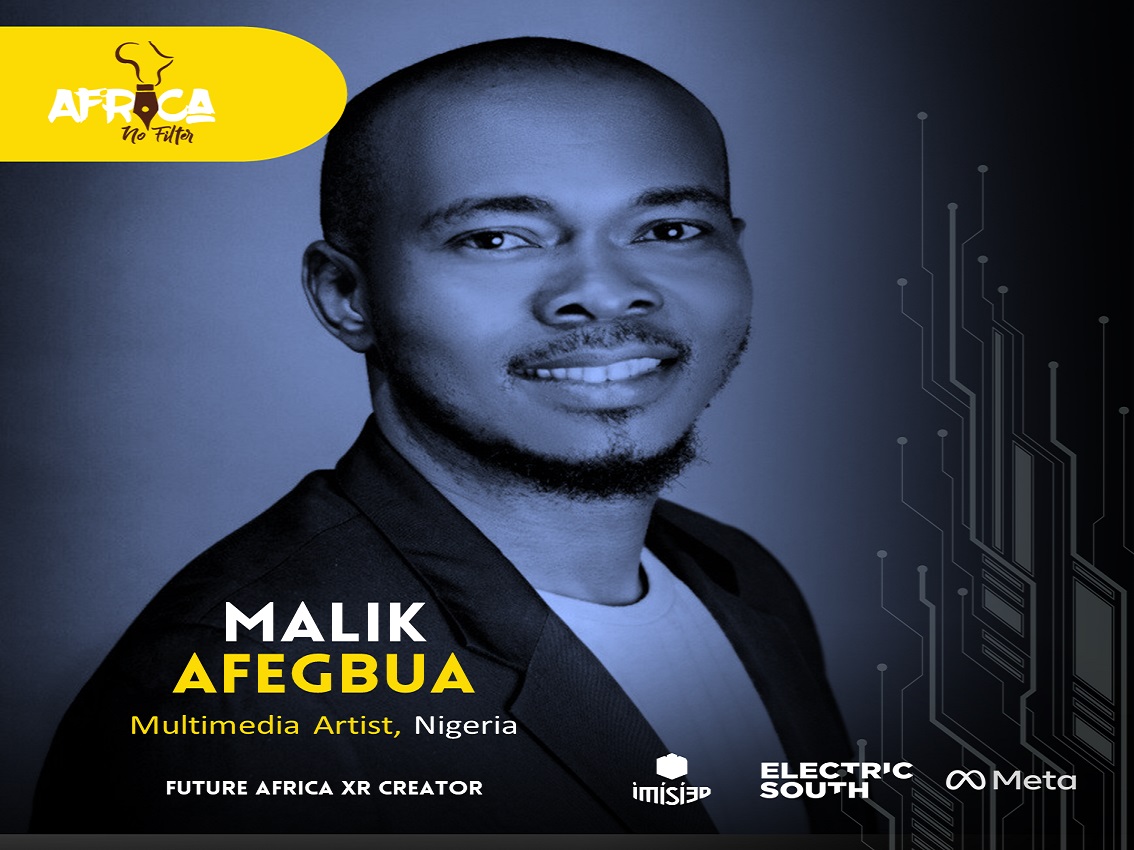
Africa No Filter and Meta are excited to announce today the six finalists of the ‘Future Africa: Telling Stories, Building Worlds’ programme – focused on harnessing and investing in the next generation of Extended Reality (XR) creators in Africa.

The winners, selected from Mozambique, South Africa, Nigeria, Mauritius, Cameroon, and Kenya, will incorporate the creative uses of music, multimedia installations, films and sculpture to explore projects around spirituality, heritage, the cosmos, imagination and memory and masculinity into their extended realities projects – all with a focus on telling compelling African stories that are contemporary, narrative-shifting, and immersive.
The six participating storytellers are:
- Pierre-Christophe Gam, Cameroon: A multimedia artist who is working on a hybrid art installation that fuses VR, film, photography, and mixed-media sculpture to imagine the future of Africa from the perspective of an African family living in 2070.
- Xabiso Vili, South Africa: A writer, performer and new media artist, Vili’s visual album is a speculative fiction piece that explores reconciliation and healing. Vili hopes to turn toxic masculinity into compassionate masculinity.
- Nirma Madhoo, Mauritius: A fashion filmmaker, XR creator and Ph.D. candidate, her work explores African cultures as technologies, which she illustrates through ancient practices like cultural astronomy.
- Michelle Angawa, Kenya: A film editor XR creator, this creation centres around a short tragicomedy that depicts a day-in-the-life of a Nairobian boda boda rider, exploring desire and the complexities of Nairobian life.
- Malik Afegbua, Nigeria: A multimedia artist who is focused on curating a virtual heritage experience of the Kofar-Mata dye pit, a cultural and historical site in Kano, Nigeria.
- Lara Sousa, Mozambique: A director and producer, this creation uses the journey of Lemanjá, the Afro-Brazilian goddess of wisdom, to explore the ocean as a sacred site of spirituality.
As part of the ‘Future Africa: Telling Stories, Building Worlds’ programme, each creator will be supported with funding of up to $30,000 and also participate in XR-industry events to improve their creativity and drive interest in their projects. They will also access mentorship from Electric South and Imisi3D.
Jessica Hagan, Arts and Culture Program Lead at ANF, said, “It’s reassuring to see the amount of incredible XR talent on the African continent.
“The creativity and innovation we encountered in the selection process has been very exciting.
“It shows that Africa is also on the pulse of global innovation and tech trends that are redefining how stories are told and experienced. XR content creation is costly, but African creators are not falling behind.”
Sherry Dzinoreva, Meta’s Public Policy Programs Director, Africa, Middle East, and Turkey, said: “This specially curated program is an opportunity to support African storytellers who are leveraging the power of the next evolution of social technology, whilst also shining a spotlight on the amazing, creative, and diverse talent pool we have here on the continent .
“We understand the power of Extended Reality and how it can be used to tell stories that shift narratives about and within the continent – and we’re excited to see these visions come to life.”


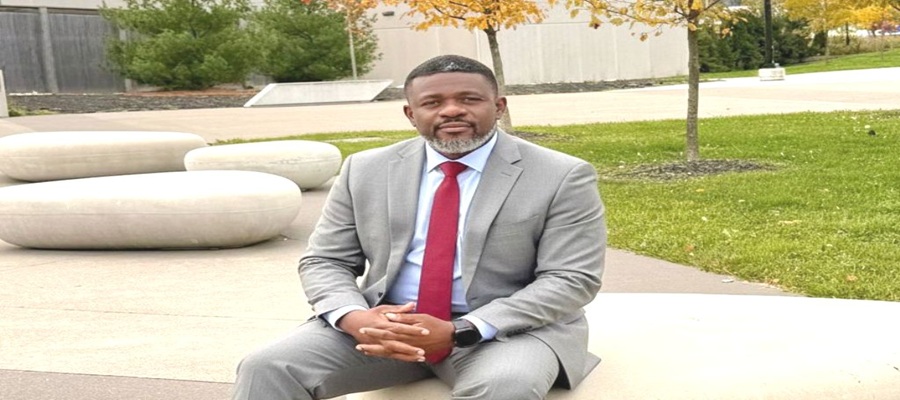
In the rapidly evolving landscape of African technology, few figures bridge the gap between high-level research and grassroots digital execution as effectively as Nnaemeka Ani.

Nnaemeka Ani
As the Founder of MGX Research Center and the visionary behind MexyGabriel, Ani has emerged as a leading protagonist in the narrative of Nigeria’s technological self-reliance.
The Visionary: Founding MGX Research
At the heart of Ani’s philosophy is MGX Research, a center dedicated to “first-principles thinking.” Under his leadership, the center has become a beacon for data-driven innovation, moving beyond the “hype” of the tech world to focus on persistent, localized solutions.
Through MGX Research Center, he is building a multidisciplinary ecosystem that cuts across artificial intelligence, data science, cybersecurity, smart cities, digital identity, e-governance, EdTech, HealthTech, robotics, and automation
Ani’s mantra – “Africa’s rise begins with its own innovation” – is not just a slogan; it is a call to arms for African builders to stop seeking international validation and start authoring their own digital destiny.
As Founder and CEO of MexyGabriel Tech Company, Nnaemeka has driven multiple large-scale technology projects across Nigeria, focusing on digital infrastructure, enterprise solutions, identity and payment platforms, and youth-centered innovation programs. MGX Research Center functions as the research and development arm of this broader ecosystem, providing the thinking laboratory, prototypes, and strategic insights that inform products, policies, and investment decisions.
Nnaemeka is passionate about youth empowerment, innovation, and Africa’s digital future. His work through MGX Research Center aims to position Nigeria not just as a consumer of technology but as a creator of solutions, producing world-class research, thought leadership, and practical tools that can be deployed across states, universities, and private organizations.
He frequently collaborates with universities, government ministries, tech hubs, and global partners, championing a model where research is not locked up in theory but translated into deployable systems, smart policies, and scalable ventures.
Ani has demonstrated a unique ability to turn complex code into commercial and social value. His work has focused on:
- Infrastructure for Good: Developing platforms that bridge the divide between urban tech hubs and rural communities.
- Sovereign Technology: Championing the idea that African data should be managed by African-built systems.
The Public Servant: Digitizing Enugu State
Ani’s influence extends into the corridors of power. Serving as the Special Adviser to the Enugu State Governor on ICT, he has been instrumental in transforming the state into a burgeoning digital ecosystem.
His work in Enugu serves as a blueprint for “Governance-Tech Synergy,” proving that when political will meets technical expertise, public service delivery can be revolutionized.
“We are no longer just ’emerging’; we are competing. Africa will rise by code, by courage, and by us,” said Nnaemeka Ani.
Quick Facts: Nnaemeka Ani
Category | Detail |
Current Roles | Founder, MGX Research; Founder, MexyGabriel; SA on ICT to Enugu State Governor. |
Core Philosophy | “First-Principles Thinking” – Breaking problems down to their core truths. |
Key Advocacy | Digital Sovereignty, Sovereign AI, and localized STEM education. |
Notable Mantra | “By Code and By Courage.” |
Why He Matters in 2026
As Nigeria enters a transformative year marked by the January 1, 2026 Tax Reforms and the push toward 70% Broadband Penetration, Ani represents the “New Guard” of leadership. He is one of the few voices consistently advocating for the Tripod Method, balancing technology, local policing, and traditional authority, to ensure that Nigeria’s digital growth is matched by national security.
Nnaemeka Ani is not just as a “tech guy,” but as a Strategic Reformer. He is a “Leader to Watch” because he understands that for technology to thrive in Nigeria, it must be supported by sound policy and cultural relevance.

Google has unveiled a new feature that allows Gmail users to change their existing email addresses without losing data or access to services, marking a major shift in the company’s long-standing policy.

Gmail
According to an update on Google’s account help page, the new option enables account holders to replace their current @gmail.com address with a new one while retaining all associated data, including emails, photos, and integrations with services such as Google Drive, Maps, and YouTube.
The guidance, however, was first spotted on the Hindi version of Google’s support page, suggesting that the rollout may begin in India or Hindi-speaking markets before expanding globally.
The English-language support page still carries the older advisory that Gmail addresses “usually cannot be changed.”
Google explained that under the new policy, users who update their Gmail address will automatically keep their original address as an alias.
This means emails sent to the old address will continue to arrive in the inbox, and the original address will remain valid for signing in to Google services.
Previously, users seeking a new Gmail address had to create an entirely new account and manually transfer their data, a process that often disrupted third-party app integrations. The new feature eliminates that inconvenience, ensuring continuity for users.
The company further clarified that while users can reuse their old Gmail address at any time, accounts that change their address will face certain restrictions.
These include a 12-month waiting period before another new Gmail address can be created, and the inability to delete the newly chosen address once it has been set.
Google assured users that all existing data would remain intact after an address update, including stored photos, messages, and emails.
The gradual rollout of the feature indicates that full global adoption is expected in the coming months, a move likely to be welcomed by millions of users who have long requested the ability to update their Gmail identities without starting afresh.

Nigerian Communications Commission (NCC) has said that Nigeria’s internet usage reached a record 1.24 million terabytes in November 2025.

According to the latest data from the NCC, the figure rose modestly from 1.235 million terabytes in October, reflecting steady growth in digital activity across the country.
Broadband penetration in Nigeria crossed the halfway mark in November 2025, reaching 50.58 per cent, up from 45.61 per cent in January, the telecoms regulator reported.
The figure, however, falls short of the 70 per cent coverage target outlined in the National Broadband Plan 2020–2025, which expires this month.
The country had roughly 109 million broadband subscriptions by November. Growth has been uneven, hindered by infrastructure and regulatory constraints, including frequent fibre-optic vandalism that triggers 30 to 43 network cuts daily, high right-of-way fees, and declining subscriber numbers earlier in the year.
Expansion of mobile networks, particularly 3G and 4G services, alongside limited 5G rollouts in urban centres, affordable smartphones, and competitive data plans, has driven uptake.
Investments in the National Communications Backbone and private-sector initiatives have also improved access, especially in underserved areas.
While Nigeria is gradually improving digital inclusion, achieving the original broadband plan remains challenging due to high infrastructure costs, coverage limitations, and deployment hurdles.
The NCC maintains that continued investment in mobile networks and broadband infrastructure will sustain gradual growth in the sector.
Commenting on the development, some Nigerian analysts attributed the surge to the broader mobile and broadband adoption and the growing appetite for streaming, online learning and other digital services.
According to the analysts, the figures suggest that internet connectivity is no longer a luxury but a necessity for both business and leisure, underscoring the slow but steady expansion of Nigeria’s digital economy.

Nigeria’s N58.18trn Budget and Rising Cost of Deficit Governance

Nnaemeka Ani – The Architect of ‘Code and Courage’

InsomniaQ Spotlights African Creativity in Lagos

T2 Backs Youth Excellence as NCBC Wins Bosun Tijani Foundation Basketball Tournament

Google Finally Allows Users to Change Gmail Address, Keeps Data and Services Intact

Nigeria Records Highest Weekly Cyberattacks in Africa — Report

Cyber Tsunami Hits Nigeria as Breaches Surge 1,047%, esentry Q3 Report Reveals

Financial Sector Faced AI, Blockchain and Organised Crime Threats in 2025 – Report

Minister Claims Bandits Exploit Poor Network, Bounce Calls Off Multiple Towers

Report Reveals Half of 2025’s Compromised Passwords were Already Leaked




 News3 days ago
How Moniepoint’s Founders, Tosin Eniolorunda and Felix Ike are Redefining African Tech and Finance
 Telecom1 day ago
Google Finally Allows Users to Change Gmail Address, Keeps Data and Services Intact
 General News1 day ago
T2 Backs Youth Excellence as NCBC Wins Bosun Tijani Foundation Basketball Tournament
 News1 day ago
InsomniaQ Spotlights African Creativity in Lagos
 E-Financial5 hours ago
Nigeria’s N58.18trn Budget and Rising Cost of Deficit Governance
 Telecom5 hours ago
Nnaemeka Ani – The Architect of ‘Code and Courage’