

Telecom
Mobile IoT Networks Now Available from All Leading Operators Worldwide

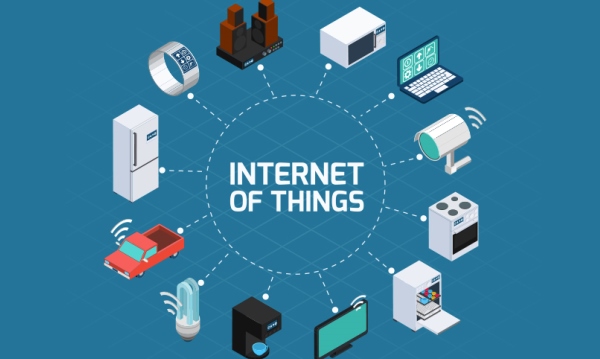
The GSMA has announced that Mobile IoT or Low Power Wide Area (LPWA) networks are now globally available in licensed spectrum in 50 markets1 around the world following 94 launches by 50 different mobile operators across both LTE-M and NB-IoT.
Coverage is now expected to reach approximately 93% of the world’s largest IoT markets by Q2 20192. According to GSMA Intelligence forecasts, by 2025 there will be 3.5 billion cellular IoT connections, including 1.9 billion licensed LPWA connections3.
“The speed with which these networks have been standardized and deployed around the world is staggering. They are now available in every major IoT market encouraging the development of innovative new products and services across a wide range of sectors.
“The market clearly sees the benefit of solutions in licensed spectrum that offer flexibility, adaptability, security and lower cost. They are also future proofed for the 5G era and will support and co-exist with other 5G technologies,” commented Alex Sinclair, Chief Technology Officer, GSMA.
To date there have been 69 NB-IoT launches in 46 markets and 25 launches of LTE-M networks in 19 markets. This is supported by a network of 47 Open Labs worldwide enabling organisations to test their products and services prior to launch:
The GSMA Mobile IoT Innovators community has also reached 2,100 developers from more than 1,300 companies around the world. The official community is an ecosystem that unites operators, vendors, manufacturers and developers around LPWA technologies in licensed spectrum and supports the development and creation of innovative new products and services that utilize these technologies.
Backed by over 100 mobile operators and vendors, the GSMA’s Mobile IoT Initiative4 has helped to align the mobile industry behind licensed, standardized and complementary Low Power, Wide Area (LPWA) technologies called LTE-M and NB-IoT.
These Mobile IoT networks support mass-market IoT applications such as smart meters, environmental sensors and consumer electronics, that are low cost, use low data rates, require long battery lives and often operate in remote locations.
They are designed to support mass-market IoT applications across a wide variety of applications such as industrial asset tracking, safety monitoring, water and gas metering, smart grids, city parking, vending machines and city lighting.
The GSMA also recently launched the GSMA APAC IoT Partnership programme to help mobile operators and partners in the Asia-Pacific region to accelerate the adoption of IoT by facilitating the sharing of innovation and ideas,


MTN Group delivered impressive financial and operational achievements for 2025, boosted by strong performances in MTN Nigeria and MTN Ghana, as well as solid earnings from MTN South Africa.

The three core markets of Africa’s largest mobile provider enhanced profitability, free cash flow, and shareholder dividends by 45%.
IT Web Africa reported that Ralph Mupita, group CEO and president, MTN, highlighted that the telecoms giant’s robust commercial momentum across key markets capped the final year of its Ambition 2025 strategy, while laying the foundation for a new long-term growth phase under Ambition 2030.
“The Group’s overall performance in 2025 was excellent. In the final year of our Ambition 2025 strategy, we were proud to have exceeded the 300 million customers milestone,” he said.
MTN revealed that it now serves more than 307 million voice subscribers, 172 million data users, and 70 million Mobile Money customers across 16 African markets, reflecting the continent’s growing demand for digital connectivity and financial services.
The operator credited its results to disciplined commercial execution and sustained investment in network infrastructure, with R38 billion spent during the year to expand capacity, improve coverage and enhance service quality.
The group reported that data traffic surged 27%, while average monthly data consumption per user climbed to 12.5GB, up from 10.8GB a year earlier, reflecting Africa’s fast-growing appetite for digital services.
Financially, the performance was driven by MTN’s largest markets.
In constant currency terms, MTN Nigeria grew service revenue by 54.9%, while MTN Ghana increased service revenue by 35.9%.
Meanwhile, MTN South Africa recorded 2% growth, demonstrating operational resilience in one of the continent’s most mature and competitive telecom markets.
MTN Group service revenue rose nearly a quarter to R218 billion, while earnings before interest, tax, depreciation and amortisation climbed to R98.5 billion, supported by R3.6 billion in expense efficiencies.
Mupita stressed that the strong results translated into robust free cash flow and improved return generation, allowing the board to declare a dividend of 500 cents per share, up from 345 cents the previous year.
“This comfortably exceeds the minimum dividend of 370 cents we had previously guided,” he said.
The group also announced a R6 billion share buyback programme as part of an enhanced shareholder remuneration framework aimed at delivering stronger long-term returns.
Alongside its results, MTN unveiled Ambition 2030, a strategy centred on three platforms, connectivity, fintech and digital infrastructure, as it seeks to capture the next wave of growth driven by data adoption and financial inclusion across Africa.
“We are hugely excited about Africa’s potential. We are well positioned to leverage our scale, footprint and brand leadership to capture the significant structural growth opportunities identified,” said Mupita.
Source: IT Web Africa

Association of Telephone, Cable TV, and Internet Subscribers of Nigeria (ATCIS) non-profit consumer rights group dedicated to protecting the rights, interests, and welfare of telecommunications subscribers, has urged the Federal Government to ensure safety of telecom consumers’ data hosted by government agencies.

Dr Sina Bilesanmi, president of the body stated this World Consumers Day in Lagos.
He alleged that said subscribers” data are being jeopardised by some of its agencies.
Bilesanmi urged government to ensure that every subscriber in Nigeria can use digital service without fear of physical, financial, or data-related harm.
The ACTIS president said safety in the telecommunication sector extends beyond physical hardware to include data privacy and protection from cyber fraud.
“We call for stricter enforcement by the Standard organization of Nigeria (SON) to eliminate substandard mobile devices and Cable Tv equipment that pose fire or electric hazards.
“We also want safe services from telecoms that are transparent – free from hidden charges and misleading advertisements”, he said.
He urged subscribers to utilize platforms like ACTIS as well as NCC and even FCCPC web portal when they encounter service failures.
He also tasked FG on hosting Nigerian Data Privacy in the country.
He said: “We ask for more robust surveillance and swifter penalties for entities that violate consumer safety standards. We admonish the subscribers to be aware and speak out, a vigilant consumer is a protected consumer.”

Telecom companies should invest in sophisticated anti-fraud tools that employ machine learning and Artificial Intelligence (AI) to enhance detection and response times while conducting regular audits to ensure that systems remain up-to date and effective.

That’s according to Pricewaterhouse Coopers (PwC’s) latest paper on AI fraud in the Telecom sector.
The paper notes the dual role of Artificial Intelligence as both a threat and a shield highlights the need for Nigerian telecom operators to adopt AI deliberately and strategically.
It calls for a deeper understanding of how technological disruption is transforming fraud risks today and how those risks may evolve in the.
The professional services firm noted that the rapid adoption of AI is reshaping the fraud landscape in the telecommunications sector, enabling criminals to automate scams, impersonate victims through deepfake technologies, and scale fraudulent schemes with unprecedented speed.
The 16-page report, titled ‘AI’s Dual Role in Telecom Fraud’, noted that while AI is helping fraudsters launch more sophisticated attacks, the same technology can also serve as a powerful defensive tool for telecom operators and financial institutions.
“AI has tremendous potential to drive positive change across sectors, but it also enables fraudsters to create and disseminate scams quickly and at scale,” PwC said, warning that the expanding digital ecosystem linking telecom networks and financial services is creating new vulnerabilities.
Fraud has long posed a significant challenge for telecom operators worldwide, resulting in financial losses, reputational damage, and regulatory scrutiny.
Globally, telecom fraud was estimated at approximately $38.95 bn in 2023, highlighting the scale of the problem. In Nigeria, the sector has also faced rising risks.
According to the Nigerian Communications Commission (NCC), citizens lost approximately N12.5 bn to telecom-related financial crimes between 2019 and January 2023.
PwC said the growing integration between telecom networks and financial services, such as mobile money platforms and digital banking, is further complicating the fraud landscape.
“When fraud occurs across interconnected platforms, both telecommunications and financial services providers face regulatory scrutiny and erosion of customer trust,” the report said.
The firm added that telecom operators are increasingly becoming critical infrastructure for digital financial services, exposing them to greater risk as criminals target the ecosystem.
Despite these risks, PwC said telecom companies have a unique advantage in the fight against fraud due to the vast amount of network and customer data they possess.
By deploying advanced AI systems, telcos can detect suspicious activity patterns, flag unusual call behaviour, and identify fraudulent transactions in real time.
For example, AI-driven pattern recognition can analyse large datasets to detect irregular call durations, unusual call frequencies, or activity occurring at odd hours, indicators that may signal fraudulent activity.
Machine learning models trained on historical fraud cases can also help identify subtle warning signs that traditional detection systems might miss.
PwC noted that some telecom operators are already deploying AI-powered spam detection tools capable of analysing hundreds of behavioural parameters to determine whether a message is fraudulent.
Real-time data analysis, the firm added, can allow companies to block fraudulent activities before they cause major financial damage.
Beyond fraud detection, AI can also help organisations respond more effectively to incidents.
Using natural language processing, generative AI systems can convert technical security data into simplified reports tailored for regulators, executives, and compliance officers.
However, PwC said technology alone will not be enough to curb the growing threat.
The firm stressed that stronger collaboration between telecom operators, financial institutions, and regulators is essential to prevent fraud from spreading across digital platforms.
Telecom companies, it said, possess sophisticated tools capable of monitoring call patterns and network behaviour, which could help banks detect suspicious activities such as SIM swap attempts.
At the same time, banks have developed advanced fraud detection algorithms that could enhance telecom operators’ ability to identify suspicious activity across their networks.
“By sharing insights and real-time threat intelligence, both sectors can strengthen their individual and collective defences,” PwC said.
The firm cited international examples where such collaboration has improved fraud detection and response times, including initiatives in the United Kingdom, Singapore, Australia, and the Philippines. PwC also emphasised the importance of closer engagement with regulators such as the Central Bank of Nigeria and the Nigerian Communications Commission to ensure clear and responsive regulatory frameworks that support innovation while protecting consumers.

SEC Shuts Over 400 Fraudulent Investment Schemes, Arrests Operators

NigComSat-1R, Nigeria’s Only Satellite to Expire this Year

Nigeria, Ghana Trigger Stunning 45 Percent Surge in MTN Dividends

Banks, Offices to Close for Thursday and Friday for Eid-el-Fitr

ATCIS Urges FG to Ensure Safety of Consumers Data

Kaspersky Discovers New Phishing Campaign Exploiting Google Tasks Notifications to Steal Corporate Credentials

esentry 2025 Report Shows Healthcare, Financial Services and Telecoms as Staging Grounds for Increased Cyberattacks in Africa

AfDB, UNDP Launch $10Bn AI Initiative for Africa

Mutual Benefits Assurance Settles ₦5.9bn Claims in January 2026

MultiChoice Suspends Yearly DStv Price Hike as Canal+ Pushes Growth




 E-Financial2 days ago
CBN Rolls Out New Rules for Safer Instant Payments, More Customer Control

 News2 days ago
NIMMME Inaugurates Engr. Michael Orekyeh as 13th National Chairman in Abuja

 Telecom2 days ago
MTN Nigeria Races Ahead in Fibre Broadband Market

 E-Financial2 days ago
CBN Tightens BVN Rules to Curb Fraudulent Banking Transactions

 E-Financial2 days ago
Nova Bank Appoints Jude Anele as Managing Director/CEO

 E-Business2 days ago
Tech Expert Unveils BAT-BOT AI App to Curb Fake News ahead of 2027 Elections

 Broadcasting1 day ago
Spotify’s Loud & Clear Report Reveals Over ₦60Bn Revenue for Nigerian Artists in 2025

 Telecom1 day ago
PwC Warns Nigeria Telcos of AI Fraud Risks