

Broadcasting
MRA Inducts Voice of Nigeria into FOI ‘Hall of Shame’

Media Rights Agenda (MRA) has named the Voice of Nigeria (VON) into its Freedom of Information (FOI) Hall of Shame, accusing it of failing to promote the FOI Act and ensuring its effective implementation as a public service media organisation as well as non-compliance with its obligations under the Act as a public institution.
In a statement in Lagos, Mr. Ayode Longe, MRA’s director of Programmes, noted that the Voice of Nigeria, as a national radio station established to inform the world on national issues and developments, should ordinarily be at the forefront of promoting the FOI Act and seeking compliance with the provisions of the Law by other public institutions as this would evidently enhance its performance of its statutory functions as well as enable it discharge its duties with greater ease and effectiveness.
He, however, expressed disappointment that the station not only failed to promote the Act or advocate compliance by other public institutions, but has itself refused to comply with its obligations under the Act.
The Voice of Nigeria is the second Federal Government-owned media institution to be inducted into the FOI Hall of Shame since the inception of the programme in 2017, following the conferment of the dubious award on the Nigerian Television Authority (NTA) on September 11, 2017 for similarly failing to promote the Act, ensure its effective implementation and for its non-compliance with its obligations under the Act as a public institution.
The objectives of the Voice of Nigeria, as provided in the Act establishing it, are to project Nigeria’s positive image externally, to inform the world on national and African issues and developments, to change the perspectives of the world on Nigeria and the black world, to unite Africa and the black world and to engender positive contribution of Africans in the Diaspora to the growth and development of the continent.
Mr. Longe said there was no doubt that the institution’s lack of transparency and accountability had eroded public trust and confidence in it, which would affect its credibility and ultimately, its ability to deliver on its statutory mandate.
According to him, “being a national radio network broadcasting in seven languages, including English, Yoruba, Hausa, Igbo, French, Arabic, Kiswahili and Fulfulde, the Voice of Nigeria is uniquely positioned to overcome the language limitation that most other media organizations have and be able to promote the Act among Nigerians of different linguistic backgrounds. Instead, this national broadcaster has itself been consistently in blatant disregard of its statutory duties and obligations as a public institution covered by the Act, thereby undermining its implementation and effectiveness.”
Mr. Longe stressed that “all public institutions established by Law, including the Voice of Nigeria, are expected to proactively disclose certain types of information listed in Section 2(3) (a) to (f) of the FOI Act, by various means including print, electronic and online sources. But the Voice of Nigeria has not fulfilled its proactive disclosure obligations under Section 2 of the Act as it has not published the itemized categories of information either on its website or anywhere else, as it is required to do by the FOI Act.”
He described the failure of the Voice of Nigeria to designate an official of the institution to whom requests for information by members of the public should be sent as well as its failure to proactively publish the title and address of such an officer as an inexcusable breach of the provisions of the FOI Act, particularly in the light of repeated demands by the Office of the Attorney-General of the Federation issued to all public institutions to appoint such officials and send their details to the Federal Ministry of Justice, which is the coordinating institution for matters related to the implementation of the Act.
Mr. Longe also noted that although Section 13 of the FOI Act requires all public institutions to ensure the provision of appropriate training for their officials on the public’s right to access information and records held by the government or public institutions as well as to ensure the effective implementation of the Act, the Voice of Nigeria had not organized any such training for its officials since the Act was passed into Law.
He observed that over the last seven years, the Voice of Nigeria has consistently failed to comply with its obligation under Section 29 of the FOI Act, which requires each public institution to submit to the Attorney-General of the Federation, on or before February 1 of each year, a report covering the preceding fiscal year of its implementation of the Act. He stressed that the Voice of Nigeria had not submitted any such report for any year since 2011.
Mr. Longe said: “Such egregious violation of the clear provisions of the Law by a public institution which should know better is certainly unacceptable. The relevant authorities of the Federal Government must make clear that they do not condone such acts of impunity and take urgent steps to rein in public institutions such as the Voice of Nigeria, which disdainfully disregard the Laws of the Land.”
Launched on July 3, 2017, the FOI Hall of Shame spotlights on a weekly basis public officials or institutions that are undermining the effectiveness of the FOI Act through their actions, inactions, utterances and decisions.


Broadcasting
Dr. Cairo Ojougboh Foundation Bolsters Nigeria’s Education Drive with ₦2.7m Student Support

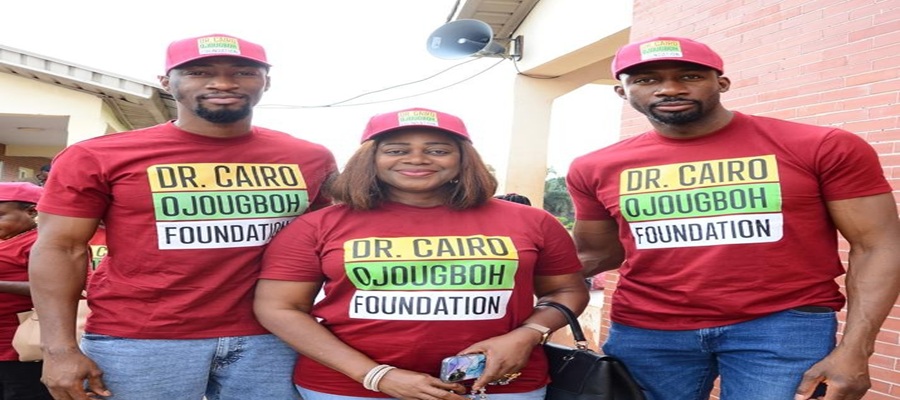
Dr. Cairo Ojougboh Foundation has reinforced government’s educational development efforts in Nigeria through a targeted initiative honouring the late medical doctor and House of Representatives member, Dr. Cairo Ojougboh.

L-R: Son of the late Dr, Cairo Ojougboh, Mr. Nkem Ojougboh; Chairperson, Dr. Cairo Ojougboh Foundation, Mrs. Bose Ojougboh and another son, Mr. Orieka Ojougboh, during the event in Agbor, Delta State recently.
The foundation recently hosted a programme themed “Your Future, Your Choice” at St. Columba’s Grammar School in Agbor, headquarters of Ika South Local Government Area, Delta State.
It presented a cheque of ₦2,700,000 to cover examination fees for students preparing for West African Examinations Council (WAEC), National Examinations Council (NECO), and Junior Secondary School (JSS) 3 exams.
Academic excellence received further boosts with cash rewards for top students across the school’s nine academic arms, alongside distributions of notebooks and writing materials to enhance learning.
Chairperson Mrs. Bose Ojougboh, joined by her sons Mr. Nkem and Mr. Orieka Ojougboh, urged students to view challenges as stepping stones, embrace discipline, consistency, and focus, and make intentional choices shaping their futures.
“The school that moulded Dr. Cairo’s values deserves our support,” she said, highlighting the foundation’s commitment to inspiring hard work and personal growth.
Old Boys of St. Columba’s Grammar School, led by Elder Ndudi Agholor, attended in force, sharing nostalgic reflections and praising the school’s sustained high standards under current leadership.
School Principal Rev. Fr. Joseph Ugboh and Ika South LGA Chairman Engr. Jerry Ehiwarior lauded the initiative as “commendable and impactful,” calling for its continuation to preserve Dr. Ojougboh’s legacy of discipline, excellence, and service.
They noted the support had motivated students to pursue their goals with renewed determination, ending the event on a hopeful note.

In a landmark educational innovation, New Horizons Nigeria has become the first institution to integrate the Chinese (Mandarin) language into its ICT curricular as an elective, thereby positioning Nigerian students for relevance in the rapidly changing world order.

Mr. Tim Akano, Managing Director and CEO of New Horizons Systems Solutions Limited
New Horizons Nigeria is a leading ICT training and solutions provider committed to provide individuals and institutions with future-ready skills. Through innovative program, global partnerships, and strategic foresight, the organization continues to redefine education, workforce development, and global competitiveness.
With over 80% of global consumer products manufactured in China and China’s growing dominance in global supply chains and labour markets, New Horizons Nigeria recognizes the urgent need for the current generation to understand, speak, and engage with the Chinese language and culture. As global economic power dynamics evolve, the labour market is increasingly tilting towards China, making Mandarin proficiency a critical competitive advantage.
According to Mr. Tim Akano, Managing Director and CEO of New Horizons Systems Solutions Limited, Nigeria, the program represents far more than a language course.
He asserted that very soon, the global labour market is likely to increasingly reflect China’s influence rather than the predominantly western orientation it currently exhibits. Language will be a major differentiator and the first Chinese-speaking technology experts in Nigeria will have a significant advantage, especially in integration into Chinese companies operating locally and globally.
Therefore, New Horizons Nigeria has officially launched a Mandarin Scholarship Program with China Advancement Opportunity, selecting 100 outstanding students from five prominent Nigerian secondary schools. This initiative marks a major milestone in Nigeria–China educational cooperation and reflects a forward-thinking response to shifting global economic realities.
Furthermore, the scholarship program has commenced with an intensive three-month online Mandarin training and at the end of the program, the top-performing students will be selected strictly on merit. 20 outstanding students will receive an additional scholarship valued at $2,500 per students to participate in a one-year pre-degree Mandarin and cultural immersion program in China. From this group, the best candidates will progress to fully funded admission scholarships into top universities in China. This initiative is designed not only to build language proficiency but also to enhance global competence, international exposure, and cultural intelligence among Nigerian students.
Also, to maintain international academic standards, participating schools are required to comply with strict guidelines. They will be obligated to join the online classes ten minutes earlier, they must have a minimum of 85% attendance throughout the program, and must ensure they have a stable internet connectivity, reliable power supply and a conducive learning environment.
Therefore, School owners and administrators have been formally congratulated and strongly encouraged to nominate their most disciplined, and committed students, as advancement to the China program will be strictly merit-based.
However, apart from students, internation business men are equally encouraged to attend New Horizon’s Mandarin executive lessons which will equip them with basic Chinese language to enhance their business communications.
Additionally, while the pilot phase begins with selected secondary schools which includes Startrite School, Lightway School, British Nigerian Academy School, Honeyland Schools and Great Heights School, the Mandarin program will be available as an elective ICT course at all New Horizons retail centers.
This is done to extend access to students and learners beyond its partner schools and within one year, committed learners will be able to communicate effectively in Mandarin, which will open doors to global employment, trade, and cultural exchange.
In conclusion, a Mandarin Cultural Fiesta will be hosted, bringing together educators, students, institutional partners, and distinguished guests from China and Nigeria. The event will celebrate outstanding performance, cross-cultural exchange, and the strengthening of bilateral educational ties.
For enquiries and participation details, interested individuals are encouraged to contact New Horizons Nigeria via 08125541750

By Moliehi Molekoa, Managing Director of Magna Carta Reputation Management Consultants and PRISA Board Member
The start of a new year often brings optimism, new strategies, and renewed ambition. However, for the public relations and reputation management industry, the past year ended not only with optimism but also with hard-earned clarity.

Moliehi Molekoa
2025 was more than a challenging year. It was a reckoning and a stress test for operating models, procurement practices, and, most importantly, the foundation of client–agency partnerships. For the C-suite, this is not solely an agency issue.
The year revealed a more fundamental challenge: a partnership problem that, if left unaddressed, can easily erode the very reputations, trust, and resilience agencies are hired to protect. What has emerged is not disillusionment, but the need for a clearer understanding of where established ways of working no longer reflect the reality they are meant to support.
The uncomfortable truth we keep avoiding
Public relations agencies are businesses, not cost centres or expandable resources. They are not informal extensions of internal teams, lacking the protection, stability, or benefits those teams receive. They are businesses.
Yet, across markets, agencies are often expected to operate under conditions that would raise immediate concerns in any boardroom:
Unclear and constantly shifting scope
Short-term contracts paired with long-term expectations
Sixty-, ninety-, even 120-day payment terms
Procurement-led pricing pressure divorced from delivery realities
Pitch processes that consume months of senior talent time, often with no feedback, timelines, or accountability
If these conditions would concern you within your own organisation, they should also concern you regarding the partner responsible for your reputation.
Growth on paper, pressure in practice
On the surface, the industry appears healthy. Global market valuations continue to rise. Demand for reputation management, stakeholder engagement, crisis preparedness, and strategic counsel has never been higher.
However, beneath this top-line growth lies the uncomfortable reality: fewer than half of agencies expect meaningful profit growth, even as workloads increase and expectations rise.
This disconnect is significant. It indicates an industry being asked to deliver more across additional platforms, at greater speed, with deeper insight, and with higher risk exposure, all while absorbing increased commercial uncertainty.
For African agencies in particular, this pressure is intensified by factors such as volatile currencies, rising talent costs, fragile data infrastructure, and procurement models adopted from economies with fundamentally different conditions. This is not a complaint. It is reality.
This pressure is not one-sided. Many clients face constraints ranging from procurement mandates and short-term cost controls to internal capacity gaps, which increasingly shift responsibility outward. But pressure transfer is not the same as partnership, and left unmanaged, it creates long-term risk for both parties.
The pitching problem no one wants to own
Agencies are not anti-competition. Pitches sharpen thinking and drive excellence. What agencies increasingly challenge is how pitching is done.
Across markets, agencies participate in dozens of pitches each year, with success rates well below 20%. Senior leaders frequently invest unpaid hours, often with limited information, tight timelines, and evaluation criteria that prioritise cost over value.
And then, too often, dead silence, no feedback, no communication about delays, and a lack of decency in providing detailed feedback on the decision drivers.
In any other supplier relationship, this would not meet basic governance standards. In a profession built on intellectual capital, it suggests that expertise is undervalued.
This is also where independent pitch consultants become increasingly important and valuable if clients choose this route to help facilitate their pitch process. Their role in the process is not to advocate for agencies but to act as neutral custodians of fairness, realism, and governance. When used well, they help clients align ambition with timelines, scope, and budget, and ensure transparency and feedback that ultimately lead to better decision-making.
“More for less” is not a strategy
A particularly damaging expectation is the belief that agencies can sustainably deliver enterprise-level outcomes on limited budgets, often while dedicating nearly full-time senior resources. This is not efficiency. It is misalignment.
No executive would expect a business unit to thrive while under-resourced, overexposed, and cash-constrained. Yet agencies are often required to operate under these conditions while remaining accountable for outcomes that affect market confidence, stakeholder trust, and brand equity.
Here is a friendly reminder: reputation management is not a commodity. It is risk management.
It is value creation. It also requires investment that matches its significance.
A necessary reset
As leadership teams plan for growth, resilience, and relevance, there is both an opportunity and a responsibility to reset how agency partnerships are structured.
That reset looks like:
Contracts that balance flexibility and sustainability
Payment terms that reflect mutual dependency
Pitch processes that respect time, talent, and transparency for all parties
Scopes that align ambition with available budgets
Relationships based on professional parity rather than power imbalance
This reset also requires discipline on the agency side – clearer articulation of value, sharper scoping, and greater transparency about how senior expertise is deployed. Partnership is not protectionism; it is mutual accountability.
The Leadership Question That Matters
The question for the C-suite is quite simple:
If your agency mirrored your internal standards of governance, fairness, and accountability, would you still be comfortable with how the relationship is structured?
If the answer is no, then change is not only necessary but also strategic. Because strong brands are built on strong partnerships. Strong partnerships endure only when both sides are recognised, respected, and resourced as businesses in their own right.
The agencies that succeed and the brands that truly thrive will be those that recognise this early and act deliberately.

UBA Revamps Agency, Unveils Enhanced Value on RedPay Terminals

FG Seeks Private Sector Partnership to Bridge Broadband Gap

Nigeria Market Powers Jumia’s Momentum as E-commerce Platform Demand Accelerates

Cybersafe Foundation Partners Google to Strengthen Cybersecurity Among CCIs in Africa

Kaspersky Brings more Transparency to Threat Detection with New Hunt Hub

Firm Detected a Fivefold Surge in QR Code Phishing Attacks in the Second Half of 2025

US invests $115m in counter-drone tech for World Cup security

Nigerian Terra Industries Secures $11.8m for Expansion

Nigeria Targeted with 4,622 Cyber-attacks Per Week in December 2025

Firm Detected a Scam Exploiting OpenAI’s Teamwork Features




 General News3 days ago
CBN, NCC Propose Instant Refunds for Failed Airtime, Data

 Telecom3 days ago
Safer Internet Day: Sophos Warns – 42% Attacks Hit Stolen Logins in 2025

 Telecom2 days ago
Inside Nigeria’s Telecom Exploitation Crisis Draining Household Budgets

 News3 days ago
Ecobank Nigeria to Host Customer Forum on Strengthening Regional Integration for Economic Transformation

 News3 days ago
Lagos to Establish West Africa’s Premier International Financial Centre

 Telecom3 days ago
Airtel Achieves 99 Per cent 4G Coverage across Nigeria

 General News3 days ago
FG Launches the Happy Woman App Platform

 News3 days ago
Lasaco Assurance Gets Shareholders Approval to Advance Capitalization Plans