

Telecom
2,600 Athletes Vie for Olympic Glory in Inaugural Continental Relays at MTN Champs

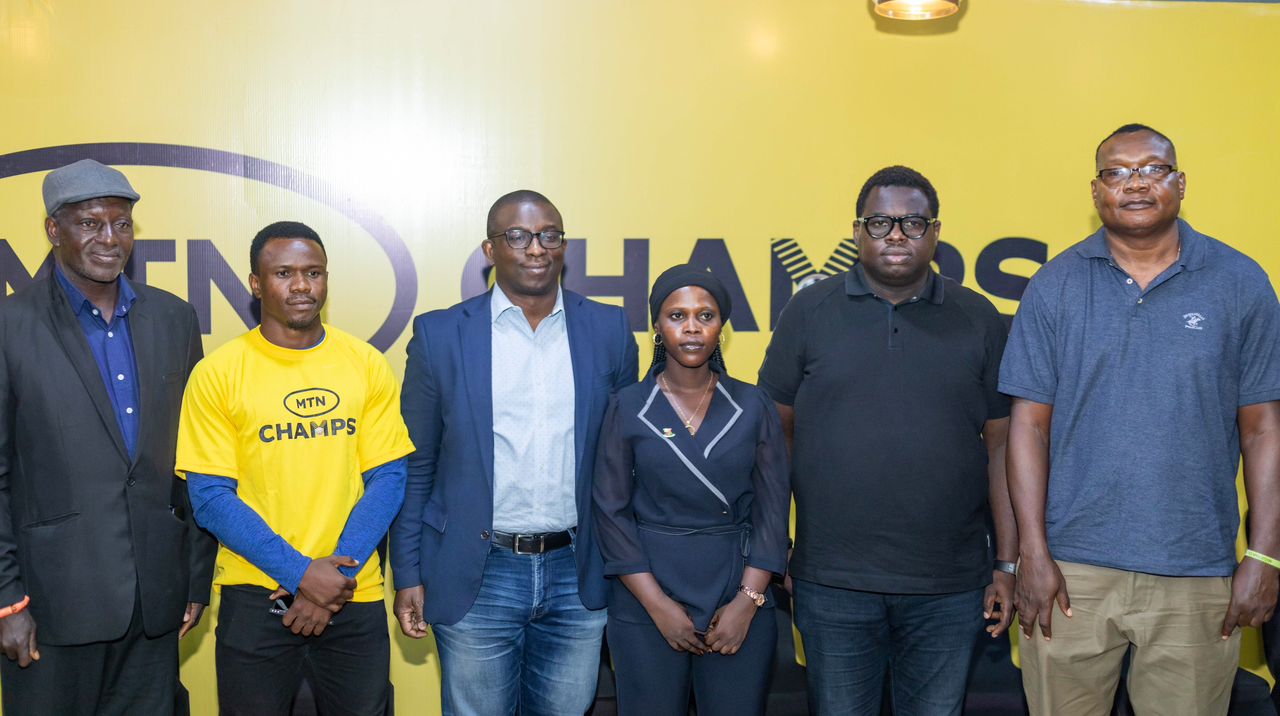
MTN Champs, Nigeria’s leading Schools’ Athletics Championships kicked off its second leg in Ibadan yesterday.

A press conference held on Thursday, April 4th, revealed a competition brimming with anticipation. This leg boasts a record number of 2,600 participating athletes and a new feature: the introduction of the Continental Relays.
Among the distinguished guests in attendance were Professor Abdul Waheed Salihu Adelabu, Commissioner for Education, Science and Technology, Oyo State; Hon. Wasilat Adegoke, Commissioner for Sports, Oyo State; Bisi Adegoke, Director of Sports Administration, Ministry of Youth and Sports Oyo State; Bambo Akani, Founder, Making of Champions; Idowu Adesokan, General Manager, Consumer Marketing, MTN Nigeria.
This year’s MTN Champs features several exciting developments. For the first time, the competition will be held simultaneously in two locations: Lekan-Salami Stadium and the University of Ibadan (UI) Sports Complex. Additionally, the event expands to include a senior category, catering to a wider range of athletes.
The most significant innovation is the introduction of the Continental Relays. This event will feature teams from five African countries competing on Nigerian soil. These relays serve as a crucial qualifier for the World Relays and ultimately, the Olympic Games.

Beyond the thrilling competitions and records to be broken, MTN Champs offers a deeper significance. Idowu Adesokan, General Manager, Consumer Marketing, MTN Nigeria, spoke at the press conference, emphasizing the unifying power of sports that transcends our differences. He noted that while sports like football hold a strong position in the hearts of Nigerians, athletics has steadily claimed its own space. “While football holds a special place in the hearts of Nigerians, athletics has steadily carved its own path to success. We’ve witnessed countless athletes who’ve filled us with pride on the international stage, from The African Games to the Olympics. These individuals have put Nigeria firmly on the global map. We are excited to be part of this initiative and will continue to support things that matter to Nigerians,” said Adesokan.
Bambo Akani, Founder of Making of Champions, emphasized Nigeria’s strong potential in athletics at the press conference; noting the nation’s impressive record of eight out of ten relay medals won at the Olympics in the last decade. Akani emphasized at the press conference that “We need to start setting our sights higher. We’re not satisfied with dominating Africa in track and field. That’s a low bar for us to set for ourselves. In the next five years with MTN Champs, you’re going to see Nigeria be mentioned in the same breath as USA and Jamaica in track and field, sprinting, and the olympics. That is why we’re also using this event to launch the idea of the continental relays.”
Other notable figures who graced the occasion included HRM Oba Dairo Jacob Olutayo Fadairo I, the Olasole of Lasole Kingdom; Akin Osun Sunday, State Coordinator, Nigeria School Sports Federation (NSSF); Deji Aliu, Olympic medallist and MTN CHAMPS Meet Director; and Enoch Adegoke, MTN CHAMPS Ambassador and five-time qualifying Olympian.
The second leg of MTN Champs in Ibadan promises excitement and innovation. With a record-breaking number of athletes, simultaneous venues, and the introduction of the Continental Relays, MTN Champs is poised to propel Nigeria to the forefront of African and, ultimately, global athletics.


Telecom
GSMA Industry Services Unveils Circularity Services to Help Operators Reduce E-Waste and Unlock Value


GSMA Industry Services have announced the launch of its new Circularity Services offering, designed to help mobile operators and ecosystem partners extend the life of devices, reduce e-waste, and unlock greater value from existing assets.

The offering launches with two commercial partners: Closing the Loop, whose ‘One for One’ service links one new mobile device sold by an operator to the collection and responsible recycling of one end-of-life device, and RGX, a neutral, online marketplace for enterprise asset disposition.
As the mobile industry continues to grow, operators are increasingly looking for practical ways to both meet sustainability commitments and enhance commercial performance.
GSMA Circularity Services has been developed to address these challenges by providing access to trusted partners and proven solutions that support the recovery, reuse, refurbishment and responsible recycling of ICT assets – helping organisations deliver on customer needs, reduce costs and generate value from equipment that might otherwise sit idle.
The ‘One for One’ service provides a practical and measurable way for organisations to incorporate circularity into their device propositions. Vodafone, Samsung and T-Mobile have successfully used the customer-centric program for devices sold in Europe, while Google is a global user.
One for One leads to electronic waste reduction around the world and has created positive impact in countries where formal waste collection and recycling infrastructure is often limited. Closing the Loop is an award-winning social enterprise, supported by UNIDO, UNEP and GIZ.
Joost de Kluijver, Co-founder and CEO, Closing the Loop, said: “The GSMA is globally respected as a unifier of the mobile ecosystem, and we’re excited to work together to expand the value that our ‘One for One’ service can deliver across the industry.
“By linking one new device sold to the collection and responsible recycling of one end-of-life phone, we help operators take practical action on waste reduction while supporting their wider circularity ambitions.
“One for One is also a differentiator at the point of sale that adds clear, value for customers and the brand. Through this partnership, we look forward to helping more organisations use circular thinking to excite customers.”
Michael Jungwirth, Head of Sustainability, Vodafone Germany explains why One for One is important to them and the broader ecosystem: “E-waste is a global problem. That’s why our solutions must not end at national borders.
“With One for One, we take responsibility and set an example for the industry. Not just a sign of change, but a sign of action. We close the loop for our customers. For one new phone Vodafone brings into circulation, we retrieve an old one.”
Addressing another aspect of the circularity challenge, RGX provides a neutral, online marketplace for e-waste management and enterprise asset disposition that connects organisations with service providers through a single automated platform.
The service is designed to help businesses optimize returns from redundant devices and equipment through competitive bidding and effective resource management, while ensuring responsible disposal practices. Initially available in the United States, the offering is expected to expand internationally over time.
Sean Miles, Co-founder, RGX said: “Innovation is only as good as its ability to scale. Through our partnership with GSMA Industry Services, we have an opportunity to help a broader part of the mobile ecosystem put circularity into place.
“RGX helps organisations manage enterprise asset disposition and e-waste more efficiently through a trusted, transparent marketplace. By working together, we can help operators recover value from redundant equipment, support responsible recycling practices and help operators turn circularity ambitions into action.”
Roman Smith, Director, Global Environmental Sustainability, AT&T commented on their collaboration with RGX: “RGX has been a valued strategic collaborator as we’ve developed our retail e-waste initiative.
“Their platform and expertise have helped support practical circularity solutions, and we appreciate the work they’ve done with our teams to advance more sustainable device recovery and recycling opportunities”
Sianne Ryder, Chief Executive Officer, Events and Industry Services, GSMA, said: “The launch of Circularity Services, together with partners Closing the Loop and RGX, marks an important step in helping operators take practical action on circularity. By bringing together solutions that support both responsible recycling and asset recovery, we are making it easier for organisations to reduce waste while unlocking greater value from existing assets.
“Through these partnerships, operators can access proven services that help accelerate their circularity ambitions and respond to growing demand for more sustainable approaches to device lifecycle management. The opportunity is a win-win: circular approaches are both more sustainable and deliver meaningful operational and commercial benefits for the industry.”

MTN Nigeria has unveiled the Y’ello Street Museum beneath Falomo Bridge in Lagos, an immersive experience that chronicles 25 years of connectivity, culture, innovation and shared experiences, as the company marks its silver jubilee in Nigeria.

Designed as a walk-through journey across five generations of network technology, from 1G to 5G, the museum brings together technology, campaign artefacts, cultural memorabilia, iconic devices and personal stories that reflect how connectivity has transformed the way Nigerians communicate, work, create, learn and engage with the world.
Located beneath one of Lagos’ most recognisable landmarks, the museum transforms the urban space into a living archive of Nigeria’s digital evolution.
Visitors begin the experience in 2001, when MTN commenced operations with approximately 50,000 subscribers and devices such as the Nokia 3310, before progressing through successive eras of connectivity that have helped shape today’s digital economy.
Along the journey, visitors encounter moments that have resonated across generations of Nigerians, from popular entertainment platforms and cultural experiences to technological innovations that changed how people access information, consume content, discover talent, build businesses and stay connected.
The experience captures the evolution of mobile technology, digital services, music, storytelling, entrepreneurship, and everyday life over the past quarter century.
Speaking at the launch, Chief Financial Officer, MTN Nigeria, Modupe Kadri, described the museum as a tribute to the millions of Nigerians who have shaped the company’s journey.
“When we look back at the last 25 years, we recognise that this story has been shaped by millions of Nigerians. Our customers, government, and regulatory stakeholders, partners, employees, communities, and many others have been part of the progress we celebrate today.
“The Y’ello Street Museum is an opportunity to reflect on the moments, innovations and connections that have transformed lives, businesses and communities across the country, while appreciating everyone who has contributed to that shared history.”
Speaking about the experience, Onyinye Ikenna-Emeka, Chief Marketing Officer, MTN Nigeria, said the museum celebrates not only technological progress but also the memories and moments that connect people.
“Technology is most meaningful when viewed through its impact on people. The Y’ello Street Museum brings together memories, cultural moments and innovations that have shaped everyday life over the last 25 years.
“Many visitors will see their own stories reflected in this experience, from the devices they used and the entertainment they enjoyed to the connections that helped them learn, build businesses and create opportunities.
“Above all, it is a celebration of the customers and communities whose experiences have shaped this journey.”
The museum places MTN’s story within the broader context of Nigeria’s transformation over the last two and a half decades. As network technology evolved from voice services to high-speed connectivity, new opportunities emerged for communication, entrepreneurship, financial inclusion, entertainment, education, and participation in the digital economy.
It also highlights the role connectivity has played in supporting Nigeria’s creative industries, enabling artists, performers, creators and businesses to reach wider audiences and participate in an increasingly connected world.
Through its blend of technology, culture and human-centred storytelling, the experience celebrates not only technological progress but also the ingenuity, resilience and aspirations of Nigerians.
Open to the public for seven days, the Y’ello Street Museum invites visitors to revisit the milestones, memories and moments that have defined a generation, while reflecting on the possibilities that the next chapter of connectivity and innovation can unlock.

Africa is facing a new wave of cybercrime driven by Artificial Intelligence (AI), with 55 per cent of reported cybercrimes on the continent now reportedly AI-enabled, according to the International Criminal Police Organisation (INTERPOL).

INTERPOL, in its African Cyberthreat Assessment Report 2026 released on Aug. 3, said cybercrime-related financial losses in Africa had more than doubled since 2024 to reach 484 million dollars.
The report also identified online scams as the most frequently reported form of cybercrime, with financial services, telecommunications and government institutions among the sectors most affected.
It further revealed that cybercriminals were increasingly using AI-generated synthetic identities, combining real personal information with fabricated elements to bypass biometric verification systems.
The findings have heightened calls for African governments and other stakeholders to develop homegrown, inclusive and rights-respecting approaches to AI governance and cybersecurity.
Paradigm Initiative (PIN), a pan-African organisation focused on digital rights and inclusion, said the growing use of AI in cybercrime underscored the need for a deeper understanding of the technology and its implications.
The organisation made the position known in a primer titled, “What is the Whole Fuss About AI?”, which examines emerging challenges associated with AI regulation across Africa.
PIN identified surveillance without accountability, the use of internet shutdowns as a regulatory tool and the adoption of “copy-and-paste” laws that fail to reflect local realities as some of the major challenges confronting AI governance on the continent.
The organisation said African countries needed to move beyond simply restricting emerging technologies and instead develop regulatory frameworks that protect fundamental rights while enabling societies to benefit from innovation.
According to PIN, stakeholders should consider three critical questions when developing or deploying AI systems: how society benefits from the technology, how inclusive standards can be created, and what avenues for redress exist when something goes wrong.
The organisation also stressed the importance of inclusivity in the development of AI systems and standards.
“A standard written without women, rural communities, people with disabilities or African languages will fail them by design,” the report stated.
PIN noted that although AI strategies were multiplying across African countries, safeguards remained inadequate, raising concerns about whether existing frameworks were rights-respecting, homegrown and sufficiently open to public participation.
The organisation said the response to AI-enabled cybercrime should involve a broad range of stakeholders, including governments, law enforcement agencies, technology companies, financial institutions, civil society organisations, researchers and digital platform users.
It argued that meaningful solutions required the participation of the right stakeholders in developing practical measures capable of addressing the abuse of AI while ensuring that the technology was harnessed for public good.
The organisation further maintained that African governments should not approach AI solely from the perspective of risk or restriction, but should develop dynamic frameworks capable of responding to both the opportunities and threats presented by the technology.
The latest INTERPOL findings underscore the growing sophistication of cybercriminals and the increasing scale of cyber threats across the continent.
With online scams, financial fraud and identity-related attacks becoming more sophisticated through AI, stakeholders are increasingly confronted with the need to strengthen cybersecurity systems while protecting citizens’ digital rights.
PIN said it remained committed to advancing digital rights and inclusion across Africa and supporting solutions capable of making the digital environment safer, more inclusive and resilient without compromising fundamental rights.

Nigeria Not Making Progress in Fiscal Transparency –US

NCAA to Introduce RFID Technology to Tackle Missing Luggages

SEC Directs Operators to Subscribe to NigSac Alerts, Freeze Terrorists-Linked Funds

Davido Bets $1m in Hit-for-Hit Battle with Colleagues

GSMA Industry Services Unveils Circularity Services to Help Operators Reduce E-Waste and Unlock Value

EFCC Busts NIS Visa Overstay Racket, Uncovers N700m in an Account

Fact-Check: Elon Musk’s “Tesla Pi Phone” is Internet Rumor

NBC Tasks Broadcasting Stations over 2028 DSO Global Deadline

NBC Scraps Annual Digital Access Fee on DSO

Glo Sponsored African Voices to Feature Netflix’s “The Polygamist” Stars




 News2 days ago
Moove Achieves Unicorn Status With $250m Funding

 Telecom2 days ago
MTN Nigeria Clocks 25, Connects over 90m People

 E-Financial2 days ago
FG Suspends NAICOM’s N680m Insurance Recapitalisation Fees

 Broadcasting2 days ago
Affordable, Flexible Streaming Platforms May Kill PAYtv – Report

 E-Business2 days ago
Microsoft to Unveil Next-generation AI Chip in September

 Telecom2 days ago
Subscribers to Seek Legal Redress if Poor Quality of Service Continue in September

 E-Financial2 days ago
SEC Moves to Recover Unclaimed Dividends, Inherited Investments Nationwide

 Telecom2 days ago
ipNX Collaborates with ICT Stakeholders on the Future of Fibre-to-the-Home in Nigeria @ ATCON Forum