

Telecom
MTN Explains Poor Quality of Service in Telecommunications

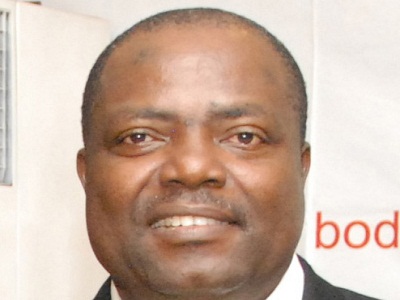
MTN has disclosed that its regulator, NCC has imposed a fine on the company for ‘failing to meet the minimum quality of service for the period under review in the period March – April 2012.’ The fine is payable on or before 25th May 2012.
All the other GSM operators also received similar fines for the same reason.
In a swift reaction to the NCC directive, Akinwale Goodluck, MTN’s Corporate Services Executive stated that the company remained committed to ensuring the best quality of service for its teeming customers.
He said, ‘MTN continues to employ the greatest effort to overcome the infrastructural and environmental challenges that impede the delivery of consistently good quality of service”.
He reiterated the challenges that exist in Nigeria including those related to unavailability of regular power supply, the insecurity of property, vandalization, and the menace of multiple taxation and over-regulation.
Speaking of power, he revealed that the company generates up to 80% of its power requirements, stating that MTN’s network is one of the largest in the world running almost entirely on self generated power. He further revealed that the company expends billions of Naira annually on diesel alone.
Goodluck also lamented the indiscriminate vandalisation of telecommunication infrastructure around the country. He estimated that MTN suffers more than seventy cuts to its fibre on a monthly basis. Indeed, in April this year, MTN had cause to publish full page announcements in the newspapers, alerting the public to the growing incidence of criminal damage to MTN’s infrastructure in various parts of the country and the impact on quality of service in the country, particularly the South East, as well as Port Harcourt, and Onitsha, Lagos, Kano and Abuja.
He commented that the heightened insecurity in several parts of the country has limited MTN’s ability to carry out routine maintenance and emergency repairs.
Goodluck also recalled several incidents of multiple taxation and over regulation, citing as examples the difficulties encountered by MTN in Abia State last year and last week’s face off between NESREA and NCC over jurisdiction to intervene in specific regulatory issues, leading to the closure of a number of MTN sites in Abuja. In each case, as with numerous such incidents all over the country, MTN’s ability to service its customers has been severely impaired.
In a passionate appeal for understanding, Goodluck solicited the co-operation and support of the NCC to assist the industry to overcome the various challenges that he listed. Goodluck added that” no business thrives when its customers complain. It is not in our interest for them to do so. It is our desire that our customers are happy with us or else we do not have a business”.
Whilst reinstating MTN’s commitment to improve its services and apologizing to its customers, he noted that the company would invest more than N158 Billion in 2012 alone in its network infrastructure.
‘No company has invested more than MTN in network infrastructure since 2001. We have not been shy to invest heavily in our business and we will continue to do so.’


Telecom
Starlink Rolls Out V2 Satellites for Direct 5G Connectivity to Smartphones, Eyes Nigeria’s Rural Gaps


Starlink, owned by American billionaire Elon Musk, has unveiled plans for its next-generation Mobile V2 satellites, poised to beam full 5G cellular service directly to ordinary smartphones, bridging vast connectivity voids in Nigeria and beyond.

Starlink
The company, in an official website statement, described the V2 satellites as the pinnacle of satellite-to-mobile technology, powered by proprietary SpaceX silicon and phased-array antennas generating thousands of beams for 20 times the throughput of earlier models.
This leap enables unmodified phones to access high-speed internet for video calls, streaming, podcasts, and remote work, rivaling terrestrial 5G in most settings, Starlink said.
Seamless Integration with Local Networks
The satellites will partner with telecom firms, allowing handsets to toggle effortlessly between space-based and ground signals. In Nigeria, where rural blackspots persist, this could revolutionise access.
The Nigerian Communications Commission (NCC) backs such Direct-to-Device (D2D) innovations in its draft Spectrum Roadmap (2025-2030), hailing them for reaching riverine, border, and underserved communities without costly towers.
“D2D satellite services will extend voice and data to areas beyond mobile towers’ reach while bolstering resilience against fibre cuts, outages, and crises,” NCC stated.
African Telecom Giants Onboard
Deployment hinges on operator alliances. Airtel Africa inked a pact with SpaceX last year to roll out Direct-to-Cell across 14 countries, including Nigeria, filling terrestrial gaps.
MTN Group is advancing talks with Starlink and rivals to serve unnetworked regions, underscoring satellites’ role in affordable expansion.
As global telecoms chase ubiquitous coverage sans infrastructure overhauls, Starlink’s V2 could fast-track Nigeria’s digital economy targets.

By: Juan Visser, Regional Director, Sub-Saharan Africa, International Education,
Today’s young people are navigating a world that is changing fast. From advances in artificial intelligence (AI) and technology to the impacts of climate change and global politics, they’re preparing not just to face uncertainty, but to shape what comes next.

Juan Visser, Regional Director, Sub-Saharan Africa, International Education
How effectively they do this will depend in part on their education, which has a crucial role in equipping students with the skills, knowledge and behaviours to thrive in the future.
Education is always evolving, but at this time of profound global change, we must keep asking ourselves if it is keeping pace. That’s what prompted the International Education group at Cambridge University Press & Assessment to undertake a large-scale research study with over 3,000 teachers and almost 4,000 students across 150 countries, including in Africa, to find out how they are experiencing education today.
Several priorities emerged in the Preparing Learners to Thrive in a Changing World study, highlighting a high degree of common thinking among students and teachers globally about where more action is needed in education to help students be ‘future-ready’.
1. Subject knowledge should be valued more in the AI era – not less
In an age where AI can deliver information within seconds, attitudes to the importance of subject knowledge are shifting.
When presented with a list of skills categories, knowledge and values, both teachers (81%) and students (73%) considered subject knowledge to be critical for students’ next step in education, but subject knowledge was the least selected option by both teachers and students when considering what is important for life beyond education.
This suggests that subject knowledge is often seen as a short-term asset for passing exams or progressing to higher education, rather than a lifelong asset. However, AI is not a shortcut to knowledge – and a solid foundation of subject knowledge is critical in helping students spot misinformation and use AI effectively.
To thrive, students need future-ready competencies such as adaptability and critical thinking – and here, subject knowledge and skills go hand in hand. We need to help students see that subject knowledge is something concrete they will draw on in the future, enabling them to assess information critically and make informed decisions.
2. Help students develop stronger self-management skills
Developing self-management skills – such as the ability to focus, prioritise tasks and regulate behaviour – emerged as a critical factor in helping students prepare for the future and adapt to changes in how we live and work. These skills can also solve some of the challenges created by digital technology, helping students to set boundaries for device use. While technology is embraced as a benefit to both teaching and learning, 70% of teachers said digital distraction and reduced attention span are challenges that technology creates in preparing students for the future. Students also voiced concerns about how their use of technology might affect them, with 66% worrying that they get distracted easily and 59% worrying about excessive screen time.
In Africa, the situation is complicated by inconsistent digital access. Many students are limited in opportunities to use technology to support learning, while those who have access, particularly via personal mobile devices, face the same struggle with distraction, such as access to social media, that students across the world are grappling with.
It’s clear that students would benefit from having more opportunities to practise self-management in school, not only to strengthen their focus but also to build resilience and help them deal with stress and anxiety. If students feel better able to manage themselves today, we are empowering them to manage new situations in the future.
3. Create safe and structured places to practise communication skills
Technology has transformed how we communicate with each other, yet the need to communicate effectively in person is not diminished. The research found that both teachers and students view communication skills, including social skills and empathy, as critical for future success.
However, the research also showed that concerns about getting communication wrong – which can be amplified in online spaces – are holding students back, with 61% of teachers saying fear of judgement is a challenge in helping students develop their interpersonal skills. Interviews with students also revealed that they may avoid disagreement due to fear of social repercussions, such as being the ‘lone voice’ or facing social judgement.
Schools can help students overcome these fears by creating a safe environment where they can develop their communication skills and build meaningful relationships.
Africa’s multilingual and diverse cultural contexts offer unique opportunities for developing communication skills.
Many African educational traditions emphasise oral communication, storytelling, and collective knowledge sharing, which support the development of communication skills in a context that students can relate to.
The tradition of active participation in African oral storytelling engages the audience, inviting them to ask questions, interact, and share their thoughts.
By incorporating African oral storytelling traditions into the curriculum, educators can create more inclusive, engaging and culturally relevant learning environments and help students develop key skills in listening, critical thinking and empathy.
4. Help students recognise when and how they are developing vital skills
With so much change in the world, it is perhaps not surprising that the research revealed students feel underprepared for the future. Only 48% of students feel prepared for their next step in education, and 45% for their future beyond it.
We also asked teachers to reflect on how well prepared they feel their students are for their futures. 67% feel students are well prepared for their next step in education, and 59% say students are well prepared for life after education.
These findings have profound implications for workforce development across Africa, where youth unemployment remains high despite growing economies.
If students don’t recognise their own readiness, they may not pursue opportunities they’re actually qualified for.
The underestimation may arise because students do not always see the skills they are developing alongside subject knowledge, nor do they understand how their school experiences can translate into future success.
To counter this, educators need to signpost students through their learning so they recognise the skills they are developing and understand how these skills may serve them in the future.
This will give them a stronger belief that they are prepared for the future and empower them to shape it.
Measuring impact: focusing on outcomes
With just under five years remaining to realise the 2030 education targets set by the United Nations, it is crucial that investments in education directly impact the UN Sustainable Development Goal 4.
Learning quality remains a major concern, and most countries are off track to meet education targets for access, completion and learning outcomes. In sub-Saharan Africa, upper-secondary school completion rates are hovering at 28,9%, far from the targets identified in 2015.
Many African education systems face resource constraints, making every investment count. The move from measuring inputs to focusing on outcomes is key to accelerating progress.
Initiatives like the HP Cambridge Partnership for Education EdTech Fellowship also provide a space for policymakers to strengthen the skills, knowledge and network needed to drive digital transformation in education systems.
The future of African education depends on embracing both the challenges and the unique opportunities presented by technology, evolving skill sets, and the continent’s rich cultural diversity.
Accelerating digital education is vital in Africa, but at the same time, educators must help students develop the skills and knowledge to use technology wisely.
By prioritising subject knowledge as well as skills development, strengthening self-management and communication skills, and helping young people to recognise all the ways in which they are prepared, educators can help empower them to thrive in a rapidly changing world.
Telecom
First Batch of Nigerian Undergraduates Emerged in Airtel Africa Foundation Scholarships Programme


Airtel Africa Foundation has inducted the first Nigerian cohort of the Airtel Africa Tech Fellowship that offers fully paid scholarships for students pursuing undergraduate courses in science, technology, engineering and mathematics across the continent.

During a ceremony held at Airtel Nigeria headquarters in Lagos, Airtel Africa Foundation’s Chairman, Dr Segun Ogunsanya, alongside Airtel Nigeria’s CEO, Dinesh Balsingh, presented the full-ride scholarship awards to 70 students from universities across Nigeria.
The undergraduates studying technology courses, were drawn from the University of Lagos, Obafemi Awolowo University, the University of Benin, Tai Solarin University of Education, the University of Ilorin, Ahmadu Bello University, and the University of Nigeria.
Selected from thousands of applicants through an independently managed process, which took nearly six months, these fellows are beneficiaries of Airtel Africa Foundation’s continentwide financial aid programme, which covers tuition, laptop computers, living expenses, and essential learning resources. The Nigerian cohort joins a prestigious network of Airtel Africa Foundation fellows currently studying in Tanzania, the Democratic Republic of Congo (DRC), Uganda, and India.
In his address, Dr. Ogunsanya, emphasised the need for initiatives such as the Airtel Africa Foundation’s undergraduate tech scholarship for the future of the continent.
The Airtel Africa Foundation Chairman said, “True legacy is not measured by the awards we win or the volume of SIM cards we sell; it is measured by the lives we save, the people we feed, and the students we support when the line between success and failure is at its thinnest.
At the Airtel Africa Foundation, we believe that lifting people out of poverty is the ultimate benchmark of a great company. Today, we are writing that legacy by tilting the balance in favour of the brilliant but underserved, ensuring that the fourth industrial revolution, driven by AI and Data Science is built by African talent for the African continent.”
Dr Ogunsanya further revealed that this fellowship, executed through Airtel Nigeria, is designed to bridge the gap where funding, skills, and opportunity often fail to meet. In addition to the N500,000 yearly budget for the fellows’ four-year or five-year courses, each fellow would be integrated into a structured support system for academic guidance and career mentorship, intended to ultimately transition students from the classroom to the global tech workforce.
Addressing the students, Mr Balsingh emphasised that youth development is a strategic imperative for Airtel.
He said, “At Airtel Nigeria, we view youth development as essential nation-building. When young people succeed, innovation accelerates, and social stability improves. By connecting these brilliant scholars to knowledge, skills, and confidence, we are fulfilling our core mission to connect people to opportunity.
“To our recipients: you earned your place here through merit and discipline. You are now ambassadors of excellence, and we expect your leadership to be defined by your conduct as you help shape a more inclusive digital future for Nigeria.”
The initiative underscores a broader commitment to technology education, youth development, and Nigeria’s digital economy. By aligning academic excellence with industry requirements, Airtel Africa Foundation and Airtel Nigeria continue to demonstrate their dedication to skills as the new currency in a rapidly evolving global market.

Africa Startups Raised $272m in Funding in February

First Asset Management Secures Ratings Upgrade

NICA Confers Professional Fellowship on Uche Uzoebo

Starlink Rolls Out V2 Satellites for Direct 5G Connectivity to Smartphones, Eyes Nigeria’s Rural Gaps

Madonna University Taps Tech Guru Adote for Strategic Board Role

Dr. Cairo Ojougboh Foundation Bolsters Nigeria’s Education Drive with ₦2.7m Student Support

Kaspersky Brings more Transparency to Threat Detection with New Hunt Hub

Kaspersky Discovers New Phishing Campaign Exploiting Google Tasks Notifications to Steal Corporate Credentials

esentry 2025 Report Shows Healthcare, Financial Services and Telecoms as Staging Grounds for Increased Cyberattacks in Africa

AfDB, UNDP Launch $10Bn AI Initiative for Africa




 Telecom1 day ago
Dimension Data Nigeria Seals N20bn Bond Deal to Bridge Digital Infrastructure Gap

 Telecom1 day ago
First Batch of Nigerian Undergraduates Emerged in Airtel Africa Foundation Scholarships Programme

 E-Business1 day ago
CBN Affirms Alpha Morgan Bank’s Capitalisation

 General News1 day ago
Mojisola Sayo-Kazeem Reflects on Leadership, Opportunity, Women in Tech @ IWD

 E-Financial1 day ago
Polaris Bank Marks IWD2026 with Renewed Pledge to Women’s Empowerment

 General News1 day ago
Experts Weigh Blockchain Option for Nigeria’s Elections Process

 News1 day ago
EFCC Seals Anti-Corruption Alliance with Anambra Security Chiefs, Traditional Rulers

 General News11 hours ago
Zedvance Hits ₦96bn Lending Milestone, Eyes ₦250bn Target in 2026