

Telecom
MTN Pledges Support for Nigeria’s Technology Space, Visits Various Innovation Hubs across Lagos

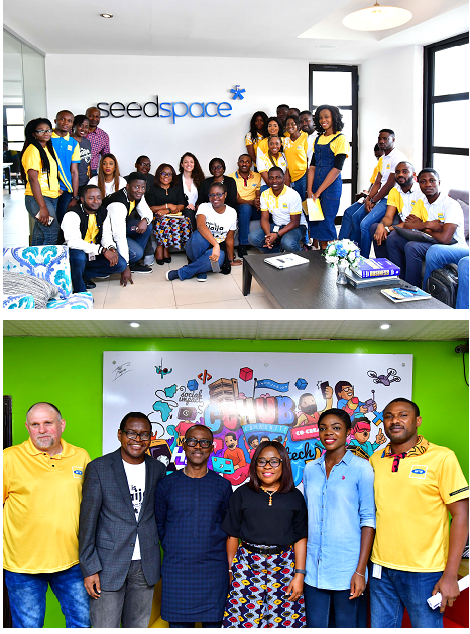
MTN, Nigeria’s Information and Communications Technology giant, has pledged its unbridled support for Nigeria’s technology space and the building of a future enabled by technology.
This was made evident by the visits to several technology hubs in Lagos of a high-powered delegate from the company led by the Chief Executive Officer, Ferdi Moolman, Chief Transformation Officer, Bayo Adekanmbi, Sales and Distribution Executive, Adekunle Adebiyi and Human Resource Executive, Esther Akinnukawe.
Ferdi Moolman, CEO,MTN, confirmed that MTN will relentlessly assist hubs in Nigeria with the provision of test API/sandbox; provision of proof of concept support on relevant ideas and partnership on ideas for go-to-market commercialisation as part of its BRIGHT strategy to grow digital platforms that can transform the lives of Nigerians.
According to him, “I must say that we are impressed with what we have seen here today, and we are filled with optimism for the future.
“I assure you of MTN’s commitment in the areas of technological and any other necessary support you could need to achieve full potentials.”
“Technology innovation hubs are unarguably the shortest cut to job creation, bridging of the gap between the developed and developing world and to economic diversification. We are already feeling the impact of your work and I will say more power to your elbow,” the CEO stated.
He explained that the company has defined various touch points to grow the potentials of innovative hubs in the country.
These include, the immersion of the MTN Nigeria Graduate Development Trainees in the Nigerian innovation hub with a view to keeping them abreast of local trends through structured visit, participation in hackathon and projects, and leverage of the innovation hub for ideation, concept testing, go-to-market validation and technical feedback.
During the visits, the hubs showcased some of their achievements, various ongoing projects and their challenges.
They noted the assistance they have so far received from government and corporate bodies but appealed for increased support so as to enable them to contribute optimally to the economic development of the country.
The Nigerian innovation market is one of the fastest growing in the sub-region with over 55 active technology hubs.
These include incubators, accelerators, co-working spaces, fab labs, makerspaces, and other innovation centres.
The strategic importance of these hubs have been validated by the visit some of the global technology icons like Mark Zuckerberg of Facebook and Sundar Pichai of Google.



Starting February 2027, Nigerian Communications Commission (NCC), has mandated mobile network operators and other communications service providers to notify it within four hours of detecting any cyberattack.

This is aimed at strengthening the protection of telecom infrastructure and subscriber data.
The directive is contained in the Cyber Resilience Framework for the Nigerian Communications Sector (CRF-NCS) released by the NCC last month.
According to the NCC, the rule will take effect in February 2027, giving operators a year to put in place the necessary monitoring and reporting systems.
Under the framework, telecommunications companies must alert the regulator within four hours of detecting a cyber incident and continue to provide updates every four hours until the situation is contained.
Operators are also required to submit a confirmation report within 24 hours through a dedicated reporting portal.
The commission said the framework is designed to strengthen cybersecurity oversight in a sector that handles vast volumes of sensitive consumer and national infrastructure data.
Cyber threats targeting telecom networks can lead to service disruptions, data breaches affecting subscriber information, malware infections and other attacks capable of crippling communications systems, according to the regulator.
By introducing faster reporting timelines, the commission said it hopes to improve sector-wide situational awareness and ensure quicker response to threats before they escalate into major outages or data compromises.
The framework also requires telecommunications companies to establish dedicated Security Operations Centres (SOC) to monitor networks continuously for suspicious activity and cyber threats.
These centres are expected to detect and report malicious activities promptly while coordinating responses internally.
In addition, each operator must designate a cybersecurity lead responsible for working with the commission’s Computer Security Incident Response Team (CSIRT) to share intelligence and coordinate responses to incidents affecting the communications ecosystem.
The NCC said the new framework forms part of broader efforts to strengthen resilience across Nigeria’s communications infrastructure and promote a unified cybersecurity posture in the sector.
The measures come amid growing global and domestic concern over data breaches and cyber intrusions targeting companies that manage large volumes of digital information.
Telecommunications companies, which serve as gateways for internet traffic, mobile banking, messaging and other digital services, are increasingly seen as critical infrastructure vulnerable to cyber threats.
Nigeria’s telecom regulator has in recent years tightened rules around data protection and network security as the country’s digital economy expands.

A United States federal court in the Southern District of New York has comprehensively dismissed all claims against Binance, the world’s largest cryptocurrency exchange by registered users, in a high-profile lawsuit under the Anti-Terrorism Act (ATA).

Binance
The 62-page decision represents a decisive legal victory, rejecting allegations from 535 plaintiffs who claimed the platform provided material support linked to 64 terrorist attacks.
The court meticulously examined and dismissed every central allegation, ruling that plaintiffs failed to establish Binance assisted terrorists, associated itself with the attacks, participated in or sought to advance them, or engaged in any conspiracy with terrorist organisations.
This full dismissal underscores the absence of evidence supporting the claims, affirming Binance’s long-standing position that the suit was meritless.
Binance General Counsel Eleanor Hughes described the outcome as “a complete vindication of all false allegations.” She emphasised: “The court has unambiguously rejected the false and damaging narrative that Binance assisted terrorists.
“We have always maintained these claims were without merit, and today’s ruling confirms that. We will continue to defend ourselves aggressively against any litigation or reporting that misrepresents who we are and how we operate.”
While the ruling grants plaintiffs 60 days to file an amended complaint in light of a recent appellate decision, Binance expressed strong confidence that no revisions can remedy the “fundamental deficiencies” identified by the court. The exchange views this as a thorough examination and rejection of the underlying assertions.
Binance reaffirmed its commitment to industry-leading compliance infrastructure, proactive regulatory engagement, and robust legal governance worldwide.
The company stressed that its operations do not support, facilitate, or enable terrorism in any form, and it plans to maintain constructive dialogue with regulators while pursuing vigorous defences against misleading narratives.
This development bolsters Binance’s position amid ongoing global scrutiny of crypto platforms, highlighting its operational integrity in a sector often targeted by unsubstantiated claims.
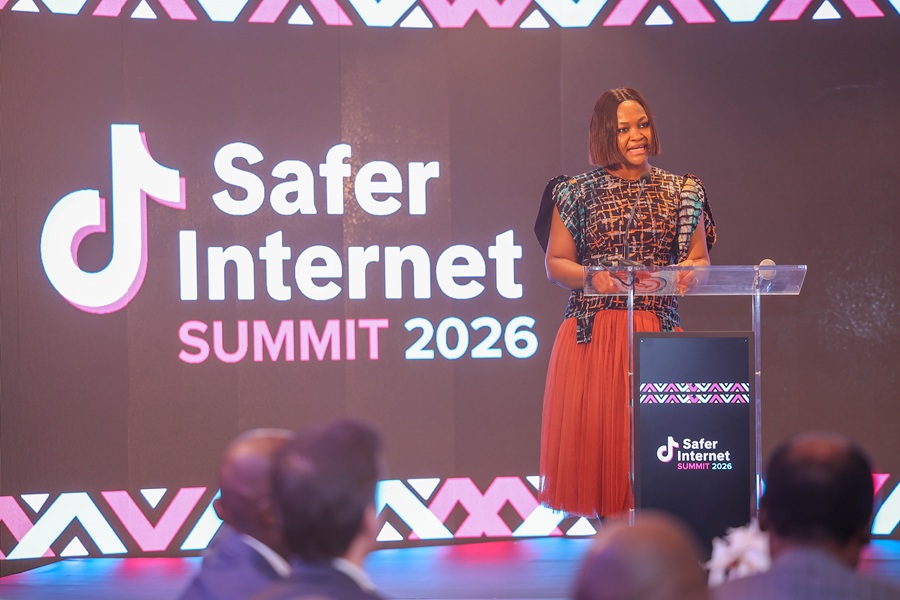
TikTok has announced an additional $200,000 investment in AI media literacy initiatives across Sub-Saharan Africa during its third annual Safer Internet Summit in Nairobi, underscoring the platform’s push for safer online spaces amid rising digital challenges.

TikTok
The two-day event, themed #SaferTogether: ‘Innovation and Safety’, gathered government officials, regulators, safety partners, and industry leaders from the region. It builds on prior summits in Ghana (2024) and Cape Town (2025), focusing on collaborative solutions for online protection.
TikTok’s Head of Government Relations and Public Policy for Sub-Saharan Africa, Tokunbo Ibrahim, stated: “Our mission is clear: to share learnings, tackle challenges, and advance actionable solutions that protect citizens online. By uniting policymakers, innovators, and creators, we ensure all-inclusive conversations for a resilient digital landscape.”
Kenya’s Cabinet Secretary for ICT, Hon. William Kabogo, who opened the summit, added: “This reflects our commitment to collaboration, sector growth, and a safe digital space. We must advance digital innovation, responsible AI governance, and strong regional partnerships.”
Boosting AI Literacy with Local Partners
A summit highlight was TikTok’s expanded $2 million AI Literacy Fund, launched globally in November 2025. The new $200,000 in ad credits targets local organisations to combat misinformation and empower users.
In Sub-Saharan Africa, initial grantees include:
Mtoto News (Kenya): Producing content to help youth engage responsibly with AI.
Africa Check (Nigeria, South Africa, Kenya): Enhancing fact-checking against AI-generated deepfakes.
CJID/DUBAWA (West Africa): Amplifying truth via independent fact-checking to fight information disorder.
Valiant Richey, TikTok’s Global Head of Partnerships, Elections & Market Integrity, said: “We partner with trusted locals because their expertise makes AI literacy impactful, empowering communities as viewers or creators.”
Transparency and Moderation Advances
Delegates explored TikTok’s AI-driven safety measures, including mandatory labelling of AI-generated content (AIGC), advanced detection, and partnerships like the Coalition for Content Provenance and Authenticity (C2PA) for watermarking.
With over 100 million daily uploads, AI aids proactive moderation: Q3 2025 data shows 14 million videos removed in Sub-Saharan Africa, 96.7% via automated tech, complementing human oversight.
The summit ended with pledges for ongoing digital safety efforts across the region.

Meta to Charge Location Fees on Ads to Six Countries from July 1, 2026

Tizeti Tests Ad-Funded Internet Access Model in Nigeria and Ghana

Court Orders Final Forfeiture of N81.1m Sterling Bank Fraud Funds

NCC Orders Telcos to Report Cyberattacks Within 4 Hours from 2027

FG Mulls Age Restriction for Kids on Social Media

Dr. Cairo Ojougboh Foundation Bolsters Nigeria’s Education Drive with ₦2.7m Student Support

Kaspersky Brings more Transparency to Threat Detection with New Hunt Hub

Kaspersky Discovers New Phishing Campaign Exploiting Google Tasks Notifications to Steal Corporate Credentials

esentry 2025 Report Shows Healthcare, Financial Services and Telecoms as Staging Grounds for Increased Cyberattacks in Africa

AfDB, UNDP Launch $10Bn AI Initiative for Africa




 Telecom2 days ago
Dimension Data Nigeria Seals N20bn Bond Deal to Bridge Digital Infrastructure Gap

 Telecom2 days ago
First Batch of Nigerian Undergraduates Emerged in Airtel Africa Foundation Scholarships Programme

 E-Business2 days ago
CBN Affirms Alpha Morgan Bank’s Capitalisation

 General News1 day ago
Zedvance Hits ₦96bn Lending Milestone, Eyes ₦250bn Target in 2026

 E-Financial2 days ago
Polaris Bank Marks IWD2026 with Renewed Pledge to Women’s Empowerment

 General News2 days ago
Mojisola Sayo-Kazeem Reflects on Leadership, Opportunity, Women in Tech @ IWD

 General News2 days ago
Experts Weigh Blockchain Option for Nigeria’s Elections Process

 Broadcasting1 day ago
Madonna University Taps Tech Guru Adote for Strategic Board Role