

General News
Naira to Find Support From Rising Oil Prices; Dollar softens

By Lukman Otunuga, Research Analyst at FXTM,
The Dollar tumbled against a basket of major currencies on Wednesday evening, after minutes from the latest FOMC meeting revealed policymakers had adopted a more cautious approach towards raising rates.
Most policymakers expressed concern over the volatile financial markets, plateauing global growth, and ongoing trade tensions. With officials also believing that inflation remained muted, the US central bank could “afford to be patient” about further policy tightening. External and domestic risks have made the future path of interest rate hikes “less clear”, and this may end up fuelling expectation over the Fed taking a pause on rate hikes this year.
Appetite towards the Dollar diminished further following the cautious Fed minutes with prices sinking towards 95.20 as of writing. A solid breakdown and daily close below the 95.00 level could open a clean path towards 94.65 in the near term.

A dovish Fed was good news for emerging market currencies with the Chinese Yuan, South African Rand, and Naira among many others holding ground against the Dollar. Attraction towards EM currencies is likely to be boosted further by optimism over US-China trade talks. While the improving market mood is a welcome development for emerging markets, the geopolitical risks weighing on global sentiment remain present. With Brexit-related uncertainty, chaos in Washington and lingering growth fears on the mind of many investors, EM currencies remain in the crosshairs.
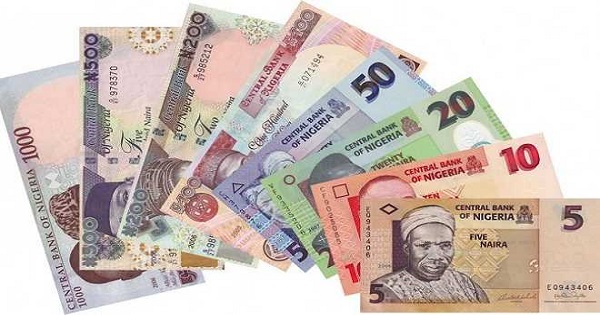
In Nigeria, the Naira traded around 361N on the parallel exchange due to trade talk optimism and rising oil prices. Oil prices were elevated by Dollar weakness today while optimism over US-China trade negotiations easing tensions between the world’s two largest economies supported upside gains. While the commodity is seen extending gains in the near term amid the improving market mood, the upside remains limited by supply and demand dynamics. Oversupply fears coupled with concerns over falling demand are poised to create headwinds for oil bulls down the road. Depressed oil prices will continue impacting confidence over Nigeria’s ability to move ahead with its 2019 budget which pegged oil prices at $60.
A cautious Fed pushed gold prices back above $1,290 yesterday evening. While market optimism over US-China trade talks continues to weigh on the precious metal, dollar weakness and expectations over the Fed taking a pause on rate hikes are likely to keep prices buoyed. With rising geopolitical risks and global growth fears fuelling risk aversion down the road, the outlook for gold points to further upside. In regards to the technical picture, the precious metal is firmly bullish on the daily charts. A breakout above $1,290 is likely to encourage an incline higher towards the $1,300 psychological level.


International Trade Union Confederation, (ITUC-Africa), representing trade unions from countries in Africa, has called on Nigeria and other African governments to ensure that industrialisation translates into improved living standards for workers and ordinary citizens.

According to ITUC-Africa, economic growth must lift Nigerians and other Africans out of poverty rather than deepen inequality, frowning at Nigeria’s government plans to remove subsidy on electricity.
Delivering his opening remarks at the New Energy for Africa 11 Convening: African Workers’ Contributions to Energy Sovereignty, Green Industrialization, and a Common African for COP31, Akhator Joel Odigie, general secretary of ITUC-Africa, said, industrialisation remains central to Nigeria and Africa’s liberation and development agenda but warned that it would be meaningless if it failed to improve the welfare of the continent’s people.
He faulted the plans by the Nigerian government to remove so-called subsidy on electricity in 2027, arguing that it is aimed at satisfying the Bretton Woods institutions such as the International Monetary Fund, IMF, and the World Bank.
According to him, such removal would worsen the poverty rate in Nigeria and regress any marginal progress towards industrialisation. Subsidy removal will make electricity inaccessible to workers and the majority of the citizens.
He said, “As we speak now, Nigeria is talking of subsidy removal on electricity. The plan is not to satisfy or help Nigerians, but IMF, World Bank and other donor countries. The talk that subsidy is bad economics is a lie. All developed economies depended on public sector-driven electricity and not private sector.
“For us as Africans, industrialisation is central to our liberation and development. It is part of our aspiration to define our own identity and achieve shared prosperity through an industrialised Africa. Unfortunately, that vision has yet to be realised.
“We have also come to understand that lamenting our circumstances is not enough. Identifying the barriers to Africa’s development or pointing fingers at those who may be responsible does not move us forward. The more important question is: What next? What solutions can we pursue together?
“It is from that perspective that we confront the reality that more than 600 million Africans still lack access to electricity, while privatisation continues to deny many people affordable access to energy. This compels us to ask: What can we do differently?”
According to him, organised labour believes industrialisation can be achieved without worsening the climate crisis if governments, workers and development partners commit to energy justice.
Odigie noted that “When we speak about sustainable industrialisation, we are asking how Africa can industrialise without increasing environmental degradation or worsening the climate challenges our people already experience every day.
“We know this is possible. But it will require negotiation, compromise and genuine partnerships. It demands serious discussions on technology transfer, skills development and financing.”
He stressed that developing technical skills and mobilising investment for energy infrastructure are essential if Africa is to industrialise sustainably, saying “These are not impossible skills to acquire. With the right investment and commitment, Africa can build them. Equally important is access to finance and the resources needed to develop the infrastructure that will support sustainable industrialisation.
“An industrialised Africa has little meaning if it does not improve the lives of our people. Our vision is an Africa where prosperity is shared.
“We must reverse the growing phenomenon of the working poor. We must end the situation where women, children and older persons bear the greatest burden whenever governments attempt to balance national budgets.
“What does prosperity mean if ordinary people cannot enjoy a decent quality of life? A worker who returns home after a long day’s work should be able to switch on a fan during hot weather, watch television, listen to the news and spend meaningful time with family because electricity is available, reliable and affordable.
“If our people cannot enjoy these basic necessities, then what kind of prosperity are we really talking about?
“Energy justice means energy that is accessible, affordable and capable of improving people’s lives.”
Odigie also renewed ITUC-Africa’s campaign for stronger public participation in Africa’s energy sector, citing Finland as an example of how governments can ensure affordable electricity while working with private investors.
“Recently, we visited Finland, where we observed a successful model that combines public and private participation, with strong public leadership. Energy there is affordable. In fact, electricity costs less in Finland than it does here in Nairobi.
“Our hosts explained that this is possible because the state retains an important role in the energy sector, including the ability to influence pricing to ensure affordability for everyone.”
Ahead of the COP31 climate negotiations, he called for closer collaboration between organised labour and the African Group of Negotiators (AGN), saying trade unions are partners in governance rather than adversaries.
“Trade unions are not antagonistic to governments, even though we are sometimes misunderstood.
“Our responsibility is to strengthen accountability and help governments perform better because, from time to time, leaders can become too comfortable.”
Using a metaphor that drew applause from participants, Odigie likened the role of trade unions to keeping leaders “close to the fire.”
“Our responsibility is to keep the feet of our leaders close to the fire so that their heads do not become too cold. We want them to continue thinking clearly, making sound decisions and remaining connected to the realities faced by ordinary people.
“That is why we are not in opposition. We are not enemies.”
He said organised labour’s partnership with the AGN is intended to ensure African governments enter international climate negotiations with the full backing of workers across the continent.
Speaking, Dr Nana Amoah, chair of the African Group of Negotiators, AGN, said Africa’s energy transition presents both an urgent challenge and a historic opportunity, lamenting that “More than 600 million Africans still lack access to electricity, even though our continent possesses exceptional solar, wind, hydro and geothermal resources. Yet Africa continues to receive only a very small share of global clean-energy investment.”
Represented by Dr George Manful, AGN Senior Advisor, Amoah, said: “This imbalance must be corrected if the transition is to support Africa’s development rather than reproduce existing patterns of dependence, extraction and inequality.
“For the African Group of Negotiators, a just transition cannot be measured solely by installed megawatts, emissions reductions or new electricity connections. It must also be measured by the quality of jobs created, affordability of energy, protection of workers, participation of women and young people, development of local industries, and the capacity of African countries to retain value from their natural resources.
“Initiatives such as Mission 300 must therefore go beyond expanding access. They must strengthen public institutions, mobilise affordable and debt-sensitive finance, support local manufacturing and skills development, and guarantee that no worker, community or vulnerable group is left behind.
“Africa’s critical minerals must similarly become a foundation for green industrialisation—not another chapter of raw-material extraction. Our policies must promote local processing, technology transfer, decent work, environmental integrity and equitable participation in global value chains.”

Allen Onyema, vice chairman, Airline Operators of Nigeria (AON) and chairman, Air Peace, has warned that several domestic airlines could cease operations within the next 30 days unless the federal government urgently intervenes in the challenges confronting the aviation industry.

Allen Onyema
Onyema, gave the warning on Wednesday at the launch of the book, Pathways, Pilgrimage & Destiny: The Biography of Alhaji Muneer Bankole, held in Lagos.
He described the aviation industry as capital-intensive but less rewarding, warning that airlines are facing serious threats to their survival.
“Going into aviation is not a piece of cake. It is an industry that is not very rewarding. It is capital-intensive, yet less rewarding. Today, we are facing a phase that has existential threats. Except something drastic is done very quickly within the next 30 days, a lot of airlines might go extinct,” Onyema said.
The Air Peace chairman also cautioned aviation unions against their planned picketing of airlines over the non-remittance of the five per cent Ticket Sales Charge.
He warned that if any airline is picketed, other domestic carriers would suspend operations in solidarity.
“If they picket any airline, others will go because there’s no need for that. There is nowhere in the world that government agencies use unions to talk about issues of debt,” he said.
Onyema lamented the harsh operating environment for Nigerian airlines, noting that more than 50 airlines have shut down over the years.
“Everybody pities Nigerian airlines, yet nobody wants to do anything about their situation. Over 50 airlines have come and gone. The owners of these airlines succeeded in other businesses, yet they failed in airline business,” he said.
He stressed that airlines were not opposed to helping the government generate revenue but called for a more sustainable approach.
“The airlines are not against helping government generate revenue. But no airline in the world is taxed directly for revenue. The airlines indirectly provide revenue for government,” Onyema added.
General News
QNET Denies Links to Ignite, Backs Nigeria Immigration Service Crackdown on Alleged Fraud Syndicate

QNET has denied any association with Ignite following the arrest of 12 individuals by the Nigeria Immigration Service (NIS) over alleged fraudulent recruitment, irregular migration and other unlawful activities.

QNET
In a statement issued on Tuesday, the direct-selling company described reports referring to the suspects as belonging to a “QNET/IGNITE network” as inaccurate, stressing that Ignite is an entirely separate entity with no relationship to QNET.
The company stated that Ignite is neither part of QNET nor authorised to conduct any business or activities on its behalf.
QNET urged media organisations, commentators and members of the public to avoid linking the two organisations, warning that such reports could mislead the public and unfairly associate the company with alleged criminal activities beyond its control.
According to the company, it has fully cooperated with the Nigeria Immigration Service and will continue to provide any relevant information required as investigations progress.
It reaffirmed its commitment to supporting law enforcement agencies in identifying and prosecuting individuals who misuse the QNET name to facilitate fraudulent recruitment, human trafficking, irregular migration or other criminal acts.
The company also clarified the use of the term “Model Q,” explaining that law enforcement agencies increasingly use it to describe criminal schemes in which fraudsters exploit the names of legitimate direct-selling companies and established brands to lure victims with false promises of employment, overseas travel, migration opportunities or guaranteed income.
It stressed that “Model Q” does not refer to QNET’s legitimate business operations but rather to criminal activities carried out through the unauthorised use of recognised brand names.
QNET maintained that it does not offer employment opportunities, visas, overseas travel or guaranteed financial returns through its independent distributors.
It explained that its business model is based solely on the direct sale of wellness and lifestyle products.
The company warned that anyone soliciting money for jobs, migration, travel or guaranteed investment returns in QNET’s name is acting without its authorisation.
According to the statement, criminal groups have repeatedly impersonated the company’s brand to deceive unsuspecting members of the public.
QNET said it considers itself a victim of such brand impersonation and has been working with law enforcement agencies in Nigeria and other countries to share intelligence, support investigations and protect potential victims.
The company commended the Nigeria Immigration Service for what it described as an intelligence-led operation that resulted in the rescue of victims and efforts to dismantle transnational criminal networks.
It reaffirmed its readiness to continue collaborating with the Service and other relevant authorities to ensure that those exploiting its name for criminal purposes are brought to justice.
QNET also advised members of the public to verify any claims involving the company through its official communication channels and to report suspicious offers relating to employment, travel, migration or investment made in its name.

ITUC-Africa Faults FG’s Plans to Remove Electricity Subsidy

SEC Begins Full e-Registration for Capital Market Services

NAICOM Revokes Nigeria Reinsurance’s Licence over Failure to Meet MCR

Many Nigerian Airlines May Collapse within 30 Days – Onyema

Ogbaga, Abuja Lawyer to Sue Telcos, DStv over Alleged Unfair Practices

NRC, Ponzi Scheme Collapses Resulting Loss of Billions of Naira

From Scarcity to Scale: What Africa Can Learn from India’s Agricultural Transformation

EFCC Busts NIS Visa Overstay Racket, Uncovers N700m in an Account

BON Establishes Six Ad Hoc Committees to Modernize Broadcasting

How EFCC Turned Recovered Loot Into School Supplies for Thousands of Nigerian Students




 E-Business3 days ago
Kaspersky Identifies Cyberespionage as a Growing Threat Across Africa, Others

 Broadcasting3 days ago
NBC Files Fresh Appeal against Judgment Barring it from Imposing Fines on Broadcast Stations

 News3 days ago
INTERPOL Report Shows AI Powers 55% of Cybercrimes in Africa Amid $484m Losses

 News3 days ago
Nigeria Expands Deep-tech Skills Pipeline

 E-Financial3 days ago
Nigerians Lost N25.85Bn to Digital Payment Fraud in 2025 –CBN

 E-Business2 days ago
Kaspersky Reveals a New Malicious Framework Targeting Cryptocurrency Users with the Use of OkoSpyware

 Telecom3 days ago
Why Strong Institutions Remain Africa’s True Growth Engine

 E-Financial3 days ago
NRS Announces 30 Percent Tax on Corporate Crypto Income