

Telecom
NASRDA Says Nigeria’s Expired Satellites will Not Breakdown

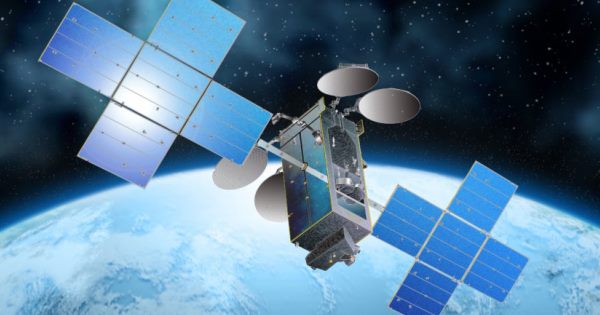
National Space Research and Development Agency (NASRDA), has said Nigeria’s two satellites in the orbit which have expired are not likely to break down in the near future because the agency was monitoring them daily.

Dr. Felix Ale, head of Media and Corporate Communications, NASRDA explained that there was no cause for alarm over their condition.
Recall that Dr. Halilu Shaba, director general of the Agency recently revealed that Nigeria’s two satellites in the orbit have expired but are enjoying a grace period.
Shaba, said one of the satellites, which was commissioned in 2011, has a seven years lifespan and expired in 2018.
He said the satellite was supposed to have been replaced but that the country had not done so because satellites function on fuel that gets exhausted after a period and gets decommissioned, if not replaced.
He said: “We have a satellite in high orbit, which was launched in 2011 and it has a seven-year lifespan. It was supposed to have expired in 2018, but in the culture of the satellite industry, you build a new satellite to replace it. But we have not done that.
“Right now, we are living in a grace period because, based on the fuel capacity, the satellite should only orbit for seven years.”
Shedding more light Dr. Ale, explained that Shaba was right about the expiration of the satellites.
Ale said: “When a satellite is in orbit, there is always a window of opportunity. We call it grace. If the satellite still has enough fuel, it may outlive its designed lifespan.
“So, we are very lucky that Nigeria’s Sat X, which was designed for five years, is still functioning in orbit, still downloading data. Up till this morning, we were still in communication with the satellite.
“Also, Nigeria’s Sat 2, which was designed and expected to last seven years, is still functioning very well in orbit. So, the two satellites are still functioning very well. There is no cause for alarm.”
“Going by their designed lifespan, they were supposed to have expired. But we are in contact with the satellites on daily basis. From what we have seen from monitoring the satellites, I can assure you that nothing will happen to them for now.
“We are in the process of replacing them. If you monitor very well, recently, we had the Space Council meeting, chaired by the President. He has requested that the Council should come up with the submission. We are on it. The final submission will be made by the Minister of Science and Technology.
“We are now at the preliminary stage and believe that as soon as the approval is given, we can come up with a window of activities for a launch.
“Right now, efforts and arrangements are in place for us to get another set of satellites.”



Dr Bosun Tijani, Nigeria’s minister of communications, innovation, and digital economy, has revealed that the federal government’s 3 Million Technical Talent (3MTT) programme has trained over 135,000 citizens as it moves from pilot to national level.

Tijani announced this in an update on the program’s success, stating that the beneficiaries were trained in three batches.
He also stated that the initiative’s community-based learning tools had provided over 300,000 extra learners with access to digital skills training across the country.
According to the minister, the program has also enabled the creation of about 15,000 job, entrepreneurship, and career development in Nigeria’s developing digital economy.
He further revealed that more than 1.8 million Nigerians are currently in the 3MTT pipeline, as the government works toward its target of equipping three million citizens with in-demand digital skills aligned with local and global labour market needs.
As the programme enters its scale-up phase, Tijani said the government’s focus will shift toward deepening impact rather than just expanding numbers.
Key priorities, he explained, include strengthening the 3MTT alumni community, widening access to economic opportunities and ensuring that skills acquired through the programme translate into measurable outcomes such as jobs, business creation and innovation.
To support this phase, the federal government has introduced the #3MTTImpactChallenge, an initiative aimed at assessing the programme’s real-world impact
Through the challenge, fellows and partners are invited to share personal stories on how 3MTT has shaped their professional journeys as part of a National Impact Reflection exercise.
Participants are expected to share their experiences across social media platforms, with selected winners set to receive prizes including laptops, e-tablets, data bundles and other incentives.


MTN Foundation has kicked off the seventh phase of its ICT business skills training programme, targeting more than 2,000 entrepreneurs, mostly from Nigeria’s small and medium-scale enterprises (SMEs), in support of the Federal Government’s National Digital Economy and SME Development agenda.

MTN Foundation
The virtual training’s first week ran from Monday, January 5, to Friday, January 9, 2026. It equips small business owners and aspiring entrepreneurs with simple digital tools to shift from paper-based operations to efficient, productivity-boosting systems.
Business analyst Babajide Jolaolu-Kehinde, moderated by Temiloluwa Oyekanmi, programme and partnerships lead, introduced the SWOT framework—Strengths, Weaknesses, Opportunities, and Threats—to guide participants in assessing and improving their businesses.
Jolaolu-Kehinde stressed digital record-keeping, online payments, and customer data tracking for measurable growth, aligning with government efforts to formalise SMEs. “Hope is good, but action and systems make growth happen,” he said.
Trainers showcased real-world examples: traders using handwritten ledgers expanded reach via WhatsApp Business, online marketplaces, and spreadsheets; others grew by accepting mobile transfers over cash and digital orders to tap distant markets.
Manual operations limit sales visibility and customer insights, experts noted, while digital tools deliver real-time data, cut errors, and unlock broader markets.
Participants must adopt at least one digital tool post-onboarding, with organisers promising follow-up workshops and mentorship. The four-week programme aims to bolster SME growth and Nigeria’s economic goals.


Spacecoin, US-based, has announced the signing of recent agreements with local authorities and operators to launch satellite connectivity pilot projects in Africa.

The initiatives, focused on Kenya and Nigeria, aim to serve areas where terrestrial networks remain limited or unavailable.
n Kenya, Spacecoin has obtained a transmission license from the Communications Authority, allowing it to test satellite-based solutions for connectivity and Internet of Things (IoT) monitoring, particularly in rural and peri-urban areas with limited internet access.
According to the Kenyan regulator, internet penetration remains below 50% of the population, despite mobile penetration exceeding 130%.
In parallel, the company is continuing operations in Nigeria under an existing license issued by the Nigerian Communications Commission (NCC).
This authorization supports initiatives aimed at delivering affordable broadband connectivity to isolated and underserved communities.
Spacecoin’s approach is based on a decentralized satellite network using nanosatellites in low Earth orbit (LEO).
Combined with blockchain-based protocols, this architecture is intended to offer more flexible and cost-effective connectivity services than traditional networks, while also enabling the integration of IoT solutions for a range of uses, from smart agriculture to infrastructure monitoring.
These projects are part of a broader strategy to help narrow Africa’s digital divide, where a significant share of the population still lacks access to reliable internet services.
Satellite technology is increasingly viewed as a complement to terrestrial infrastructure, particularly in hard-to-reach areas where deployment costs and geographic constraints remain high.
Beyond Africa, Spacecoin is also running pilot projects in Asia, working with local partners to test the viability of its model across different regulatory and geographic environments.
According to the company’s management, growing interest from regulators reflects a shift toward solutions capable of reaching populations that have long been excluded from internet access.

DG NCC Tasks University Dons on Research Commercialization, IP Management to Build Global Competitive Ecosystems

FG Expands 3MTT Programme Across the Country

Banks to Cut Fraud Response Times to Under 30 Minutes

Firms Face Gaps Between AI Ambition and Execution

Firm Detected a Scam Exploiting OpenAI’s Teamwork Features

Banks quietly move to enforce new ₦50 transfer levy from Jan. 1

FIRS says NIN, CAC Numbers to Serve as Tax IDs from 2026

FIRS Declares NIN, CAC Numbers as Tax IDs from 2026

Jumia CEO says Black Friday Signals Nigeria’s E-Commerce Maturity

Galaxy Backbone Celebrates the Federal Government’s Paperless Civil Service Milestone




 General News3 days ago
Cybersecurity Firm Detects a Wave of Crypto Phishing Following BlockFi Bankruptcy

 News3 days ago
IMF Upgrades Nigeria’s 2026 Growth Projection to 4.4%

 Telecom3 days ago
NCC Unveils Spectrum Roadmap to Power Nigeria’s $1tr Digital Economy

 Telecom2 days ago
Spacecoin Secures Licenses to Roll Out Satellite Connectivity in Nigeria, Kenya
- Telecom3 days ago
NCC Gives Amazon’s Kuiper, BeetleSat Nod to Provide Satellite Broadband Services in Nigeria

 News3 days ago
New Horizons Invests N50m to Empower Almajiris with Skills

 General News3 days ago
FG Rejects Northern Elders’ Gold Refinery Siting Claim

 E-Financial3 days ago
KongaPay K-Save Users Save over N3.2Bn