

Telecom
How to File Complaints against Telcos- NCC

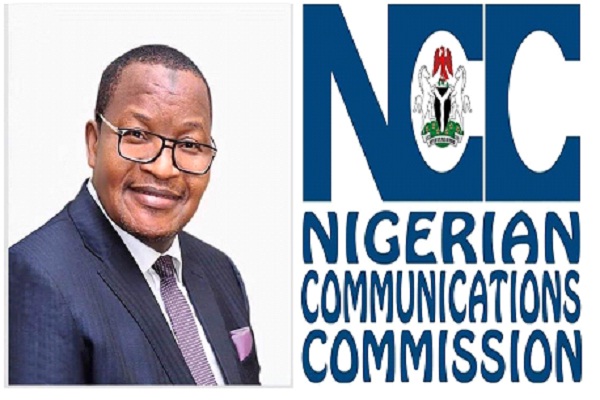
Nigerian Communications Commission (NCC) has made it easy for consumers of telecom services in the country, who are dissatisfied with services rendered to them by any of the service providers, to file a complaint.

Prof Umar Danbatta, EVC, NCC
The simple steps laid down by the regulator give room for consumers to seek redress of the situation and they are highlighted below:
- When dissatisfied with telecom services:
The consumer should contact the service provider, whose services or product he/she is not satisfied with, to make a complaint and obtain a complaint ticket number. In case the issue is not satisfactorily resolved by the service provider, the consumer should contact NCC through any of the following:
Complete a Digital Complaint Form on www.ncc.gov.ng/consumer or send a mail or walk into any of the NCC offices listed below to make a complaint.
OR
Write a letter to NCC and submit to any of the addresses listed below. The letter, either handwritten or typewritten, should be legible, concise and not more than two (2) A4 pages. The letter must be signed by the consumer who is dissatisfied.
OR
iii. Call the NCC Contact Centre Toll-Free number 622 to lodge the complaint providing ticket number given by the operator.
OR
Send email to [email protected]
When lodging a formal complaint, you must provide the required information as outlined below.
The complaint must state name, address, phone number(s), fax, or e-mail of the dissatisfied consumer; a statement of the problem and duration (how long the problem has lasted); a brief explanation of the circumstance that led to the complaint; name of service provider and the number of the telephone that has the problem; the date you contacted the service provider about your complaint; and copies of any relevant supporting documents to assist in our investigation.
What happens when a consumer’s complaint is received by NCC Consumer Affairs Bureau?
The Consumer Affairs Bureau analyses the complaint and starts investigations immediately. The bureau will mediate as appropriate to resolve the issues.
Will NCC Consumer Affairs Bureau give feedback to the consumer who lodged a formal complaint?
Yes. In situations where investigations are concluded in less than 48 hours, the dissatisfied consumer will be reached by phone or e-mail. This communication can also be in writing.
Do I have to pay for the services of the Consumer Affair Bureau?
No. The services of the CAB are rendered FREE OF CHARGE.
Can an aggrieved consumer sue the service provider in law court over a breach of contract?
Yes. However, in line with the provision of the Nigeria Communications Act (NCA) 2003, a dissatisfied consumer should first seek redress with the service provider, and later with NCC. A court action may be considered as last option.
What avenues for redress are available within NCC?
The NCC has two distinct redress processes available. These are: Consumer Complaints Resolution Process and Arbitration Process.
What issues can consumers complain to NCC about?
Doubtful bills, arbitrary disconnection of lines, nonchalant attitude towards genuine complaints, poor services delivery, inappropriate or deceptive advertisements, unauthorized increase in price, the supply of sub-standard equipment, exploitation and invasion of privacy and any matters connected thereto.
FOR ANY COMPLAINT: Contact your service provider. If you are dissatisfied with the intervention from your service provider, call NCC Toll Free Number, 622.
FOR ONLINE COMPLAINTS
Send email to: www.ncc.gov.ng [email protected]


Dimension Data Nigeria has raised ₦20 billion (approximately $13.7 million) through a bond programme under Dimension Data SPV Funding Plc, following approval from the Securities and Exchange Commission of Nigeria.

This initiative aims to strengthen Nigeria’s digital infrastructure by addressing gaps in fibre coverage, limited enterprise connectivity, and increasing demand for cloud, fintech, digital services, and Artificial Intelligence.
The integrated IT solutions provider stated that the capital will be used to fund long-term investments in expanding network capacity, enhancing resilience, and supporting carrier-grade and enterprise services as data consumption continues to accelerate nationwide.
Speaking at a documentation and regulatory clearances event in Lagos, managing director, Gbenga Olabiyi, said sustained infrastructure investment is critical to maintaining competitiveness and enabling future growth.
He noted that strategic upgrades would help future-proof operations, reduce service disruptions, and allow the company to scale efficiently as business and consumer demand for cloud, fintech, and other digital services intensifies.
The bond programme is backed by private equity firm Mbavaa Partners Limited, whose managing partner, Shatse Kakwagh, described the transaction as a milestone that unlocks long-term capital for expansion.
He highlighted that strong ratings and an oversubscribed first issuance show investor confidence in Dimension Data’s execution and growth potential.
The fundraising comes as Nigeria confronts persistent infrastructure gaps, including limited metro and last-mile fibre coverage and rising enterprise connectivity needs.
Government intends to deploy 90,000 kilometres of fibre nationwide under Project Bridge aim to expand internet penetration and lower access costs.


Nigerian B2B e‑commerce platform Alerzo is disposing of large parts of its delivery fleet, including buses, motorcycles, and operational vehicles, as it contends with a N4.38 billion debt owed to Moniepoint Microfinance Bank.

Alerzo
Footage of the company’s facility in Ibadan, packed with dusty Alerzo‑branded motorcycles and buses, circulated on social media on Thursday, with a background voice inviting buyers to purchase the vehicles in bulk. The asset sale follows a Federal High Court order in Lagos that froze Alerzo’s accounts and assets after the company defaulted on a N5 billion working‑capital loan obtained in January 2025 from Moniepoint.
By December 2025, the outstanding balance on the loan reached N4.38 billion, with interest still accruing.
While Alerzo has not issued an official public statement, insiders close to the company attribute the business downturn to the harsh macroeconomic conditions in Nigeria, including rising fuel and logistics costs, inflation‑driven price pressures, and tight credit. “They tried their best. They did everything to stay afloat and keep several young Nigerians under their employment, but several economic factors were against them,” said a source close to the company.
Facing severe financial strain, Alerzo reportedly turned to Moniepoint in early 2025 for emergency funding to stabilise operations and maintain inventory supply to retailers. The facility was initially structured as an 18‑month loan, with a clause allowing Moniepoint to recall it immediately in case of default. Despite a demand letter issued on November 18, 2025, Alerzo allegedly failed to fully repay the debt, triggering the bank’s legal action.
In January 2026, the Federal High Court in Lagos granted Moniepoint Microfinance Bank Limited a Mareva injunction against Alerzo Limited and its associates, directing all financial institutions to freeze accounts and assets linked to the defendants pending the resolution of the case. The bank’s suit names Alerzo Limited, its Managing Director Adewale Opaleye Adesina, three guarantors – Opaleye Bukola Modinat, Dauda Hakeem Omotayo Taiwo, and the Singapore‑based Alerzo PTE Limited – as defendants. Court documents show that Alerzo sought the N5 billion facility through a board resolution dated January 20, 2025, to meet working capital and inventory supply needs.
Moniepoint argued that despite the demand notice, the defendants did not liquidate their obligation, leaving a N4.38 billion balance as of December 3, 2025. The bank also complained of difficulties in serving court processes on some guarantors at their known addresses, with the Singapore‑registered entity requiring substituted service via courier.
Alerzo’s Chief Executive Officer, Adewale Opaleye, has since clarified that the company is only selling scrap vehicles and not its core operational fleet. He stated that Alerzo still operates over 400 active delivery vehicles, and the sale of the idle and damaged units does not signify a full shutdown of logistics operations. According to Opaleye, the disposed assets were mainly old or non‑functional units withdrawn from service, and the exercise forms part of an internal asset‑optimisation drive unrelated to the Moniepoint loan dispute.
Founded as a B2B e‑commerce and distribution platform, Alerzo developed a network that supplied fast‑moving consumer goods directly to neighbourhood retailers, cutting out middlemen and promising lower prices, faster delivery, and improved stock efficiency for small shops. At its peak, the company raised about $20 million in venture funding and expanded across Lagos, Oyo, Ogun, and other southwestern states, employing hundreds of staff and building a large fleet of delivery vehicles.
However, the capital‑intensive logistics and low‑margin nature of the business began to weigh heavily on the balance sheet, especially as fuel, maintenance, driver salaries, and warehousing costs surged. By 2023, Alerzo had initiated layoffs to cut costs and restructure operations, reflecting the broader pressure on Nigerian startups that scaled up during the 2020–2022 venture‑capital boom but now struggle with tighter funding, higher operating costs, and slower growth.
Alerzo’s situation echoes wider challenges facing the Nigerian tech ecosystem, where several once‑promising startups have shut down or scaled back operations since 2023, underscoring the risks of high‑burn logistics models in a difficult macro environment and the need for tighter alignment between unit economics, funding runway, and real‑market conditions.

MTN Nigeria Communications Plc has recorded a landmark turnaround in 2025, posting a pre‑tax profit of N1.70 trillion, reversing a loss of N550.3 billion in 2024 as the company emerged from a rough patch driven largely by foreign exchange volatility.

MTN Nigeria
The telecom giant said the performance reflects a “significant turning point” in its corporate and financial trajectory, underpinned by improved macroeconomic conditions, strong service‑revenue growth, and tightening operational efficiency.
Profitability, Revenue, and Dividend
For the full year 2025, MTN Nigeria reported profit after tax of N1.11 trillion, compared with a loss after tax of N400.4 billion in 2024, while earnings per share rose to N53.07 from a negative N19.05 a year earlier.
Total revenue grew 54.9% year‑on‑year to N5.20 trillion, with service revenue up 55.1% to N5.17 trillion, driven mainly by data, voice, and fintech services.
The company’s board proposed a final cash dividend of N15 per share, bringing the total dividend for the 2025 financial year to N20 per share. Dividends will be paid electronically to shareholders on the register as of April 8, 2026, subject to completed e‑dividend mandates.
This payout is one of the largest single‑year dividends in Nigerian corporate history, signalling strong cash‑flow generation and management confidence in the company’s earnings quality.
Fourth‑Quarter Momentum and Customer Base
MTN Nigeria’s fourth‑quarter performance was particularly robust, with pre‑tax profit surging 248.8% year‑on‑year to N569.6 billion, compared with N163.3 billion in Q4 2024.
The company’s mobile subscriber base reached 87.3 million at year‑end, up 7.9% from the previous year, reinforcing its position as Nigeria’s largest telecom operator by subscribers.
Active data users grew by 11.6% to 53.2 million, and smartphone penetration rose to 66.1%, reflecting the deepening shift toward data‑driven services and digital lifestyles among Nigerians.
Data, Fintech, and Voice Growth
Data was the biggest growth driver, with data revenue up 74.5% to N2.78 trillion and data traffic increasing 34.0%, amid rising demand for mobile broadband and video streaming.
Voice revenue also climbed strongly, rising 42.1% to N1.85 trillion as tariffs and usage patterns adjusted to more stable exchange‑rate conditions.
Fintech revenue surged 79.7% to N191.3 billion, underscoring the rapid expansion of MTN Nigeria’s mobile money ecosystem and the growing role of digital financial inclusion in the country’s economy.
Cost Management and EBITDA Leap
Operating leverage improved markedly, with cost of sales rising 30.3% and operating expenses up 16.7%, both growth rates below the 55% revenue expansion.
EBITDA jumped 108.9% to N2.74 trillion, lifting the company’s EBITDA margin into the mid‑to‑high 50% range, ahead of its prior guidance.
Management attributed the improvement to a more stable foreign‑exchange market, moderated inflation, and sustained demand for data and digital services, as well as disciplined cost control.
FX Recovery and Capital Expenditure
Foreign exchange performance was a major swing factor: MTN Nigeria recorded a net FX gain of N90.3 billion in 2025, compared with a N925.4 billion FX loss in 2024.
The turnaround followed settlement of outstanding letters of credit and a deliberate reduction in dollar‑denominated exposure, which helped insulate earnings from earlier currency shocks.
Capital expenditure excluding leases rose 126.2% to N1.00 trillion, as the company invested heavily in network capacity, coverage, and digital infrastructure, including fibre rollout and 4G/LTE upgrades.
Despite the higher capex, free cash flow soared 215.5% to N1.2 trillion, indicating that the expansion is being funded internally without straining the balance sheet.
Balance Sheet and Shareholder Value
The company’s balance sheet strengthened materially, with total assets up 28.7% to N5.40 trillion and shareholders’ equity turning positive after several years in deficit.
Shareholders’ funds rose 219.8% to N548.7 billion, while retained earnings closed at N400.4 billion, compared with negative N607.5 billion in December 2024.
In the stock market, MTN Nigeria’s shares recently traded around N760, making it the most capitalised company on the Nigerian Exchange with a market valuation of about N16 trillion.
The stock has gained 33% in February 2026 alone, taking year‑to‑date returns to 49%, following a 155.5% rally in 2025, which investors see as a vote of confidence in the company’s turnaround story.
Outlook and Strategic Guidance
Management maintains a medium‑term service‑revenue growth guidance of at least low‑20% annually, underpinned by ongoing data and fintech expansion as well as gradual price adjustments.
The group has also revised its EBITDA margin guidance upward to the mid‑to‑high 50% range, signalling sustained profitability even as the company continues to invest in network and digital infrastructure.
Analysts note that MTN Nigeria’s 2025 performance not only restores investor confidence but also sets a benchmark for other Nigerian corporates navigating FX‑linked risks and regulatory uncertainty.

Leo Stan Ekeh at 70; thanks Tinubu, Obasanjo, Nigerians, Global Tech Community

Iran-Israel-US Conflict and CBN’s FX Gains: A Stress Test for Nigeria’s Monetary Stability

JAMB Uncovers AI-Driven Fraud Targeting UTME Candidates, Warns Parents

SERAP Asks FCCPC to Investigate Google, Meta, Others over Alleged Rights Abuses

Reps Mull Commission to Regulate Fintech Operations

Accidental Billionaire Opts for Jail Instead of Returning Money Credited Him by Mistake

New Horizons Nigeria Breaks Ground: First to Fuse Mandarin into ICT Curriculum

Kaspersky Brings more Transparency to Threat Detection with New Hunt Hub

NDPC Commits to Balancing Data Privacy, Protection Information

OADC Lagos Reinforces Commitment to Local Data Hosting and Digital Transformation @ NDPC’s National Privacy Week Summit




 General News3 days ago
More 14m Farmers to Benefit from AfDB-backed Initiative

 Telecom3 days ago
MTN Nigeria Posts Record N1.70 Trillion Pre‑Tax Profit, Declares N20 Dividend for 2025

 Telecom3 days ago
Dimension Data Nigeria Secures ₦20Billion Funding to Strengthen Digital Infrastructure

 News3 days ago
Galaxy Backbone Confirms Over 150,000 Active Official Government Email Accounts, Clarifies Status of GOVMAIL

 Telecom3 days ago
Alerzo Liquidates Delivery Fleet as N4.38bn Moniepoint Loan Row Deepens

 General News3 days ago
Newmark Webinar Explores How AI Could Transform Healthcare in Africa
 General News14 hours ago
SERAP Asks FCCPC to Investigate Google, Meta, Others over Alleged Rights Abuses
 E-Financial14 hours ago
Iran-Israel-US Conflict and CBN’s FX Gains: A Stress Test for Nigeria’s Monetary Stability