

/home/kenneth/web/nigeriacommunicationsweek.com.ng/public_html/wp-content/themes/zox-news/parts/post-single.php on line 153
">
Warning: Undefined array key 0 in /home/kenneth/web/nigeriacommunicationsweek.com.ng/public_html/wp-content/themes/zox-news/parts/post-single.php on line 153
Warning: Attempt to read property "cat_name" on null in /home/kenneth/web/nigeriacommunicationsweek.com.ng/public_html/wp-content/themes/zox-news/parts/post-single.php on line 153
Ndukwe, Father of Telecoms Gets ITU Honours

Ernest Ndukwe, father of modern telecommunications in Nigeria and chairman of the Openmedia Group, has been recognised by the International Telecommunications Union (ITU) for his contribution to global information and technologies and the work of the ITU.
The recognition was conveyed to Ndukwe in a letter signed by Hamadoun I. Toure, secretary-general of the ITU, which underscored the leading role he has played at home and abroad, but specifically for his immense contribution in the global sphere of information and technology.
The ITU is a specialized agency of the United Nations that was created to encourage international cooperation in all forms of telecommunication.
Its activities include maintaining order in the allocation of radio frequencies, setting standards on technical and operational matters, and assisting countries in developing their own telecommunication systems.
The recognition of Ndukwe by the ITU therefore speaks volume of the landmark of his achievement in the Nigeria’s telecoms industry particularly for organising a hitched-free GSM license auctioning in 2001, an event which ushered in the much cherished telecommunications revolution in Nigeria.
In his acceptance speech, Ndukwe noted that the recognition is indeed a further call to crystalize the development of ICT in Africa and greater service to humanity.
He pledged to devote effort to Broadband development in Africa given that it is critical to the continent’s Socio-economic development.
He disclosed that “we have recently founded a new project, the Broadband Rights Advocacy Network – Africa. This is to preserve the rights of everyone in Africa to broadband Access”.
He further noted with delight that “in Nigeria, we are lucky that President Goodluck Jonathan and Mrs. Omobola Johnson, minister of Communications Technology are strong advocates of pervasive Broadband development in Nigeria”. He therefore pledged to “continue to serve the nation & the ITU in the drive to make digital natives of everyone in Africa”.
Ndukwe, who is no stranger to local and international honours hold the national honour of the Order of the Federal Republic of Nigeria (OFR).
He is the immediate past Executive Vice Chairman and Chief Executive Officer of the Nigerian Communications Commission (NCC) and has over 36 years experience in the telecommunications industry.
He is currently the Chairman of Openmedia Group which recently organised a hugely successful “International Forum on Accelerating Nationwide Broadband Access in Nigeria”.


Warning: Undefined array key 0 in /home/kenneth/web/nigeriacommunicationsweek.com.ng/public_html/wp-content/themes/zox-news/parts/post-single.php on line 493
Warning: Attempt to read property "cat_ID" on null in /home/kenneth/web/nigeriacommunicationsweek.com.ng/public_html/wp-content/themes/zox-news/parts/post-single.php on line 493
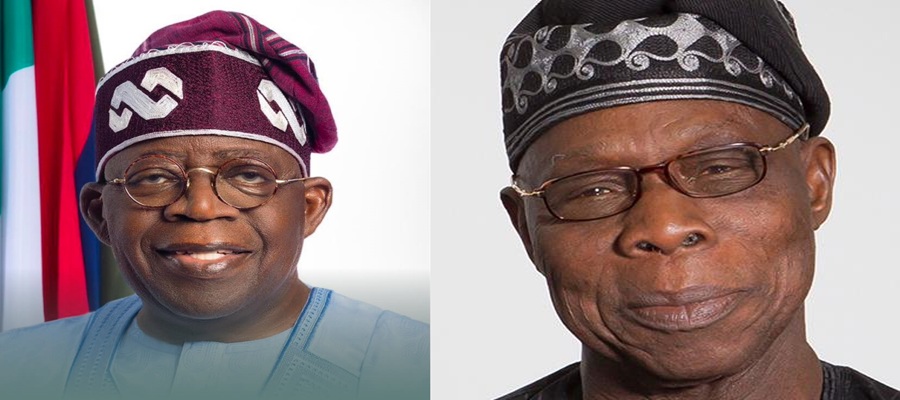
Leo Stan Ekeh, Chairman of Zinox Group and Africa’s foremost digital disruptor, has expressed gratitude to President Bola Ahmed Tinubu, and former President and African statesman, Chief Olusegun Obasanjo, for their goodwill messages and prayers on his birthday.

Ekeh, who turned 70 on Sunday, February 22, also extended gratitude to governors; former governors, including Babatunde Raji Fashola, former governor of Lagos state; National Assembly members; captains of industries, members of the global tech community, some of whom sent delegations to his house aside virtual goodwill messages sent from across the globe; royal fathers and the media.
In a post-birthday prayer and thanksgiving meeting with some members of the ICT media in his Ikoyi residence at the weekend, Ekeh said he was overwhelmed by the deluge of good wishes from Nigerians of all tribes and tongues.
Ekeh reflected on his relationship with President Tinubu over the past decades, describing Tinubu as a trustworthy and loyal friend who does not hesitate to make sacrifices for the good of the people he leads.
“President Tinubu has been my supporter long before I launched Zinox. He has always shown brotherly love,” he recalled.
He mentioned Mr. Sam Amuka, publisher of Vanguard newspapers; Lt. General T.Y Danjuma (retd), Founder, South Atlantic Petroleum; and Pa Obafemi Awolowo’s family as some of the many Nigerians with established companies who “experienced me and trusted me in the early days of my business life, and I didn’t disappoint”.
Recounting how Nigerians celebrated him on his birthday, he said: “In all my years, I have never seen such a show of love from Nigerians via different communications channels, from calls to social media. I was deeply touched by the kindred spirit of Nigerians. It tells me one thing: Nigerians are caring and loving people, and they appreciate quality and value-driven impact.
“I want to use this medium to say ‘thank you’ to those who sent me messages of goodwill, prayers through different communication platforms that I could not immediately acknowledge. I appreciate you all,” he said.
It will be recalled that President Tinubu while celebrating Ekeh on his birthday described him as one of “Nigeria’s pioneering innovators in the information technology sector.”
The President also commended Ekeh for his “commitment to promoting the Nigerian brand and creating opportunities for young Nigerians,” amongst his other achievements in the tech sector.
President Obasanjo, accompanied by his wife, Chief (Mrs.) Bola Obasanjo, who visited Ekeh to pray for him, described Ekeh as a “very kind man and an achiever who inspired many youths at a critical point in Nigeria’s information technology history.” He also prayed for the Zinox Group boss to live for 100 years and beyond.
As a sitting President, Obasanjo honoured Ekeh as an Icon of Hope and a role model for Nigerian youths on October 1st, 2001, and subsequently with the national honour of the Officer of the Federal Republic (OFR).
Others who joined Obasanjo in honouring Ekeh were former Lagos state governor, Babatunde Raji Fashola and his wife, former INEC Chairman, Professor Maurice Iwu and his wife, Chairman of MTN, Dr. Ernest Ndukwe and his wife; Mr. Atedo Peterside, Founder of Stanbic IBTC Bank and his wife; Chairman of Fidelity Bank, Mrs. Amaka Onwughalu and her husband; Managing Director Fidelity Bank, Dr. Nneka Onyeali-Ikpe; Mr. Udoma Udo-Udoma, Chairman Seplat Energy and his wife; Mr. Sam Amuka; Prof Anya O. Anya; Mr. Chris Uwaje, tech policy expert and his wife; Mr. John Momoh, Chairman of Channels Media Group and his wife; Mr and Mrs Walter, CEO of Providus bank, Mr. Roosevelt Ogbonna, group CEO of Access bank, Mrs. Victoria Ajayi, CEO of TVC Communications and her husband; Mrs. Nkeiru Anumudu, CEO of Globe Motors, secondary school mates of Ekeh including Charles Oputa (Charly Boy) who came with his wife; Leo Stan’s elder brother HRM Eze George Ekeh (aka Saint George), the traditional ruler Ishi Ubomiri Autonomous Community in Imo state; representatives of multinationals with whom he has partnered all through the years; among
E-Financial
Iran-Israel-US Conflict and CBN’s FX Gains: A Stress Test for Nigeria’s Monetary Stability

Blaise Udunze
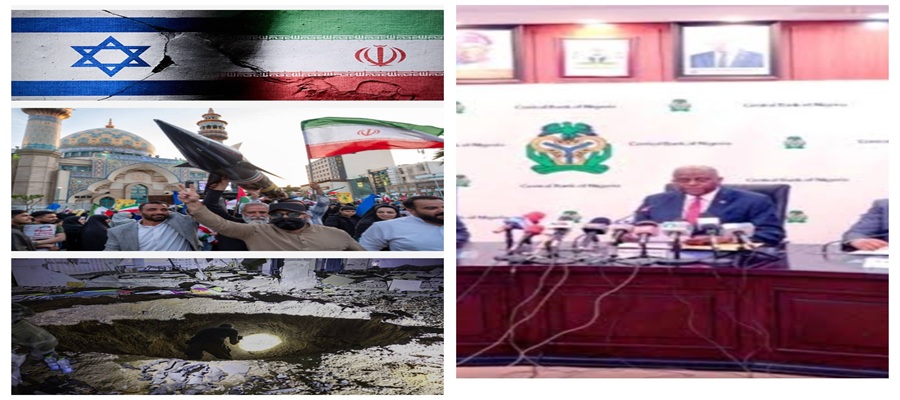
At the 304th policy meeting held on Wednesday, the 25th February, the Central Bank of Nigeria’s (CBN) Monetary Policy Committee cut the rate by 50 basis points to 26.5 percent from 27 percent, which has been widely described as a cautious transition from prolonged tightening to calibrated easing.

CBN
The CBN stated that the decision followed 11 consecutive months of disinflation. The economy witnessed headline inflation easing to 15.10 percent in January 2026, and food inflation falling sharply to 8.89 percent. Foreign reserves are climbing to $50.45 billion, their highest level in 13 years. The Purchasing Managers’ Index is holding at an expansionary 55.7 points.
As reported in the paper, no doubt that the macroeconomic narrative appears encouraging. On a closer scrutiny, the sustainability of these gains is now being tested by forces far beyond the apex bank’s policy corridors. This is as a result of the clear, direct ripple effect of the escalating conflict between Iran and Israel, with direct military involvement from the United States, has triggered one of the most significant geopolitical energy shocks in decades. For Nigeria, the timing is delicate. Just as the CBN signals confidence in disinflation and stability, global volatility threatens to complicate and possibly distort its monetary path.
The rate cut, though welcomed by many analysts, must be understood in context. Nigeria remains in an exceptionally high-rate environment. An MPR of 26.5 per cent is still restrictive by any standard. The Cash Reserve Ratio (CRR) remains elevated at 45 per cent for commercial banks, and this effectively sterilises nearly half of deposits, while liquidity ratios are tight, and lending rates to businesses often exceed 30 per cent once risk premiums are included. The adjustment is therefore incremental, not transformational.
The Director/CEO of the Centre for the Promotion of Private Enterprise (CPPE), Dr. Muda Yusuf, has repeatedly noted that Nigeria’s deeper challenge lies in weak monetary transmission. According to him, even when the benchmark rate falls, structural rigidities, high CRR, elevated deposit costs, macroeconomic uncertainty, and crowding-out from government borrowing prevent meaningful relief from reaching manufacturers, SMEs, agriculture, and other productive sectors. Monetary easing, without structural reform, risks becoming cosmetic. The point is that even before structural reforms take effect, the fact is that an external shock will first reshape the landscape.
The Iran-Israel conflict and US involvement have reignited fears in global energy markets. Joint U.S. and Israeli strikes on Iranian targets and retaliatory missile exchanges across the Gulf have unsettled oil traders. Brent crude, already rising in anticipation of escalation, surged toward $70-$75 per barrel and could climb higher if shipping through the Strait of Hormuz, through which nearly 20 per cent of global oil supplies pass, faces disruption. It is still an irony that a major crude exporter is also an importer of refined petroleum products.
Higher crude prices offer a theoretical windfall. For Nigeria’s economy, it is well known that oil remains its largest source of foreign exchange and accounts for roughly 50 per cent of government revenue. The good thing is that rising prices could boost reserves, improve forex liquidity, strengthen the naira, and ease fiscal pressures. In theory, this external cushion could support macroeconomic stability and reinforce the CBN’s easing posture.
However, the upside is constrained by structural weaknesses. Nigeria’s oil production remains below optimal capacity. A significant portion of crude exports is tied to long-term contracts, limiting immediate gains from spot price surges. As SB Morgen observed in its analysis, Nigeria’s “windfall” is volatile and limited by soft production performance.
More critically, Nigeria’s dependence on imported refined products exposes it to imported inflation. Rising global crude prices increase the cost of petrol, diesel, jet fuel and gas. With fuel subsidies removed, these increases are passed directly to consumers and businesses. Depot pump prices have already adjusted upward amid Middle East tensions.
Energy costs are a primary driver of Nigeria’s inflation and this has remained sacrosanct. When fuel prices rise, transportation, logistics, food distribution, power generation, and manufacturing costs will definitely skyrocket, as well as the inflationary impulse spreads quickly through the economy. This will push households to face higher food and transportation costs. Businesses see shrinking margins. Real incomes erode.
Thus, the same oil shock that boosts government revenue may simultaneously reignite inflationary pressure, precisely at a moment when the CBN has begun cautiously easing policy.
This dynamic introduces a difficult policy dilemma, even as this could be for the fragile gains of the MPC. This is to say that if energy-driven inflation resurges, the CBN may be forced to pause or reverse its easing cycle. It is clearly spelled that high inflation typically compels tighter monetary conditions. As Yusuf warned, geopolitical headwinds that elevate inflation often push central banks toward higher interest rates. A renewed tightening would strain credit conditions further, undermining growth prospects.
There is also the risk of money supply expansion. Increased oil revenues, once monetised, can expand liquidity in the domestic system. Historically, surges in oil receipts have been associated with monetary growth, inflationary pressure, and exchange rate volatility. Without sterilisation discipline, a revenue boost could ironically destabilise macro fundamentals.
The exchange rate dimension compounds the complexity. Heightened geopolitical risk, just as it is currently playing out with the Iran-Israel conflict, often triggers global flight to safety. This will eventually lure investors to retreat to U.S. Treasuries and gold. Emerging markets face capital outflows. If it happens that foreign portfolio investors withdraw from Nigeria’s fixed-income market in response to global uncertainty, pressure on the naira could intensify.
Already, the CBN has demonstrated sensitivity to exchange rate dynamics by intervening to prevent excessive naira appreciation. A sharp rate cut in the midst of global volatility could destabilise carry trades and spur dollar demand. What should be known is that the 50-bps reduction reflects not just domestic disinflation, but global risk management such as geopolitical tensions, oil prices, and foreign investor sentiment.
Beyond macroeconomics, geopolitical implications carry security concerns. Analysts warn that a widening Middle East conflict could embolden extremist narratives across the Sahel and it directly has security consequences for Nigeria and the broader region. Groups such as Boko Haram and ISWAP may exploit anti-Western framing to recruit and mobilise more followers in the Sahel region, thereby giving the extremist groups new propaganda opportunities. The pebble fear is that a diversion of Western security resources away from West Africa could create regional vacuums. What the Nigerian economy will begin to experience is that security instability will disrupt agricultural output, logistics corridors, and investor confidence, feeding back into inflation and slow economic growth and as ripple effects, the economy becomes weaker.
Nigeria’s diplomatic balancing act adds another layer of fragility because it is walking on a tactful tightrope. The country is trying not to upset anyone, but maintains cautious neutrality, urging restraint while preserving ties with Western allies and Middle Eastern partners. Yet rising tensions globally between major powers, including Russia and China, complicate the geopolitical chessboard. Invariably, this will have a direct impact as trade flows, remittances, and investment patterns may change unexpectedly, affecting Nigeria’s economy.
With the current conflict in the Middle East, the prospects for economic growth also face renewed strain or are under increased pressure. The stock markets in developed countries have been fluctuating a lot because people are worried that there will be problems with the energy supply. If the whole world does not grow fast, then people will use less oil over time. This means that the good things that happen to Nigeria because of oil prices will probably not last, and any extra money Nigeria gets from oil prices now will be lost. Nigeria will not get to keep the money from high oil prices for a long time. The oil prices will affect Nigeria. Then the effect will go away. One clear thing is that since Nigeria relies heavily on oil exports, this commodity dependence exposes the country to significant risk.
Meanwhile, Nigeria’s domestic fundamentals remain structurally challenged. The recapitalisation of banks, with 20 of 33 institutions meeting new capital thresholds, strengthens resilience, but does not guarantee credit expansion into productive sectors. Banks continue to prefer risk-free government securities over private lending in uncertain environments.
Fiscal discipline remains essential. Elevated debt service obligations absorb substantial revenue. Election-related spending poses upside inflation risks. This understanding must be adhered to, that without credible deficit reduction and revenue diversification, monetary easing may be undermined by fiscal expansion.
At the moment, given the current global and domestic uncertainties, the 50 percent interest cut rate appears less like a pivot toward growth and more like a signal of cautious optimism under conditional stability. The policy decision is based on several key expectations with the assumptions that disinflation will persist, exchange rate stability will hold, and global conditions will not deteriorate dramatically.
But the Iran-Israel-U.S. conflict introduces uncertainty into all three assumptions, which is wrongly perceived as behind the rate cut that inflation will keep coming down, that the exchange rate will stay stable, and global conditions won’t worsen, are all undermined by the unfolding conflict.
If the global oil prices rise sharply and fuel becomes more expensive locally, overall prices in the economy could increase again, which means inflation could accelerate. Another dangerous trend is that if foreign investors pull capital out of Nigeria, exchange rate stability could weaken, seeing the naira coming under pressure. If global growth slows, export earnings could decline. Each of these scenarios would constrain the CBN’s flexibility.
This is not to dismiss potential upsides. Higher oil prices, if production improves, could bolster reserves and moderate fiscal deficits. Forex liquidity could strengthen the naira. Investment in upstream oil and gas could gain momentum. Historically, crude price increases have correlated with improved GDP performance and stock market optimism in Nigeria.
Yet history also warns of volatility. A good example is during the 2022 Ukraine conflict, oil prices spiked above $100 per barrel, which created a potential revenue windfall oil exporting countries, but Nigeria struggled to translate that temporary advantage into sustained economic improvement. Inflation persisted. In the case of Nigeria, the deep-rooted systemic or structural weaknesses and inefficiency diluted the benefits that should have been gained.
The lesson is clear because temporary external windfalls or short-term luck cannot substitute for structural and deep internal economic reforms.
The point is that sustainable development demands diversification beyond oil, to strengthening multiple parts of its economy at the same time, such as improved refining capacity, infrastructure investment, agricultural security, logistics efficiency, and fiscal consolidation. Monetary policy, as the action taken by the CBN at the MPC meeting by adjusting interest rates or attempting to control money supply, can anchor expectations and moderate volatility, but it cannot build productive capacity; it will only help to reduce short-term economic swings.
The CBN’s decision to cut the interest rate appears cautious. It is not a bold shift but rather a small adjustment. This shows that the bank is being careful and optimistic about the economy. It also knows that there are still problems. The trouble in the Middle East, like the fighting that affects the oil supply, reminds the people in charge that Nigeria’s economy is closely tied to what happens with energy around the world. This includes things like inflation, the value of money, and how fast the economy grows.
Until structural reforms reduce dependence on volatile oil cycles and imported fuel, Nigeria’s monetary policy will remain reactive to external crises. To really make the economy strong and stable, Nigeria needs to make some changes. It requires resilience against geopolitical storms.
The MPC has taken a step. Whether it marks a turning point depends less on 50 basis points and more on how Nigeria navigates a world increasingly defined by conflict-driven volatility.
Blaise, a journalist and PR professional, writes from Lagos and can be reached via: [email protected]

Joint Admissions and Matriculation Board (JAMB) has said it has uncovered criminal syndicates that are deploying artificial intelligence tools to impersonate its officials and defraud candidates preparing for the Unified Tertiary Matriculation Examination (UTME).

Is-haq Oloyede, registrar of the board, disclosed this on Saturday in Abuja, warning that candidates and parents involved in the scheme would face severe consequences.
Mr Oloyede also said three top officials of the board have been found to have collaborated in sabotaging the system and have been recommended for dismissal.
He added that two other officials and a member of staff of Ahmadu Bello University, Zaria, are currently undergoing criminal prosecution for involvement in activities inimical to the integrity of the examination body.
Mr Oloyede said investigations revealed that more than 100 candidates were linked to the scheme, with 83 confirmed to have made payments to the syndicates.
He added that those involved cut across 25 states with three school proprietors in custody for aiding and abetting examination malpractice.
He further said the board had made recommendations to the Minister of Education for the cancellation of the affected registrations.
“What is important for us to emphasise here is that the students themselves and their parents are willing collaborators and cannot be regarded as innocent,” he said.
Mr Oloyede also expressed concern about the involvement of underage candidates, noting that about 38,000 underage candidates have registered for the 2026 UTME.
He said many of the candidates who patronised the syndicate are underaged, who have been pushed by their parents beyond their academic capacity.
While noting that JAMB’s mandate is limited to conducting examinations, he urged parents to refrain from encouraging malpractice.
“Parents must understand that paying for fraud does not secure a child’s future. It destroys it. You are teaching them that cheating is a strategy, that deception is acceptable, and that merit is optional,” he said.
Mr Oloyede rejected suggestions that the board should negotiate with suspects, including some who allegedly fled the country after last year’s examination.
He added that some computer-based test (CBT) centres had already been sanctioned.
He warned that paying for examination fraud or belonging to online groups offering such services would attract sanctions.
“Let it be clearly understood by all Nigerians that paying for examination fraud is a crime. Receiving illegal assistance is a punishable offence. Being a willing member of a WhatsApp group where these fake services are offered will no longer be condoned. Ignorance will not be accepted as a defence,” he said.
Mr Oloyede said the board is working with security agencies to tackle the fraud schemes.
He thanked the Office of the National Security Adviser, the Directorate of State Services, the Nigerian Police Force and the Nigeria Security and Civil Defence Corps for their support.
“As for capacity, we have the capacity to deal with all these issues. If we did not have the capacity, we would not be able to stay ahead of them. As they are planning, we are planning,” he said.
He added that JAMB has strengthened its technical systems, including the ability to detect prohibited devices during examinations.

Leo Stan Ekeh at 70; thanks Tinubu, Obasanjo, Nigerians, Global Tech Community

Iran-Israel-US Conflict and CBN’s FX Gains: A Stress Test for Nigeria’s Monetary Stability

JAMB Uncovers AI-Driven Fraud Targeting UTME Candidates, Warns Parents

SERAP Asks FCCPC to Investigate Google, Meta, Others over Alleged Rights Abuses

Reps Mull Commission to Regulate Fintech Operations

Accidental Billionaire Opts for Jail Instead of Returning Money Credited Him by Mistake

New Horizons Nigeria Breaks Ground: First to Fuse Mandarin into ICT Curriculum

Kaspersky Brings more Transparency to Threat Detection with New Hunt Hub

NDPC Commits to Balancing Data Privacy, Protection Information

OADC Lagos Reinforces Commitment to Local Data Hosting and Digital Transformation @ NDPC’s National Privacy Week Summit




 General News3 days ago
More 14m Farmers to Benefit from AfDB-backed Initiative

 Telecom3 days ago
MTN Nigeria Posts Record N1.70 Trillion Pre‑Tax Profit, Declares N20 Dividend for 2025

 Telecom3 days ago
Dimension Data Nigeria Secures ₦20Billion Funding to Strengthen Digital Infrastructure

 News3 days ago
Galaxy Backbone Confirms Over 150,000 Active Official Government Email Accounts, Clarifies Status of GOVMAIL

 Telecom3 days ago
Alerzo Liquidates Delivery Fleet as N4.38bn Moniepoint Loan Row Deepens

 General News3 days ago
Newmark Webinar Explores How AI Could Transform Healthcare in Africa
 E-Financial21 hours ago
Iran-Israel-US Conflict and CBN’s FX Gains: A Stress Test for Nigeria’s Monetary Stability
 General News22 hours ago
SERAP Asks FCCPC to Investigate Google, Meta, Others over Alleged Rights Abuses