

News
NFIU Seeks Advanced Technology to Combat Financial Crimes in Nigeria


The Nigerian Financial Intelligence Unit (NFIU) is ramping up efforts to combat financial crimes through advanced technology and enhanced collaboration as part of its drive to remove Nigeria from the Financial Action Task Force (FATF) grey list.

Speaking at a high-level conference organized in partnership with the London Stock Exchange Group (LSEG) Risk Intelligence, in Lagos on Thursday, NFIU’s General Counsel, Felix Obiamalu, revealed that the agency had established a special unit, “Emerging Technologies and Innovations sector” dedicated to integrating cutting-edge tools into its operations.
Obiamalu explained that the NFIU was automating processes and developing software to monitor and track financial crimes. “Criminals continuously exploit gaps in the system, but we are upgrading our capabilities and working with global software developers to stay ahead,” he said.
“The LSEG Risk Intelligence also have sophisticated technology tools that we can also leverage on to combat these financial crimes. That is the essence of such collaborations as the fight cannot be won in isolation,” he added, highlighting the role of partnerships in addressing the nation’s anti-money laundering and counter-financing of terrorism (AML/CFT) challenges.
Since being greylisted in February 2023 due to deficiencies identified during FATF’s mutual evaluation process, Obiamalu stressed that relevant stakeholders were working relentlessly.

“This conference is part of efforts to improve interagency cooperation, enhance information sharing, and ultimately build a sustainable AML/CFT framework,” he said, noting that the focus is not only on exiting the grey list but also on creating a system that can effectively address future challenges.
Che Sidanius, the Global Head of Financial Crime at the London Stock Exchange Group, highlighted the broader economic implications of Nigeria’s greylisting. “Being greylisted has a significant impact on foreign direct investment and how Nigeria is perceived internationally.
However, the commitment from both the government and private sector to address these challenges is clear, and that is the first and most critical step,” Sidanius remarked. He emphasized the need for capacity building, robust data utilization, and actionable strategies to strengthen existing frameworks.
The Chief Executive Officer of the NFIU, Hafsat Bakari, earlier in her address stressed that a coordinated approach is vital for success. “No single organization, public or private, can tackle the myriad financial crime challenges we face in isolation. Only through structured cooperation can we succeed,” she said.
Bakari pointed to the Bank Verification Number (BVN) initiative, partnership between the Central Bank of Nigeria (CBN) and commercial banks among other measures as an effective example of PPPs bolstering Nigeria’s AML/CFT framework.
“We, at the NFIU, recognize that gatekeepers in the financial and designated non-financial sectors are often the first to become aware of emerging trends and typologies. They have a wealth of intelligence and information that can contribute to more effective law enforcement responses across a variety of predicate crimes.
“It is therefore critical that we ensure a properly joined up approach, and this is reflected as a priority in our National AML/CFT/CPF Strategy. Therefore, our gathering today could not have come at a better time,” she added.


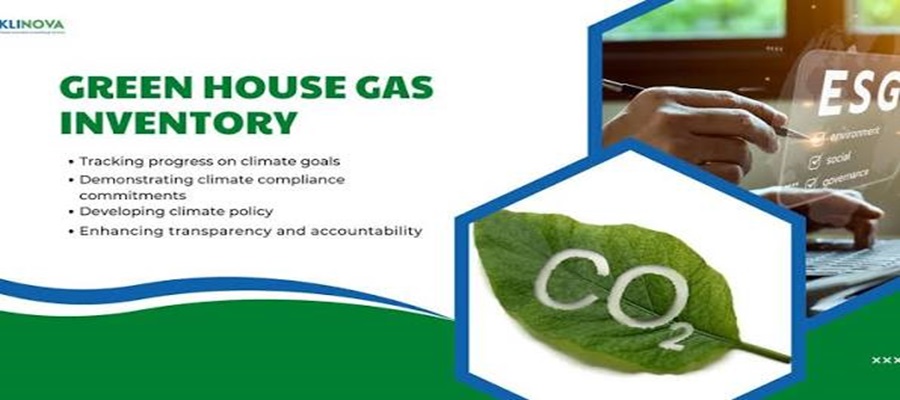
Lagos State has become the first sub-national government in Nigeria to establish a comprehensive Greenhouse Gas Registry, a move aimed at strengthening climate governance, improving emissions accountability and accelerating the state’s transition to a low-carbon economy.

The Lagos State Greenhouse Gas Registry (LGHGR) was unveiled at the Central Business District, Alausa, Ikeja, at a ceremony attended by Prof. Akin Abayomi, commissioner for Health, members of the State Executive Council, representatives of the Federal Ministry of Environment, development partners, TPHG Technologies, the diplomatic and business communities, academics, civil society organisations and the media.
Describing the initiative as a landmark achievement in the state’s environmental sustainability drive, Dr. Babatunde Ajayi, general manager of the Lagos State Environmental Protection Agency (LASEPA), said the Registry marks a defining moment in Lagos’ climate action journey and reflects Governor Babajide Sanwo-Olu’s commitment to building a resilient, climate-smart and environmentally sustainable economy.
According to Ajayi, the digital platform will enable the state to accurately measure, monitor, report and verify greenhouse gas emissions across key sectors, providing credible data to guide environmental policies and climate interventions.
He said the Registry would strengthen evidence-based decision-making, improve transparency and accountability, support national and international climate reporting obligations, unlock carbon market opportunities and boost investor confidence in Lagos’ environmental initiatives.
Ajayi also commended TPHG Technologies for providing the technical expertise that made the pioneering project possible.
Delivering the keynote address, Prof. Abayomi described the Registry as a major milestone that positions Lagos at the forefront of climate governance and emissions accountability in both Nigeria and Africa.
He noted that climate change has evolved into a significant public health and governance challenge, stressing that access to reliable emissions data would enable the state to formulate evidence-based policies, attract climate financing, strengthen resilience and accelerate its transition to a low-carbon economy.
Providing insights into the technical framework of the project, Dr. Mofoluso Fagbeja, lead consultant and chief executive officer, TPHG Technologies, explained that the Registry was developed from the greenhouse gas inventory jointly undertaken by LASEPA and TPHG Technologies in 2022, using 2019 as the baseline year for emissions assessment.
He said the platform is designed to close critical emissions data gaps, particularly within the industrial sector, while supporting effective climate policy implementation, emissions management and sustainable development.
Fagbeja also disclosed that the greenhouse gas inventory estimated that poor air quality contributes to about 35,000 premature deaths annually in Lagos, underscoring the urgent need for stronger emissions control measures and cleaner environmental practices.
In a goodwill message, Balarabe Abbas Lawal, minister of Environment, represented by Mrs. Adenaike Olunimpe Oludunni, federal controller of Environment in Lagos, commended Lagos State for pioneering the initiative, describing it as a significant contribution to Nigeria’s climate commitments.
He said the Registry aligns with the country’s Nationally Determined Contributions (NDCs) under the Paris Agreement and supports the Federal Government’s Energy Transition Plan, while reaffirming the ministry’s commitment to deeper collaboration with Lagos State on climate governance and environmental sustainability.

A recently released Henley Passport Index 2026, showed that Nigerian citizens can travel to at least 20 destinations outside the African continent where entry is allowed either visa-free, with a visa on arrival (VOA) at no extra cost, or via an e-visa.

This expanded access opens doors for Nigerian travellers to experience countries in the Caribbean, Asia, and beyond with greater ease.
Below is a comprehensive guide to countries outside Africa which Nigerian passport holders can visit without a traditional visa.
Visa-Free Countries outside Africa for Nigerian Passport Holders:
Barbados
Cambodia – Visa on arrival
Comoros Islands – Visa on arrival
Cook Islands
Dominica
Fiji
Haiti
Iran – Visa on arrival
Kiribati
Lebanon
Maldives – Visa on arrival
Micronesia
Montserrat
Niue – Visa on arrival
Palau Islands – Visa on arrival
Samoa – Visa on arrival
St. Kitts and Nevis
Timor-Leste – Visa on arrival
Tuvalu
Vanuatuul

Nigeria and Israel yesterday reaffirmed their commitment to deepening bilateral cooperation in research, technology and innovation as both countries pledged to expand partnerships that will drive entrepreneurship, commercialise research and accelerate economic development.

The commitment was made at the closing ceremony and innovation showcase of the I-FAIR Cohort of the Israel-Nigeria Innovation Fellowship for Aspiring Inventors and Researchers (I-FAIR) in Abuja, where the Ambassador of Israel to Nigeria, Michael Freeman, announced that funding had been secured for the fifth edition of the programme, scheduled to begin in October 2026.
Freeman described I-FAIR as a practical demonstration of the growing partnership between both countries, saying it had enabled Nigerian innovators to develop local solutions to national challenges through Israeli mentorship and expertise.
He said, “This programme has never been about bringing Israeli solutions to Nigeria. It’s been about helping brilliant Nigerian innovators develop Nigerian solutions to Nigerian challenges supported by Israeli experience, mentorship and innovation.”
The envoy noted that the initiative had brought together government, academia, investors, engineers and entrepreneurs to transform innovative ideas into businesses capable of creating jobs and stimulating economic growth.
Announcing the continuation of the programme, he said, “I am so proud to stand here today and announce that we have secured with our partners funding for I-FAIR 5 and I-FAIR 5 will be launching in October 2026.”
Freeman said the relationship between Nigeria and Israel had grown significantly over the past four and a half years through cooperation in innovation, agriculture, healthcare, education, water management and technology.
He expressed confidence that stronger collaboration between both countries would unlock greater opportunities for startups, research institutions and businesses.
According to him, “Israel brings experience and innovation, technology, agriculture, healthcare, cyber security, security and water management. Nigeria brings extraordinary talent, creativity, entrepreneurship and one of the most dynamic young populations anywhere in the world.”
He added, “I have no doubt that the best chapters of the relationship between Israel and Nigeria are still ahead of us.”
The Executive Secretary of the Tertiary Education Trust Fund, Architect Sonny Echono, also reaffirmed TETFund’s commitment to strengthening research and innovation through strategic partnerships with Israel and other stakeholders.
He said the I-FAIR programme aligned with Nigeria’s priorities in food security, agriculture, medicine, technology, clean energy and the circular economy, adding that TETFund would continue supporting initiatives that promote research commercialisation.
Echono stressed that collaboration between government, academia and industry remained critical to translating research findings into products and services.
He said, “It is this critical linkage, especially between science, engineering, technology and innovation, and the productive sector that is critical for translating R&D results and inventions into finished products for socio-economic benefits of our people.”
He disclosed that TETFund was working with partners to establish innovation facilities in about 60 tertiary institutions and had created a student innovation fund that would provide up to ₦50 million to students with commercially viable ideas.
The TETFund boss also announced plans for a National Research Fair later this year, where innovators would showcase products before policymakers, financial institutions and investors to attract funding and commercial partnerships.
Paying tribute to the outgoing Israeli ambassador, Echono described Freeman as a strong bridge between Nigeria and Israel.
He said, “Nigeria is grateful for your service. You have been a strong bridge between our two countries.”
Earlier, Head of Programmes at Innov8 Hub, Tolulope Aina, said sustainable economic development depended on building an innovation ecosystem that transforms ideas into successful businesses.
She noted that Innov8 Hub had supported more than 3,000 innovators, researchers and entrepreneurs, helping them convert research into products, startups and investment-ready ventures.
Aina said, “Nigeria does not suffer from a shortage of brilliant minds, what we need are stronger pathways that help those ideas become products, businesses, and opportunities that improve life.”
She thanked the Embassy of Israel and TETFund for their continued support in strengthening Nigeria’s innovation ecosystem.
According to her, “Building an innovation-driven economy requires collaboration, long-term commitment and shared purpose.”

History as Lagos Becomes First Nigerian State to Launch Greenhouse Gas Registry

AMCON Puts ntel Up for Sale, Seeks Investors

Nigeria Atomic Energy Commission Seeks Collaboration on Power Plants

AI Investment Gap Threatens Africa’s Future Growth

UNN to Partner Firm on AI, Smart Mobility Innovation Centre

NRC, Ponzi Scheme Collapses Resulting Loss of Billions of Naira

EFCC Busts NIS Visa Overstay Racket, Uncovers N700m in an Account

Tokenization, Blockchain Technology will Transform Financial Institutions – IMF

From Scarcity to Scale: What Africa Can Learn from India’s Agricultural Transformation

Spotify partners Afro Nation Portugal to expand African music experience




 E-Business1 day ago
Report Says Cybercriminals Deploy Malware to Hijack Crypto Wallets, Monitor Browsers Telegram

 Telecom1 day ago
Subscribers, Telcos Warn FCCPC over Airtime Lending Enforcement

 Telecom1 day ago
NCC, REA Partner to Cut Telecom Costs with Renewable Energy

 News1 day ago
See Verified 20 Countries Nigerian Passport Holders Can Travel Visa-Free

 General News1 day ago
AfDB, Nigeria Urge African Control of Mineral Resources

 E-Business1 day ago
NPC Opens 131 Births, Deaths Registration Centres in Anambra

 General News1 day ago
Lagos Chamber Opposes 21 Percent Pension Contribution, Warns of Job Losses

 Telecom1 day ago
Nigeria Pushes for United African Front Ahead of Global Telecoms Elections