

Telecom
NIGCOMSAT Eyes $5m Revenue through Broadband Expansion

Nigerian Communications Satellite Ltd. (NIGCOMSAT) has announced plans to generate N8 billion (some $5 million) in revenue within the next three years through expansion of its broadband services.

Mrs Jane Egerton-Idehen, managing director, NIGCOMSAT, disclosed this during a stakeholder roundtable event organised by the company in Lagos recently.
Egerton-Idehen said broadband remained the company’s most profitable but least utilised product line, with only seven per cent currently in use.
She said that about 93 percent of the satellite’s broadband capacity was still idle, despite its wide applications in education, healthcare, defence, financial services and governance.
“We know broadband has greater value and wider use cases, from connecting local government offices to supporting education, defence, healthcare and even fintech. The challenge is that we cannot do it alone,” she said.
She explained that while the country had recorded progress in broadband penetration, where utilisation rose from 35 percent in 2023 to 75 percent, NIGCOMSAT broadband remained largely untapped and required stronger collaboration with private sector partners.
Egerton-Idehen said NIGCOMSAT had already shown capacity to deliver broadband services through special projects.
She cited the provision of internet to naval ships, moving vessels, and local government secretariats in remote communities where terrestrial networks could not reach.
According to her, under Project 774, NIGCOMSAT successfully provided connectivity to 45 local government secretariats across eight states within two months, a task fibre cable operators could not achieve at the same speed.
She stressed that NIGCOMSAT’s 250 staff could not cover the entire market, hence the need for channel partners and resellers with wider reach and distribution capacity.
“Our role is to provide the service backbone and support partners to take it to the market.
“We are not set up to compete directly with consumer operators because we don’t have engineers in every state to do installations and support.
“However, by working with partners, we can reach schools, health centres, fintech companies and government agencies across Nigeria and even in West Africa,” she said.



Federal government is preparing for the acquisition of two new communication satellites as it advances a nationwide fibre-optic rollout.

Bosun Tijani, minister of communications, innovation, and digital economy, made the announcement during a press briefing in Abuja commemorating Global Privacy Day 2026, which was hosted by the Nigerian Data Protection Commission.
The minister said the national fibre-optic backbone, which is expected to cover 90,000 kilometres, is nearly 60% complete.
The project aims to expand high-capacity broadband across the country, reduce the cost of internet access and improve service quality for businesses, public institutions and households.
According to Tijani, the fibre rollout is central to the government’s digital economy strategy, providing physical infrastructure required for e-government services, digital financial inclusion, innovation hubs and private sector investment.
He added that extending fibre deeper into underserved areas would help narrow Nigeria’s persistent urban-rural connectivity divide.
Alongside the terrestrial network, the federal executive council has also approved the procurement of two additional communication satellites to strengthen Nigeria’s space-based communications capacity.
The satellites are expected to enhance broadband coverage in remote and hard-to-reach regions, support broadcasting and improve data resilience for critical national services.
Tijani emphasised the satellite investment will complement the fibre network by providing redundancy and last-mile connectivity where laying cables is commercially or geographically challenging.
The combined approach, he said, will make Nigeria’s digital infrastructure more resilient and inclusive and will particularly close long-standing connectivity gaps.
By expanding broadband access and modernising communications infrastructure, authorities believe Nigeria can unlock new opportunities across sectors including technology, education, healthcare and commerce.
The initiatives are being implemented amid efforts to attract private investment and improve policy coordination across federal and state agencies.
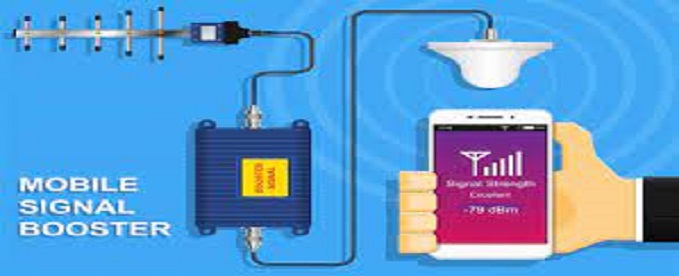
Nigerian Communications Commission (NCC) has removed over 450 illegal signal boosters deployed in the Federal Capital Territory (FCT).

Illegal signal boosters (also known as unauthorized, non-compliant, or rogue repeaters) are devices designed to amplify weak cell phone signals but are prohibited for use because they interfere with legitimate mobile network infrastructure, causing disruptions for others.
The NCC has also approved spectrum reassignments, socalled egulatory process of taking radio frequency spectrum that was previously assigned to one type of service or user and reallocating it for another, usually to support new technologies or more efficient usage.
All these are part of measures to improve telephone services in the country.
The NCC said its enforcement teams removed the illegal signal boosters across the FCT, noting that the devices degrade network quality in surrounding areas.
“Subsequent analysis indicates localised improvements in service quality, supported by crowd-sourced data, operator performance metrics and a decline in related consumer complaints.
“At least 70 network sites recorded measurable performance gains following booster removal. Engagements are ongoing with the Nigerian Customs Service (NCS) to prevent further importation of the devices,” the NCC stated.
The telecom regulator said to enhance spectrum efficiency and service delivery, it approved a series of spectrum trades and reassignments, including the reallocation of approximately 50 MHz of previously underutilised spectrum for immediate network expansion.
These measures, it said, have resulted in demonstrable improvements in network performance, as reflected in independent monthly reports since September 2025.
“In particular, the reassignment of an additional contiguous 10 MHz to Globacom contributed to an increase in its average 4G download speeds from 9.5 Mbps to approximately 15 Mbps by November/December 2025.
In terms of telecom infrastructure protection, NCC revealed that the ongoing operationalisation of the CNII Executive Order.
The Commission said it has adopted a structured, multi-layered approach to the implementation of the CNIL Executive Order within the telecommunications sector.
“This includes enforcing minimum compliance standards for infrastructure deployment, conducting nationwide public awareness campaigns, strengthening stakeholder collaboration, institutionalising mediation as a dispute resolution mechanism, and retaining enforcement as a necessary tool where required.
“In collaboration with the Office of the National Security Adviser, the Commission has convened engagements with the National Assembly, Judiciary, Federal Ministry of Works, State Attorneys-General, and the Nigeria Security and Civil Defence Corps, with plans to extend collaboration to State Ministries of Works,” it stated.
The Commission claimed that its mediation approach has led to successful interventions already recorded in Kogi, Bauchi, and Osun States.
The telecom regulator said it is currently collaborating with the Central Bank of Nigeria (CBN) on Failed Airtime/Data Top-Ups and Consumer Refunds.
The NCC stressed that it’s working jointly with the Central Bank of Nigeria, mobile network operators and financial service providers to address issues relating to failed airtime and data recharge transactions.
“Through this collaborative framework, mechanisms for transaction tracing, dispute resolution, and timely consumer refunds are being formalised. The initiative has already facilitated refunds exceeding N10 billion to affected consumers, contributing to enhanced confidence in digital payment channels,” it stated.
The NCC said, in collaboration with a joint industry committee, it continued to implement the Smarter Data Management Consumer Awareness Campaign.
The Commission said the campaign focuses on promoting efficient data usage, conservation practices, and behavioural adjustments aimed at reducing passive data consumption linked to increasing network speeds and device capabilities.
“Since inception, the campaign has coincided with a noticeable reduction in data depletion-related complaints and will remain active through 2026. Campaign materials are disseminated across multiple media platforms and in major languages spoken nationwide,” it stated.
The NCC informed that to further strengthen spectrum optimisation, service quality, and long-term network planning, the Commission has developed Nigeria’s first structured Spectrum Roadmap for the communications sector.
Through the roadmap, the NCC said it sets out strategic direction on spectrum utilisation, future assignments, refarming initiatives and flexible access models to support expanding connectivity, emerging technologies and improved consumer experience. It will also enhance the Commission’s capacity to proactively monitor utilisation, address persistent underuse, and implement targeted regulatory interventions.
According to it, public consultation on the draft has been concluded, and approval and issuance are expected following the next meeting of the Commission’s board.

As Nigeria faces rising youth unemployment and increasing scrutiny of informal business models, trust has become the defining currency of entrepreneurship.

Against this backdrop, QNET, a global wellness and lifestyle company, says it is repositioning ethical direct selling as part of the solution – not as a quick-income promise, but as a regulated, transparent pathway into micro-entrepreneurship – as it outlines its Nigeria-focused strategy heading into 2026.
With nearly three decades of experience in the wellness and lifestyle segment, QNET has operated in Nigeria through independent distributors and digital sales channels since 2021.
In recent years, regulators have intensified oversight of informal and semi-formal business models amid growing concerns around consumer protection, transparency, and fraud, reshaping expectations for how direct-selling companies operate in the country.
For Nigeria, where millions of young people rely on informal income streams, the distinction between legitimate direct selling and fraudulent schemes has become a policy and consumer-protection priority.
“Against this backdrop, QNET’s 2026 strategy for Nigeria will place integrity, strict regulatory compliance, and responsible stakeholder engagement at the centre of its operations.
“As the company adapts to tighter oversight and evolving market conditions, we believe ethical entrepreneurship must be anchored in transparency and accountability if it is to remain a credible pathway for economic participation, particularly for young Nigerians facing limited formal employment opportunities,” says Ayokunmi Solesi, General Manager for QNET in Nigeria.
At the core of QNET’s direct-selling model are product value, transparent compensation structures, and strict adherence to consumer protection standards, principles aligned with the global direct selling industry’s performance as reported in the WFDSA 2024 STATS Report, which showed the channel generating around $164 billion in retail sales and supporting more than 104 million independent representatives worldwide.
QNET’s model ensures that Independent Distributors (IDs) earn solely from verified product sales rather than recruitment-based incentives, reinforcing the distinction between legitimate direct selling and illicit schemes.
This distinction—earning from products rather than recruitment—is widely recognized by regulators as the primary line separating ethical direct selling from pyramid-style schemes.
By prioritizing verifiable product demand and transparent earnings, QNET supports sustainable income opportunities and professional skill development that contribute positively to Nigeria’s formal economy.
Product innovation remains a key pillar of QNET’s 2026 outlook in Nigeria. Through its partner Transblue Limited since 2022, the company has hosted workshops and expos, such as the 2025 Lagos Product Expo, to promote innovation and youth opportunities.
These events showcased certified wellness products while addressing misconceptions, with over 8,000 attendees at the Abuja edition alone.
QNET’s product portfolio spans health, wellness, personal care, home living & living. At the heart of its wellness category are the Amezcua range of products – including the Amezcua Bio Disc and Chi Pendant – which remain among the company’s most recognised offerings and are widely used for personal well-being and lifestyle optimisation.
Complementing these are timepieces and accessories under the Bernhard H. Mayer brand, including the OMNI Watch, which earned a Silver Stevie Award in 2025 for its sustainability-forward design.
Together, these products reflect QNET’s continued emphasis on certified wellness, durability, and long-term consumer value within Nigeria’s growing lifestyle and wellness market.
Beyond product innovation, consumer protection is expected to be a central pillar of QNET’s strategy, amid rising financial fraud in Nigeria. Building on recent advocacy and enforcement efforts, the company says it is expanding both preventive and defensive measures to safeguard consumers.
In an environment where financial fraud continues to undermine public trust, QNET says consumer education and institutional accountability must go hand in hand. The company’s “Say NO!” public awareness campaign, launched in 2023, focused on helping citizens identify fraudulent schemes through mass outreach and community engagement across Nigeria and other West African markets.
This effort was reinforced through structured collaboration with Nigerian authorities, including the Economic and Financial Crimes Commission (EFCC) and the Federal Competition and Consumer Protection Commission (FCCPC), aimed at disrupting impersonation networks and protecting the integrity of legitimate entrepreneurship.
Such measures place QNET among a small group of direct-selling firms in Nigeria publicly aligning enforcement, education, and regulator engagement as part of their operating model.
In addition to external advocacy, the company believes ethical direct selling must be enforced from within. Between 2022 and 2023, QNET suspended more than 80 distributor accounts across Sub-Saharan Africa for ethics violations, underscoring its zero-tolerance approach to misrepresentation and misconduct. Continuous monitoring of digital platforms for brand misuse further reflects QNET’s view that compliance is not a one-time response, but an ongoing responsibility essential to sustaining trust in the direct-selling sector.
Complementing these legal efforts are educational programmes, such as QNET’s signature financial literacy programme, FinGreen Programme, launched in 2022 in partnership with Transblue Limited, which has trained over 1,500 young people and women across Nigeria in budgeting, saving, responsible spending, and digital financial literacy skills to avoid exploitation.
Moving forward, QNET aims to strengthen its role in Nigeria’s formal economy by positioning ethical direct selling as a viable pathway for micro-entrepreneurship, income diversification, and skills development, particularly among young people navigating an increasingly competitive labour market.
As Nigeria’s gig economy matures under tighter regulation, QNET argues that the future of direct selling will be decided less by scale and more by trust—measured in transparency, consumer protection, and the economic literacy of those it empowers.

Kaspersky Launches OT Calculator to Align Cybersecurity Investments with Business Goals

Stanley Amandi, Nollywood Actor Arrested over Alleged Coup Plot against Tinubu

FBNQuest Merchant Bank Rebrands as Quest Merchant Bank

FG to Acquire Two Communications Satellite to Boost Digital Access

How Plot to Topple Tinubu was Uncovered, Foiled

19 Nigerian Banks Meet CBN Recapitalization Targets Ahead of March Deadline

Galaxy Backbone Celebrates the Federal Government’s Paperless Civil Service Milestone

DStv Offers Instant Package Upgrade for Customers from January to February

Banks to Impose N50 Stamp Duty on Transfers of N10,000 and Above from January 1

Youth Talent Takes Center Stage as T2 Ignites High-Octane Rap Battles @ Carnival Calabar




 Telecom1 day ago
Police Bust ₦7.7bn Telecom Hack Gang, Seize 400 Laptops in Massive Fraud Swoop

 E-Financial2 days ago
PayPal Goes Live in Nigeria through Paga

 Broadcasting2 days ago
NITDA, NBC Explore Strategic Collaboration on Digital Transformation, Media Regulation

 General News1 day ago
Naira Smashes Through ₦1,400 Barrier in Official FX Rally

 General News1 day ago
NCC Slaps ₦250,000 Fee on Trial Licences to Spur Telecom Innovation

 General News2 days ago
Facebook Powers Connection, Creativity at African Creators Summit 2026

 E-Business2 days ago
Gold Hits Record $5,110/Ounce Amid Trump Tariff Threats, Geopolitical Fears

 Telecom2 days ago
TikTok, Instagram Blamed in US Youth Suicide Lawsuit