

News
Nigeria : Chance for Re-Awakening


Nigerians are gradually coming to terms that the cheese has indeed moved this time. The days of lucre and easy money, fuelled by petrodollars are far behind us; no thanks to shale oil and other sources of energy.
The aimless swagger has been replaced by a renewed sense of purpose and the need to produce in order to survive.
No wonder Agriculture seems to be the only game in town these days. To borrow from the words of Pravin Gordhan – Finance Minister of South Africa, it is now Agri-Cool. All manner of yesterday’s nose thumpers now proudly call themselves farmers, it is beginning to have a nice ring and tone to it.
Unlike other oil boom and busts, it seems that this particular bust is here to stay. We seem to be in a stalemate. If we cut production to shore up prices, the shale producers will seize the opportunity to increase their own production and drive the prices right down.
Not to talk of the conscious global effort towards cleaner renewable energy, and the significant improvement in its technology and adoption. COP 21 in Paris cemented the commitment to clean environment and green energy.
Time there was not too long ago in Nigeria, when first class and business class seats on commercial airlines were filled way before economy seats, and private jets littered all our airports.
But how did we get here and how did we subsequently fall from such deluded Olympian heights? The recurrent mistake we keep making as a nation is failing to anticipate and plan for our oil windfalls.
There have been many boom opportunities since Nigeria joined the Organisation of Petroleum Exporting Countries (OPEC) in 1971; Oil prices increased by 400% in six short months after the Yom Kippur War following the Arab Oil Embargo.
Crude prices doubled from $14 in 1978 to $35 per barrel in 1981 following the Iran/Iraq war. The price of crude oil spiked in 1990 with the uncertainties associated the Iraqi invasion of Kuwait and the ensuring Gulf War – the so called ‘Gulf War windfall’ under then Head of State Ibrahim Babangida.
Data from the U.S. Energy Information Administration shows that the latest windfall happened between February 2011 and August 2014, under the Goodluck Jonathan presidency, when oil prices were much in excess of $100 per barrel.
Another golden opportunity was squandered, characterised by organised kleptocracy of epic proportions as has now come to light.
There is a saying in my native Igbo culture that an abomination that endures for long enough becomes part of the culture. Corruption came close to achieving this status in Nigeria.
Our inflated egos were matched with the adventure into GDP rebasing in 2014 which put Nigeria as the largest economy if Africa, overtaking poster boy South Africa.
Alas this new status, propped up by an artificial exchange rate sustained by huge foreign reserves did not last. As the reserves dwindled, partial reality in the foreign exchange rate has wiped away close to half of the estimated $510b GDP. And along with it went our bragging rights.
I say ‘partial reality in the foreign exchange rate’, because I still feel that a differential of over 60% between the official rate and the parallel rate to the dollar seems to suggest that one of the rates is way off the mark. The acute shortage of the ‘Official Dollar’ seems to suggest that the parallel rate is closer to the mark.
The thing about the market is that you can distort it for a while, but you cannot hold it back for long. The market is like water; it will always find its level.
The earlier we let this happen the better for our economy. Within the period of a decade, I have witnessed the British pound at close to £1 to $1.9 and now at as low as £1 to $1.22; and yet the British government is not scrambling to shore up the pound by all means (including expensive subsidy of the currency).
It should be understood that such distortions open huge arbitrage opportunities for those with access, which distract from productive pursuit.
Rent seeking from allocation of dollars creates a new crop of overnight billionaires akin to those created during the era of petroleum subsidy. In the long run, it blows no good wind.
I have always argued that more important than the exchange rate, is the stability of the rate, which removes uncertainty, and attracts investment.
As it is, we are inadvertently inviting more pressure on the naira because even locals are saving their money in dollars, albeit at zero interest rates.
And why not? They have figured out that even at the relatively high interest rates on treasury bills and fixed deposits, savings are halved in real terms due to the fast deteriorating exchange rate of the naira.
We have to understand that the exchange rate is an indicator of the perception of performance, and opportunity in the economy.
To shore it up you have to do the hard work of better economic management. Removing the alert on the dashboard of your car that tells you that the oil level is low, puts out the disturbing light, but does not guarantee that the engine will not knock further down the road.
There is now a fervent glamour for buying Nigerian and growing what we eat. About time too. According to the Minister of State for Agriculture, Heineken Lokpobiri, Nigeria spends about $22bn annually on food imports.
How can a country with a huge population of over 170 million people (a viable consumer market by any standard), squander such a whopping amount on imported food, and in the process export much needed jobs in the agriculture value chain? This is despite the huge fertile landmass and favourable climate?
It is no different in the Education and Health sectors. It was estimated that Nigerians studying in British and American Universities spent over N137billion on tuition and living expenses in 2014.
There were also about 71,000 Nigerian students who paid tuition fees in excess of N160billion in Ghana during the same period (these may have easily doubled in the past year due to the deteriorating foreign exchange rate).
And yet the Nigerian Government’s total budget for education in 2017 is N540b (a paltry $1.1b against South Africa’s $22b) Why can’t we fix our educational system and send our children to school here? And fix our hospitals and treat our sick here?
I understand that luxury shop owners in Dubai and London are asking loudly ‘where are the Nigerians?’
Well, the Nigerians are at home, confronting the new realities of basic survival. You only have to look into the eyes of the average Nigerian to glean the pain of adjustment.
This difficult period is too painful to waste. We must seize the opportunity of this painful reality check, for a reawakening and realignment towards doing the right thing.
As Maria Robinson said “Nobody can go back and start a new beginning, but anyone can start today to make a new ending”. Let us begin today to write the ending we want for our country.
Austin Okere is the Founder of CWG Plc, the largest Systems Integration Company in Sub-Saharan Africa & Entrepreneur in Residence at CBS, New York. Austin also and serves on the World Economic Forum Global Agenda Council on Innovation and Intrapreneurship


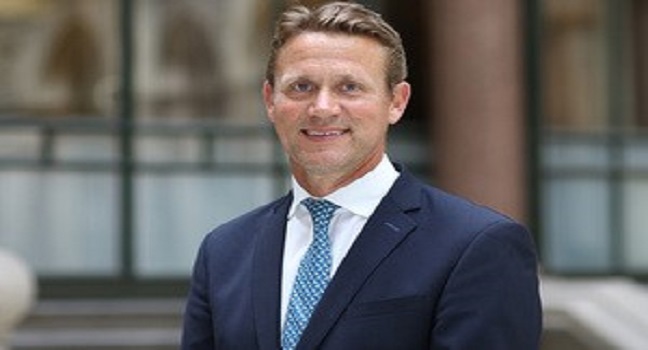
The UK Government has announced the appointment of Mr Peter Vowles as the next British High Commissioner to the Federal Republic of Nigeria.

Mr Vowles succeeds Dr Richard Montgomery CMG and is expected to take up his post in Abuja in September 2026. Dr Montgomery remains in post until that time.
Mr Vowles brings extensive diplomatic and development experience to the role, having served as His Majesty’s Ambassador to Zimbabwe from 2023 to 2026 and previously as Ambassador to Myanmar from 2021 to 2022.
He has held senior leadership positions across the FCDO and its predecessor department DFID, including as Transformation Director and Director for Asia, Caribbean and Overseas Territories.
Earlier in his career, Mr Vowles worked in international development across South Asia, Central Africa and East Africa, including postings in Bangladesh, India, the Democratic Republic of Congo and Kenya. He began his career in Zimbabwe, where he worked in education and development.
Peter Vowles said: “I am honoured to be appointed as British High Commissioner to Nigeria. Nigeria is a country of immense importance to the United Kingdom, and I look forward to working closely with Nigerian partners to strengthen our relationship across trade, development and security.”

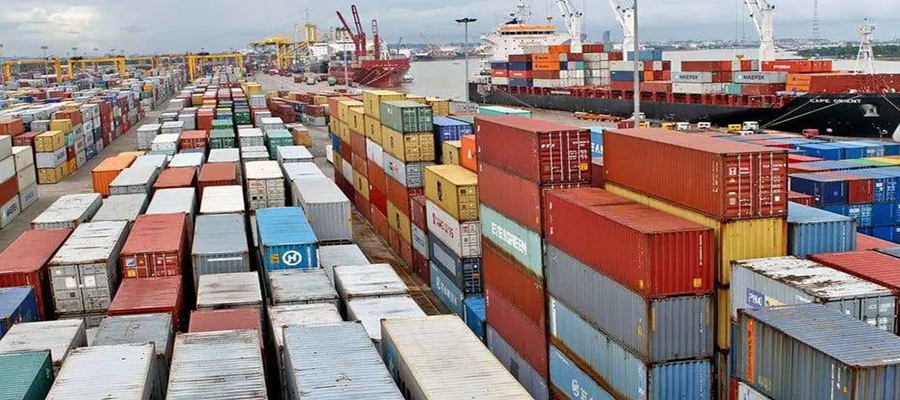
World Bank has ranked the Apapa and Tin Can Island Port complexes in Lagos among the world’s 20 most improved ports in its 2025 Container Port Performance Index (CPPI), released in June 2026.

The ranking places both ports in the “Top 20 Port Improvement Since 2020” category, reflecting significant gains in operational efficiency and vessel turnaround time.
The CPPI is a global benchmark used to assess the efficiency of container ports based on factors such as cargo handling speed, ship turnaround time and overall logistics performance.
According to the report, the improvement highlights ongoing reforms and modernization efforts within Nigeria’s maritime sector.
The Managing Director of the Nigerian Ports Authority (NPA), Mr Abubakar Dantsoho, attributed the recognition to ongoing policy reforms and infrastructure upgrades in the sector.
He said the development reflects the impact of economic policies of President Bola Tinubu and the support of the Minister of Marine and Blue Economy, Mr Adegboyega Oyetola.
“With the investor-friendly policies of President Bola Ahmed Tinubu providing the impetus for increased investment to drive our port infrastructure and equipment modernisation programme, coupled with the unflinching support of the Honourable Minister of Marine and Blue Economy, Adegboyega Oyetola, we have all it takes to further enhance trade facilitation, improve competitiveness and boost the national economy,” he said.
The NPA said the recognition is expected to strengthen investor confidence in Nigeria’s maritime sector and enhance the country’s position as a regional trade and logistics hub.
It noted that improvements in port operations are already contributing to increased efficiency in cargo movement and reduced delays at key terminals.
The authority also pointed to ongoing efforts to modernise port infrastructure and expand digital systems aimed at improving service delivery.
Earlier in February 2026, the NPA said the federal government had intensified efforts to position Nigeria as a leading maritime destination through port rehabilitation and modernization projects.
It also highlighted public-private partnership initiatives, including developments at the Lekki Deep Sea Port, as part of broader reforms aimed at improving efficiency and attracting investment.
The CPPI ranking is expected to further boost Nigeria’s maritime profile and encourage additional investment in the sector.
As digital payment adoption continues to grow across Nigeria and emerging markets, the next phase will depend not just on innovation, but on the strength, reliability, and trustworthiness of the infrastructure behind it.

While the ecosystem has made clear progress in recent years, trust remains a critical issue for users, businesses, and operators alike. Questions around resilience, security, interoperability and transaction reliability continue to shape how the market evolves and how confidently digital payments can scale.
These issues will be central to the deliberations at Digital Pay Expo 2026, where fintech leaders, payment operators, and other ecosystem stakeholders will gather under the theme, “Seamless Digital: Fostering Pan-African Market Expansion in the Era of AI.”
PalmPay’s participation reflects its continued commitment to building trusted and scalable payment infrastructure, while contributing to the broader industry efforts to strengthen systems, standards, and partnerships needed to support long-term ecosystem growth.
Speaking ahead of the event, Olorunfemi Hanson, Head of Marketing and Communications at PalmPay Nigeria, said: “As the financial services ecosystem continues to grow, trust and reliability become even more important.
“The industry’s next phase will be shaped not only by innovation, but by the strength of the infrastructure supporting it. Digital Pay Expo provides an important platform to address the resilience, interoperability, and trust issues that will shape the future of digital payments growth across Africa.”
The event, scheduled to be held from the 17th to the 18th of June, 2026, will feature Chika Nwosu, Managing Director of PalmPay Nigeria, alongside other distinguished guests, including the Director-General, Payment System Management Department (PSMD), Central Bank of Nigeria. The event will examine how the industry can balance innovation, regulation, and scalability while strengthening trust across the digital payments value chain.
For PalmPay, this event reinforces its role in supporting a more resilient, secure and scalable payments ecosystem for Nigeria and emerging markets more broadly.

FG Bans Use of Gmail, Other Personal Emails for Civil Service Operations

Indwelt Studios Seeks Increased Awareness @ World Sickle Cell Day

Standard Bank Targets $15.4b SME Growth in Nigeria, Others with Trade Expansion Drive

Payaza Launches AI-powered Storefront Platform to Drive Cross-border Commerce

NAICOM’s 18 Months Management Spill @ African Alliance Ends

CBN Extends PoS Geo-Fencing Enforcement Deadline to August 2026

FG Targets Alleged N3tn Capital Flight, Opens Airtime Credit Market to Nigerian Fintechs

NCC Drafts New Rules for Virtual Mobile Operators

London Strengthens Global Investment Ties with Africa @ First Ever London-Africa Business Summit

Japan, UNESCO Boost Digital Learning in 15 CoEs with Donation of ICT Equipment




 E-Business3 days ago
NIPOST Plans Digital Postcodes for Every Building in Nigeria

 Broadcasting3 days ago
Nigeria Launches FreeTV Nationwide

 E-Financial2 days ago
FG Issues Transition Guidelines for Tax Acts 2025

 Telecom2 days ago
Telecom Regulator, NCC, Digital Encode, AfriGoPay Support eBusinesslife Girls In ICT Campaign

 E-Financial2 days ago
How Fraudsters Stole N134Bn from Banks, Customers in 6 Years – CBN

 Telecom2 days ago
Mobile Technologies Boost Africa’s Economy by $240B in 2025, Commences a New Phase of Digital Transformation

 Telecom3 days ago
Enugu to Host The Gathering on 100 as MTN-Backed Youth Movement Expands Across Nigeria

 Telecom3 days ago
FG Debunks Claims of Plans to Introduce Telecoms, Fuel Taxes