

Telecom
Nigeria Mobile Market to Hit 168n By 2017- Informa & Telecom


Nigeria’s mobile subscription which recorded a milestone 107.3 million by end of September 2012 is expected to reach a threshold 168.99 million by 2017 that is five years from now according to the latest industry statistics released by Informa & Telecom, the UK based industry analysts.
Nigeria’s ICT sector was recently acclaimed as the fastest growing sector of the country’s economy with a 30 per cent growth in 2012; contributing 5.83 per cent to the nation’s GDP.
Teledensity is now 76.69 by end of Q3 2012.
Informa & Telecom noted that the overall African market is expected to reach climax 761 by end of 2012 is expected to cross the one billion milestone by 2017.
Nigeria also has one of the biggest 3G network roll-out in the continent with a number of operators moving 3.7G which are also major drivers of broadband penetration.
Commenting on the release , Dr. Samsudeen Kayode, senior economics lecturer at the Lagos State University (LASU), told Nigeria CommunicationsWeek that “Nigeria’s mobile market will continue to flourish and drive foreign direct investment (FDI) inflow into the economy for a long time to come”
Kayode attributed the steady growth in the telecom market to the dearth in telecommunications infrastructure in the country.
Nigeria currently hosts four major undersea fibre cables; unfortunately their presence is not felt outside of the commercial capital, Lagos due operators’ inability to link them to the hinterlands. Most of the regions outside Lagos are under-served by broadband connectivity.
Most mobile subscribers depend on smartphones for internet connections due to long years of neglect of the telecom sector by successive administrations in the country.
“I am hopeful that the projected 168 million could be surpassed before 2017,” said Dr. Kayode.
He noted that the country’s market has been grossly undermined by Western economic analysts because of a lack of proper grasp of the Nigerian situation.
Early in the year a Nigeria operator, Globacom (Glo mobile) was the first to test run LTE but has failed to give further insight into its official commercial take-off date. It also currently operates a 3G plus network across the country.
Others like MTN, Airtel and Etisalat also operate either 3.5G or 3.7G networks to drive mobile data services.
MTN leads the market with over 42 million subscribers controlling market share by over 46 per cent. Glo mobile and Airtel have 22 per cent and 20 per cent respectively.
Kayode attributed the growth to the huge youth market, which he also sees as driving the smartphone segment.
“Population figures indicate that people under- 40 are more than those above 40 years, so you can understand that the Nigerian market has more than enough capacity to grow exponentially. We will see this market trend continue for another 10 another” the University don stated


Telecom
Sunil Bharti Mittal Conferred GSMA Lifetime Achievement Award for Transforming Global Telecommunications

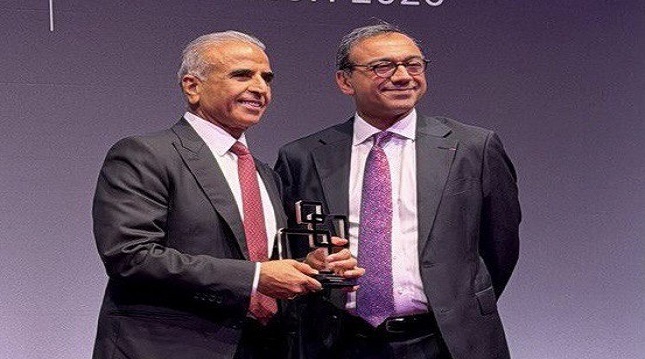
The GSMA has conferred a rare Lifetime Achievement Award on Sunil Bharti Mittal, Founder and Chairman of Bharti Enterprises, recognising his role in reshaping the global telecommunications landscape and expanding connectivity across operators, governments, businesses and billions of consumers worldwide.

Bestowed on only a handful of industry leaders in the GSMA’s history, the honour recognises contributions that have left an enduring and defining mark on the global communications ecosystem.
The award was presented at Mobile World Congress in Barcelona in the distinguished presence of His Majesty Felipe VI, the Prime Minister of Spain, Pedro Sanchez, the President of Catalonia, Salvador Illa, and global industry leaders.
A visionary in the telecom sector, Sunil Bharti Mittal has built Bharti Airtel into one of the world’s leading mobile operators, with operations across India and Africa, ranking among the top three globally and serving over half a billion customers.
He pioneered the expansion of mobile services across emerging markets and served as Chairman of the GSMA from 2017 to 2018, where he championed policies that encouraged investment and innovation while strengthening the industry’s commitment to connecting the unconnected and advancing digital inclusion.
He was previously honoured with the GSMA Chairman’s Award in 2008 and again in 2016 for his outstanding contribution to the growth and development of the global mobile industry and was felicitated at Mobile World Congress in February 2019 in recognition of his Chairmanship.
On receiving the award, Sunil Bharti Mittal said, “I am deeply honoured to receive this recognition and sincerely thank the GSMA for this award. I accept it not only as a personal milestone, but as a tribute to India’s telecom journey, the collective spirit of Bharti, and the rise of Indian telecom companies on the global stage.
Equally the award reflects the progress of an industry that has connected billions and belongs to the customers we serve, the teams who built our institutions, and the partners who believe in the transformative power of connectivity.
Telecommunication is a force that expands opportunity, places essential services in the palm of every individual and unlocks human potential. Helping shape its evolution into a powerful accelerator of modern progress has been a privileged responsibility. As innovation accelerates, we will continue to work with our partners & stakeholders to ensure that growth advances equity and creates lasting opportunity for generations to come.”
The Lifetime Achievement Award is a rare honour, bestowed only on select individuals whose leadership and innovation have left an enduring mark on the industry.


House of Representatives is pushing to regulate Nigeria’s fintech sector through a public hearing on “A Bill for an Act to Establish the Nigerian Fintech Regulatory Commission and for Related Matters (HB.2389).”

Speaker Tajudeen Abbas opened the hearing, stressing the need for stakeholder inputs to craft enforceable, constitutional laws addressing regulatory overlaps in digital banking, science, technology, and communications.
Abbas highlighted fintech’s role in Nigeria’s growth via digital payments, blockchain, crowdfunding, and financial inclusion for the unbanked, creating jobs and supporting SMEs under President Tinubu’s Renewed Hope Agenda.
He warned that lagging regulations cause fragmentation, compliance issues, and investor uncertainty, necessitating a coordinating commission for licensing, supervision, standards, and a level playing field without duplicating bodies like the Central Bank of Nigeria (CBN), SEC, NITDA, or NDIC.
The commission would protect consumers, monitor cybersecurity, ensure data privacy, and promote education while complementing existing regulators.
Committee Chairman Emmanuel Ukpong-Udo, overseeing digital banking, banking regulations, science, technology, communications, capital markets, and institutions, called the bill vital for harmonizing oversight amid Nigeria’s rise as Africa’s fintech hub with 430+ firms valued at billions.
Ukpong-Udo emphasized balancing innovation, stability, and coordination to avoid burdens on startups.
Bill sponsor Fuad Kayode Laguda argued the commission would streamline operations currently split among CBN, SEC, NITDA, NOTAP, and FIRS, boosting profitability, user security, and ease of business. He cited 2024-2026 stats: 250-430 firms, $230 billion market projection, $10.6 billion valuation for top nine, and $1.6 billion in mobile transactions.
Fintech stakeholders offered mixed views, with some backing unified regulation and others fearing overlaps with current mandates.

By Kehinde Ogundare, Country Head, Zoho Nigeria
For years, security for SMEs across sub-Saharan Africa meant metal grilles and alarm systems. Today, the most significant risks are invisible and growing faster than most businesses realise.

Kehinde Ogundare
Artificial Intelligence has quietly embedded itself into everyday operations. The chatbot responding to customers at midnight, the system forecasting inventory requirements, and the software identifying unusual transactions are no longer experimental technologies. They are becoming standard features of modern business tools.
Last month’s observance of Safer Internet Day on February 10, themed ‘Smart tech, safe choices’, marked a pivotal moment. As AI adoption accelerates, the conversation must shift from whether businesses should use AI to how they deploy it responsibly. For SMEs across Africa, digital trust is no longer a technical consideration. It is a strategic business imperative.
The evolving threat landscape
Cybersecurity threats facing sub-Saharan African SMEs have moved well beyond basic phishing emails. Globally, cybercrime costs are projected to reach $10.5 trillion this year, fuelled by generative AI and increasingly sophisticated social engineering techniques. Ransomware attacks now paralyse entire operations, while others threats quietly extract sensitive customer data over extended periods.
The regional impact is equally significant. More than 70% of South African SMEs report experiencing at least one attempted cyberattack, Nigeria faces an average of 3,759 cyberattacks per week on its businesses, Kenya recorded 2.54 billion cyber threat incidents in the first quarter of 2025 alone, whilst Africa loses approximately 10% of its GDP to cyberattacks annually.
The hidden risk of fragmentation
A common but often overlooked vulnerability lies in digital fragmentation.
In the early stages of growth, SMEs understandably prioritise affordability and agility. Over time, this can result in a patchwork of disconnected applications, each with separate logins, security standards, and privacy policies. What begins as flexibility can involve into operational complexity.
According to IBM Security’s Cost of a Data Breach Report, companies with highly fragmented security environments experienced average breach costs of $4.88 million in 2024.
Fragmented systems create blind spots, each additional data transfer between applications increases exposure. Inconsistent security protocols make governance harder to enforce. Limited visibility reduces the ability to detect anomalies early. In practical terms, complexity increases risk.
Privacy-first AI as a competitive differentiator
As AI capabilities become embedded in business software, SMEs face a choice about how they approach these powerful tools. The risks are not merely theoretical.
Consumers across Africa are becoming more aware of data rights and willing to walk away from businesses that cannot demonstrate trustworthiness. According to KPMG’s Trust in AI report, approximately 70% of adults do not trust companies to use AI responsibly, and 81% expect misuse. Meanwhile, studies also show that 71% of consumers would stop doing business with a company that mishandles information.
Trust, once lost, is difficult to rebuild. In the digital age, a single data leak can destroy a reputation that took ten years to build. When customers share their payment details or purchase history, they extend trust. How you handle that trust, particularly when AI processes their data, determines whether they return or take their business elsewhere.
Privacy-first, responsible AI design means building intelligence into business systems with data protection, transparency and ethical use embedded from the outset. It involves collecting only necessary information, storing it securely, being transparent about how AI makes decisions, and ensuring algorithms work without compromising customer privacy. For SMEs, this might mean choosing inventory software where predictive AI runs on your own data without sending it externally, or customer service platforms that analyse patterns without exposing individual records. When AI is built responsibly into unified platforms, it becomes a competitive advantage: you gain operational efficiency whilst demonstrating that customer data is protected, not exploited.
Unified platforms and operational resilience
The solution lies in rethinking digital infrastructure. Rather than accumulating disparate tools, businesses need unified platforms that integrate core functions whilst maintaining consistent security protocols.
A unified approach means choosing cloud-based platforms where functions share common security standards and data flows seamlessly. For a manufacturing SME, this means inventory management, order processing and financial reporting operate within a single security framework.
When everything operates cohesively, security gaps diminish and the attack surface shrinks. And the benefits extend beyond risk reduction: employees spend less time on administrative friction, customer data stays consistent, and platforms enable secure collaboration without traditional infrastructure costs.
Safer Internet Day reminds us that the digital world requires active stewardship. For SMEs across the African continent who are navigating complex threats whilst harnessing AI’s potential, digital trust is foundational to sustainable growth. Security, privacy and responsible AI are essential characteristics of any technology infrastructure worth building upon. Businesses that embrace unified, privacy-first platforms will be more resilient against cyber threats and better positioned to earn and maintain trust. In a market where trust is currency, that advantage is everything.

Sunil Bharti Mittal Conferred GSMA Lifetime Achievement Award for Transforming Global Telecommunications

Jumia Tech Week 2026 Begins with Tech Deals on Smartphones, Electronics, and Everyday Technology

AfDB Supports Francophone Africa Start-ups with €6.5M

Krishnan Exits Africa Data Centre to Embark on Professional Chapter

House Probes Fintech Regulation via Public Hearing on New Commission Bill

Accidental Billionaire Opts for Jail Instead of Returning Money Credited Him by Mistake

New Horizons Nigeria Breaks Ground: First to Fuse Mandarin into ICT Curriculum

Kaspersky Brings more Transparency to Threat Detection with New Hunt Hub

Dr. Cairo Ojougboh Foundation Bolsters Nigeria’s Education Drive with ₦2.7m Student Support

NDPC Commits to Balancing Data Privacy, Protection Information




 E-Financial2 days ago
Iran-Israel-US Conflict and CBN’s FX Gains: A Stress Test for Nigeria’s Monetary Stability

 E-Financial2 days ago
Mutual Benefits Assurance Reaffirms Full Regulatory Compliance, Enhanced Governance

 General News2 days ago
JAMB Uncovers AI-Driven Fraud Targeting UTME Candidates, Warns Parents

 General News2 days ago
SERAP Asks FCCPC to Investigate Google, Meta, Others over Alleged Rights Abuses

 News2 days ago
FlashChange CEO, Bidemi Oke, Urges Startups to Build Strong Governance Structures Early

 News2 days ago
TeamApt, Awabah Partner to Boost Pension Drive for Nigerians

 General News1 day ago
Leo Stan Ekeh at 70; thanks Tinubu, Obasanjo, Nigerians, Global Tech Community

 General News2 days ago
Capelli Institute Commits to Advancing Trichology in Nigeria