

General News
Nigeria, Others Lose $947Bn to Corruption, Tax Evasion


Nigeria and some other developing countries lost a total of $946.7 billion to corruption, trade mis-invoicing and tax evasion in 2011, with amount being spirited away growing larger with each passing year.
Nigeria alone lost $142.27 billion to the unsavoury practices during the period, according to a recent report by Global Financial Integrity, a research and advocacy organization based in Washington, D.C.
Money lost to corruption in these developing nations was 13.7 per cent higher in 2011 than the figure in the previous year.
Illicit outflows totaled $832.4 billion in 2010, while the cumulative figure between 2002 and 2011 amounted to about $5.9 trillion.
The report explained that “illicit flows are all unrecorded private financial outflows involving capital that is illegally earned, transferred, or utilized, generally used by residents to accumulate foreign assets in contravention of applicable capital controls and regulatory frameworks.”

The report added that this exodus of funds constitutes “a major source of domestic resource leakage, which drains foreign exchange, reduces tax collections, restricts foreign investments, and worsens poverty in the poorest developing countries.”
In other words, those hundreds of billions of dollars could have been used to fund anything from food security to healthcare to education.
“Instead they have been squandered in shady trade deals, illegal tax havens and crooked investments. Trade mis-invoicing was the biggest driver of losses, accounting for 79.7 percent of illicit outflows.”
In terms of pure volume, the countries with the biggest illicit outflows in 2011 are those with relatively large economies; Russia tops the list with $191.14 billion, followed by China with $151.35 billion, and India with $84.93 billion.
In Africa, the continent’s largest economy, South Africa, was the worst offender with $23.73 billion in losses. Next is oil-rich Nigeria, where corruption cost $12.89 billion.
In terms of GDP percentages, sub-Saharan Africa is faring the worst. Countries there lost an average 5.7 percent of total GDP each year from 2002 to 2011, while the global average was just 4 per cent.
Because sub-Saharan African economies are relatively small, it is still the region with the lowest total value of illicit outflows from 2002 to 2011: a cumulative $419.1 billion, which is just 7.7 per cent of the total amount lost to all developing countries during the same time period, but the growth of that loss on a year-by-year basis is among the world’s highest at 20.2 per cent, second only to the Middle East and North Africa, where an average 31.5 per cent annual increase in illegal outflow is largely due to rising oil prices.
These findings have grave implications for sub-Saharan Africa, where 48.5 per cent of the population lived on less than $1.25 a day in 2010. The region’s massive losses mean that less funds are available for sorely needed investments in infrastructure and development. For that reason, says the report, corruption, tax evasion and shady trading practices have “an outsized impact on the continent.”
GFI’s findings are important not only for developing countries, but for aid donors as well. The amount lost to illicit outflows in 2011 amounts to an incredible 10 times the amount that came in as official development assistance.
The report recommends that developed and developing countries work together to improve transparency and strengthen financial regulatory systems, which would help poorer nations make better use of their own assets in order to improve the lives of their citizens.
Brian LeBlanc, GFI economist and co-author of the report, said: “The way forward will involve measures to verify ownership of trusts and shell companies, reforms to customs protocols in order to discourage trade misinvoicing, initiatives to digitize exchanges of tax information across borders, and efforts to hold money-launderers more accountable in courts of law.
“Unless these changes happen and fast, the world’s poorest countries will continue to lose huge amounts of funds that could have been used for much-needed development.
“Poor countries hemorrhaged nearly a trillion dollars from their economies in 2011 that could have been invested in local businesses, health care, education, or infrastructure.
“This is nearly a trillion dollars that could have been used to help pull people out of poverty and save lives. Without concrete action, the drain on the developing world is only going to grow larger,” said Le Blanc.



Prof. Chukwuma Soludo, governor, Anambra State, has approved an indefinite ban on graduation ceremonies in kindergarten, primary and secondary schools across the state as part of efforts to reduce the financial burden on parents.

Prof. Chukwuma Soludo, governor, Anambra State,
The directive was confirmed by Dr. Law Mefor, commissioner for Information and Value Reformation, in a statement issued on Friday.
According to the commissioner, the government deemed it necessary to clarify the policy following public inquiries and concerns over the scope of the ban.
Mefor explained that the directive applies to all graduation-related ceremonies in both public and private schools across the state.
He said the ban covers events described as graduation, passing-out, crossover or any other ceremony organised to mark the completion of kindergarten, primary or secondary school levels.
The government said the decision was taken to discourage unnecessary financial obligations often imposed on parents through elaborate school celebrations.
The commissioner clarified that students completing Senior Secondary School (SS3) are exempt from the directive.
However, he stressed that graduation ceremonies for SS3 students are not compulsory and may only be held without imposing any financial burden on students or their parents.
According to him, schools choosing to organise such ceremonies must ensure that no levies, compulsory contributions or hidden charges are demanded from parents.
Mefor warned that the state government would not hesitate to sanction any school that violates the directive.
He said schools found organising prohibited graduation ceremonies or imposing illegal charges on parents risk severe penalties, including possible closure.
The commissioner urged school proprietors and administrators to comply fully with the directive in the interest of parents and the education sector.
The state government said the policy is part of broader efforts to make education more affordable and eliminate unnecessary expenses associated with school activities.
Many parents have previously complained about the increasing costs of graduation ceremonies, including compulsory levies for gowns, entertainment, souvenirs and other related expenses.
The government expressed optimism that the directive would ease the financial pressure on families while encouraging schools to focus more on academic excellence than ceremonial activities.
General News
Universities, Polytechnics Submit 169 Entries for NASENI Research Commercialisation Grants

About 169 proposals from Nigerian institutions including universities, polytechnics, and research institutes spread across Nigeria’s six geopolitical zones have entered for the NASENI Research Commercialization Grant Programme (NRCGP).

NASENI
The programme, an initiative of the National Agency for Science and Engineering Infrastructure (NASENI), aimed at bridging the gap between research and industry, is designed to identify innovative research with strong commercial potential and support its transition from laboratories to the marketplace.
Speaking on the latest episode of the NASENI Window Podcast, recorded on yesterday at NASENI Studio, NASENI headquarters, Abuja, the Team Lead of the NRCGP and Deputy Director, Monitoring and Evaluation, Ms. Joy Elugbe, said the team received 169 proposals from eligible institutions across the country, including Universities, polytechnics and other research institutions.
Following the close of applications, and to ensure transparency and a rigorous selection process, NASENI engaged 21 professors with expertise across the Agency’s approved thematic areas to evaluate the originality and technical quality of the shortlisted proposals.
According to her, a rigorous preliminary screening reduced the number to 49 proposals after removing duplicate entries and submissions that failed to meet eligibility requirements while the Agency’s Innovation Hub assessed their commercial viability to determine their potential for market adoption.
“12 proposals, two from each geopolitical zone, have progressed to the due diligence stage before the final selection of six grant beneficiaries will be done. The objective is not simply to fund research but to invest in innovations that can successfully reach the market and deliver real impact,” Elugbe explained.
The NRCGP was conceived to address one of Nigeria’s longstanding innovation challenges which is the research breakthroughs that remain on the shelves due to inadequate funding.
She said the initiative, championed by the Executive Vice Chairman/Chief Executive Officer of NASENI, Mr. Khalil Suleiman Halilu, targets promising research proposals with the capacity to generate economic value, create jobs and contribute to Nigeria’s industrial development.
“The idea behind the programme is to identify innovative and commercially viable research outputs that have remained on the shelves because of lack of funding, and provide the support needed to transform them into products that can impact the economy,” she said.
Explaining the concept of commercialization, Elugbe described it as the process of transforming an invention, research outcome or service into a profitable product that meets market needs. The NRCGP aligns with NASENI’s strategic focus on Collaboration, Creation and Commercialization (3Cs), stressing that innovation only achieves its full value when it reaches end-users.
She disclosed that following the launch of the application portal, the Proposal Evaluation Team went on nationwide sensitization campaigns across the six geopolitical zones to educate prospective applicants on the programme requirements and application process.
The sensitization exercise, complemented by radio awareness campaigns, significantly improved participation and the quality of submissions.
She further revealed that NASENI’s support would extend beyond grant disbursement, noting that successful innovators would be linked with the Agency’s Innovation Hub for continuous technical guidance, market advisory services and commercialization support to ensure their products achieve sustainable market success.
The NASENI Research Commercialization Grant Programme was inaugurated in March 2025 to promote innovation, technological advancement and the commercialization of research outcomes in line with the Renewed Hope Agenda of President Bola Ahmed Tinubu, GCFR.
General News
NITRA Conference: Stakeholders Seek Policy Reforms, Grassroots Innovation to Bridge Nigeria’s Digital
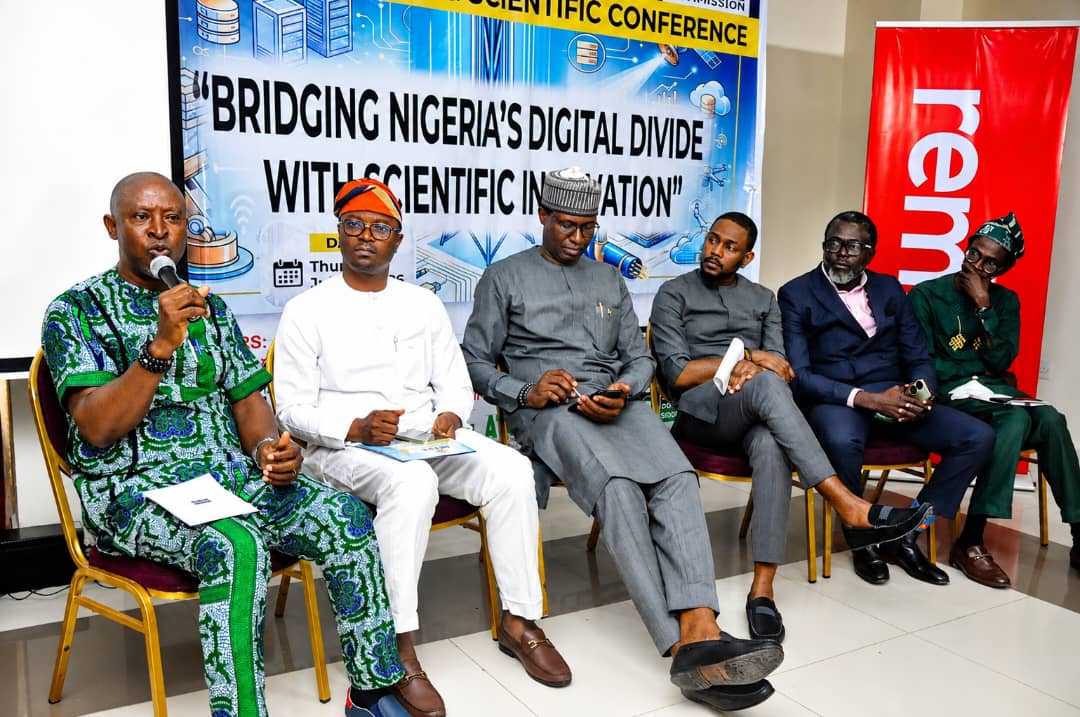
Stakeholders in Nigeria’s information and communications technology (ICT) sector have called for comprehensive policy reforms, stronger infrastructure investment and grassroots innovation to bridge the country’s digital divide and improve global competitiveness.

NITRA Conference
The stakeholders made the call on Thursday during the Nigeria Information Technology Reporters Association (NITRA) Innovative and Scientific Conference held at Citi Height Hotel, Ikeja, Lagos.
The conference, themed “Bridging Nigeria’s Digital Divide With Scientific Innovation,” brought together government agencies, technology experts, regulators, telecom operators, private sector players, academics and policymakers to examine strategies for accelerating digital inclusion through science and innovation.
A panel session titled “The Place of Policy and Infrastructure in Nigeria’s Quest for Global Competitiveness through Scientific Innovation: Roles of Different Stakeholders in Grassroots Mobilisation” examined the policy, infrastructure and human capital requirements for driving Nigeria’s digital transformation.
Panelists identified multiple taxation, high right-of-way (RoW) charges, inconsistent state government policies, poor electricity supply, inadequate digital infrastructure and limited grassroots innovation support as major impediments to expanding broadband access and improving Nigeria’s competitiveness in the global digital economy.
One of the speakers noted that transporting internet bandwidth from Lagos to Canada is cheaper than extending connectivity to some parts of Nigeria because of infrastructure bottlenecks and multiple charges imposed by sub-national governments.
According to the panelist, although some state governments claim to have abolished right-of-way charges, operators are still subjected to numerous levies under different names.
“When we talk about right-of-way limitation, it affects the cost of providing services in some states.
“Some states say right of way is free, but when they grant free right of way, they introduce development charges, education levies and infrastructure fees, making the so-called free right of way meaningless,” the panelist said.
The speaker called for harmonised national policies that would eliminate multiple taxation and reduce the cost of deploying telecommunications infrastructure across the country.
Another panelist representing telecommunications operators stressed that government policies should encourage fair competition rather than favour dominant market players.
According to the representative, improved collaboration between regulators and industry operators is necessary to ensure that policies support innovation, cybersecurity and sustainable sector growth.
Speaking on innovation development, a representative of a private sector innovation fund said Nigeria must begin identifying and nurturing innovators from an early age.
The representative said the organisation supports young innovators through essay competitions, grants and educational programmes aimed at exposing students to science, technology and entrepreneurship.
“We believe innovation begins from childhood.
“By helping children in primary and secondary schools think creatively, they become better positioned to seize opportunities as they grow.
“Innovators exist everywhere, including rural communities. What many of them need is exposure and opportunity,” the speaker said.
On cybersecurity, another panelist advocated greater investment in developing indigenous cybersecurity professionals through structured internship and mentorship programmes.
The panelist also suggested that young people involved in cybercrime should, where appropriate, be rehabilitated and equipped with legitimate digital skills rather than relying solely on imprisonment.
“Part of what we are known for is developing local talent.
“We recruit interns from schools and train them in cybersecurity.
“We should find ways to harness the abilities of young cyber offenders instead of simply sending them to prison,” the speaker said.
A representative from the computer society sector emphasised that Nigeria’s digital transformation should begin with reforms in basic education.
According to the representative, pupils should be introduced to coding, robotics, artificial intelligence and innovation at the primary school level.
“If Nigeria wants to become globally competitive, we must start from primary school.
“Our schools should not merely prepare students for examinations; they should become innovation clubs where children learn robotics, coding and problem-solving,” the panelist said.
The speaker also referenced the recent launch of an artificial intelligence university portal in Lagos designed to create a talent pipeline from primary education through tertiary institutions.
Addressing regulation, a media analyst cautioned against excessive government control that could discourage technological innovation.
According to the analyst, regulatory frameworks should emerge through stakeholder engagement and strike a balance between consumer protection and innovation.
“Regulation must come with dialogue.
“If regulation becomes excessive, it will stifle innovation.
“As Nigeria develops policies on artificial intelligence, there is a need to strike the right balance,” the analyst said.
On infrastructure protection, another panelist called for stronger public awareness campaigns to discourage vandalism of telecommunications infrastructure.
The speaker said community ownership and public education are essential to safeguarding digital infrastructure.
“When telecommunications infrastructure is vandalised, everyone suffers, including regulators, operators and consumers.
“People need to understand that protecting infrastructure benefits the entire society,” the panelist said.
Participants also highlighted the affordability of digital services as a major challenge to digital inclusion.
One speaker urged the Federal Government to consider subsidy mechanisms that could reduce the cost of internet-enabled devices.
“Telecommunications companies are businesses, not charity organisations.
“If government introduces subsidy policies similar to what has been done in other sectors, device prices can become more affordable,” the speaker said.
Another panelist stressed that reliable electricity remains fundamental to Nigeria’s digital competitiveness.
“The child who enjoys uninterrupted electricity and internet access cannot be compared with one who has gone months without power.
“For Nigeria to compete globally, every child should have reliable electricity, internet access and opportunities to acquire digital skills,” the speaker added.
Earlier, NITRA Chairman, Mr Chike Onwuegbuchi, said the conference was organised to provide a platform for stakeholders to examine policy options capable of strengthening scientific innovation and promoting grassroots technological development.
He noted that the Federal Government had demonstrated increasing commitment to building an innovation-driven economy through various strategic initiatives.
Founded in 2013, NITRA is the umbrella body of journalists covering Nigeria’s information and communications technology sector.

HURIWA, CLO Protests Bill Asking Social Media Firms’ to Open Shops Nigeria

Anambra Govt Bans Graduation Ceremonies in Anambra Schools

Airtel Secures Another 10-year Spectrum Renewal in Nigeria

Moniepoint as a Key Driver in Expanding Financial Access for Businesses in Nigeria

Nigeria, Israel Strengthen Research, Technology Collaboration

NRC, Ponzi Scheme Collapses Resulting Loss of Billions of Naira

EFCC Busts NIS Visa Overstay Racket, Uncovers N700m in an Account

Tokenization, Blockchain Technology will Transform Financial Institutions – IMF

From Scarcity to Scale: What Africa Can Learn from India’s Agricultural Transformation

Spotify partners Afro Nation Portugal to expand African music experience




 E-Business2 days ago
Kaspersky Warns Mobile‑data Buyers about Scammers Posing as Telecoms Operators

 E-Financial2 days ago
ChatPay Unveils Public Waitlist for WhatsApp-Based Banking Platform

 General News2 days ago
Three Entrepreneurs Secure ₦5 Million at The Gathering on 100 Pitchathon

 News2 days ago
African Judges Pledge Support for AfCFTA’s Success

 Telecom2 days ago
Airtel Africa Backs London Listing

 Telecom2 days ago
GSMA Says High Smartphone Costs Threatens Africa’s AI Future

 E-Business2 days ago
Nigeria Leads Africa in Online Gambling Regulation – GCI

 News2 days ago
How 21 Former Almajiri Children Learned to Build Computers and Drones in Months