

News
Nigeria, Others Top Slavery’s List of Shame

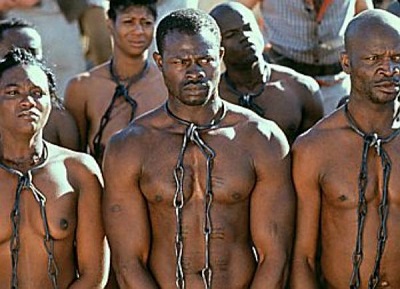
Nigeria is again in the news for the wrong reason: it was dishonorably ranked as the fourth country with the highest numbers of slaves in the world by the Global Index on Modern Slavery for 2013.
The report found that the traditional form of slavery still exists of course in Nigeria, hidden from view but there nevertheless: more than 200 years after slavery was abolished.
It is particularly disturbing that slavery is still being practiced in Nigeria; one of the West Africa countries where slavery is remembered for its almost unimaginable brutality.
Global Index on Modern Slavery for 2013 said that there are 701,032 estimated population in modern slavery in Nigeria. The range of the estimate spans from 670,000 to 740,000 salves in the country.
During the peak of the slave era, unknown numbers of people – according to some estimates at least 4 million – died in slave wars and forced marches.
Jon Avis in one of his writing in Defense of Marxism reported that “More perished on the voyages across the Atlantic”.
“The scourge of human trafficking and forced prostitution have become an extremely profitable enterprise, especially with the re-introduction of capitalism in Russia and Eastern Europe. Marx explained that while chattel slavery was officially abolished, wage slavery became the dominant form of exploitation under capitalism.
Workers no longer own the means of production and are forced to sell their labour power from week to week. Few are able to escape from this relationship. While the slave trade has been partly abolished, the task now before us is to abolish wage slavery by the overthrow of capitalism and the construction of a socialist society. Only then will humankind become really free” Avis stated.
But back to Global Index on Modern Slavery, India has the highest population of slavery in the world with 13,956,010; China is rated second with 2,949,243; and Pakistan third, with 2,127,132. The report showed that 30 million people are enslaved worldwide, trafficked into brothels, forced into manual labour, victims of debt bondage or even born into servitude.
Almost half are in India, where slavery ranges from bonded labour in quarries and kilns to commercial sex exploitation, although the scourge exists in all 162 countries surveyed by Walk Free, an Australian-based rights group. Its estimate of 29.8 million slaves worldwide is higher than other attempts to quantify modern slavery.
The International Labour Organisation estimates that almost 21 million people are victims of forced labour. “Today some people are still being born into hereditary slavery, a staggering but harsh reality, particularly in parts of West Africa and South Asia,” the report said.
“Other victims are captured or kidnapped before being sold or kept for exploitation, whether through ‘marriage’, unpaid labour on fishing boats, or as domestic workers. Others are tricked and lured into situations they cannot escape, with false promises of a good job or an education.”
The Global Slavery Index 2013 defines slavery as the possession or control of people to deny freedom and exploit them for profit or sex, usually through violence, coercion or deception. The definition includes indentured servitude, forced marriage and the abduction of children to serve in wars.
The rankings for the index are generated using three variables: a composite estimate of the number of people in slavery in each country, an estimate of the level of human trafficking from and into each country, and an estimate of the level of child and early marriage in each country.
According to the index, 10 countries, including Nigeria, alone account for three quarters of the world’s slaves. Other countries with high population of modern slavery include Ethiopia (651,000), Russia (516,000), Thailand (473,000), Democratic Republic of Congo (462,000), Myanmar (384,000) and Bangladesh (343,000). United Kingdom and Ireland tied as the least countries with low population in modern slavery.
The index also ranked nations by prevalence of slavery per head of population. By this measure, Mauritania is worst, with almost 4 percent of its 3.8 million people enslaved. Estimates by other organisations put the level at up to 20 percent.
Chattel slavery is common in Mauritania, meaning that slave status is passed down through generations. “Owners” buy, sell, rent out or give away their slaves as gifts.
After Mauritania, slavery is most prevalent by population in Haiti, where a system of child labour known as “restavek” encourages poor families to send their children to wealthier acquaintances, where many end up exploited and abused. Pakistan, India, Nepal, Moldova, Benin, Ivory Coast, Gambia and Gabon have the next highest prevalence rates.
At the other end of the scale, Iceland has the lowest estimated prevalence with fewer than 100 slaves.
Next best are Ireland, Britain, New Zealand, Switzerland, Sweden, Norway, Luxembourg, Finland and Denmark, although researchers said slave numbers in such wealthy countries were higher than previously thought.


The Stakeholders in Blockchain Technology Association of Nigeria (SiBAN), the nation’s foremost self-regulatory body for the blockchain industry, has completed its election cycle, heralding the beginning of a new executive council dedicated to scaling Nigeria’s digital economy.

The highly anticipated elections concluded recently with the emergence of a new leadership team poised to champion industry standards, foster innovation, and drive widespread adoption of blockchain technology across the country.
The newly elected executives, who will officially assume their roles in January 2026, represent a blend of legal, financial, and technical expertise critical for navigating the evolving regulatory landscape.
Leading the charge is Mela Claude-Ake, a lawyer, who has been elected the President of SiBAN to succeed the outgoing President, Obinna Iwuno, whose tenure was marked by significant achievements, including facilitating crucial reforms and forging strategic partnerships with regulators and other critical stakeholders in the digital asset industry. Mr. Iwuno will formally hand over the reins to the new council in January 2026.
Other elected to the executive council are Chimene Chinah – Vice President 1, in charge of Blockchain education and adoption; Oroke Cornelius – Vice President 2, in charge of membership, strategic partnerships, and funding; and Ayo Shonibare – Vice President 3, in charge of policy, regulation, and ethics.
Others are Ugochukwu Peters – Vice President 4 in charge of digital asset operations and capital markets, Mbene Vivian – Chief strategy officer in charge of projects and incubation, Olufunmilayo Tugbobo as Financial Secretary/Chief Financial Officer, and Chiemeka David Ohajionu as Chief Communications Officer.
The newly elected council’s structure reflects SiBAN’s commitment to addressing key pillars of the blockchain ecosystem: from grassroots education and fostering innovation through projects, to establishing robust regulatory frameworks.
In his acceptance speech, Mela Claude-Ake emphasized the vital role SiBAN plays in shaping the future of finance and technology in Nigeria.
“The trust placed in this new council is not one we take lightly. We inherit a great foundation built by the outgoing team. Our mission now is to accelerate. We stand at a critical juncture where the potential of blockchain to revolutionize every sector, from finance and governance to supply chain, is undeniable. This new council will focus relentlessly on advancing smart, collaborative regulation, democratizing blockchain education, and protecting the interests of all stakeholders to ensure that Nigeria remains a leader in the African digital economy space,” he assured.
He added that he is humbled by the opportunity to be the face of one of Nigeria’s youngest and most promising sectors — blockchain tech.
“As a tech enthusiast I am excited at the possibilities. The ecosystem needs careful nurturing by the government. My administration will be focused on building new bridges for the blockchain sector internationally and domestically, establishing trust with the public and unifying the sector. I enjoin all blockchain stakeholders in Nigeria, connected to Nigeria or of nigerian heritage to join hands together with my administration in building the industry of our dreams.”
The industry now looks forward to the handover ceremony in January 2026 and the initiatives the new SiBAN leadership will unveil to solidify the association’s role as a catalyst for innovation and a respected partner to the Nigerian government.

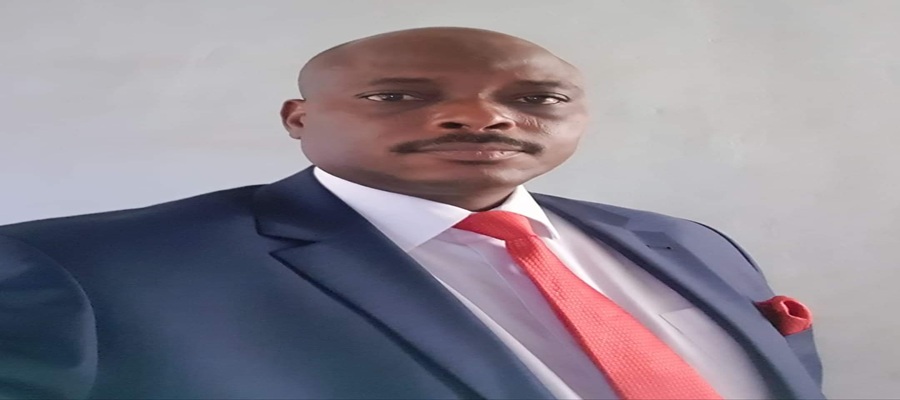
The National Chairman of the All Progressives Congress (APC) has approved the appointment of Mr. Abimbola Tooki as Special Adviser on Media and Communication Strategy.

Mr. Abimbola Tooki
The appointment reflects the Chairman’s confidence in Mr. Tooki’s vast experience, professional pedigree, and proven capacity to deploy strategic communication in strengthening party cohesion, public engagement, and effective message delivery at both national and international levels.
Mr. Tooki is a celebrated journalist, columnist, and media strategist with deep expertise in governance reporting, crisis communication, information management, and team leadership.
He is widely regarded for his ability to bring institutions closer to the people through the effective use of conventional and digital media platforms.
His career demonstrates a consistent track record of innovation, results-oriented leadership, and excellence in managing internal and external communications.
A versatile Information and Communications Technology (ICT) editor for many years, Mr. Tooki managed and developed influential ICT and business sections in leading newspapers, contributing significantly to public understanding of technology and economic issues.
He also pioneered major newsroom initiatives, including the establishment of specialised ICT publications, and is respected for his sharp analytical skills and solution-driven approach in fast-paced environments.
His professional journey spans several reputable media organisations, culminating in his role as Editor of BusinessWorld Newspaper, where he oversees editorial direction, production, administration, and corporate management.
He previously rose through the ranks at Financial Standard, earning rapid promotions due to exceptional performance, intellectual depth, and dedication to duty.
Mr. Tooki is also a familiar face and respected voice in broadcast media, serving over the years as a guest analyst on platforms such as Channels Television and other national stations, where he analyses major headlines, public policy, and issues of national importance.
Academically, he holds an MBA from Obafemi Awolowo University, a Postgraduate Diploma in Journalism from the Nigerian Institute of Journalism, and a Bachelor’s degree in Language Arts from the University of Ilorin.
In his new role, Mr. Tooki is expected to provide strategic direction for the Chairman’s media engagement, strengthen the APC’s communication architecture, manage reputation and messaging, and enhance the party’s interface with stakeholders, the press, and the Nigerian public.
The APC congratulates Mr. Abimbola Tooki on his appointment and wishes him success as he brings his wealth of experience, energy, and professionalism to bear in support of the Chairman and the party at large

The Fiscal Responsibility Commission (FRC) and the Independent Corrupt Practices and Other Related Offences Commission (ICPC) have signed a memorandum of understanding (MoU) to enhance institutional synergy and accountability in public finance management.

The partnership is also to deepen transparency and strengthen the fight against corruption in Nigeria.
The Executive Chairman of the FRC, Mr. Victor Muruako, and the Executive Chairman of the ICPC, Dr. Musa Adamu Aliyu, expressed profound satisfaction over the partnership, describing the signing as timely and symbolic, coming on a day dedicated globally to integrity, transparency, and the fight against corruption.
Speaking at the ceremony, both chairmen reaffirmed their agency’s shared commitment to prudent management of Nigeria’s resources, fiscal discipline, and the coordinated strategies to confront corruption and financial mismanagement.
Under the MoU, both agencies will collaborate extensively in capacity building, joint investigations, information sharing, asset recovery, and enforcement operations.
The ICPC, through its Anti-Corruption Academy of Nigeria (ACAN), will provide specialised training to FRC staff in forensic investigations, financial crime detection, digital evidence recovery, and prosecution strategies. In turn, both agencies will exchange resource persons for workshops and public enlightenment programmes.
The agreement further empowers both institutions to conduct joint investigations and coordinated operations where violations cut across the mandates of both the Fiscal Responsibility Act, 2007 and the ICPC Act, 2000. It also establishes a framework for mutual assistance in tracing, freezing, confiscating, and recovering stolen public funds.
On information sharing, the MoU guarantees the confidential exchange of intelligence, financial records, and technical data, while upholding strict ethical standards and full compliance with all applicable laws.
According to the parties, the collaboration will significantly enhance Nigeria’s anti-corruption architecture by eliminating institutional silos and strengthening enforcement outcomes.
The Memorandum of Understanding, which can be terminated with a 30-day notice by either party, marks a renewed and expanded phase of cooperation between the two key integrity institutions.
The signing ceremony concluded with both chairmen reaffirming their resolve to work tirelessly to promote accountability, transparency, and sustainable national development in line with the Constitution of the Federal Republic of Nigeria and existing anti-corruption laws.
Meanwhile, the Chairman of the FRC, Victor Muruako, has commended the ICPC Chairman, Dr. Musa Adamu Aliyu, and his team for sustaining the Commission’s legacy as one of Nigeria’s frontline anti-corruption institutions. Muruako particularly highlighted the signing of the MoU between the two agencies, describing it as a major step toward strengthening inter-agency collaboration in tackling corruption at all levels of government.
According to him, both agencies have, in recent months, intensified joint efforts to enhance accountability and prevent corruption at the local government level. These efforts, he noted, focus on improved budget preparation, prudent management of public funds, and the modernisation of tax, financial and asset administration systems.
He emphasised that where acts of corruption are detected, the law must take its full course to deter future offenders.

SiBAN New Executive Council to Champion Vision for Nigeria’s Digital Economy

NITDA DG Calls for Innovation-Led Economic Rebirth @ Kano Startup Weekend

Sterling Bank Renewable Energy Colloquium Urges Stakeholders to Unlock Nigeria’s Clean Energy Potential

Tax Reform or Financial Exclusion? The Trouble with Mandatory TINs

APC National Chairman Appoints Mr. Abimbola Tooki as Special Adviser on Media

Nigeria Records Highest Weekly Cyberattacks in Africa — Report

Hackers Breach Phones of Dangote and Otedola, Demand Ransom

Cyber Tsunami Hits Nigeria as Breaches Surge 1,047%, esentry Q3 Report Reveals

MTN Nigeria Has Invested Over ₦32.23 Billion in National Priorities Through Its Foundation

FG Lists Bank Charges Nigerians Will Stop Paying from January 2026




 E-Financial1 day ago
Preventing Financial Crimes Amid Mounting Insecurity: Why Following the Money is Now a Survival Imperative

 E-Financial1 day ago
Supreme Court Clears Fidelity Bank in ₦225bn Sagecom Saga

 E-Financial1 day ago
Union Bank Clinches Top Workplace Practice Honour at Sustainability Awards

 Telecom1 day ago
NITDA Charts Path for Kano as Innovation Hub

 Broadcasting23 hours ago
Davido, Babajide Sanwo-Olu, Karl Toriola, Others To Be Honoured At The Most Influential People of African Descent Awards In Lagos

 General News1 day ago
Cellulant Taps Freddie Oduro to Lead Enterprise Payments Expansion in Ghana
 News12 hours ago
SiBAN New Executive Council to Champion Vision for Nigeria’s Digital Economy

 Telecom12 hours ago
NCC Blames NOGASA for Abuja Outage