

E-Financial
Nigerian Consumers Are Africa Booming e-Commerce Force- PayPal

A recent study conducted in Nigeria by Ipsos, a global market research company, on behalf of PayPal shows an expectation by Nigerian consumers to conduct more shopping online.
Out of the approximately 50 million internet users in Nigeria, 65% of users already shop online and another 24% of users expect to do so in the future.
There are several key drivers that would encourage even more ecommerce in Nigeria.
Of the online shoppers surveyed, 53% of Nigerians who have shopped online in the past said faster delivery of goods would encourage them to shop online more often, 40% indicated that safer ways to pay was a key driver, and 31% indicated lower product costs as a driver to do more shopping online.
Security Of Online Payment And Delivery Costs Are The Main Concerns
The research shows that security of online payments and delivery costs are among main concerns preventing consumers from conducting more online shopping.
From the study, 31% of those who have not shopped online give concerns about security of payments as a reason for not currently shopping online, and 27% say that the cost of delivery is a reason for not currently shopping online.
Fear over security of online payments means that cash on delivery is still the most used and preferred payment method when shopping online, with 39% of online shoppers using cash and 32% indicating it is a preferred payment method for online purchases.
“Online security matters. This is why PayPal provides a simpler, easier and more secure way to shop and pay on millions of websites around the world,” said Efi Dahan, regional director for Africa and Israel at PayPal. “The fact that PayPal does not share financial information with the seller when authorizing a transaction keeps the consumers’ financial details more secure”.
Nigerian consumers who have heard of PayPal agree PayPal is a fast (85%), convenient (83%) and safe (73%) way to pay online – to the extent that 72% of online shoppers aware of PayPal agree it is the safest online payment method.
Popularity of Mobile Online Shopping
The research shows the overwhelming usage of mobile phones to shop online.
Meanwhile, 90% of online shoppers that own a smartphone or a feature phone have used it to shop online while 51% use their device to shop online once a month or more.
Shopping on mobile browsers seems to be the most popular way to do mobile shopping with 43% of Nigerian mobile shoppers stating a preference to shop using the phone’s browser, compared to 34% who prefer to shop from an app (and 23% who have no preference).
However, some barriers remain for mobile shopping.
Security of payments was flagged as a concern to Nigerians with 30% of mobile shoppers saying security of online purchases from a mobile device is a reason for not shopping online using a mobile phone more often, while 30% also flagged concerns about internet usage costs on mobile as a barrier to mobile shopping.
Popular Categories
Nearly half (47%)of online shoppers in Nigeria purchased digital goods in the past year, followed by 39% that purchased adult clothing, footwear & accessories online, and 33% that purchased physical entertainment such as books and CDs online.
The research also found that one in every four Nigerian online shoppers purchased consumer electronics online in the past year. 40%-69% of online shoppers have indicated they expect to spend the same or more on the following categories next year: digital goods (62%), adult clothing footwear & accessories (69%), physical entertainment(60%),jewelry and watches (53%), consumer electronics (54%) and children clothing(40%).
A Regional Perspective
Nigeria is without a doubt a significant ecommerce nation leading in the amount of potential and existing online shoppers (89%), compared to South Africa (70%) and Kenya (60%).
Finally, intra-African trade is significant with 36% of Nigerian cross-border shoppers (those who have shopped online from another country) buying from elsewhere in Africa in the past 12 months.
South Africa is the main destination with 30% of Nigerian cross-border shoppers buying from the country in the past 12 months. It is followed by Kenya with 2%, Egypt with 1%, and the rest of the continent with 3%.
Founded in 1998, PayPal continue to be at the forefront of the digital payments revolution, processing almost 11.5million payments for its customers per day.
It also gives people better ways to connect to their money and to each other, helping them send money without sharing financial information with the seller and with the flexibility to pay using their PayPal account balances debit and credit cards.
With our 162million active digital wallets, PayPal has created an open and more secure payments ecosystem people and businesses choose to securely transact with each other online, in stores and on mobile devices.
Snap Shot Of The *Ipsos-PayPal Africa Insights Research conducted in Nigeria, South Africa and Kenya
Nigeria: On Behalf of PayPal, Ipsos interviewed a representative quota sample of 500 adults (aged 18 – 54) in Nigeria who have used a PC, laptop, mobile or tablet to access the internet in the past 6 months. Interviews were conducted face to face between 12 -24thNovember 2014.
South Africa: On Behalf of PayPal, Ipsos interviewed a representative quota sample of 501 adults (aged 18 – 54) in South Africa who have used a PC, laptop, mobile or tablet to access the internet in the past 6 months. Interviews were conducted by telephone between 12 -21stNovember 2014.
Kenya: On Behalf of PayPal, Ipsos interviewed a representative quota sample of 553 adults (aged 18 – 54) in Kenya who have used a PC, laptop, mobile or tablet to access the internet in the past 6 months. Interviews were conducted by telephone between 12 -24thNovember 2014.


Central Bank of Nigeria (CBN) has directed all International Money Transfer Operators (IMTOs) operating in the country to open and maintain naira settlement accounts with authorised dealer banks, as part of efforts to tighten oversight of diaspora remittances and improve transparency in the foreign exchange market.

The directive was contained in a circular dated March 24, 2026, signed by Dr Musa Nakorji, director of the Trade and Exchange Department, and addressed to IMTOs, authorised dealer banks and the general public.
The circular was published on the apex bank’s website on Tuesday.
The CBN said the measure is aimed at “enhancing diaspora remittances, strengthening transparency, traceability, and effective monitoring of all transactions.”
It stated that “all IMTOs are hereby directed to open naira settlement accounts and ensure that all transactions are routed strictly through their designated settlement accounts, maintained with Authorised Dealer Banks in Nigeria.”
Under the new rule, all inflows, beneficiary payments and related settlements linked to international money transfers are to be processed solely through these accounts.
IMTOs may, however, operate multiple settlement accounts across different banks in line with their operational needs.
The circular also introduced tighter controls on how the accounts can be funded, stating that they “shall only be credited with remittance flows and proceeds of foreign exchange conversions by licensed IMTOs (or their agents)” within the Nigerian foreign exchange market.
Operators are required to clearly designate the accounts and submit the details to the CBN, with updates provided periodically where necessary.
To improve market operations, authorised dealer banks are permitted to process foreign currency transfers from IMTO settlement accounts to other banks and approved participants, including licensed Bureau De Change operators.
The apex bank further directed IMTOs to adopt market-reflective pricing by referencing the Bloomberg BMatch system. It said IMTOs “shall observe real-time market prices from the Bloomberg BMATCH and utilise this as guidance for pricing transactions with their customers and Authorised Dealers.”
According to the CBN, this approach is expected to “improve price discovery, reduce information asymmetry between IMTOs and banks, and encourage increased participation in the official FX market.”
The bank added that all operators must maintain proper transaction records for regulatory checks and comply fully with anti-money laundering, counter-terrorism financing and counter-proliferation financing rules.
“This directive takes effect from May 1, 2026. Please note and ensure compliance,” the circular stated.
The move shows the CBN’s push to channel remittance inflows through formal banking channels, boost liquidity in the official foreign exchange market and strengthen regulatory oversight of cross-border transactions.
E-Financial
DLM Capital Group’s AAA-Rated Sovereign Bond-Backed Composite Notes (“SBCNS”) Strengthens Investor Confidence with Successful First Principal & Interest Payment


Foremost Development Investment Bank, DLM Capital Group has reinforced its position as a leader in innovative fixed income solutions with the successful payment of the first principal and interest (coupon) to investors under its Sovereign Bond-Backed Composite Notes (“SBCNs”) issuance.

This milestone, alongside the consistent delivery of quarterly performance reports, underscores the Group’s commitment to transparency, capital preservation, and investor confidence.
DLM SPV PLC’s 40.62% Hold-to-Maturity return ₦7.30 billion (Tranche A) and 19.07% ₦1.70 billion (Tranche B) Plain Vanilla Series 1 Notes, issued under its ₦30.00 billion Medium-Term Notes Programme and developed by Sonnie Babatunde Ayere, Group CEO of DLM Capital, was recently listed on the FMDQ Exchange with the Tranche A bond becoming the most valuable AAA-rated corporate bond on the market.
This represents a new class of structured debt instruments designed to meet both issuer funding needs and investor expectations. As a platform widely recognised for supporting innovative debt structures, FMDQ provides an enabling environment for instruments like DLM’s SBCNs to thrive.
At launch in July 2025, DLM SBCNs, which achieved a 9-notch upgrade from BBB- (GCR Sponsor ratings at issuance) without securitisation, entered the market with a healthy degree of skepticism, as is typical with pioneering financial instruments. However, after six months of post-issuance, DLM Funding SPV Plc has delivered on its promise by comfortably and successfully meeting its first principal and coupon obligations to its investors.
This performance milestone has significantly strengthened market confidence and validated the robustness of the structure. The notes are rated AAA by Global Credit Rating and AAA by DataPro Limited, reflecting their strong credit fundamentals and low-risk profile. Designed to prioritise capital preservation, liquidity, and above competitive market returns, the instrument stands out as one of the most compelling corporate fixed income offerings for institutional investors currently available in the market.
Investor response has been notably strong and institutional investors who are beginning to recognize the value of a well-structured de-risked, high-return and, high-quality fixed income investment backed by a credible issuer with a proven track record. The combination of timely coupon payments, high credit ratings, and ongoing transparency has positioned SBCNs as a preferred option for investors seeking stability and performance in today’s evolving financial landscape.
As investor interest continues to build towards Series 2, DLM SBCNs are not only demonstrating resilience but also setting a benchmark for innovation in Nigeria’s debt capital markets. In its role as a Development Investment Bank (“DIB”), DLM Capital Group remains committed to delivering structured solutions that align with investor needs whilst maintaining the highest standards of governance and execution.
E-Financial
Refining Without Relief: How Global Oil Wars, Market Structure, and Monopoly Risks Still Drive Fuel Prices in Nigeria

By Blaise Udunze
The vision was bold. The expectation was clear. And the promise was powerful. When the Dangote Refinery began operations, it was hailed as Nigeria’s long-awaited escape from decades of energy contradiction, which involves exporting crude oil while importing refined fuel at high costs. It was meant to guarantee supply, stabilize prices, conserve foreign exchange, and most importantly, deliver relief to ordinary Nigerians.

What appears to be a distinct contradiction is that, despite months into its operation, a different reality is emerging, with fuel prices rising sharply. Inflationary pressures are intensifying. This occurrence has forced Nigerians to ask a difficult question once again, one that calls for an urgent answer. Why does a country that produces and refines crude oil still suffer the consequences of global oil shocks?
Looking at the trend, it is clear that the answer lies not just in geopolitics, but in the deeper structure of Nigeria’s oil economy, where global pricing, policy gaps, and now the looming risk of monopoly intersect.
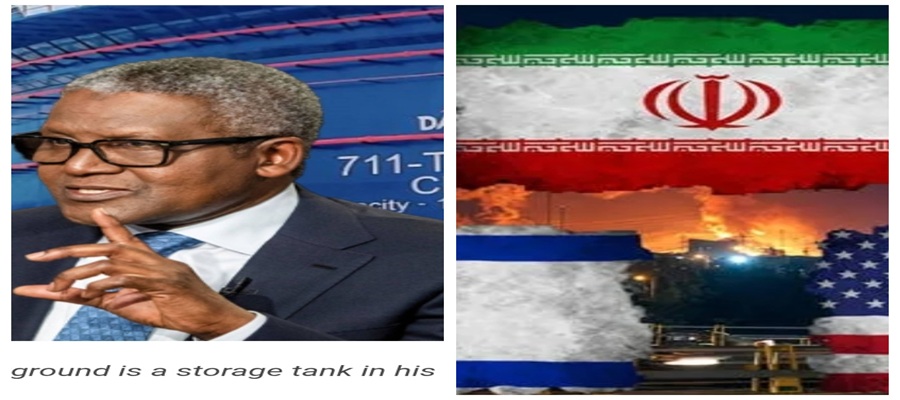
With the recent development, the latest alarming surge in petrol prices has been driven largely by escalating tensions in the Middle East. This is particularly the U.S-Israel strikes on Iran and retaliatory measures from Tehran. A well-known fact is that at the center of the crisis is the Strait of Hormuz, a vital oil transit route through which a significant portion of global supply flows. Any disruption, even a speculative one, triggers immediate spikes in crude prices.
Within a week, oil prices jumped from the mid-$60 range to nearly $120 per barrel. For global markets, this is expected. For Nigeria, it is devastatingly ironic. Because, despite having crude oil in abundance and despite refining it locally, Nigeria remains fully exposed and this has continued to re-echo the same ironic question.
In a rare moment of corporate candor, the refinery’s leadership acknowledged this reality. The plant is deeply affected by global shocks. Crude oil, even when sourced locally, is priced at international benchmarks. Shipping costs have surged dramatically, from about $800,000 per tanker to as high as $3.5 million. Insurance premiums have climbed, and logistics have become significantly more expensive, with total costs further driving higher.
Even more revealing is the refinery’s sourcing structure. Only about 30 percent – 35 percent of crude comes from the Nigerian government supply under the crude-for-naira framework. A significant portion is still purchased in U.S. dollars on the open market, while another 30 percent – 40 percent is sourced internationally, including from the United States and other regions. This means the refinery is not insulated; it is integrated into the global oil system. The implication is unavoidable as local refining has not translated into local pricing control.
The impact on Nigerians has been immediate and severe, as petrol prices have surged from under N800 earlier in the year to over N1,200, and in some regions, it is even more alarming when the prices skyrocketed close to N1,400 per litre. Within weeks, multiple price increases have been recorded, driven largely by global crude price spikes and rising logistics costs. Doubtless, the country has witnessed the consequences ripple across the economy as transport fares rise, food prices increase, businesses struggle with higher operating costs, and inflation accelerates.
The development has attracted the attention of the labour unions and the organised private sector, prompting them to raise concerns and alarm about the consequences of job losses, business closures, and worsening hardship if the trend continues with each passing day, witnessing a daily increase and causing possible artificial scarcity.
Nigeria remains trapped in a painful contradiction. It produces crude oil. It refines crude oil. Yet it cannot protect its citizens from global oil volatility. As Aliko Dangote himself acknowledged, Nigeria has no direct role in the conflict driving these price increases, yet it bears the consequences due to global economic interdependence.
In a real sense, this is the deeper tragedy, as Nigeria has achieved capacity without control.
At the heart of the issue is a structural reality, crude oil is priced globally, not locally. Even under the crude-for-naira arrangement, pricing is benchmarked against international rates. This means refineries pay global crude prices, fuel prices reflect global market conditions, and domestic consumers absorb international shocks. In essence, Nigeria has moved refining home without bringing pricing sovereignty with it.
To be fair, the Dangote Refinery has played a stabilizing role. Nigeria still enjoys relatively lower petrol prices compared to many global markets. In several countries, supply disruptions have led to panic buying and rationing, while Nigeria has maintained a consistent supply. As the refinery’s CEO aptly noted, what is worse than $120 oil is no oil. The refinery has prevented scarcity, but it has not prevented high prices. Availability, in this case, has not equated to affordability, which is the painful part for the citizens.
While much of the current debate focuses on pricing, another critical issue is quietly taking shape, which is the risk of market concentration. Dangote Refinery deserves credit for its scale and ambition, but scale brings power, and power demands oversight. If fuel importers are gradually pushed out and no competing refineries emerge at scale, Nigeria could find itself transitioning from a public sector monopoly to a private sector dominance led by a single player.
Nigeria has seen this pattern before. In the cement industry, increased domestic production did not necessarily translate into lower prices. Limited competition allowed prices to remain elevated despite local capacity. The same risk now looms in the downstream oil sector. Without competition, price-setting power becomes concentrated, supply risks increase, and consumer protection weakens. In a country with fragile regulatory institutions, this is not a theoretical concern; it is a real and present danger.
No one should perceive this wrongly, because it is important, however, not to misplace blame. It should be made known that the Dangote Refinery is not a charity; it is a private enterprise operating within market realities. It must recover its investment, manage costs, and deliver returns. Its exposure to global pricing is not a failure of intent but a function of the system within which it operates.
The real issue lies in the structure of the market and the absence of sufficient competition.
It is no longer news that Nigeria’s downstream sector is now largely deregulated following the removal of fuel subsidies. While deregulation has reduced government fiscal burden and encouraged private investment, it has also exposed consumers to price volatility and limited the scope for intervention, as this has continued to cause pain. Markets, in theory, deliver efficiency, but in practice, they require competition and effective regulation to function properly. Without these, deregulation can simply replace one form of inefficiency with another.
Nigeria does not need to weaken Dangote Refinery; it needs to multiply it. The goal should be to build a competitive refining ecosystem to replace one dominant structure with another. The truth is not far from this, as part of a lasting solution, it requires encouraging new refinery investments, removing bottlenecks for players such as BUA and modular refineries, ensuring transparent crude allocation, providing open access to pipelines and storage infrastructure, and enforcing strong antitrust regulations.
Competition remains the most effective regulator of price, which is sacrosanct and it protects consumers, strengthens supply security, and reduces systemic risk.
This must also be perceived beyond competition, which calls for the government to act strategically. The fact is that when supplying crude to local refineries at discounted or stabilized rates, expanding naira-based transactions, and introducing temporary relief measures during global crises are all viable options that must be put into consideration. Energy is too critical to be left entirely to market forces, especially in a developing economy where millions are highly vulnerable to economic shocks.
It is time that Nigerians understood that the nation’s refining crisis has been decades in the making, and it cannot be solved by a single refinery, no matter how large. If asked, it will be said that this is a fact that can’t be argued. The Dangote Refinery is undoubtedly a turning point, but it will only remain so if it is embedded within broader systemic reform. Otherwise, Nigeria risks replacing one form of dependency with another, from import dependence to domestic concentration.
The question is no longer whether Nigeria can refine crude oil. It can. The real question is whether Nigeria can build a system that ensures fair pricing, competitive markets, consumer protection, and economic resilience, as these are exactly the core answers.
If global conflicts continue to dictate local fuel prices, if monopoly risks go unchecked, and if citizens remain vulnerable despite abundant resources, then the promise of local refining will remain unfulfilled, as it will bring no expected relief.
What is playing out is the well-known fact that in refining, as in democracy, concentration of power is dangerous. And in both, the strongest safeguard remains the same, competition, transparency, and institutions that serve the public interest.
Blaise, a journalist and PR professional, writes from Lagos and can be reached via: [email protected]

Court Remands Hacker for Allegedly Stealing N3.09Bn from FCMB

CBN Directs IMTOs to Open Naira Settlement Accounts

Nigerians Lose N12.5Bn to AI-Driven Scams- PwC

SEDC Launches SEVCP to Expand Access to Capital for Startups

Kaspersky, AFRIPOL Conduct Joint Cybersecurity Training for African law Enforcement

Kaspersky Discovers New Phishing Campaign Exploiting Google Tasks Notifications to Steal Corporate Credentials

esentry 2025 Report Shows Healthcare, Financial Services and Telecoms as Staging Grounds for Increased Cyberattacks in Africa

AfDB, UNDP Launch $10Bn AI Initiative for Africa

MultiChoice Suspends Yearly DStv Price Hike as Canal+ Pushes Growth

MTN Nigeria Posts Record N1.70 Trillion Pre‑Tax Profit, Declares N20 Dividend for 2025




 E-Financial2 days ago
DLM SPV PLC Lists ₦9.00bn AAA-Rated Medium-Term Notes on FMDQ Exchange, Sets Benchmark in Corporate Bond Market

 E-Financial3 days ago
CBN Wins Central Bank of the Year Title @13th Global Awards

 General News3 days ago
Tech Firms Sack over 45,000 so Far in 2026

 News2 days ago
Metaverse Collapses, Horizon Worlds Shuts Down on Quest

 News3 days ago
Morney Launches in Nigeria as E-invoicing Drives Finance Digitisation

 Telecom3 days ago
FG Taps Quest Merchant Bank for Advisory on 90,000km Fibre Project

 General News3 days ago
Jury Finds Elon Musk Liable for Misleading Twitter Investors

 News3 days ago
TEF-Backed Entrepreneurs Generate $4.2Bn, Create 1.5m Jobs across Africa