

E-Business
Nigerian Secures Global Right to License COBiT 5 for PCIDSS Practice Guide

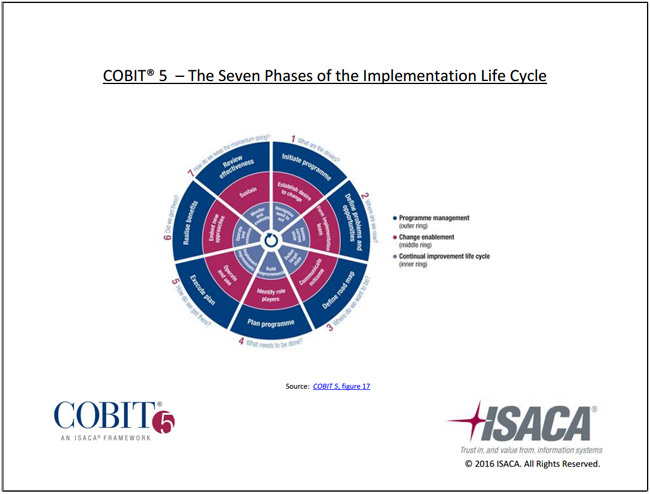
Adesanya Ahmed, a Nigerian, has been granted the authority by Information Systems Audit and Control Association (ISACA)to license and certify individuals or corporates globally in COBiT 5 for Payment Card Industry Data Security Standard (PCIDSS) making him the only African to secure such right, Nigeria CommunicationsWeek has learnt.
In the letter conferring the authority to him made available to Nigeria CommunicationsWeek dated January 12, 2017, and signed by J. Fullerton, senior director, ISACA headquarters in USA, ISACA acknowledged the agreement with Ahmed to license practical guide in COBIT 5 for PCIDSS cybersecurity framework.
Reacting, Ahmed explained that COBiT 5 for PCIDSS is an international standard security solution that addresses the security implications, ensures the security of transactions, elimination of frauds and cyber attacks on every electronic payment transactions.

“Most importantly COBiT 5 for PCIDSS addresses all areas of associated risks with respect to our critical national infrastructures so that hackers and other fraudulent intended people would not take undue advantage of our honest mistake or carelessness,” he said.
He noted that he has sign MoU with Digital Bridge Institute to offer certification training for individual or corporates seeking certification in to deploy the solution and has also written to National Information Development Agency (NITDA) to approve the product as a local content for Nigeria.
Confirming this development, Mrs. Gbadamosi Folakemi Toyin, immediate past president, ISACA Ibadan Chapter, and Accredited ATO for COBiT 5 Foundation, Implementation and Assessor, said that Mr. Adesanya Ahmed CEO of Petrovice Resources International Ltd, works published by ISACA ‘meeting PCI DSS when using a Cloud Service Provider’ was recommended by Payment Card Industry Standards Security Council for securing cloud computing environments.
“This made history as the first African work to be adopted as an international best practice. Also appointed to review the IT benchmark for the world (The Practical Guide to the Payment Card Industry Data Security Standard) were COBiT 5 and ISO 27001 were mapped with PCIDSS Published by ISACA, 2016.
“In light of the above, permission was granted by ISACA HQ(USA) to develop and license two additional products to COBiT 5 family, which are COBiT 5 for PCI DSS Implementation and PCI DSS Audit/ Assurance based on COBIT 5.
“My team and I developed the courseware of the two certifications and the syllabus. These products will give Nigeria an upper hand in the ICT world because there is no product of this kind in Africa and in the whole world. It will enable Nigeria to earn both local and foreign currencies.
“As Nigeria is preparing to sign digital single market with European Union, we already have the required local contents to contribute to this technological market which is part of COBIT 5 for PCIDSS I mentioned above,” she added.



Microsoft is planning to unveil its new Maia 300 AI chip this fall, potentially as soon as next month, The Information reported on Monday, citing people with direct knowledge of the plans.

The company introduced its Maia AI chip in November 2023 but has lagged rivals such as Alphabet and Amazon in scaling up its in-house chip efforts as it seeks to reduce its reliance on Nvidia’s costly processors.
Google began recognizing revenue from direct sales of its custom AI chips, called Tensor Processing Units, in the quarter ended June, while Amazon has also seen growing adoption of its processors, including its Trainium chips.
Microsoft has been in talks with chipmaker TSMC to secure manufacturing capacity for more than 300,000 units of the chip for delivery in 2027, according to the report. It is also looking to significantly ramp up production and persuade major cloud customers such as Anthropic to adopt the chip.
Microsoft ultimately aims to secure capacity for more than 1 million Maia 300 chips, though component supplies and ongoing capacity negotiations with TSMC could constrain its plans, according to the report.
It unveiled its second-generation Maia 200 in January, built by TSMC using 3-nanometer technology.
Microsoft packed the chip with a significant amount of SRAM, a type of memory that can provide speed advantages for AI systems handling large numbers of user requests.


X has announced plans to discontinue its Revenue Sharing programme and introduce a new Original Content Rewards programme to reward creators for producing original content on the platform.

The social media company announced the changes at the weekend in a post on its X Creators handle, saying the new programme would reward creators who contribute original content.
“Today, we’re introducing the Original Content Rewards Program, a new way to reward creators who bring original ideas, expertise, reporting, creativity, and commentary to X,” the company said.
X said it would stop accepting new enrolments into the Revenue Sharing programme from Friday, while existing participants would continue earning until September 7, 2026.
“Starting today, we’re no longer accepting new enrollments into Revenue Sharing,” it said.
According to the company, existing Revenue Sharing participants will receive three final payouts, with two scheduled for August 14 and August 28, while the final payment for earnings accrued through September 7 is expected around September 11.
X said existing Revenue Sharing participants would begin getting access to apply for the new programme from September 8, subject to meeting its eligibility requirements.
The first payout under the Original Content Rewards programme will be made on August 28, 2026, while existing Revenue Sharing creators who enrol in the new programme from September 8 will receive their first payment on September 25.
Under the new programme, eligible creators will earn from qualified impressions generated by their original content, with payments made every two weeks.
X defined qualified impressions as unique impressions from Premium users on the Home Timeline feed, where at least 50 per cent of a post is visible.
On the other hand, “The following are excluded from qualified impressions: impressions from the same account counted more than once per post; paid, promoted, or artificially generated impressions; and fraudulent impressions,” it said.
To qualify, creators must be at least 18 years old, live in a country where the programme is available, maintain an account in good standing and have either a personal or vusiness account.
They must also subscribe to X Premium, Premium+ or Premium Business, have at least 500 verified followers and record at least 500,000 Home Timeline impressions from verified users within the previous 90 days.
X said creators must also regularly post original content to remain eligible.
“We want to recognize creators who break news, share expertise, tell stories, create entertainment, and contribute meaningful perspectives to the conversation,” the company said.
The platform said original content could include threads, videos, memes, graphics, illustrations, reporting, analysis, commentary and reactions that add meaningful value to existing conversations.
It said creators who use content produced by others would need to add meaningful commentary, context, analysis, humour or creative transformation for such posts to qualify.
“Building on existing conversations is a core part of X, but simply reposting someone else’s content is not enough,” it said.
X said minor edits such as cropping, filters, borders, watermarks, speed adjustments or simple text overlays would generally not qualify as meaningful transformation on their own.
It also warned that content copied or substantially reproduced from another creator, content downloaded and re-uploaded from X or another platform without being the original author’s, automated content, disinformation and misleading content would be ineligible.
The company said accounts that violate the programme’s requirements could be temporarily or permanently removed from it, depending on the severity of the violation.
It added that creators would be responsible for ensuring they had the necessary rights, permissions or licences to use content created by others.
“Original content is content you personally create that reflects your own voice, perspective, expertise, or creativity,” X said.
The company said the new programme was intended to reward creators who make the platform more valuable by bringing original ideas and perspectives to its conversations.
“The Original Content Rewards Program is designed to reward the creators who start them, shape them, and move them forward,” it said.

National Information Technology Development Agency (NITDA) has introduced so-called Nigeria’s Certified Cloud Register, regulatory framework developed under the agency’s National Sovereign Cloud Initiative to determine which cloud providers are authorized to handle sensitive data, such as banking records.

In effect, from October, NITDA requires banks, fintech companies and other regulated organisations to source cloud infrastructure providers from a national register of certified firms approved to host sensitive financial and government data.
The Certified Cloud Register, is expected to strengthen data sovereignty, improve regulatory oversight and support the implementation of the Central Bank of Nigeria’s (CBN) data localisation policy, which takes effect on January 1, 2027.
Under the framework, banks, fintechs, government institutions and other regulated entities will be able to verify whether cloud service providers, data centre operators, managed service providers and Artificial Intelligence (AI) infrastructure companies have met NITDA’s certification requirements before entrusting them with critical digital workloads.
The initiative is expected to provide regulated institutions with a standardised process for selecting cloud infrastructure providers that satisfy Nigeria’s technical, security and regulatory requirements.
According to NITDA, the framework establishes “a common national standard, an independent assessment process and a public register of approved providers that banks, fintechs and government institutions can rely on when selecting cloud infrastructure partners.”
The register is expected to become a key compliance tool ahead of the CBN’s directive, which requires all payment transaction data generated within Nigeria to be stored and processed locally, effective from January 1, 2027.
The policy applies to deposit money banks, microfinance banks, mobile money operators, payment service providers, switching companies and other financial institutions.
The certification regime is also expected to reshape Nigeria’s cloud computing ecosystem, making regulatory approval a major requirement for cloud providers seeking to handle sensitive data for regulated industries.
Figures cited by NITDA showed that Nigeria’s 10 largest banks spent about N177.91 billion on information technology in the first quarter of 2026, representing a 31 per cent increase over the corresponding period last year.
A sizeable portion of the investment currently supports cloud infrastructure hosted outside Nigeria, a trend the new certification framework is expected to address by encouraging greater utilisation of compliant local infrastructure.
NITDA said the certification programme will apply the same technical and regulatory standards to indigenous cloud providers and international hyperscale operators, creating a level playing field for all companies seeking to provide cloud services to regulated sectors.
The agency also disclosed that more than 85 per cent of Nigerian businesses currently rely on cloud services, with the majority using infrastructure hosted outside the country.
It said the new framework is aimed at improving confidence in Nigeria’s digital infrastructure while promoting local capacity and enhancing oversight of critical national data.
Speaking on the objective of the initiative, Kashifu Inuwa Abdullahi, director-general of NITDA, said the programme is designed to strengthen Nigeria’s position in the global digital economy rather than exclude foreign technology companies.
According to him, the initiative is intended “to redefine the terms under which Nigeria participates in the global digital economy rather than isolate the country from international technology providers.”
The Certified Cloud Register forms part of broader efforts by the Federal Government to deepen digital trust, strengthen cybersecurity and ensure that critical financial and public sector data are managed in line with Nigeria’s evolving data governance and sovereignty objectives.

Affordable, Flexible Streaming Platforms May Kill PAYtv – Report

FG Suspends NAICOM’s N680m Insurance Recapitalisation Fees

FG Taps Indian, Chinese Technologies to Tackle $2.5Bn in Food Losses

MTN Nigeria Clocks 25, Connects over 90m People

Subscribers to Seek Legal Redress if Poor Quality of Service Continue in September

EFCC Busts NIS Visa Overstay Racket, Uncovers N700m in an Account

Fact-Check: Elon Musk’s “Tesla Pi Phone” is Internet Rumor

NBC Tasks Broadcasting Stations over 2028 DSO Global Deadline

NBC Scraps Annual Digital Access Fee on DSO

Glo Sponsored African Voices to Feature Netflix’s “The Polygamist” Stars




 E-Business2 days ago
X Replaces Revenue Sharing wit New Creator Rewards Programme

 Telecom2 days ago
MTN Alerts Subscribers over Fake 25GB Anniversary MTN Data Giveaway

 E-Financial2 days ago
Interswitch, Temenos Commit to Advancing Nigeria’s Digital Banking Technology

 General News2 days ago
Fake Agency: ICPC Indicts NITDA, Others over Inadequate Due Diligence

 E-Financial2 days ago
FG Spent N3.1 Trillion on Domestic Debt Servicing in Q1- DMO

 General News2 days ago
UNESCO Taps Oguamanam,Nigerian Scholar to Advisory Body on Science, Tech Ethics

 General News2 days ago
Tax Reform Built on Taxing Prosperity, Not Poverty– Adedeji

 Broadcasting2 days ago
Awba-Ofemili Unveils 2026 Health Campaign, Offers Free Medical Screening