

E-Business
NIMC Says NIN Services Back Online

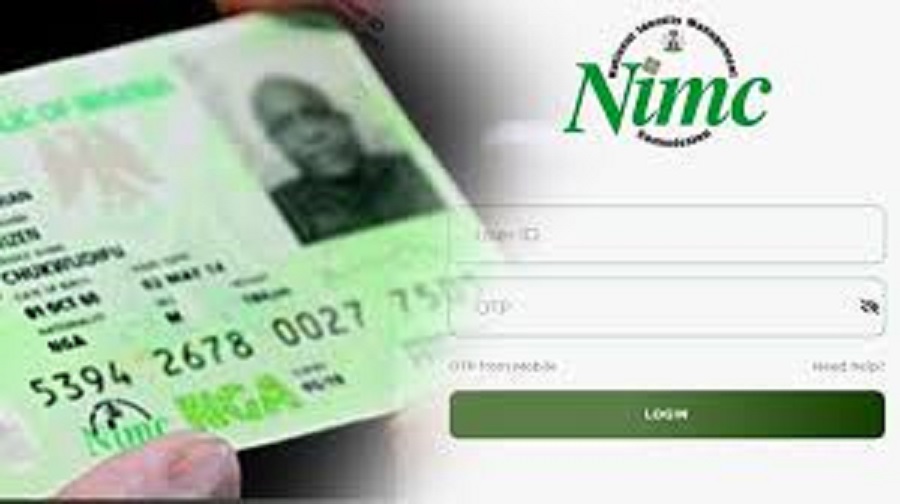
National Identity Management Commission (NIMC) has announced the restoration of its National Identification Number (NIN) verification services nationwide.

This, according to the commission, follows the completion of a system maintenance exercise.
In a statement issued on Friday, the NIMC confirmed that all previously disrupted services have resumed.
“NIMC wishes to inform the general public that the recent technical maintenance has been completed and all services have been restored,” the statement read.
The NIMC urged Nigerians seeking to enroll for NIN to visit the its official website to locate the nearest enrollment centers.
The agency also encouraged individuals to make use of its self-service portal for tasks such as data modification, including name changes.
To further ease the verification process, the Commission recommended downloading the NIMC NameAuth app (oath.app) from the Google Play Store or Apple App Store for quick and secure NIN authentication.
NIMC expressed appreciation for the public’s patience during the service disruption, which had impacted banks, telecom providers, and government agencies that rely on NIN verification for their operations.



Federal Government of Nigeria has approved the acquisition of electric buses for civil servants as part of efforts to promote cleaner transportation and boost local vehicle manufacturing.

The development was disclosed in Abuja by Joseph Osanipin, Director-General of the National Automotive Design and Development Council (NADDC). Osanipin said the buses would be sourced from local assemblers to strengthen domestic production and stimulate growth in Nigeria’s automotive sector.
He stated: “The initiative is aimed at encouraging the transition to cleaner mobility while creating opportunities for local manufacturers.” According to him, the government has also procured charging infrastructure that will be deployed across parts of the country to support the adoption of electric vehicles.
As part of broader efforts to develop the sector, the council is establishing the Nnewi Automotive Development Park in Anambra State. Osanipin explained: “We are developing the Nnewi Automotive Development Park where we will provide the necessary infrastructure so that users of the park can share facilities.”
He added that the shared infrastructure model would enable investors and manufacturers to operate without bearing the full cost of setting up independent facilities. The council is also seeking additional investment to accelerate the development of the park and attract more industry participants.
Osanipin urged Nigerians to support locally assembled vehicles, noting that increased patronage would help create jobs and drive economic growth. He said the council is providing training to manufacturers and stakeholders to enhance local production of vehicle components such as batteries and tyres.
“The move will reduce import dependence, create employment opportunities, and contribute to the country’s Gross Domestic Product,” he said. The NADDC is also working with the Bank of Industry Nigeria to facilitate the disbursement of the National Automotive Development Fund to qualified stakeholders.

As the global community commemorates World Consumer Rights Day, Jumia Nigeria joined industry leaders, regulators, and consumer advocates at the Lagos Marriott Hotel, Ikeja, for a high-level panel session hosted by the Lagos State Consumer Protection Agency (LASCOPA) on Tuesday, March 17, 2026.

Speaking during the session, Peters Afebuame, Group Head of Content and Production at Jumia, highlighted Jumia’s comprehensive approach to protecting consumers from counterfeit or adulterated products on its marketplace, noting that the company has implemented structured checks and technology-driven systems across the entire product lifecycle, from seller onboarding to post-listing monitoring, to safeguard product authenticity.
“Ensuring product authenticity on our platform requires a combination of technology, policy enforcement, and continuous seller engagement,” he stated.
“At Jumia Nigeria, we have implemented a multi-layered process that begins with rigorous seller onboarding and policy agreements, followed by catalogue configuration controls, AI-driven product attribute verification, and the use of global product identification standards. These systems are reinforced by ongoing quality moderation, brand protection mechanisms, and strict enforcement actions, including product and seller delisting, ensuring that customers can shop on our platform with confidence.”
Central to Jumia’s consumer protection framework is a rigorous seller verification process designed to ensure marketplace integrity. Vendors are required to provide proof of legal and regulatory compliance before gaining access to the platform. This vetting process is reinforced by a strict quality control system that monitors products listed on the platform, backed by a zero-tolerance policy toward counterfeit or substandard goods. Non-compliant sellers face penalties and permanent delisting from the marketplace.
Transparency also remains a core priority in helping customers make informed purchasing decisions. Product listings across the platform feature clear specifications, verified descriptions, and detailed images, enabling shoppers to understand exactly what they are purchasing before completing a transaction.
Recognising that digital literacy plays a critical role in online safety, Jumia continues to invest in consumer education initiatives through instructional “how-to” videos, platform guides, and social media campaigns that equip Nigerian shoppers with practical knowledge to navigate online shopping securely and confidently.
To further strengthen transaction security, Jumia leverages its proprietary payment solution, JumiaPay, which provides a secure and encrypted payment infrastructure designed to protect customer financial data. The company also adheres to internationally recognised data protection standards such as the General Data Protection Regulation (GDPR) and local regulatory frameworks established by the Nigeria Data Protection Commission (NDPC), ensuring responsible handling and protection of user information.
Beyond the point of purchase, Jumia reinforces consumer protection through a customer-centric return and refund policy designed to ensure seamless resolution when issues arise. A dedicated customer service team also provides support through multiple channels, including phone and social media, enabling swift response to consumer inquiries and complaints.
As e-commerce continues to expand across Nigeria, Jumia reaffirmed its commitment to building a marketplace that prioritises fairness, transparency, and consumer safety. Through continuous investment in technology, strong policy enforcement, and ongoing consumer engagement, the company aims to strengthen trust and confidence in Nigeria’s growing digital commerce ecosystem.
Federal government is determined to protect Nigerians’ rights and privacy in the digital space, according to Dr Ayodele Bakare, assistant director, Cybersecurity Department, National Information Technology Development Agency (NITDA),

To achieve that, Bakare, said that the government has developed several policy and regulatory frameworks to strengthen cybersecurity.
Bakare, stated all these during an interview with the News Agency of Nigeria (NAN) in Abuja on Monday.
He said that cybersecurity governance in Nigeria was implemented through a collaborative approach involving multiple government institutions with different responsibilities.
According to him, the Office of the National Security Adviser (ONSA) provides overall coordination of national cybersecurity efforts through the National Cybersecurity Coordination Centre, which serves as its operational arm.
“At the national level, cybersecurity implementation is done collectively, and different government organisations are responsible for implementing different aspects of the national cybersecurity framework.
“At the top, however, the Office of the National Security Adviser coordinates these efforts through the National Cybersecurity Coordination Centre,” he said.
Bakare said that one of the key policy instruments guiding the country’s cybersecurity efforts was the National Cybersecurity Policy and Strategy Framework.
He also highlighted the legal framework provided by the Cybercrimes Prohibition and Prevention Act 2015, which was recently amended in 2024 to strengthen Nigeria’s response to cyber threats and digital crimes.
According to him, NITDA has also introduced sector-specific regulations to enhance cybersecurity in the country.
“One such regulation is the National Public Key Infrastructure Regulation, which is one of the core infrastructures required to ensure trust and security in digital communications and transactions,” he said.
Bakare said that NITDA played a pioneering role in Nigeria’s data protection landscape through the Nigeria Data Protection Regulation 2019, which laid the foundation for the current data protection framework.
He said the regulation had since evolved into a full legal framework implemented by the Nigeria Data Protection Commission.
Bakare disclosed that the agency was also finalising an Information Security Regulation that would soon be made available to the public.
He further explained that the regulation would provide organisations and individuals with clear guidelines on their responsibilities in safeguarding information and digital assets.
“Nigeria has continued to strengthen its legal and policy environment for cybersecurity, a development reflected in the country’s performance in the Global Cybersecurity Index.
“One of the pillars of the index focuses on legal measures and assesses the availability of national cybersecurity laws and regulations.
“Nigeria recorded a strong performance under the legal measures pillar, reflecting the country’s efforts to establish the necessary frameworks to support cybersecurity governance,” he told NAN.
He said that sustained collaboration among government agencies and stakeholders remained essential to effectively implement the existing policies and strengthen Nigeria’s digital security architecture.

UBA, NiDCOM Deepen Collaboration to Unlock Diaspora Capital for Nigeria’s Growth

Vitel Wireless Lures Subscribers with “Data that Never Expires” Campaign

FG Deploys Technology, Approves $54m Drugs to Tackle Tuberculosis

BoI, MTN Foundation Launch N1Bn Fund for Women Entrepreneurs

Luno Launches First Crypto Prediction Market in Nigeria

Kaspersky Discovers New Phishing Campaign Exploiting Google Tasks Notifications to Steal Corporate Credentials

esentry 2025 Report Shows Healthcare, Financial Services and Telecoms as Staging Grounds for Increased Cyberattacks in Africa

AfDB, UNDP Launch $10Bn AI Initiative for Africa

Mutual Benefits Assurance Settles ₦5.9bn Claims in January 2026

MultiChoice Suspends Yearly DStv Price Hike as Canal+ Pushes Growth




 Broadcasting3 days ago
Spotify’s Loud & Clear Report Reveals Over ₦60Bn Revenue for Nigerian Artists in 2025

 E-Financial3 days ago
CBN Relaxes Dormant Account Rules with Removal of Affidavit Requirement

 News3 days ago
Elumelu Tags Elon Musk, Disowns AI-Generated Scam Video

 Telecom3 days ago
PwC Warns Nigeria Telcos of AI Fraud Risks

 E-Financial3 days ago
Crypto Transactions Hit $96Bn in Nigeria -SEC

 E-Financial21 hours ago
Kuda MFB Increases Kuda for Her Business Grants to ₦10 Million

 E-Business3 days ago
FG Determined to Protect Rights, Privacy Online- NITDA

 E-Business3 days ago
Firm Warns of Malware Aiming to Steal Data from Individuals, Organisations in Nigeria