

Telecom
NITDA Inaugurates Advisory Committee to Help Cushion Impact of COVID-19 Pandemic

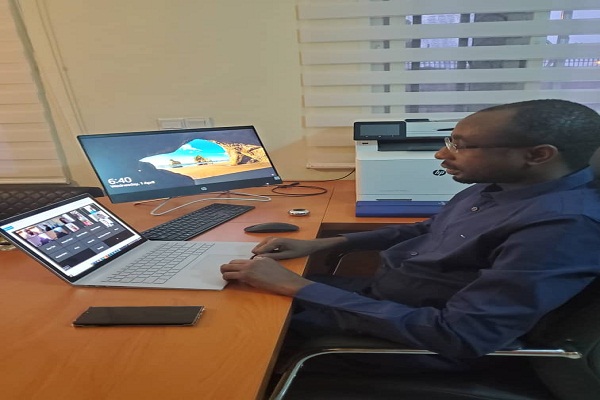
Mallam KashifuInuwa Abdullahi, director general, National Information Technology Development Agency (NITDA), has inaugurated a 10-Member Advisory Committee to advise Government on measures to be taken to cushion the impact of the COVID-19 pandemic on start-ups, small and medium businesses as well as the Technology Ecosystem in general.
The DG stated this in a statement released on Wednesday by Mrs Hadiza Umar, head, Corporate Affairs and External Relations, National Information Technology Development Agency (NITDA).
According to the statement, “Concerned with the potential impact of the COVID-19 pandemic on the ICT sector, the Honourable Minister of Communications and Digital Economy, Dr Isa Ali Ibrahim Pantami, directed NITDA to urgently look into how the Federal Government can effectively provide the enabling environment for Technology Start-ups and ICT businesses to help in mitigating the potential impact of the pandemic on their businesses.
“The Committee has the Chairman, Innovation Support Network (ISN) and President, African Business Angels Network (ABAN), Mr Tomi Davies, as its Chairperson. Other members of the Committee include Amal Hassan, MD/CEO, Outsource Global, Bosun Tijani, MD/CEO Co-Creation Hub (CCHub), Juliet Anammah, Chairperson Jumia Nigeria and Head, International Affairs, Jumia Group, Kola Aina, Founder, Ventures Platform, Musa Ali Baba, MD/CEO TeasyPay, Iyinoluwa Aboyeji, Co-Founder, Andela, Collins Onuegbu, MD/CEO Signal Alliance and Dr. Kalli Zannah, Special Assistant to the Honourable Minister of Communications and Digital Economy. Dr Amina Sambo-Magaji, the National Coordinator, Office for ICT Innovation and Entrepreneurship (OIIE),is to serve as Member/Secretary”.

Members of the Committee during their online inauguration
While inaugurating the Committee, the DG, indicated that the constitution of the Committee is at the instance of the Honourable Minister of Communications and Digital Economy.
He also said that they were carefully selected for their significant contributions to the ICT sector in general and the Technology and Innovation ecosystem in particular.
He therefore charged them to consider the assignment as a call to national duty, especially at this critical time when the Federal Government is making all efforts to ensure the containment of the COVID-19 pandemic as well as minimize its impact on the economy.
The Terms of Reference of the Advisory Committee, as listed by the DG, include:devise suitable strategies for the provision of affordable Internet access to individuals and businesses; develop a Framework to facilitate access to financing for tech and tech-enabled ventures;
Others are to devise modalities for encouraging the development and adoption of digital technology use support policies in line with the ‘Work From Home’directives of the Federal Government; and develop a support program for Innovation Hubs to facilitate access to remote resources by startups during the work from home as well as other forms of support the hubs may require to be sustainable.
In an effort to ensure the involvement of all stakeholders, especially tech and tech enabled start-ups, a Stakeholder engagement instrument is developed.
In line with the social distancing measures aimed at minimizing the spread of the COVID-19 pandemic, digital technologies were used for the inauguration.
It is also expected that the Committee will make effective use of digital technologies in carrying out this assignment.
The Committee has been assigned 48 hours to submit its preliminary report.



Vitel Wireless, pioneer Mobile Virtual Network Operator (MVNO) licensed by the Nigerian Communications Commission (NCC), has launched an audacious “data that never expires” campaign designed to address consumer pain points in the market.

Kenneth Nwabueze, Chairman and CEO of Vitel Wireless
Fast-depleting data is a major issue for mobile users, particularly in Nigeria, with numerous complaints against network providers alleging that data plans exhaust prematurely.
But Vitel Wireless said it is now addressing the situation after extensive engagement with Nigerian consumers, particularly young people and small businesses.
Kenneth Neabueze, chairman of Vitel Wireless, said “What we’re saying to Nigerians is this, you buy the data, and you keep the data for as long as you want. There’s no more. You bought 2GB for two days, and it expires. If you buy that data under our scheme, it stays with you forever,” he said.
He added that the model promotes transparency and cost efficiency. “So it’s saving us money, it’s giving us transparency, and it’s giving us the ability to have control over how we spend and use our data,” he stated.
He noted that the concept was inspired by research into the everyday challenges Nigerians face.
“We talked to students who would tell us that in the middle of doing a project, they would be told that the data had expired, and we asked, ‘ How do we innovate?” We have analysed it, and we know, given the current economic conditions in Nigeria, you should buy the data with discounts of almost 40 per cent, and that’s why we are transparent”
The company has also unveiled a suite of products and services aimed at redefining connectivity, including its flagship Vitel Xphone.
The company explained that its services are available via both physical SIMs and eSIMs, with the 0712 number offering global use.
According to the firm, users can retain existing mobile numbers or migrate seamlessly, while enjoying nationwide coverage across all 36 states and the Federal Capital Territory with full GSM services including voice, SMS, USSD, and mobile data.
Chudi Nwabueze, chief operating officer of Vitel Wireless, described the firm as a technology telecom focused on innovation beyond traditional voice and data services.
“We’re coming in with a lot of innovation to activate applications and create tools that people can use in their businesses, homes, and daily lives,” he said.
He added that eSIM technology allows users to operate multiple lines on compatible devices, while introducing a range of digital solutions aimed at enhancing communication, safety, and business operations, anchored by its flagship Xphone.
Hence, the platform combines GSM and VoIP technologies to deliver seamless voice, video, and messaging services, along with cost-saving benefits and nationwide connectivity.
It is complemented by the Oga App, which enables real-time staff monitoring, automated payroll, and performance tracking to improve organisational efficiency.
Similarly, the network also rolled out SecureMe and Asset Tracker to address security and asset management needs.
While SecureMe provides GPS tracking and emergency alerts for personal and workplace safety, Asset Tracker helps businesses monitor and manage physical assets in real time.
Vitel Wireless noted that on pricing, challenged consumers to compare daily data costs across operators, while adding that the network offers discounts for higher volumes without imposing expiry limits.
Also speaking, Chinenye Adebayo, relationship partnership manager, outlined opportunities for Nigerians to join the company’s distribution network by visiting the website and becoming a mobile agent or sun-agents in any state.
The company noted that its offerings, including Close User Group (CUG) services and high-speed wireless network, are designed to provide integrated digital solutions for individuals and enterprises, as it seeks to position itself as a disruptive force in Nigeria’s telecom sector.

MTN Group delivered impressive financial and operational achievements for 2025, boosted by strong performances in MTN Nigeria and MTN Ghana, as well as solid earnings from MTN South Africa.

The three core markets of Africa’s largest mobile provider enhanced profitability, free cash flow, and shareholder dividends by 45%.
IT Web Africa reported that Ralph Mupita, group CEO and president, MTN, highlighted that the telecoms giant’s robust commercial momentum across key markets capped the final year of its Ambition 2025 strategy, while laying the foundation for a new long-term growth phase under Ambition 2030.
“The Group’s overall performance in 2025 was excellent. In the final year of our Ambition 2025 strategy, we were proud to have exceeded the 300 million customers milestone,” he said.
MTN revealed that it now serves more than 307 million voice subscribers, 172 million data users, and 70 million Mobile Money customers across 16 African markets, reflecting the continent’s growing demand for digital connectivity and financial services.
The operator credited its results to disciplined commercial execution and sustained investment in network infrastructure, with R38 billion spent during the year to expand capacity, improve coverage and enhance service quality.
The group reported that data traffic surged 27%, while average monthly data consumption per user climbed to 12.5GB, up from 10.8GB a year earlier, reflecting Africa’s fast-growing appetite for digital services.
Financially, the performance was driven by MTN’s largest markets.
In constant currency terms, MTN Nigeria grew service revenue by 54.9%, while MTN Ghana increased service revenue by 35.9%.
Meanwhile, MTN South Africa recorded 2% growth, demonstrating operational resilience in one of the continent’s most mature and competitive telecom markets.
MTN Group service revenue rose nearly a quarter to R218 billion, while earnings before interest, tax, depreciation and amortisation climbed to R98.5 billion, supported by R3.6 billion in expense efficiencies.
Mupita stressed that the strong results translated into robust free cash flow and improved return generation, allowing the board to declare a dividend of 500 cents per share, up from 345 cents the previous year.
“This comfortably exceeds the minimum dividend of 370 cents we had previously guided,” he said.
The group also announced a R6 billion share buyback programme as part of an enhanced shareholder remuneration framework aimed at delivering stronger long-term returns.
Alongside its results, MTN unveiled Ambition 2030, a strategy centred on three platforms, connectivity, fintech and digital infrastructure, as it seeks to capture the next wave of growth driven by data adoption and financial inclusion across Africa.
“We are hugely excited about Africa’s potential. We are well positioned to leverage our scale, footprint and brand leadership to capture the significant structural growth opportunities identified,” said Mupita.
Source: IT Web Africa

Association of Telephone, Cable TV, and Internet Subscribers of Nigeria (ATCIS) non-profit consumer rights group dedicated to protecting the rights, interests, and welfare of telecommunications subscribers, has urged the Federal Government to ensure safety of telecom consumers’ data hosted by government agencies.

Dr Sina Bilesanmi, president of the body stated this World Consumers Day in Lagos.
He alleged that said subscribers” data are being jeopardised by some of its agencies.
Bilesanmi urged government to ensure that every subscriber in Nigeria can use digital service without fear of physical, financial, or data-related harm.
The ACTIS president said safety in the telecommunication sector extends beyond physical hardware to include data privacy and protection from cyber fraud.
“We call for stricter enforcement by the Standard organization of Nigeria (SON) to eliminate substandard mobile devices and Cable Tv equipment that pose fire or electric hazards.
“We also want safe services from telecoms that are transparent – free from hidden charges and misleading advertisements”, he said.
He urged subscribers to utilize platforms like ACTIS as well as NCC and even FCCPC web portal when they encounter service failures.
He also tasked FG on hosting Nigerian Data Privacy in the country.
He said: “We ask for more robust surveillance and swifter penalties for entities that violate consumer safety standards. We admonish the subscribers to be aware and speak out, a vigilant consumer is a protected consumer.”

CBN Introduces Stricter BVN Rules to Curb Fraudulent Transactions

Binance is Missing from Ghana’s Crypto Sandbox

Canal+ to Cut Jobs as Part Sweeping Restructuring

Activist Warns against Rising Junk Food Culture in Nigeria

World Bank Debars 3 PwC Subsidiaries for 21 Months over Alleged Project Fraud

Kaspersky Discovers New Phishing Campaign Exploiting Google Tasks Notifications to Steal Corporate Credentials

esentry 2025 Report Shows Healthcare, Financial Services and Telecoms as Staging Grounds for Increased Cyberattacks in Africa

AfDB, UNDP Launch $10Bn AI Initiative for Africa

Mutual Benefits Assurance Settles ₦5.9bn Claims in January 2026

MultiChoice Suspends Yearly DStv Price Hike as Canal+ Pushes Growth




 E-Financial1 day ago
Kuda MFB Increases Kuda for Her Business Grants to ₦10 Million

 General News2 days ago
Banks, Offices to Close for Thursday and Friday for Eid-el-Fitr

 News2 days ago
Kaspersky Discovers Infostealers Mimicking Claude Code, OpenClaw and Other AI Developer Tools

 Telecom2 days ago
Nigeria, Ghana Trigger Stunning 45 Percent Surge in MTN Dividends

 E-Financial2 days ago
SEC Shuts Over 400 Fraudulent Investment Schemes, Arrests Operators

 Telecom2 days ago
ATCIS Urges FG to Ensure Safety of Consumers Data

 News2 days ago
Breaking…….Nigerian Firms Pledge Millions, Create UK Jobs

 General News2 days ago
NigComSat-1R, Nigeria’s Only Satellite to Expire this Year