

News
NITDA Trains 335 Lagos Kids in Emerging Technologies


The National Information Technology Development Agency (NITDA) has empowered 335 kids in Lagos with skill in emerging technologies such as Robotics, Artificial intelligence, Coding, virtual Reality among other at the STEM Bootcamp for Kids (SB4KIDS).

Mallam Kashifu Inuwa, the Director General, NITDA in his goodwill message said that SB4KIDS is aimed at bridging the gap that currently exists in the educational sector.
He said that this Stem Bootcamp for Kids triggers NITDA’s interest and resonates deeply with the ongoing efforts toward implementing the National Digital economy policy for digital Nigeria.
Inuwa who was represented by Mrs Jumoke Alaka, Manager, South West Zonal office, NITDA, said that NITDA mandate is to create a framework for the planning, research, development, and standardization application, coordination, monitoring, evaluation and regulation of Information Technology practices in Nigeria.
According to him, “NITDA remains committed to supporting campaigns to diversify the country’s economy from a resource-based to a knowledge-based one through Information Technology (IT).
“We are indeed proud to be part of this event. It is my pleasure to introduce to you National Centre for Artificial Intelligence and Robotics (NCAIR), the arm of NITDA meant to drive R&D and innovation in the areas of emerging technologies.
“NCAIR is one of NITDA’s special purpose vehicles created to promote research and development on emerging technologies and their practical application in areas of Nigeria’s national interest,’’ he said.
He added that kids across spectrums of the society were trained on Coding, Artificial Intelligence, Robotics and Drone.As well as Digital Communications, Embedded Systems, the Internet of Things (IoT), Virtual Reality, and 3D requisite skill-set for the 4th Industrial Revolution.
The DG said that as an NCAIR’s catch-them-young initiative, the SB4KIDS is a Bootcamp to inspire young Nigerians in STEM.
He said that through the SB4Kids, NCAIR engages youngsters between the age of 8 and 16 years in an immersive and well-articulated Bootcamp.
According to him, “the bootcamp is meant to coach and inspire youngsters to imbibe STEM passion and create an early interest in digital and emerging technologies, that would hopefully shape the children future careers in these fields”.
He said that, NITDA SB4Kids is a yearly initiative conducted during the summer school holidays. And has trained over 200 participants which will broaden the minds of children in critical thinking and high sense of curiosity in science and digital technology.
He said that the early involvement of in technology and innovation would accelerate the development of the IT sector and create future leaders who will transform the Nigerian technology space and boost Nigerian Digital Economy.
Mr Mayowa Ajiboye, Partner, TEF Community Innovation Hub appreciated NITDA for bringing the training to Alimosho Local Government Area , a suburb of Lagos state where there are kids underserved in technology.
“NITDA through its subsidiary NCAIR thought it wise that during summer holidays children should kept busy by teaching them current technologies that are relevant in the 4th industrial revolution and the idea is to bring children together to teach them Science Technology Engineering and Mathematics (STEM).
“Locating this programme in Alimosho was significant in reaching children of less privilege in the society.
“The number that was totally trained were 335 children which was more than the number that was planned for. When we saw the number we decided not to drive them but to manage to accommodate every kid that shown interest.
“Because of the huge impact we saw that we extended the programme by one week to complement effort of the government. In spite of the fact that schools in Lagos State have resumed kids still continued to attend the training which shows that the programme has made its objective,” Ajibola said.
A total of 6 Laptops were given out. 3 laptops for the first 3 junior category and 3 for the first 3 senior category. All of them were also giving Arduino tool kits.


The Rural Electrification Agency (REA) and the National Bureau of Statistics (NBS) have signed a Memorandum of Understanding (MoU) to conduct a nationwide energy survey aimed at closing long-standing data gaps in Nigeria’s power sector. The initiative is expected to guide policy, attract investment, and accelerate universal electricity access.

Signed in Abuja, the agreement establishes a National Energy Survey based on the Multi-Tier Tracking Framework (MTF), a globally recognized methodology that measures electricity access not only by grid connection but also by quality, affordability, reliability, and usage of electricity and clean cooking solutions.
The survey will be implemented under the Energy Sector Management Assistance Program (ESMAP) of the World Bank. Dr. Abba Aliyu, REA Managing Director/CEO, said the partnership underscores REA’s commitment to evidence-based rural electrification planning and will generate detailed insights on electricity access and off-grid solutions nationwide.
Prince Adeyemi Adeniran, Statistician-General of the Federation/CEO of NBS, emphasized that reliable statistics are essential for effective policymaking, assuring that NBS will provide technical oversight, sampling expertise, and quality assurance to meet global standards.
The survey will assess energy access, household affordability, expenditure patterns, and the adoption of off-grid technologies such as solar home systems, mini-grids, and clean cooking solutions. REA will provide sector expertise and policy alignment, while NBS manages regulatory approvals, methodology, and technical supervision.
Funded and technically overseen by the World Bank, the exercise will run for 18 months, with the resulting data expected to improve national energy planning, programme targeting, and private sector investment, particularly in underserved and rural communities.
Officials said the collaboration reflects the Federal Government’s commitment to strengthening inter-agency coordination, enhancing energy data availability, and advancing Nigeria’s goal of universal electricity and clean cooking access.

The Stakeholders in Blockchain Technology Association of Nigeria (SiBAN), the nation’s foremost self-regulatory body for the blockchain industry, has completed its election cycle, heralding the beginning of a new executive council dedicated to scaling Nigeria’s digital economy.

The highly anticipated elections concluded recently with the emergence of a new leadership team poised to champion industry standards, foster innovation, and drive widespread adoption of blockchain technology across the country.
The newly elected executives, who will officially assume their roles in January 2026, represent a blend of legal, financial, and technical expertise critical for navigating the evolving regulatory landscape.
Leading the charge is Mela Claude-Ake, a lawyer, who has been elected the President of SiBAN to succeed the outgoing President, Obinna Iwuno, whose tenure was marked by significant achievements, including facilitating crucial reforms and forging strategic partnerships with regulators and other critical stakeholders in the digital asset industry. Mr. Iwuno will formally hand over the reins to the new council in January 2026.
Other elected to the executive council are Chimene Chinah – Vice President 1, in charge of Blockchain education and adoption; Oroke Cornelius – Vice President 2, in charge of membership, strategic partnerships, and funding; and Ayo Shonibare – Vice President 3, in charge of policy, regulation, and ethics.
Others are Ugochukwu Peters – Vice President 4 in charge of digital asset operations and capital markets, Mbene Vivian – Chief strategy officer in charge of projects and incubation, Olufunmilayo Tugbobo as Financial Secretary/Chief Financial Officer, and Chiemeka David Ohajionu as Chief Communications Officer.
The newly elected council’s structure reflects SiBAN’s commitment to addressing key pillars of the blockchain ecosystem: from grassroots education and fostering innovation through projects, to establishing robust regulatory frameworks.
In his acceptance speech, Mela Claude-Ake emphasized the vital role SiBAN plays in shaping the future of finance and technology in Nigeria.
“The trust placed in this new council is not one we take lightly. We inherit a great foundation built by the outgoing team. Our mission now is to accelerate. We stand at a critical juncture where the potential of blockchain to revolutionize every sector, from finance and governance to supply chain, is undeniable. This new council will focus relentlessly on advancing smart, collaborative regulation, democratizing blockchain education, and protecting the interests of all stakeholders to ensure that Nigeria remains a leader in the African digital economy space,” he assured.
He added that he is humbled by the opportunity to be the face of one of Nigeria’s youngest and most promising sectors — blockchain tech.
“As a tech enthusiast I am excited at the possibilities. The ecosystem needs careful nurturing by the government. My administration will be focused on building new bridges for the blockchain sector internationally and domestically, establishing trust with the public and unifying the sector. I enjoin all blockchain stakeholders in Nigeria, connected to Nigeria or of nigerian heritage to join hands together with my administration in building the industry of our dreams.”
The industry now looks forward to the handover ceremony in January 2026 and the initiatives the new SiBAN leadership will unveil to solidify the association’s role as a catalyst for innovation and a respected partner to the Nigerian government.

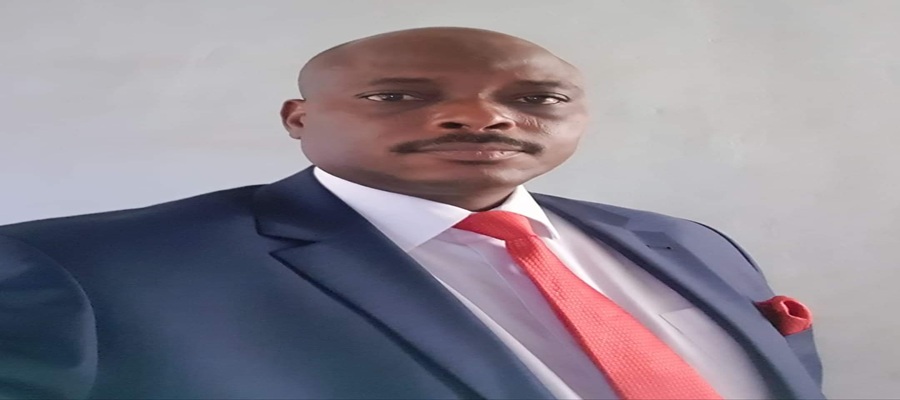
The National Chairman of the All Progressives Congress (APC) has approved the appointment of Mr. Abimbola Tooki as Special Adviser on Media and Communication Strategy.

Mr. Abimbola Tooki
The appointment reflects the Chairman’s confidence in Mr. Tooki’s vast experience, professional pedigree, and proven capacity to deploy strategic communication in strengthening party cohesion, public engagement, and effective message delivery at both national and international levels.
Mr. Tooki is a celebrated journalist, columnist, and media strategist with deep expertise in governance reporting, crisis communication, information management, and team leadership.
He is widely regarded for his ability to bring institutions closer to the people through the effective use of conventional and digital media platforms.
His career demonstrates a consistent track record of innovation, results-oriented leadership, and excellence in managing internal and external communications.
A versatile Information and Communications Technology (ICT) editor for many years, Mr. Tooki managed and developed influential ICT and business sections in leading newspapers, contributing significantly to public understanding of technology and economic issues.
He also pioneered major newsroom initiatives, including the establishment of specialised ICT publications, and is respected for his sharp analytical skills and solution-driven approach in fast-paced environments.
His professional journey spans several reputable media organisations, culminating in his role as Editor of BusinessWorld Newspaper, where he oversees editorial direction, production, administration, and corporate management.
He previously rose through the ranks at Financial Standard, earning rapid promotions due to exceptional performance, intellectual depth, and dedication to duty.
Mr. Tooki is also a familiar face and respected voice in broadcast media, serving over the years as a guest analyst on platforms such as Channels Television and other national stations, where he analyses major headlines, public policy, and issues of national importance.
Academically, he holds an MBA from Obafemi Awolowo University, a Postgraduate Diploma in Journalism from the Nigerian Institute of Journalism, and a Bachelor’s degree in Language Arts from the University of Ilorin.
In his new role, Mr. Tooki is expected to provide strategic direction for the Chairman’s media engagement, strengthen the APC’s communication architecture, manage reputation and messaging, and enhance the party’s interface with stakeholders, the press, and the Nigerian public.
The APC congratulates Mr. Abimbola Tooki on his appointment and wishes him success as he brings his wealth of experience, energy, and professionalism to bear in support of the Chairman and the party at large

UBA Partners CIG Motors, Lagride, Launches $100m “Drive to Own” Scheme

REA, NBS Partner to Deliver Comprehensive Energy Data for Nigeria

Check Point Reveals Nigeria as Second Most Targeted African Country for Cyberattacks in November

Airtel Africa Partners Starlink to Launch Direct-to-cell Service in 14 Markets

CBN Revokes Licenses of Two Mortgage Banks, NDIC Begins Liquidation

Nigeria Records Highest Weekly Cyberattacks in Africa — Report

Hackers Breach Phones of Dangote and Otedola, Demand Ransom

Cyber Tsunami Hits Nigeria as Breaches Surge 1,047%, esentry Q3 Report Reveals

FG Lists Bank Charges Nigerians Will Stop Paying from January 2026

MTN Nigeria Has Invested Over ₦32.23 Billion in National Priorities Through Its Foundation




 E-Financial3 days ago
Supreme Court Clears Fidelity Bank in ₦225bn Sagecom Saga

 E-Financial3 days ago
Preventing Financial Crimes Amid Mounting Insecurity: Why Following the Money is Now a Survival Imperative

 E-Financial3 days ago
Union Bank Clinches Top Workplace Practice Honour at Sustainability Awards

 News2 days ago
SiBAN New Executive Council to Champion Vision for Nigeria’s Digital Economy

 Broadcasting2 days ago
Davido, Babajide Sanwo-Olu, Karl Toriola, Others To Be Honoured At The Most Influential People of African Descent Awards In Lagos

 E-Financial2 days ago
Tax Reform or Financial Exclusion? The Trouble with Mandatory TINs

 General News2 days ago
NITDA DG Calls for Innovation-Led Economic Rebirth @ Kano Startup Weekend

 Telecom2 days ago
NCC Blames NOGASA for Abuja Outage