

News
NITRA: Okere Advocates for Improved FinTech Innovations

As “money is going digital” around the world, with central banks from England to China publicly floating the notion of issuing their own national digital currencies, it has become imperative for Nigeria and other developing economies to innovate on technology that will even cater for needs of rural dwellers.
Conceptually, the idea of harnessing the upside of the digital revolution; mobile payments in particular, while preserving the existing legal and regulatory set up, practically, demonstrate the significant cost savings, a reduction of operational and fraud risks in the current payments systems, that blackchain, for instance, will bring in strengthening the ability to execute monetary policy.
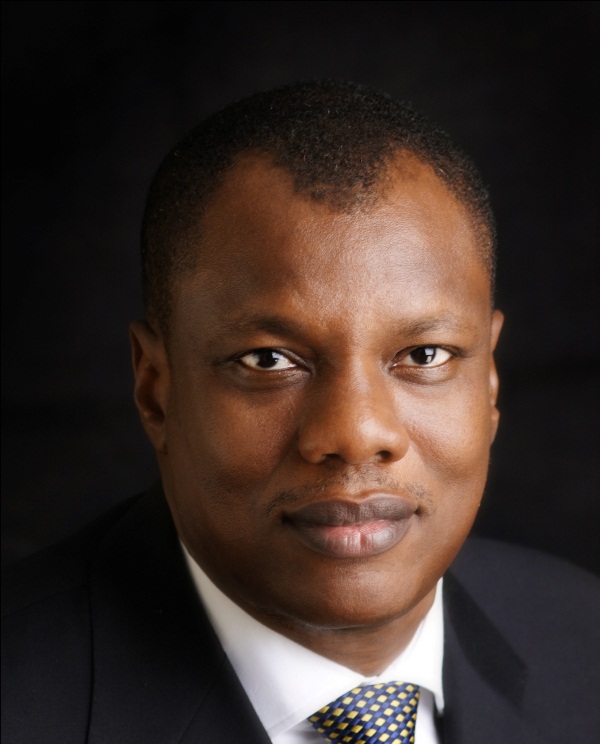
“From a consumer’s perspective, the prospect of total digital money is still mind-boggling. It is more likely that societies would not go completely digital overnight. Instead, central banks could start issuing digital currency units alongside notes and coins as base money, and adjust the mix over time, according to uptake. Once critical usage levels are reached and network effects kick in, universal adoption could happen very quickly”, said Austin Okere, founder, CWG Plc and Entrepreneur in Residence, Columbia Business School, New York.
He made the remarks while speaking on “The Fintech Challenge and the New Face of Banking”, as chairman at the 3rd Quarterly Forum organized by the Nigeria Information Technology Reporters Association (NITRA).
NITRA, is an umbrella body for journalists reporting information and communications technology in Nigeria organized its third edition of her quarterly forum tagged “Digital Payment: Prospects and Challenges of a Financially Inclusive Nigeria.” recently in Lagos.
Okere Continued: “For me the biggest thing that has happen in ICT development here in Nigeria properly in Africa is the advent of broadband and Smart phones,
“The combination of broadband and smart phones makes it possible that we can do business modules that has never existed before, such as what you are discussing today, “Digital Payments,”
“If not that we have broadband and smart phones it will be impossible for this business module to exist or to book flights and buy things online.”
He added that money is going digital around the world; central banks from England to China have publicly floated the notion of issuing their own national digital currencies.
They like the idea of harnessing the upside of the digital revolution; mobile payments in particular, while preserving the existing legal and regulatory set up.
The founder of Computer Warehouse Group noted that the changes coming financial sector will be as large as the original invention of the internet, and this may not be overstated.
Who would have imagined a decade ago that e-commerce, championed by Amazon and Alibaba will be displacing high street retailers, or that ride hailing will be dominated by UBER, a technology platform.
He stated that a report carried out in 2015 by Goldman Sachs estimated that $4.7tn of financial services revenue is at risk of displacement from Fintech groups.
The key to this revolution lies in Cryptocurrencies such as bitcoin.
But it is their underlying technology that is proving to be of practical benefit to organizations, the famous blockchain.
He added that Regulators are now helping Fintechs because they believe that Fintech firms are small enough for any problems to be manageable, and on the other hand, might produce useful innovation.
He said that the future of Fintech is bright.
“Accenture recently released a report which found that investment in Fintech around the world has increased dramatically from $930 million in 2008 to more than $12 billion by early 2015.
“The lucrative global transfers markets are major target by Fintechs.
“International money transfers, which have long been a thorny issue for entrepreneurs, are getting easier as well.
“For smaller transactions, services like PayPal automatically convert currencies, so it’s easy for a customer to purchase goods from anywhere in the world.
“Additionally, a service called TransferWise is streamlining international money transfers, disrupting that sector by offering a 90 percent discount on traditional bank transfer fees


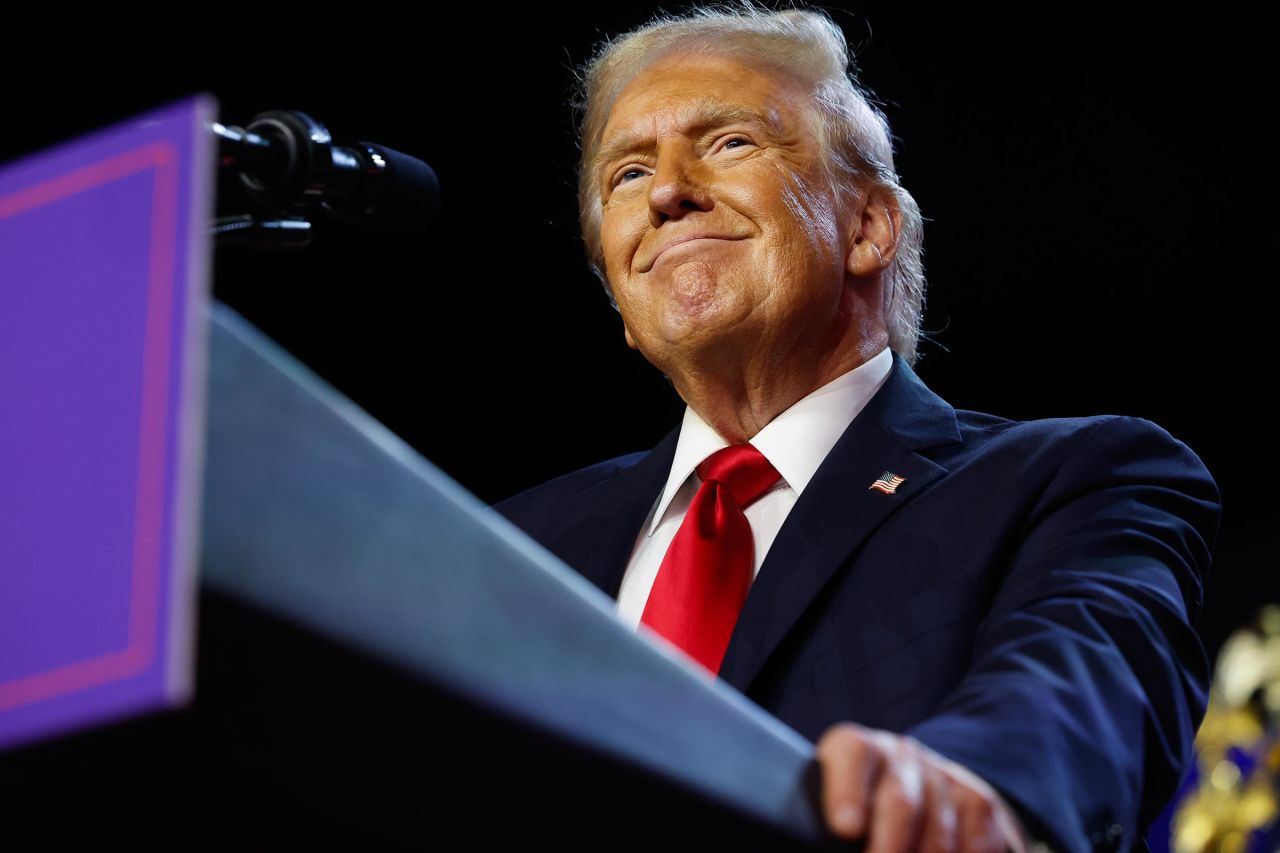
The United States has signed a five-year agreement with Nigeria to strengthen its health system, with a strong emphasis on promoting Christian faith-based health care providers.

The Department of State, in collaboration with Congress, will commit nearly $2.1 billion to expand essential preventative and curative services for HIV, TB, malaria, polio, and maternal and child health.
Under the bilateral agreement signed at the weekend, the Nigerian government will increase its domestic health expenditures by nearly $3 billion during the five-year term.
The Memorandum of Understanding is the largest co-investment any country has made to date under the America First Global Health Strategy, said Thomas Pigott, State Department spokesperson.
The MOU was negotiated within the context of Nigeria’s reforms to protect Christian populations from violence and includes significant dedicated funding to support Christian healthcare facilities.
The investments were approved to complement the efforts of Nigeria’s 900 faith-based clinics and hospitals, currently serving millions of people, and strengthen the country’s health infrastructure.
The U.S. government stressed that the President and Secretary of State retain the right to pause or terminate any programs which fails to align with the national interest.
“The Trump Administration expects Nigeria to continue to make progress ensuring that it combats extremist religious violence against vulnerable Christian populations,” Pigott added.
The MOU was signed despite the U.S. designation of Nigeria as a Country of Particular Concern and its recent inclusion in the travel ban list, which President Donald Trump premised on terrorism and visa overstay rate.
The America First Global Health Strategy, released in September 2025, covers dozens of countries. It shifts the focus of U.S. health aid to self-reliance, data security, HIV, TB, malaria, and maternal and child health services.
Socio-Economic Rights and Accountability Project (SERAP) has urged President Bola Tinubu to “urgently direct Mr Lateef Fagbemi, SAN, the Attorney General of the Federation and Minister of Justice to widely publish a certified true copy of the version of the tax bills received from the National Assembly and a certified true copy of the tax laws signed by you.”

SERAP
The documents requested by SERAP are the National Revenue Service (Establishment) Act, Joint Revenue Board of Nigeria (Establishment) Act, Nigeria Tax Administration Act; and Nigeria Tax Act.
SERAP urged Tinubu “to direct Mr Lateef Fagbemi to clarify whether the version of the tax bills received from the National Assembly are exactly the same contents as the bills that were signed into law by you and the version ultimately gazetted.”
The body made the demand of President Tinubu in a Freedom of Information request dated December 20, 2025.
It was signed by its Deputy Director, Kolawole Oluwadare.
The organisation said in the FOI request: “The law-making processes including the passing of any bills and signing them into laws, as well as gazetting the laws must meet the requirements of the Nigerian Constitution, the rule of law and separation of powers.
“This means that any passed bills and signed laws must be accessible, authentic, intelligible, clear, legitimate, and predictable so that people can know and comply with them.
“Clarifying whether the version of the tax bills received from the National Assembly are exactly the same contents as the bills that were signed into laws by the President and tax laws ultimately gazetted would promote transparency and accountability, and help to address any threats to Nigerians’ human rights.
“We would be grateful if the recommended measures are taken within 7 days of the receipt and/or publication of this letter. If we have not heard from you by then, SERAP shall take all appropriate legal actions to compel your government and the Attorney General to comply with our request in the public interest.
“Widely publishing the certified true copies of the tax bills passed by the National Assembly and the tax laws signed by the President and the gazetted versions would also allow Nigerians to identify if the provisions of the laws are consistent with their human rights, and seek effective remedies to challenge any infractions of the rights.
“Your government has the obligations under the Nigerian Constitution and the human rights treaties to which the country is a state party to promptly, independently, impartially, transparently and effectively investigate the alleged unlawful allegations of the tax laws and to ensure full accountability in this case.
“Our requests are brought in the public interest, and in keeping with the requirements of the Nigerian Constitution, the Freedom of Information Act, and the International Covenant on Civil and Political Rights and the African Charter on Human and Peoples’ Rights to Nigeria is a state party.
“According to our information, the National Assembly recently alleged that there are unlawful alterations and some material differences between the tax bills passed by the legislative body and the tax laws gazetted by the Federal Government.
“A Sokoto lawmaker, Abdussamad Dasuki, raised the issue under a matter of privilege, drawing the attention of the House to the alleged discrepancies between the harmonised versions of the tax bills passed by both chambers of the National Assembly and the copies gazetted by the Federal Government.
“The National Assembly said the alterations contained in the gazetted copies did not receive legislative approval. These alleged unlawful alterations raise questions over the legality and legitimacy of both the law-making processes and the versions of the tax laws currently being circulated by the Federal Ministry of Information.
“The National Assembly established that substantive provisions were inserted, deleted, or modified after passage by both chambers. Several oversight, accountability, and reporting mechanisms approved by parliament were reportedly removed in the final Acts. New coercive and fiscal powers (e.g., arrest powers, garnish without court order, compulsory USD computation, appeal security deposits) were also reportedly inserted in the final Acts without legislative approval.
“Section 39 of the Nigerian Constitution, article 9 of the African Charter on Human and Peoples’ Rights and article 19 of the International Covenant on Civil and Political Rights guarantee the right to seek, receive and impart information.
“The Nigerian Constitution, the African Charter on Human and Peoples’ Rights and the International Covenant on Civil and Political Rights impose duties on your government to ensure transparency and accountability in lawmaking processes.
“By the combined reading of the provisions of the Nigerian Constitution, the Freedom of Information Act, the International Covenant on Civil and Political Rights, and the African Charter on Human and Peoples’ Rights, there are transparency obligations imposed on your government to widely publish the certified true copies of the version of the tax bills received from the National Assembly and the tax laws signed by you.
“The Nigerian Constitution, Freedom of Information Act, and the human rights treaties rest on the principle that citizens should have access to information regarding their government’s activities.”

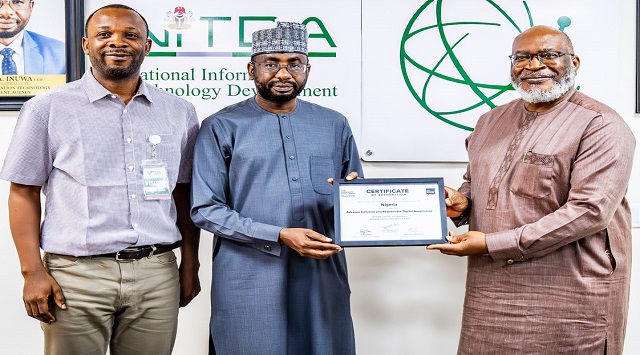
The Director General of the National Information Technology Development Agency (NITDA), Kashifu Inuwa, CCIE, has reaffirmed Nigeria’s commitment to open governance, transparency and inclusive digital development as the Open Government Partnership (OGP) team formally presented the award and certificate received at the OGP Global Summit Spain 2025 to the Agency’s leadership.

Nigeria emerged as the overall global winner in the Digital Governance category in recognition of the country’s excellence in deploying digital tools and policies to strengthen government transparency, accountability, and citizen engagement. In addition, Nigeria received the Regional Award for advancing Open Digital Governance across Africa and the Middle East, reaffirming its leadership role in promoting open government principles and driving digital transformation across the region.
These recognitions were largely attributed to initiatives led by NITDA in collaboration with civil society partners, such as Dataphyte, which showcased innovative and inclusive approaches to digital governance at the summit.
The summit, which was organised in Vitoria-Gasteiz, Spain, brought together more than 1,500 high-level representatives of governments, civil society leaders, and policymakers from around the world to exchange experiences, best practices, and progress on open government initiatives and implementation on key issues.
Receiving the OGP delegation at NITDA, Inuwa described the recognition as a national honour rather than an institutional one, stressing that the award reflects Nigeria’s collective efforts across government, civil society and the private sector in advancing open governance principles through the digital space.
According to him, such global recognition comes with heightened responsibility to deliver on commitments made under the OGP framework.
“This is not just about NITDA. It is a national recognition, and every recognition comes with responsibility,” the DG said.
“If we fail to execute the commitments we have made, it will not only affect our image locally but also at the international stage. This is also not something NITDA can do in isolation,” he added.
Inuwa linked the achievement directly to the Renewed Hope Agenda of President Bola Ahmed Tinubu, noting that digital transformation, transparency, economic diversification, job creation and efficient public service delivery remain central presidential priority areas.
He emphasised that leveraging digital technologies to deepen openness and accountability aligns with national objectives of strengthening institutions, improving governance outcomes and building trust between government and citizens.
Highlighting the importance of collaboration, the NITDA boss underscored the role of the OGP platform as a catalyst for a strong multi-stakeholder approach in Nigeria’s digital ecosystem.
He called on civil society organisations, development partners, the private sector and other government institutions to provide technical expertise, guidance and sustained engagement to ensure effective implementation of agreed commitments.
“We need to leverage the OGP platform. We need your expertise, your guidance, your support and your commitment to hand-hold us in delivering on these commitments,” he said.
He further noted that “a multi-stakeholder approach in the digital space is critical to fostering a resilient ecosystem that delivers real value to citizens.”
Inuwa disclosed that NITDA has already begun internal reviews of its OGP commitments and has tasked its representatives, including Dr Rousseau, to work with colleagues to develop a clear execution strategy.
He proposed the creation of joint work streams with OGP stakeholders to support implementation, ensure accountability and keep all parties on track.
“We are humans. Oversight and collaboration help us stay focused. With commitment, nothing is impossible, and I believe these goals are achievable,” he added, assuring the delegation of NITDA’s readiness and political will to deliver on all agreed commitments.
Inuwa also welcomed the idea of engaging the political leadership of OGP, including the Honourable Minister of Budget and Economic Planning, with a view to briefing President Tinubu on the achievement. He noted that celebrating milestones is important, as it reinforces morale and demonstrates that Nigeria’s efforts in digital governance are gaining global recognition.
“It’s also good when there are wins, we should celebrate, because we too never knew that the little things we are doing are noticed not just within Nigeria, but globally, to the extent of earning us this award,” he asserted.
He concluded by expressing gratitude to the Nigerian National OGP Secretariat and the global OGP leadership, reaffirming NITDA’s commitment to strengthening collaboration and building a more productive working relationship that will translate open governance principles into measurable national impact.
Earlier in his remark, Mr Olusoji Apampa, who led the OGP deelegation, said the honours were earned through a strong partnership between government and civil society, with NITDA playing a critical role, particularly in commitments focused on improving digital governance in Nigeria.
Apampa expressed hope that the awards would serve as added momentum to deepen ongoing commitments under NITDA’s leadership and accelerate the practical implementation of reforms aimed at strengthening digital governance across the country.

US Okays $2.1Bn for Christian Healthcare in Nigeria

Leo Stan Ekeh: A “Rare Avis”, an Unconquerable Entrepreneur

SERAP Asks Tinubu to Release CTC of Tax Bill

Tim Akano Recounts 20-Year Growth, Media Support at NITRA End-of-Year Meet

Sterling Bank, Water.org, Sterling One Foundation Partner on WASH Loan for Millions

Nigeria Records Highest Weekly Cyberattacks in Africa — Report

Cyber Tsunami Hits Nigeria as Breaches Surge 1,047%, esentry Q3 Report Reveals

Jumia’s Data Shows Nigerians Turning to Digital Retail to Navigate Inflation Pressures

GenAI Adoption Among African workers Outpace Global Peers

Minister Claims Bandits Exploit Poor Network, Bounce Calls Off Multiple Towers




 General News2 days ago
Jumia Kicks Off December Holiday Sale, Bringing Festive Deals to Shoppers Nationwide

 E-Financial2 days ago
Access Holdings Shareholders Approved to Raise N40bn Capital Through Private Placement

 Broadcasting2 days ago
NIMC rolls out Pre-Enrolment Portal for seamless NIN registration

 General News2 days ago
Dangote, Monopoly Power, and Political Economy of Failure

 General News2 days ago
OAU, Baptist Day School Oluponna honour Akano with Distinguished Alumnus Awards

 General News17 hours ago
The Mood Market to Light Up Lagos with a Rooftop Gifting, Food & Lifestyle Fair this Christmas
 E-Financial11 hours ago
Sterling Bank, Water.org, Sterling One Foundation Partner on WASH Loan for Millions
 News11 hours ago
US Okays $2.1Bn for Christian Healthcare in Nigeria