

General News
No Alternative to Internet Local Content-Kalu

Ndukwe Kalu is president, Nigeria Internet Registration Association (NIRA) and also the chief executive, Amsco Telecom
Kalu is an accomplished engineer with robust credentials. He has been on the forefront of improving Internet penetration and inking Nigeria positively on the Internet map. He told emeka okafor how in this interview
Making .ng Lucrative
That is a very good question because clearly there are contentious issues about how national registry should operate. The Nigeria Internet Registration Association (Nira) board has taken a decision to grow the Nira domain and make it something that registrars would be want to be part of and in fact make it the number one preferred domain in Africa and one of the few domains for the world and the steps taken are the following:
First of all, we have radically changed our few key policies. We have proposed a retail price of N5, 000 during the consultation period and after consultation the published price now comes to N1,000 through the registrar. You know with competition, it would be low but that means .ng will be the cheapest domain second only to .com in the world at the price the registrars buy it. In fact, it is cheaper than .com if you factor in the charges on top of the domain that people pay for.com or registrars pay. That is for pricing. Secondly, we are trying to put together what we call the pioneer registrars and we have given a lot of concession like lowered price, paid some fees so that we can have registrars and we are going to have 10 expressions of interest from registrars outside the country. Some of them are Nigerians in diaspora while others foreigners. There’s a foreign company in Senegal that is applying so we are looking at registrars from across the world pushing the domain so that the domain becomes a primary preference.
The third area is technical infrastructure which is very fundamental. We are looking at immediate automated domain registration. We are looking at immediate domain propagation which means if you registrar your domain now it will just take a few minutes you will see it. It will be propagated all over in the internet. It won’t be like take 48 hours. No, it will now be propagated instantly and then you can register a domain 12 midnight or whatever time and it is done in seconds. We are very confident that before the end of this month (August) we will be able to achieve that particular payment of automated registration and immediate propagation so what means is like a domain of preference. I can access it if I meet the criteria and then once it’s registered, I can easily pick up my site, there’s no delay of one week, ten days, etc.
These are the three things that we are trying to do with provision of .ng as a primary domain for Africa and basically the domain of preference globally.
Plans Embrace .ng
First of all, the first plan we have is that we have made it cheaper. You know Nigerians love things that are very cost effective. They want the best of good ones at low price and high value and that is what we have been able to achieve with .ng.
Secondly, we are working on a major awareness campaign that we already have indicative interest from corporate sponsors that are multifaceted .We are talking about website competition across many categories that create the consciousness of the type of website you should put out there, whether in the public or private sector. We are talking about a drive for content with intent on the people are ready to put their money on, a site they feel will be +able to generate revenue. We are talking about a drive for content with intent on the one people are ready to put their money on , a site they feel will be able to generate revenue .We are talking about a drive for local role play, trying to push hosting providers to provide facilities that are of international standard. All these are geared towards ensuring that Nigerians can embrace .ng fully because if you remove the impediments of. .ng and bring them at par with those of other countries, if there’s awareness and facility to host and register it, if the price is cheap, then the issue is why shouldn’t I. So that is what we want to do. Then, you know there are issues of course it is not critical now of setting IP from Nigeria. It is not just. ng even if it is .com and the IP resolved is a Nigerian IP, Nigerian IP club , there are issues about that and we are working on that .Hopefully we feel with time we should be able to resolve that to ensure that something from Nigeria is respected except when there are issues of fraud then the necessary organizations, both the service providers like ISPON and ATCON and the enforcement agencies like the Nigeria police and EFCC can step in and do something but then Nigerians should be given benefit of the doubt that they are legitimate customers and not the other way round.
Shutting Out Fraudsters on .ng
Our conditions for registrars are stringent. There are two issues that tackle that. First are the conditions for registrars, second are the conditions for registrants. Now the registrars, we have an accreditation process to ensure that they are credible people and we also have a bond that they must deliver, because once you become a newly accredited registrar, the registrants will begin to meet you and give you money and say I want to register and if the registrar is not a credible person, he may pack up and go. So, that is why we insisted that all registrars must produce a bond. So, in the case of failure we can call on the bond to use it to compensate the registrants. So, we feel with the accreditation process and the bond , we should be able to ensure that we have minimal default from registrars. Now the other aspect is for registrants.
New registrant is listed for domain and we have said these are the criteria for getting a domain so if you don’t meet those criteria you cannot have a domain. Now if you have the domain and that is why we have also emphasized that every registrant will sign an agreement electronically and say I accept this agreement and if you are registering a domain you are to be enlightened both in competition and global best practice informing you that the registry which is like Nira from Nigeria has the ultimate right over that domain .It can be withdrawn from you because you manage it on behalf of Nigeria.
Also the listed things like pornography, fraud and generally other things that are against the constitution of the Federal Republic of Nigeria are against charters Nigeria has signed to which you cannot use the domain for .
Structure in Place
You know it is not easy for a new organization by any stretch. When we came in, it was like coming in from all the issues, all the misunderstanding that happened. We were coming into a situation whereby there was really nothing on ground. We had no technical infrastructure, no physical infrastructure, basically nothing. So, we had to take a decision and priorities and our first priority went to technical because we felt if we have a wonderful office and people can’t register their domain still, it comes to nothing. So, we put everything into the technical infrastructure that you should be seeing this month . And the next thing we are tackling is the structure itself, the physical structure, the office and the manpower as it should be. We already have some reports about the structure of the operational base of Nira and it is our hope that when we finalize on that, get to the next stage of equipment, get to the next stage of acquiring an administrative office stage , we should have been able to tidy that and have it fully in place . Right now we have a temporary secretariat based here. Give or take, we are expecting that to take 3 months because we are going to choose the right set of people, get the right place and put it in order. We are feeling that by September/October, we should have tidied all that in place. But we are also working towards moving to the permanent site even with temporary structures in place. Our key priority is to ensure that we have a technical infrastructure that will pride the .ng goal in place.
Web Juries
Well, the intention of the board was to take over the web juries and expand it to various sectors and be a barometer for the value of content on the Nigerian .ng domain which is critical.
One or two companies have shown an enormous appreciation in value content. Some people have mentioned it to us that they look at some government sites, they look at some private sector sites and they are amazed that people could put out those candid things.
But unfortunately in our negotiations and discussions with Philip Consulting, we could not really find a common ground where Nira, a fully independent body could get managed and expanded working with them. So, the board decided to withdraw from that and rather set up a broad web assessment platform that will involve all sectors , not just banking, the industrial sector, the public sector itself .So, we are going to come up with web assessment platform that will truly become effective from 2009, but we are going to publish the details this year so that people will know the barometers, the inspections and so on and so forth and be able to integrate .So web juries will remain as it is but we appreciate what they had in mind and what they wanted to do by initiating a programme such as the web juries.
Increasing Local Content
Well, like I have said it over and over and people have said, well is that not over-emphasizing the issue and the issue of local content can never be over-emphasized. First of all, broadband plays a critical role in a nation’s development. It played a critical role for India, America. There is a report done in America 10 years about the impact of broadband and why some states were ahead of the others and so on. It clearly showed benefits from different areas from broadband. Then by having local content, let’s say most of your traffic end locally then it means that 80-90% of our cost for internet access will be cut simply because of going local. In china, over 95% of their traffic is local and the same in the U.S whereas n in the U.K it is over 90%. So the cost for them for internet access is the cost to get to that content which is within their country and the price of bandwidth within the country is less than 1% of the price of bandwidth to any other country which is likely to be the U.S which is called the backbone of the backbone. So with that you achieve a cost effective internet access. If you want broadband it will be affordable and there is no alternative to having local content. And when you are talking about local content, we are not just saying you build any site you see. No, you are talking about things people want. If you measure the traffic, a lot of it is on email, chat. you are going to build the same world-class email and chat that Yahoo and Google are known for . Anything short of that, Nigerians won’t patronize it and you are back to square one. So, it is a lot of effort but every country has done it by seeing the need for it and promoting it. They promote it through the internet exchange point and initiative that put people in them.


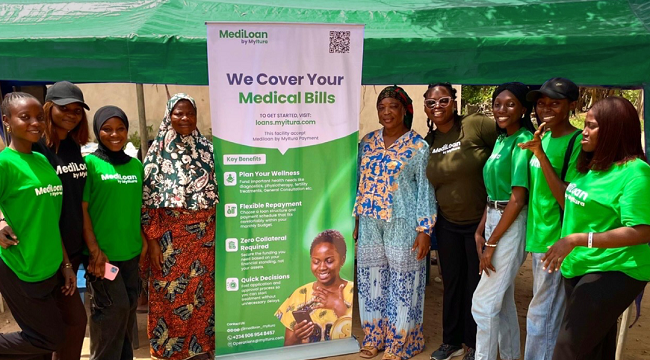
In commemoration of Women’s Month, health-tech platform Myitura has released a new white paper addressing the critical gaps in healthcare financing for women in Nigeria.

Titled “Closing the Gap: Healthcare Financing for Women in Nigeria,” the report highlights how high out-of-pocket costs, limited insurance coverage, and socio-economic factors continue to prevent women from accessing timely healthcare.
According to the report, over 70% of healthcare expenses in Nigeria are paid out-of-pocket, disproportionately affecting women who often delay care due to financial and social constraints.
“When women can afford to take care of their health early, we don’t just save lives; we strengthen families, communities, and the economy,” said Chialuka Kelechi, MyItura’s Chief of Staff.
Key Insights from the White Paper:
- Preventable conditions often escalate due to delayed care
- Women are more likely to deprioritize their own health
- Affordable, structured healthcare financing can significantly improve outcomes
Introducing a Women’s Health Initiative
As part of its commitment, Myitura is launching affordable women-focused health packages (powered by Mediloan), starting at ₦58,180, designed to encourage preventive care and early detection.
The package provides access to:
- Fasting/Random Blood Sugar
- Urinalysis
- Electrolytes
- Urea
- Creatinine
- Pap Smear Submitted slides
- HIV I & II Rapid (Qualitative)
- Hepatitis B Surface Antigen Screening (Rapid)
- Hepatitis C Virus Screening (Rapid)
- Abdominopelvic Ultrasound
- Ongoing support via the Myitura platform
Access:
Women can access these packages by downloading the Myitura app, which makes healthcare more accessible and convenient.
Myitura is a health-tech platform focused on improving access to healthcare through financing, technology, and preventive care solutions.
General News
DBI Unveils Nigeria Digital Economy Outlook 2026: Q1 Report Highlights Strategic Trends, Risks


DigitalSENSE Business Intelligence (DBI), powered by ITREALMS Media, has launched the Nigeria Digital Economy Outlook 2026: Q1 Intelligence Report (Executive Edition), delivering vital insights for navigating Nigeria’s fast-paced digital landscape.

This executive summary spotlights trends, risks, and opportunities in telecommunications, fintech, digital infrastructure, policy shifts, and investment flows. It underscores digital transformation’s pivotal role in boosting economic growth, financial inclusion, and nationwide innovation.
DBI Publisher, Ogbuefi Remmy Nweke, emphasized its value for leaders: “This Executive Edition offers a sharp, strategic view of Nigeria’s digital economy during a pivotal moment. As the sector surges ahead, reliable intelligence is key to seizing opportunities and tackling risks.”
Key highlights include:
Broadband infrastructure expansion.
Surge in digital payments adoption.
Evolving regulations.
Investor pivot to sustainable, profitable ventures.
The report urges action on digital financial inclusion, infrastructure funding, skills training, and public sector digitization.
Freely accessible, the Executive Edition complements the premium Full Edition with in-depth analysis for executives and institutions. Stakeholders can request full access or briefings.
Media & Access Contacts:
Email: [email protected]
Website: www.itrealms.com.ng
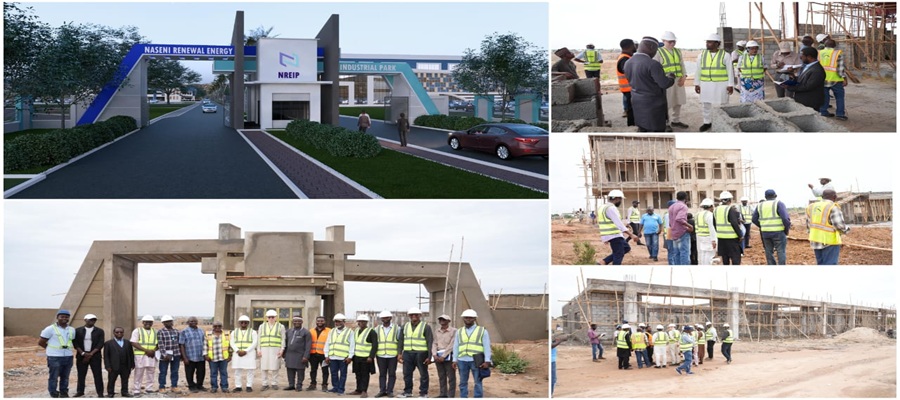
The on-going construction works at the National Agency for Science and Engineering Infrastructure, NASENI’s Renewable Energy Industrial Park, Gora, Nasarawa State is gathering momentum as the project is envisioned to address the country’s energy needs.

NASENI’s Renewable Energy Industrial Park, Gora, Nasarawa State
The project occupying a 40-hectare park designed as a multi-energy hub will help curb capital flight and save foreign exchange expenditure by enabling local production of key renewable energy components such as solar panels, mounting racks, wind systems and biomass technologies.
Speaking during an inspection visit on the project site on Tuesday, March 31, 2026, Special Adviser to the Executive Vice Chairman on Renewable Energy, Engr. Suyud Abdullahi Muhammad, who also serves as the Gora Project Manager, disclosed that the initiative is designed to significantly reduce Nigeria’s dependence on imported renewable energy equipment.
“There will be a wind assembly plant, small hydro power equipment production, and solar panel manufacturing; Renewable energy goes beyond just solar, and this park reflects that broader vision,” he said.
Abdullahi noted that the project aligns with NASENI’s goal of reducing energy poverty in Nigeria, where over 80 million citizens remain off-grid, while many connected to the national grid continue to experience inadequate power supply.
The Special Adviser also emphasised on the project’s industrialisation potential, highlighting its role in job creation and value chain development. The park is expected to generate 2,000 direct jobs, with an additional 50,000 indirect employment opportunities across supporting industries when completed.
“This initiative will localise the renewable energy value chain. Instead of relying on imports, Nigeria will begin to produce and eventually export these technologies, starting with the West African market and scaling up to the rest of the continent,” he added.
On sustainability and long-term viability, he revealed that the project is being executed in collaboration with private sector players, academia and other stakeholders, in line with NASENI’s “3Cs” principle of Creation, Collaboration and Commercialisation.
The ongoing construction is being handled by about 35 contracting firms, each handling specific components at varying levels of execution such as Multipurpose Halls for industrial productions, Research and Development (R&D) Centre, Knowledge Park, Energy Centre, Workshops, Researchers Lodge, Studio Apartments, Clinic, Restaurant, Wellness Centre, Solar Farm, Drivers Lounge, Gate House, Internal roads and drainage system and Fencing.
The Gora Renewable Energy Industrial Energy Park is considered a key component of the Federal Government’s Renewed Hope Agenda, aimed at strengthening local manufacturing, enhancing energy security and positioning Nigeria as a renewable energy hub in Africa.

Nigeria, Others Lose $88bn Yearly to Illicit Flows —Edun

Oracle Sacks 12,000 in India, Begins Shift to AI

CBN Says 33 Banks Raise Fresh N4.65 Trillion in Recapitalisation Exercise

NCC Insists Telcos Must Compensate Subscribers for Poor Quality of Service

NITDA Urges Joint Action to Drive Nigeria’s Digital Innovation

Spotify’s Loud & Clear Report Reveals Over ₦60Bn Revenue for Nigerian Artists in 2025

Madonna University Taps Tech Guru Adote for Strategic Board Role

China Threatens to Shut Nigeria’s Satellite Over $11.44m Unpaid Debt

FCCPC Bans Lagos ‘No Refund’ Policy, Vows Fines and Shutdowns for Traders

EFCC Arraigns Two FSDH Bank Officials Over $307k, €50k Fraud




 E-Financial2 days ago
NGX REGCO Fines 5 Firms N291m for Market Manipulation

 News2 days ago
Dangote Refinery Debunks Speculations on IPO

 E-Financial2 days ago
FG Launches Cross-Border Digital Payments Report

 News2 days ago
Descasio Launches “Give to Gain” Leadership Insights Report, Hosts Executive Brunch for Women in Leadership

 E-Financial2 days ago
Interswitch Deepens Strategic Partnership with KCB Group to Advance Digital Payments and Financial Inclusion

 News2 days ago
World Backup Day: Research Reveals 84% of Users Store Sensitive Data Digitally

 News1 day ago
Microsoft Revamps Copilot in Workplace AI Push

 General News2 days ago
Moniepoint Launches Sixth Edition of Women in Tech Internship with “There Is Space for You” Campaign