

E-Financial
NSE Takes ASeM on Tour of Nigeria

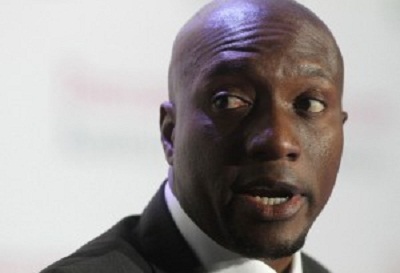
Nigerian Stock Exchange (NSE) has organised a series of road shows across the country for Alternative Securities Market (ASeM).
The Alternative Securities Market is specialised for emerging companies operating in Nigeria. The ASeM board on the NSE was developed to accommodate small to mid-sized companies, with high growth potential, seeking to access the capital market by raising long term.
The road show was held in 3 major cities: Port Harcourt, Uyo and Aba and these events took place on the 4th, 5th and 6th September 2013.
The theme for the symposiums held was “Transforming Businesses into Institutions”. The benefits of listing were discussed and participants were exposed to the opportunities available in the capital market. The need for small to mid-sized companies to formalise their businesses to becoming sustainable institutions was also demonstrated. We are seeking businesses that are ready to take the required next steps towards accessing the capital market.
Since the launch of ASeM earlier this year, the NSE has proven that this is a major focus area. SMEs remain the drivers of growth in the Nigerian economy and the NSE is a staunch believer in the critical role of emerging enterprises in a developing economy.

Mrs. Taba Peterside, head, Listings Sales Retention, NSE, explains that the Exchange has provided AseM as a platform for sustainable growth and development of these companies.
The recently held symposiums were organised in collaboration with Nextzon Business Services (NSE Accredited Institutional Service Value Add Provider) and Designated Advisers.



Central Bank of Nigeria (CBN) has launched a new digital platform to track every foreign exchange transaction involving Bureaux De Change (BDC) operators, marking a major step in its efforts to improve transparency and strengthen oversight of the country’s retail forex market.

In an operational guidance issued on July 15 to authorised dealer banks and licensed BDCs, the apex bank introduced the FX BDC Purchase Tracker (FXBT), a centralised electronic portal designed to monitor foreign exchange purchases by BDCs from the point of request through approval, settlement and eventual sale.
The CBN said the portal will require BDCs to upload real-time or same-day data on all FX purchases made through the Nigerian Foreign Exchange Market (NFEM), giving the regulator transaction-level visibility across the retail FX market.
According to the bank, the platform is designed to prevent abuse by making it easier to detect operators attempting to exceed the weekly purchase limit of $150,000, obtain allocations from multiple banks or divert foreign exchange outside approved channels.
The launch of the tracker builds on the CBN’s February policy that restored direct access for licensed BDCs to purchase foreign exchange from authorised dealer banks through the NFEM. While that policy improved access to official FX, the new platform provides the digital infrastructure to monitor how the funds are used.
Under the new framework, authorised dealer banks must conduct comprehensive Know-Your-Customer (KYC) and customer due diligence checks before selling foreign exchange to any BDC.
The new guideline also says banks must verify beneficial ownership information, retain incorporation documents and carry out enhanced due diligence for higher-risk operators.
Any BDC that fails these checks will not be allowed to access official foreign exchange.
The guidance also requires banks to acknowledge BDC purchase requests submitted through the FXBT portal within two business hours and immediately notify operators whether their requests have been approved or rejected.
To discourage speculation, the CBN directed that any forex purchased through the NFEM but left unused must be sold back into the market within 24 hours after the expiration of the utilisation period.
BDCs are also required to disclose any previously unused balances when submitting fresh requests.
In addition, all foreign exchange transactions between banks, BDCs and customers must be settled through registered accounts with licensed financial institutions.
Third-party transactions are prohibited, and any transfer outside a BDC’s registered settlement account will be treated as a regulatory violation.
The apex bank also said all authorised dealer banks and licensed BDCs are expected to comply with the new regulatory guidance and operational procedures with immediate effect.


President Bola Tinubu has signed the Presidential Executive Order on Virtual Assets Coordination, 2026, introducing a coordinated framework to regulate Nigeria’s fast-growing virtual assets sector, combat fraud and strengthen oversight without creating a new regulatory agency.

The Executive Order, which took immediate effect, establishes a Virtual Asset Council to harmonise the activities of financial, revenue and capital market regulators while promoting responsible innovation in the digital economy.
According to a statement issued on Friday by the President’s Special Adviser on Information and Strategy, Bayo Onanuga, the order was signed pursuant to Section 5 of the 1999 Constitution to address growing regulatory gaps as virtual assets increasingly blur the boundaries between currencies, commodities, securities and payment systems.
The Presidency said the fragmented regulatory landscape had exposed Nigeria to risks including money laundering, terrorism financing, cybercrime, data privacy breaches, fraud and significant revenue losses, with fraudulent operators exploiting loopholes to defraud unsuspecting investors.
Under the new framework, the Central Bank of Nigeria (CBN) will chair the Virtual Asset Council, while the Nigeria Revenue Service (NRS) and the Securities and Exchange Commission (SEC) will serve as vice-chairmen. Other members include the Nigerian Financial Intelligence Unit (NFIU) and the Office of the National Security Adviser (ONSA).
The Council will coordinate policy, strengthen collaboration among regulators and work with the Attorney-General of the Federation to develop a harmonised legal framework that aligns virtual asset regulation with Nigeria’s economic, security and social priorities.
The Executive Order also establishes a Virtual Asset Office, domiciled at the CBN, to serve as the Council’s operational secretariat. The office will coordinate information sharing, applications and reporting among participating agencies through an integrated supervisory technology platform while allowing each institution to retain control over its data.
The Presidency stressed that the order does not establish a new regulator or transfer statutory powers from existing agencies. Instead, it creates a coordination mechanism under which regulatory responsibilities will depend on the nature of the virtual asset or activity involved.
Under the arrangement, the SEC will continue to regulate virtual assets classified as securities, while the CBN will oversee payment, settlement, custody and other non-security virtual asset services. The Council will resolve jurisdictional disputes where responsibilities overlap.
As part of the reforms, the CBN will launch a regulatory sandbox that will allow eligible firms to test virtual asset products and blockchain-based solutions under close regulatory supervision before they are introduced into the wider market.
Similarly, the Nigeria Revenue Service will issue a dedicated tax policy for the virtual assets sector to clarify tax obligations, improve voluntary compliance and ensure the rapidly expanding industry contributes fairly to government revenue.
The Federal Government is also finalising a comprehensive Virtual Assets White Paper, which will outline Nigeria’s long-term policy direction for the sector.
President Tinubu directed the newly established Council to produce a Harmonised Implementation Framework within 30 days to facilitate the immediate implementation of the Executive Order and strengthen confidence in Nigeria’s digital economy.

World Bank has said that despite nearly three years of economic reforms by the federal government, about 79 per cent of Nigerians remain poor or vulnerable to falling into poverty.

The bank stated this in its newly approved Country Partnership Framework for Nigeria, covering 2026 to 2032, and its accompanying Streamlined Country Diagnostic.
The report which highlighted the country’s deepening social and economic challenges, indicated that while recent macroeconomic reforms have helped stabilise the economy and restore investor confidence, the benefits have yet to translate into meaningful improvements in living standards for most Nigerians.
The World Bank noted that the seven-year strategy seeks to support Nigeria’s ambition to create more and better jobs through private-sector-led growth while accelerating poverty reduction.
According to the Streamlined Country Diagnostic document, “Thirty-three per cent of its population is ultra-poor (food insecure by age-weighted caloric intake), 61 per cent is below the poverty line, and 79 per cent is near poor (below the poverty line or vulnerable to falling back into poverty).”
The World Bank pointed out that Nigeria’s economic performance over the past decade had been constrained by structural rigidities, policy missteps, dependence on crude oil, and repeated external shocks, leaving millions trapped in poverty.
It stated that about 139 million Nigerians currently live below the national poverty line, with poverty concentrated largely in the northern part of the country.
The report also noted that more than 86 million Nigerians remain without electricity, while three to four million young people enter the labour market every year with limited employment opportunities.
It added that sustaining macro-fiscal and structural reforms would be critical to reducing inflation, expanding fiscal space and ensuring that recent economic stabilisation translates into improved living standards.
According to the report, the reforms have begun to improve macroeconomic indicators.
Economic growth increased from 3.5 per cent in the first half of 2024 to 3.9 per cent during the corresponding period of 2025, foreign reserves exceeded $42bn, fiscal deficits narrowed, and investor confidence strengthened.
However, it warned that high inflation continues to undermine household incomes. The report stated, “High inflation, though declining, continues to erode real incomes, particularly for the poor. Social protection efforts to support the most vulnerable have been slow and uneven in their rollout.”
The World Bank added that although the reforms helped Nigeria avoid a more severe economic crisis, institutional weaknesses, weak policy coordination, and inadequate budget transparency continue to pose significant risks.
It warned that sustained reform implementation, backed by deeper structural measures, would be required to improve Nigeria’s medium-term economic outlook.
Under the new Country Partnership Framework, the World Bank said job creation would serve as the primary pathway for reducing poverty.
The report explained that international experience from countries such as India, Indonesia, and China shows that moving people into productive employment remains the most effective tool for reducing poverty.
To achieve this, the framework will prioritise labour-intensive sectors, particularly agriculture and micro, small and medium enterprises, while addressing structural deficiencies in electricity, digital infrastructure, education and healthcare.

Dangote Refinery’s Private Placement Reportedly Hits $2.5Bn

FG, UNODC Plan National Strategy against Organized Crime

EFCC Busts NIS Visa Overstay Racket, Uncovers N700m in an Account

CBN to Monitor Every Dollar with FXBT, Forex Tracker

NCC, NDLEA Partner to Fight Piracy and Drug Trafficking

NRC, Ponzi Scheme Collapses Resulting Loss of Billions of Naira

NASENI Moves to Digitize CCB’s 5m Assets Declaration and Operations

Lebara Nigeria Launches Lebara Play, Africa’s First Telecom-Owned Micro-Drama Platform

CANAL+ Partners Samsung to Pre-Load DStv Stream on New Samsung TVs In Nigeria, Other African Countries

Tokenization, Blockchain Technology will Transform Financial Institutions – IMF




 Telecom2 days ago
Helios Towers Secures $29m Facility to Expand Across Africa

 News2 days ago
ValueJet Expands Fleet with Boeing Aircraft, Targets Wider African Network

 E-Financial2 days ago
First Securities Brokers Empowers Nigerians to Trade in the Stock Market with the Launch of FirstInvest App

 Telecom2 days ago
NCC Begins Stakeholder Consultation on MVNO Business Rules

 Telecom2 days ago
Surge in Fibre Cuts Hobbles Service Provisioning

 News2 days ago
Court Orders Final Forfeiture of 48 Properties Linked to Former AGF Abubakar Malami

 Broadcasting2 days ago
NBC Scraps Annual Digital Access Fee on DSO

 News2 days ago
Court Grants Former CCT Chairman Danladi Umar N100m Bail Over EFCC Charges