

General News
NY Times Article Blasts Jonathan, PDP over Graft, Terrorism

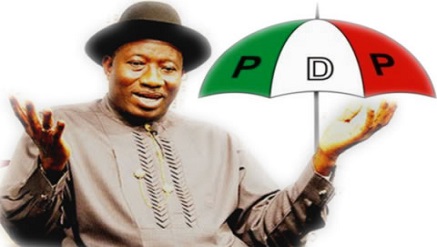
A damning article published in The New York Times has painted a not too pleasant picture of Nigerian current government which it said is “widely seen as the most corrupt since independence from Britain in 1960”
The article written by one Adewale Maja-Pearce, a writer and author of the memoir “The House My Father Built” also returned indictment on the government for failure to rescue the school girls seized by Boko Haram.
A version of the op-ed appears in print on November 17, in The International New York Times said that though corruption is a huge problem for President Goodluck Jonathan and his People’s Democratic Party, which has been continuously in power since the end of military rule in 1999.
But things are unlikely to change. To many Nigerians, it sometimes seems as if we merely swapped military dictatorship for a one-party state.
Mr. Jonathan’s name will be on the ballot this February, when Nigerians, many of them fed up with government corruption and incompetence, go to the polls.
Yet events percolating across the country that could come to a boil within the next three months might actually work to the president’s advantage.
Two grave problems — the Boko Haram insurgency and tensions in the oil-rich Niger Delta — hang over the land. A third, West Africa’s Ebola crisis, seems to have been contained so far, and though this has little to do with Mr. Jonathan’s leadership, the people responsible for it are unlikely to gain any political capital at his expense.
The incompetence of Mr. Jonathan’s government is most clearly seen in its inability to rescue the 276 schoolgirls, most of them believed to be Christians, who were kidnapped by Boko Haram insurgents in the largely Islamic north last April.
Even at the time, the president, himself a Christian from the largely Christian south, didn’t seem much concerned about their fate.
It took him almost three weeks to officially acknowledge what had happened, whereupon he belatedly invited their relatives to lunch at the presidential villa in Abuja, an event which one journalist likened to “a wedding reception,” complete with bunting and a band.
What Mr. Jonathan didn’t count upon was the international furor over the kidnappings or the powerful worldwide publicity, negative in his case, of the #BringBackOurGirls campaign. Seven months later, most of the girls are still missing (though dozens have managed to escape).
A report by Human Rights Watch catalogued the “physical and psychological abuse they were subjected to: forced labor, forced participation in military operations, including carrying ammunition or luring men into ambush; forced marriage to their captors; and sexual abuse, including rape.”
Meanwhile, sporadic violence continues. Last week, a suicide bomber killed at least 48 students at a boys’ high school in the northeast. Rescuing the girls — or putting an end to the insurgency altogether — would certainly help Mr. Jonathan’s ambitions, but his government’s ability to do so seems most unlikely. Corruption and low morale have hobbled the military.
Even so, the government announced last month that the extremists had agreed to a cease-fire, though Boko Haram has denied it.
Although the extremists have been widely condemned by leading Muslim clerics and politicians, the insurgency contributes to Christian suspicions of their Muslim compatriots, and this may well play into Mr. Jonathan’s hands come election time.
But in an effort to bridge sectarian divisions and garner votes across the religious divide, the country’s leading opposition parties, one from the largely Muslim northeast, the other from the mostly Christian southwest, have joined forces with other groups to form the All Progressives Congress. In theory, this gives the opposition a fighting chance of wresting control of the Senate and House of Representatives from the People’s Democratic Party.
Unfortunately, efforts to make common cause in Nigeria are invariably sacrificed upon the altars of religion and ethnicity.
The alliance’s likely presidential candidate is a Muslim northerner, Muhammadu Buhari. He also happens to be a former dictator, who ruled Nigeria for 20 months in the mid-1980s.
His administration came to an abrupt end in August 1985, when members of his cabinet, alienated by his efforts to root out corruption, forced him out.
Though widely unpopular, many Nigerians feel he has the credentials to tackle corruption. Moreover, one potential running mate is Babatunde Raji Fashola, the two-term governor of Lagos State who has distinguished himself by successfully tackling the incipient Ebola crisis with the same energy and efficiency that he brought to modernizing the infrastructure of Lagos, the biggest port in West Africa. But there are also doubts about his commitment to clean government, fueled by the fact that he is a protègé of Ahmed Bola Tinubu, a former governor of the same state and a founding member of the All Progressives Congress whose reputation has been tarnished by corruption scandals, even though he has never been convicted of corruption.
Though Mr. Fashola is a Muslim with a Catholic wife, few Christians (or for that matter even the generally more-liberally minded Muslims of the south) would be inclined to vote for a Muslim-Muslim ticket.
Religious differences are a key factor in voting, but perhaps patronage plays a greater role, a lesson Mr. Jonathan learned in the Niger Delta, where he taught school and gained political prominence.
Like any savvy politician, he knows that patronage is a two-way street, and he has been careful to keep the money flowing in a region plagued by resentment over oil rights, piracy and periodic unrest.
Oil is Nigeria’s greatest source of wealth, providing about 90 percent of the nation’s foreign exchange earnings, but many people among the delta’s diverse ethnic groups feel that the central government has seized control of their oil without adequate compensation. The government says it loses about $3 billion a year due to piracy, widely seen as aided and abetted by the military. Local gangs also take what they can by tapping pipelines. In the past, anger over corruption and the unfair redistribution of wealth has fueled a dangerous political militancy. Everyone knows that if the militants want to, they can easily stop oil production, which would bankrupt the country.
Thus Mr. Jonathan takes care to ensure that the region is well looked after, and this contributes to his enormous popularity there. Indeed, he is widely seen as crucial to keeping the lid on potential unrest. In the words of Mujahid Dokubo-Asari, a former leader of the Niger Delta People’s Volunteer Force who is now a key supporter, if Mr. Jonathan is not re-elected next year, there will be “blood in the streets.”


Federal Competition and Consumer Protection Commission (FCCPC) has warned Lagos traders against enforcing the unlawful “no return, no refund” policy, declaring it illegal under the Federal Competition and Consumer Protection Act (FCCPA) 2018.

FCCPC
Dr Olubunmi Otti, FCCPC Southwest Zonal Coordinator, issued the directive during the inauguration of new executives of the Phone and Allied Products Dealers Association (PAPDA) on Wednesday, stressing consumer education as the strongest defence against market exploitation.
“There is no such thing as ‘no return, no refund’. If a product does not fulfil its intended purpose, the consumer has the right to return it,” Otti declared, adding the commission mediates complaints for refunds, replacements, or exchanges.
Non-compliant businesses face fines, product withdrawals, seizures, prosecutions, or shutdowns. Otti noted thousands of monthly complaints via the FCCPC portal in the Southwest alone, with sensitisation expanding to Alaba Market and Trade Fair Complex.
She urged consumers: “When your rights are violated, do not just say, ‘You give it to God.’ Bring your complaints to the FCCPC. The law empowers us to protect you,” while calling for traders’ collective responsibility to ensure quality products and services.


African Development Bank Group (AfDB) has approved a €6.5 million investment in the Saviu II venture capital fund to boost technology start-ups across Francophone West and Central Africa.

The Bank Group will contribute €4.5 million as equity investment and an additional €2 million as a first-loss hedging tranche on behalf of the European Commission under the Boost Africa Programme.
The investment is expected to strengthen early-stage financing for innovative businesses with strong technological and digital components, particularly in French-speaking countries.
Saviu II, the second investment vehicle managed by Saviu Partners, plans to invest between €500,000 and €3 million in about 20 seed-stage or early institutional fundraising start-ups. The fund will primarily target B2B technology-oriented companies with scalable models.
At least 60 per cent of the fund’s commitments will focus on French-speaking countries in West and Central Africa, including Côte d’Ivoire, Cameroon, Benin, Senegal, Togo, Burkina Faso and Mali.
The fund may also co-invest in promising East African technology firms seeking expansion into Francophone markets.
In addition, Saviu II will dedicate a special funding envelope for pre-seed investments, mainly through minority equity stakes, often in collaboration with incubators, venture studios and other ecosystem partners.
Industry observers say the AfDB’s backing is expected to de-risk early-stage investment and crowd in more private capital into Africa’s growing digital economy.
Saviu Partners previously launched Saviu I in 2018 with a capitalization of €10 million.
The first fund invested in 12 start-ups, mainly based in French-speaking West Africa, offering not just funding but hands-on support in business development, recruitment, international expansion and fundraising.
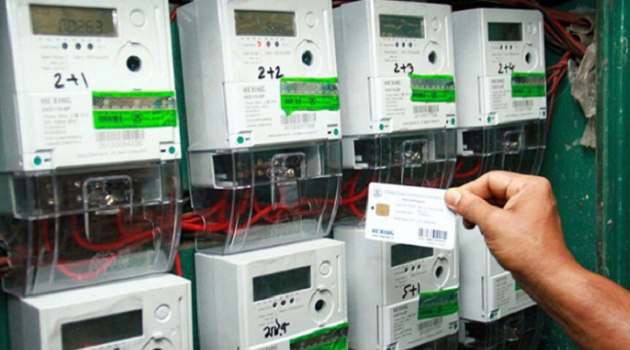
Nigerian Electricity Regulatory Commission (NERC) has ruled in favor of electricity consumers, directing distribution companies (DisCos) to refund ₦20.33 billion in outstanding costs for meters bought under the Meter Asset Provider (MAP) framework.

NERC
Signed on February 27, 2026, by Musiliu Oseni, chairman,NERC and Dafe Akpeneye, commissioner Order No. NERC/2026/025 amends a 2023 directive.
It requires DisCos to disburse the funds via energy credits over 12 months starting March 1, 2026, addressing years of slow refunds.
As of December 31, 2025, DisCos owed this amount due to delays in reimbursing prepaid customers who funded their own meters.
DisCos must automate credits for the full MAP meter cost upon activation, disbursed monthly over 120 months based on the customer’s tariff—credits cannot offset legacy debts.
Prepaid customers will receive a monthly token by the 4th day equivalent to the reimbursement value; for arrears, they’ll get two tokens per month.
Postpaid customers will see a distinct credit line on bills subtracted from totals, with two line items monthly for arrears.
NERC mandates monthly reports on reimbursement values using an approved template, plus dedicated email channels for complaints with resolution status included.
The order aims to end delays, improve notifications, and boost sector trust. DisCos must accelerate arrears recovery over 12 months without further excuses.
This follows NERC’s February 2026 compliance review, amid ongoing power sector challenges highlighted by Power Minister Adebayo Adelabu.

GCR Affirms Afreximbank’s International Scale Ratings of A, A2

SmartCash Launches ‘No Be Cho Cho Cho’ Campaign to Boost Digital Banking in Nigeria

MTN Nigeria Non-Executive Director Mazen Mroue Quits to Focus on Group Role

Google Adds Yorùbá, Hausa to AI Search, Boosting Access for Millions of Nigerians

MultiChoice Shuts Down Showmax After 11 Years Amid Streaming Wars

Dr. Cairo Ojougboh Foundation Bolsters Nigeria’s Education Drive with ₦2.7m Student Support

Kaspersky Brings more Transparency to Threat Detection with New Hunt Hub

NDPC Commits to Balancing Data Privacy, Protection Information

PwC Reveals AI Scaling Gap Slows Africa’s Digital Transformation

Firm Reviews the Evolution of Phishing Threats in 2025




 E-Financial2 days ago
NRS Targets N40trillion in Tax, Royalty Revenue in 2026

 General News2 days ago
Purple Woman 3.0 Is Back, to Empower Women in Tech this IWD 2026

 E-Financial2 days ago
SEC Revokes Registration of Kensington Agro Trading Limited

 News2 days ago
EFCC Arraigns Two FSDH Bank Officials Over $307k, €50k Fraud

 Telecom2 days ago
Konga Launches ‘Berekete Sales’ with Up to 50% Discounts Across Major Categories
 E-Business2 days ago
NDPC, 60 DPAs Collaborate on Enforcing Privacy Rights in the Use of Al

 General News2 days ago
NCDC Raises Alarm over Lassa Fever Ravaging 18 States in Nigeria

 E-Financial1 day ago
Binance Cuts Illicit Activity Exposure by 96%, Leads Global Crypto Compliance Push