

Broadcasting
2023: Who Will Go for the Igbo? – Our Best 3 Candidates

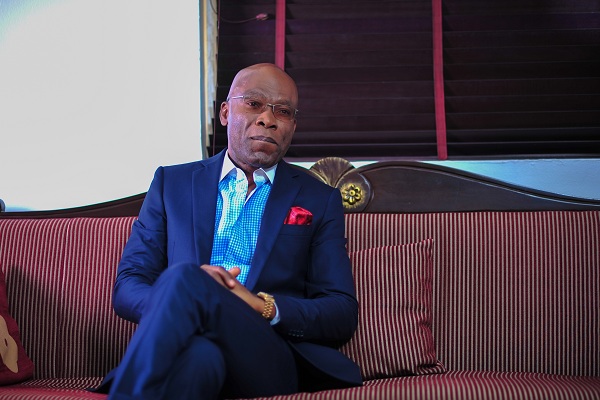
By Jonathan C. Nnakwube (Ph.D.)
With 2023 just around the corner, the race to determine who succeeds incumbent President Muhammadu Buhari as the holder of the top job in Nigeria is beginning to gather steam.

Already, several candidates have thrown their hats into the ring, with some of them, like the former Lagos State Governor, Asiwaju Bola Tinubu not hiding their clear interest in the presidency.
One of the major issues shaping the conversations around the 2023 presidential election is the Igbo question. There is a strong argument for the South East to get a shot at the presidency, especially considering the fact that the region has endured an extended hiatus from the seat of power, coupled with the school of thought that an Igbo presidency has the tendency to quell the worrisome agitations in the region and provide the much-needed sense of belonging.
Further shoring up the argument for the Igbo cause is the position of political watchers, many of whom have pointed out the fact that the South East has a strong case of marginalization, notably when one considers how it has fared in comparison to other regions, as far as the presidency is concerned.

For this school of thought, presidential powers in Nigeria have largely rotated between the North and the South West. They point to the Olusegun Obasanjo presidency which saw Atiku Abubakar, who hails from Adamawa in the North East as his side-kick for eight years; the short-lived Umar Musa Yar-Adua administration which threw up a South-South deputy in the person of Goodluck Jonathan and who later contested and won a four-year term with another Northerner, Namadi Sambo as vice president; as well as the incumbent eight-year administration of Buhari with a South-Western candidate, Yemi Osibanjo as vice president.
In their view, the fair thing would be to return the presidency to the South and allow the South-South to complete its eight years, four of which have already been enjoyed by Jonathan or better still, support an Igbo candidacy as successor to Buhari.
While another school of thought has continued to argue that the South East lacks a truly unified voice, a throwback to the republican nature which lends a fiercely decentralized, individualistic mindset in most South Easterners, others have also insisted that the region lacks the nous, the know-how and the guile to play national politics; the top-tier type loaded with high-wire stakes, lobbying and horse-trading that would guarantee a shoo-in for its candidate into Aso Rock.
Nevertheless, one thing that all parties agree on is the fact that the South East certainly deserves a chance to lead Nigeria again.
Undoubtedly, 2023 is perceived widely as a pivotal year for Nigeria on the political front. Bedeviled for donkey years by a combination of inept leadership and stunted development, the Nigerian state is home to a growing army of digitally savvy youths, many of whom are now boldly challenging the status quo and calling more loudly for better governance. The foregoing came to the fore during the #EndSARS protests which rocked Nigeria in October 2020 as an army of disenchanted youths, under a movement which began as an opposition to widespread police brutality, expanded its agitations to clarion calls for an end to bad leadership. It took the combined might of state power and a bloody night at the now-infamous Lekki Toll Gate in Lagos to put down the movement.
However, the warning signals are there that these youths are no longer just frustrated at the current state of affairs, but that they would also no longer stand by and watch with folded arms.
Also reinforcing the critical importance of the 2023 elections for the future of Nigeria is the sweeping changes in the global ecosystem, led by the growing powers of technology as a leveler and heightened by the COVID-19 pandemic. Many Nigerian youths today are resident in the country but working for firms or corporations abroad from the comfort of their homes. Others are fleeing the country in droves, either migrating as skilled hands or fueling the ranks of those seeking higher education in advanced climes, as COVID and the pervasive influence of technology continue to disrupt the global economy.
The foregoing has seen more Nigerians gainfully join the Diaspora, with these new additions who have now experienced working systems in other climes, lending their voices and joining the bandwagon of those demanding a better Nigeria.
The view among some of these thinkers and a growing segment of political watchers in Nigeria is that, in order to get it right on the leadership front, Nigeria requires a shift from traditional politicians, many of whom have failed to distinguish themselves in office. In other words, the reasoning is that the time is right for the country to explore the possibility of backing credible entrepreneurs who have built successful businesses, rather than rely on the established norm of having ill-suited career politicians in office.
Viewed from this perspective and against the backdrop of the Igbo candidacy, there is a consensus that the South East can certainly throw up a handful of very strong names, highly capable candidates that can bring their wealth of entrepreneurial experience to bear in leading Nigeria out of the woods and repositioning it as a dominant force on the continent and one to be reckoned with globally.
This list is certainly not exhaustive but here is a short list of three names that remain top of mind after rigorous examination. These men do not only rank as successful entrepreneurs, but they have equally demonstrated proof of being men whose leadership abilities can be counted on.
ABC Orjiako: Simple, unassuming and a man of means, Ambrose Orjiako is one of the useful names that springs up when it comes to sound entrepreneurial presidential options from the South East. A medical doctor by training, Dr. Orjiako holds the record of being the brains behind Seplat – the first publicly listed oil company in Nigeria. To his credit, ABC Orjiako has years of credible experience as a successful entrepreneur, having first cut his professional teeth with Shebah E&P, an oil exploration company which later metamorphosed into Seplat Petroleum Development Company, becoming the first Nigerian company to take over operation of a Joint Venture asset from Shell, Total and Eni. Given his vast international connections, Orjiako is a man whom many believe would be able to attract significant global investments to Nigeria. He is also well-educated, a factor that would represent a clear departure from the previous grain of past leaders of Nigeria. The only blot on Orjiako’s seemingly pristine record would be his misadventure with Seplat which has been embroiled in a long legal tussle with some commercial banks over alleged indebtedness and from which he is expected to stand down as Chairman in May 2022 after the company’s Annual General Meeting (AGM) when an independent chairperson will take over.
Leo Stan Ekeh: If there is one man who would receive unanimous acclaim, not only locally here in Nigeria but globally, as presidential material of Igbo extraction, it would be Leo Stan Ekeh. An internationally recognized tech guru, Leo Stan, as he is fondly called by his peers, is Chairman of the Zinox Group, a business conglomerate which has dominated the Nigerian and Sub-Saharan African technology ecosystem for many decades. Ekeh is a man of few words but his legendary strides as a globally certified serial digital entrepreneur speaks volumes. He is also the brains behind the Konga Group, a flourishing e-commerce chain which he acquired, almost at the point of asphyxiation, from foreign owners but which, from feelers gathered, has been transformed by him and his team into a profitable entity and the beautiful bride of Nigerian and African e-commerce. He also holds the enviable record of building many successful businesses in his chosen field of technology, all of which have greatly contributed in putting Nigeria on the map. Most importantly, Ekeh has remained above reproach in his personal and business dealings, with informed sources describing him as one Nigerian businessman who has hardly taken any loans or been indebted to any banks, either here in Nigeria or abroad. In addition, Ekeh is of the digital parish, a charismatic knowledge democracy promoter, a gender sensitive enthusiast, generous philantropist and a global citizen who is on first name terms with other global tech icons such as Amazon’s Jeff Bezos and Alibaba’s Jack Ma. His far-reaching connections and influence in technology, which today has become widely regarded as the determinant of the wealth of nations, are factors that further distinguish him, aligned to his selflessness, humane disposition and legendary humility. While the true measure or extent of Ekeh’s wealth remains a subject of conjecture – a point that can be attributed to the fact that he is not a noise maker – those in the know describe him as a man who is of a vastly firmer financial standing than some of the popular names in the Nigerian business space. Also working in his favour is the fact that the Zinox Chairman has friends across boundaries in Nigeria, by virtue of his business dealings which have seen him deploy solutions or set up offices or stores across the nooks and crannies of the country. This point is of critical importance as the new Nigeria requires a leader with a broad, national outlook. The only downside in Ekeh’s resume is that he has never hidden the fact that he is not a politician, but this, in itself, can be considered a plus or positive as one can be assured that in Ekeh, Nigeria would not have a leader bogged down by the foibles or failings of traditional politics and its debilitating nuances.
Allen Onyema: Chief Executive Officer (CEO) and founder of Air Peace, Chief Allen Onyema is yet another name out of the South East whom many believe has the credentials to lead Nigeria. Onyema has made a success of Air Peace which he launched in 2013 and has continued to use the business to demonstrate his status as a responsible corporate citizen and a nationalist. Onyema, through Air Peace, has consistently airlifted stranded Nigerians, notably during the lockdown imposed as a result of the COVID-19 pandemic in the UK and other countries. Also, other Nigerians stranded or set for deportation in some African countries such as Libya have enjoyed the benevolence of the Air Peace Chairman. Onyema, a lawyer by training, is a man who has displayed keen business intelligence and aptitude, as demonstrated in the way he has taken Air Peace to the pinnacle of the highly competitive and capital-intensive airline industry. His dedication to the Nigerian cause is not in doubt and while he may not be a career politician, Onyema’s entrepreneurial exploits and understanding of the challenging diversity of Nigeria certainly place him in good stead for the top job in the land. Perhaps, the only blot on his record is his alleged indictment for bank fraud and money laundering to the tune of $20 million by the United States government.
Jonathan C. Nnakwube (Ph.D.) writes from Germany


Broadcasting
NBC Files Fresh Appeal against Judgment Barring it from Imposing Fines on Broadcast Stations

National Broadcasting Commission (NBC) has filed an application seeking the permission of the court of appeal to file a fresh appeal against the judgement of the federal high court in Abuja barring it from imposing fines on erring broadcast stations.

In the application filed at the court of appeal in Abuja by Dapo Akinosun, counsel to the NBC, the commission argued sanity in Nigeria’s broadcasting sector is under threat and that the public interest would be better served if the court grants the application.
On January 17, 2024, Rita Ofili-Ajumogobia, a judge at the federal high court in Abuja, restrained the NBC from imposing a N5 million fine on broadcast stations sanctioned in 2022 over allegations of “undermining Nigeria’s national security by broadcasting documentaries on banditry in Nigeria”.
The affected broadcast stations were Multichoice Nigeria Limited, owners of DSTV; TelCom Satellite Limited (TSTV); Trust-TV Network Limited; and NTA StarTimes Limited.
The suit was filed by Media Rights Agenda (MRA).
Dissatisfied with the ruling, the NBC appealed the judgement filed an appeal at the court of appeal in Abuja.
In June, the court of appeal dismissed the commission’s appeal, holding that it was “fundamentally defective” and incompetent.
Jane Inyang, lead judge of the panel, held that the parties before the lower court were identified as “Incorporated Trustees of Media Rights Agenda (as applicant) and National Broadcasting Commission (as respondent)” but in the notice of appeal the purported appellant was described as the “Nigerian Broadcasting Commission”,
The judge held that the discrepancy was significant and that the court lacked jurisdiction to entertain the commission’s appeal.
In the application, the NBC urged the court to grant it leave to raise and argue a fresh issue on appeal relating to the legal capacity of MRA to institute and maintain the original suit before the lower court.
The commission argued that the defect in the earlier notice of appeal, which resulted in the dismissal of its appeal, arose “solely from an inadvertent misdescription” of its name by its lawyer.
The NBC told the court that the subsisting judgement raises questions on the commission’s statutory powers to regulate broadcasting and enforce compliance with broadcasting standards in Nigeria.
The commission argued that the subsisting judgment is capable of creating uncertainty regarding its regulatory powers if it is allowed to stand.
The NBC also argued that without the pronouncement by the appellate court on the issues raised in the appeal, its regulatory framework would be weakened.
“A weakened regulatory framework may embolden non-compliance with established broadcasting standards, thereby increasing the dissemination of false, misleading and unverified information capable of causing unnecessary public anxiety, panic and social unrest,” the NBC said.
“Absence of effective regulatory oversight may further encourage irresponsible broadcasting practices and the misuse of broadcast and digital media platforms by persons who deliberately publish sensational, inaccurate or inflammatory content to intimidate, harass or unduly influence individuals, institutions and public discourse.”
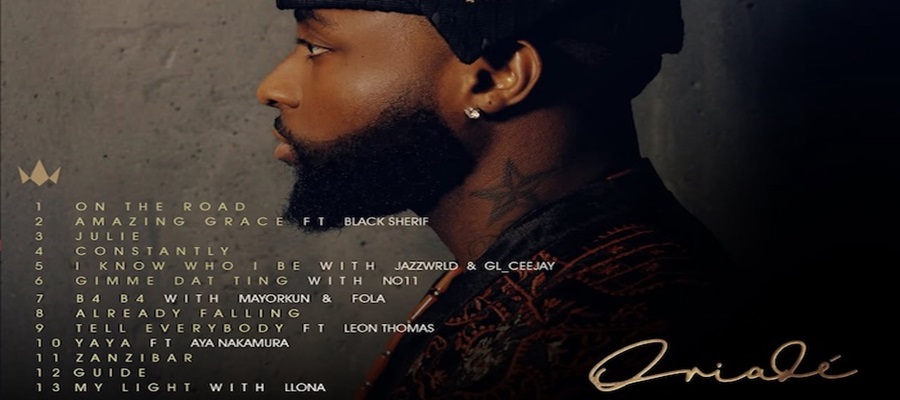
David Adedeji Adeleke, known professionally as Davido, has shared his past suicidal thoughts as he dropped Oriadé, his sixth studio album yesterday.

Davido
Davido said he chose the date on purpose as it marks exactly 15 years since he began his professional music career.
Oriadé is a Yoruba word combining “Ori,” meaning destiny, and “Adé,” meaning crown.
It translates to “the crowned head.” The album has 13 tracks and features Black Sherif, Aya Nakamura, Leon Thomas, Mayorkun, and Llona.
It follows his 2025 project, 5ive, which reached number two on the Billboard World Albums chart.
Davido also announced an international tour to support the new record.
In the days leading up to the release, Davido gave interviews that revealed personal details about his past and his current life.
Speaking to Vibe Magazine on Thursday, he described a 2014 incident in Ghana that left him feeling suicidal.
He said he invited a woman back to his hotel room after a show, and she later posted a photo of him sleeping online.
He said the fallout overwhelmed him.
“My daddy was calling me. My sisters were calling me. If I saw the balcony that day, I would have jumped,” he said.
He said he was young at the time and did not fully understand the consequences of his actions.
He described the experience as a turning point that changed how he thinks about privacy and fame.
In the same interview, he explained why he often dresses down in public despite his wealth.
He recalled a trip to the South of France where he went out in shorts and slippers without his watch.
“I’ve been on jets, I’ve been flying, I’ve been in all these places since I was a baby. I’ve been seeing money since I was a baby. So all these things don’t really excite me,” he said.
He added that he sometimes prefers to drive a Toyota to the supermarket in Atlanta instead of one of his luxury cars.
In a separate livestream with Davrel, Davido spoke about how his life has changed since marrying his wife, Chioma, and becoming a father.
He said his home no longer holds the large crowds it once did.
“I can no longer have 100 people in my house like before,” he said.
He said he speaks to Chioma every day regardless of his schedule.
He also disclosed that he spends between $200,000 and $300,000 a month on himself, not including costs for his wife, children, jewelry and cars.
He said the amount is lower when he is in the United States, where he described his lifestyle as quieter.
Africa Prudential Plc has reaffirmed its commitment to digital transformation, revenue diversification and sustainable growth after reporting a strong financial performance for the first half of 2026.

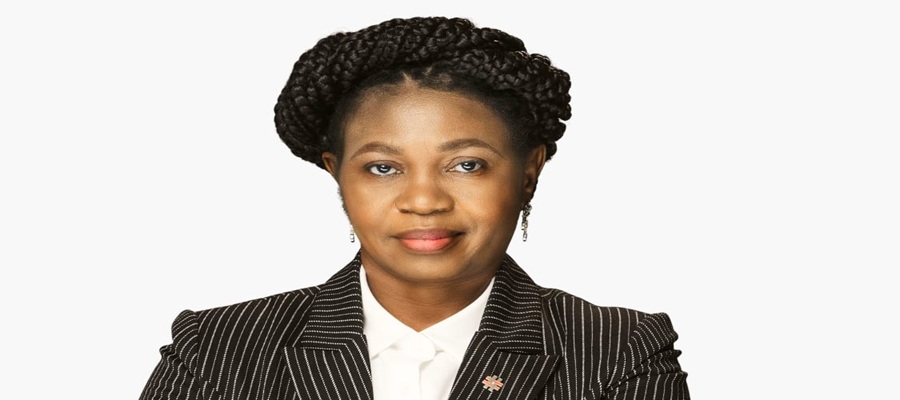
Dr Catherine Nwosu
The company made this known during its H1 2026 Investor Call, which brought together institutional investors, shareholders, investment analysts, regulators and other stakeholders to review its financial performance and strategic outlook.
Dr Catherine Nwosu, managing director and Chief Executive Officer of Africa Prudential, said the company’s performance reflected the resilience of its business model and the effectiveness of its long-term growth strategy despite prevailing macroeconomic challenges.
According to the company’s financial results, gross earnings rose by 27 per cent year-on-year to N4.28 billion, from N3.34 billion recorded in the corresponding period of 2025.
Profit before tax increased by 22 per cent to N2.41 billion, while profit after tax grew by 18 per cent to N1.59 billion.
The company also reported a 27 per cent rise in net operating income to N4.21 billion, while total assets increased by 13 per cent to N46.53 billion.
Shareholders’ funds equally rose by 13 per cent to N12.52 billion, reflecting continued financial strength.
Management attributed the performance to sustained growth in its core registrar business, increased corporate action activities in the Nigerian capital market, improved treasury earnings and rising adoption of its technology-driven solutions.
The company said it was steadily transforming from a traditional share registrar into a broader technology and business solutions provider serving Nigeria’s capital market ecosystem.
During the interactive session, investors sought clarification on the sustainability of earnings, particularly as interest rates are expected to moderate.
Responding, Nwosu said the company was deliberately expanding its recurring fee-based revenue streams to reduce dependence on treasury income.
“Interest rates influence our treasury income positively, but that is why we are deliberately diversifying our revenue streams.
“Our strategy is to grow recurring fee-based business lines such as our digital solutions, Know Your Customer (KYC) services, Annual General Meeting (AGM) technology, probate services and the SabiVest mobile app.
“Over time, this will reduce our reliance on interest income and create a more balanced and resilient earnings mix,” she said.
Nwosu noted that increasing capital market activities had created stronger demand for seamless digital investor experiences, improved operational efficiency and enhanced compliance solutions.
She said the company would continue investing in technology-enabled products capable of delivering long-term value to shareholders while strengthening its competitive position.
According to her, Africa Prudential has identified five strategic priorities for the second half of 2026.
The priorities include driving sustainable growth across its core registrar and emerging business lines, accelerating technology-led product innovation, strengthening brand leadership, investing in talent development and deepening corporate governance.
She said the investor engagement demonstrated the company’s commitment to transparency, accountability and regular engagement with shareholders and the investment community.
Africa Prudential reaffirmed its commitment to leveraging innovation, operational excellence and sound financial management to sustain growth and strengthen its leadership position in Nigeria’s capital market.

Glovo Pioneers AI Quick-Commerce

Fleeing Southeast Asia Scam Syndicates Find New Homes in Nigeria, Kenya- Report

DSS Arraigns Eze for Allegedly Hacking, Stealing N800m from SunTrust Bank

SEC Unveils Probate/Unclaimed Monies Clinic to Help Families Recover Inherited Investments

We have Multiple Layers of Protection for 281m Accounts in Nigeria – NDIC

From Scarcity to Scale: What Africa Can Learn from India’s Agricultural Transformation

EFCC Busts NIS Visa Overstay Racket, Uncovers N700m in an Account

BON Establishes Six Ad Hoc Committees to Modernize Broadcasting

How EFCC Turned Recovered Loot Into School Supplies for Thousands of Nigerian Students

BVN Enrollments Hit 69.55m- NIBSS




 E-Business3 days ago
Kaspersky Reveals a New Malicious Framework Targeting Cryptocurrency Users with the Use of OkoSpyware

 E-Business3 days ago
CMS T&M Launches TMO Rides to Enable a Faster & Cashless Transport Experience for CMS – Ajah Passengers

 E-Business3 days ago
Nigeria Tightens Data Privacy Compliance as FG Issues Directive to MDAs

 E-Business3 days ago
Firm to recruit over 100 professionals to boost NRS e-Invoicing compliance

 Telecom3 days ago
FG Commences 90,000km Fibre Optic Rollout within Weeks

 E-Financial2 days ago
Access Holdings Deepens Sustainable Finance Impact, Expanding Green Assets to ₦92.14 Billion

 Telecom3 days ago
Dimension Data to Channel Funds to Support Nigerian Fibre Expansion

 E-Financial3 days ago
Zenith Bank Confirms Cyberattack, Says Hackers Accessed Limited Customer Data