

News
Obazee, Banker Recounts Ordeal in Hands of EFCC

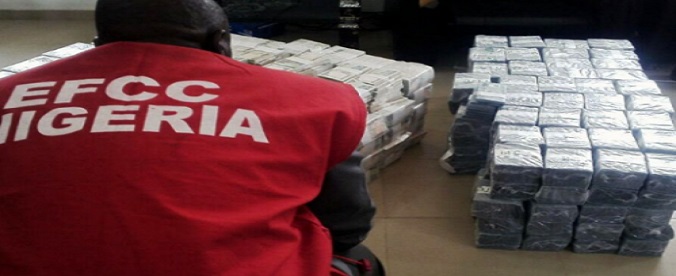
Sunny Obazee, an investment banker faced for seven years, humiliation, rejection and prosecution for alleged N855 million fraud at defunct Platinum and Habib Bank (PHB) which he joined as Divisional Director Investment Banking in December 2007.

Obazee was arraigned and tried by the Econonic and Financial Crimes Commission (EFCC) alongside Anayo Nwosu, Olajide Oshodi, Ashok Israni (Indian businessman), Sunny Obazee, Keystone Bank and NULEC Industries Limited on 13 counts of conspiracy, fraudulent diversion, obtaining under false pretences and theft before Justice Kudirat Jose of the Lagos High Court, Igbosere in 2011.
But on December 9, Justice Jose discharged and acquitted Obazee in a judgement that sent Nwosu, Oshodi and Israni to five years in prison each on seven counts; a fine of N20million to the federal government against Keystone Bank and Nulec Industries on three counts, as well as restitution of N395million to the victim of the fraud Chief Chukwudozie of Dozzy Oil and Gas.
For Obazee, the trial years were days of torture, emotional and psychological traumas especially because the fraud he was accused of started at least two years before he joined the bank.
“The mental torture was great. At a point, I had to file a case of breach of human rights against the EFCC because they were harassing and intimidating me with calls and intermittent detention after we had been admitted to bail.
“I have a boy and a girl and both were studying in Canada; all of us, including my wife, were broken down emotionally. In fact, one day in 2015, I put a call to my son and told him we would be going to court the following day and he told me that he was not feeling okay because he kept thinking about my ordeal.
“He said he could not move one of his legs and one arm. He was crying on the phone. He said he did not want to tell me about his situation so as not to compound my problem. I had to call my younger brother, who is a medical doctor in the United States to go and help check on him.
“The second day in court, I sat down weeping profusely and a lady lawyer in the EFCC team had to go and explain my situation to Rotimi Jacobs, the lead lawyer for the agency, who brought the matter to the attention of the court.
“The court magnanimously granted that I be allowed to go and see my boy. Only God helped me not to lose a boy who was close to finishing his university education over a case I knew nothing about. I would have lost Edosa over nothing.
“I was denied of my promotion, sacked and my official car collected. By the virtue of my position, the bank ought to give me two cars and a generator every four years, but before the trouble started, they only gave me one car and a generator. While they sacked me when I was still pursuing the matter, I wrote them on the need to reconcile what I need to get from them or return to them.
“They said they were coming to take the car and the generator and I was not at home the day they came, but they took away the car and said my dogs did not allow them to take the generator, only for them to later write that I am owing them N12 million for the generator.
“In the course of the trial, a friend recommended me to a British firm coming to Nigeria and who needed an investment banker.
“I met the officials and we discussed and I told them that I had an issue with EFCC and that I was sure I would come out unscathed when we departed, they never got across to me again. The EFCC stamped me with an indelible mark,” he told The Nation.
Genesis of the fraud
Israni, the owner of NULEC Industries Limited, had taken some loan from then-BankPHB and his debt rose to N130million around June 2007 and then he decided to raise capital for his company through Private Placement.
Consequently, the bank constituted a team to make a presentation to the authorities to be the Issuing House for the exercise and by then, Obazee had joined BankPHB and was leader of the team by virtue of his position.
A series of events followed the success of the bank in securing the mandate to be the Issuing House for the Private Placement exercise.
Obazee said: “NULEC gave us the mandate to be the Issuing House. I was not in Corporate Finance; the person who headed it was a Senior Manager. Also, the offer for the Private Placement was not underwritten by the bank. If that was the case, I would have been required to sign and the bank would have needed an Approval Memo, as that would mean we were exposing the bank to some risks.
“The document they produced said the transaction should be underwritten by the bank, but that was not done. I was not a signatory to the account and nobody in my division was. The allotment of the shares was done by the bank and I was not involved also. I did not ask anybody to falsify any report. We asked that a Reporting Accountant and a Solicitor be appointed for the transaction.
“The job of the Reporting Accountant was to verify the viability of NULEC Industries Limited and NULEC would do two or three years projection about its activities and what it wanted to use the funds for. In the course of the trial which lasted seven years, the Reporting Accountant gave evidence that NULEC was viable as of the time the money was given to it. “When we handled the offer, the company was not dead. I personally committed N5.7 million to the Private Placement. However, we all witnessed how the Capital Market crashed in 2009. A company, Dozzy Oil and Gas Limited, owned by one Chief Chukwudozie, committed the sum of N855 million to buy 600 million units of the shares at N5 per share.
“Other things being equal and in accordance with the regulations, if the shares were listed as planned, the company and its owners would have made N3billion from the sale of the shares and about N2 billion as profit. Unfortunately, the Capital Market collapsed.
“By the time the market collapsed, it affected a lot of things, even banks and BankPHB was not left out. Chukwudozie started making a demand for his money and some of my colleagues in the bank were being interrogated and probed by the EFCC.
“I came back from leave in 2011 and I was asked by the management to go to the EFCC office to explain myself. Before this time, some of my colleagues were already being investigated by the agency. It was at the EFCC office that I met Chukwudozie for the first time. I explained to him that the ugly development was as a result of the market collapse and I also invested some funds into the project and that if I did not believe it would work, I would not have done so.
“The next thing was that I was made to write a statement and asked a series of questions. I was now joined with those who had been under investigation for two years over the matter.
“I knew I was not involved in any criminal activity. Though I am from a humble background, my father, who worked in the palace of the Oba of Benin, wrote on the lintel of his house, in Bini Language, that good name is better than gold and silver and he inculcated that in his children.
“We were arraigned in 2011 and re-arraigned on 15-count amended charge in October 4, 2016. They still wanted to amend the charges again this year, but the court refused to entertain that.
“Each time they amended the charges, it was like starting all over again. I just wish the stain the trial put on me is removed. The establishment of the EFCC is laudable, but their activities must follow due process and based on facts.
“My son and daughter came all the way from Canada to be in court on the day of judgement because they know the type of father and parents they have. I am grateful to God that in the end I was vindicated,” he said.


Google and UpSkill Universe, Sub-Saharan Africa’s leading AI and business skills training partner, have announced a major redesign of the Google Hustle Academy programme.

For the first time, the free training initiative is open to everyone, not just business owners. The new curriculum is focused on equipping individuals and entrepreneurs with practical AI skills.
Small businesses are the engine of Africa’s economy, creating over 80% of jobs on the continent. To help them grow, the Hustle Academy was launched in 2022, providing bootcamp-style training on business strategy, digital skills, AI, and leadership. The program has since trained over 18,000 SMEs, with many reporting increased revenue and job creation.
Now, as AI reshapes the job market, the program is evolving. The 2026 edition is built for anyone in Sub-Saharan Africa, including employees, students, and jobseekers, who wants to use AI to advance their career.
To meet the needs of a diverse audience, the new format includes short, 60-minute webinars and more immersive, high-impact bootcamps. These sessions are laser-focused on putting AI to work immediately in areas like digital commerce, marketing, and growth strategy.
Speaking about the academy, Gori Yahaya, Founder & CEO UpSkill Universe said “The 2026 Hustle Academy is designed to close the AI Skills gap with hands-on training that is short, focused, and immediately useful. AI is reshaping how businesses win and how careers are built, right across this continent.
“We’re excited to renew our partnership, now in its fifth year with Google, combining their global AI leadership with our deep regional AI expertise. The next wave of AI leaders will come from this continent. We are making sure they are ready.”
The Hustle Academy initiative has strengthened digital competitiveness across emerging African economies by enabling SMEs to move beyond AI awareness to practical implementation, positioning them for sustained growth in an increasingly AI-driven business environment.
“We believe that the future of Africa’s digital economy lies in the hands of individuals and entrepreneurs alike. Our new strategy focuses on scaling reach by training individuals in the latest AI-centered tools and techniques,” said a Google representative.

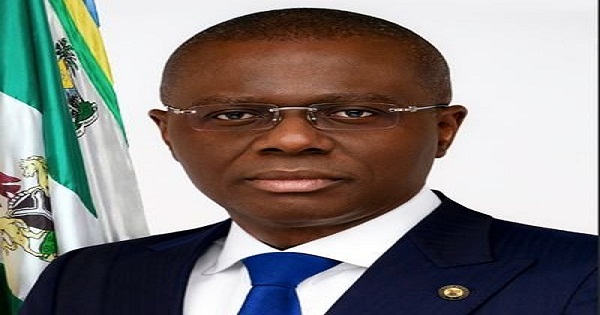
Lagos State has dragged 45 individuals and firms, including Bi-Courtney Aviation, DAAR Communications and Leaders & Company, to revenue court for tax debts running into billions of naira.

Lagos Govt
Bi-Courtney, operators of Murtala Muhammed Airport Terminal Two, faces N38.7 million claim; DAAR, behind Africa Independent Television, owes N22.4 million; ThisDay publishers Leaders & Company allegedly skip N67.1 million.
GMT Energy Resources tops corporates at N145.8 million, followed by Sheriff Deputies at N132.1 million; others like Heyden Petroleum, AA Rescue, BRT operator Primero also listed.
Individuals owe N13.5 million to N35 million each.
Attorney-General Lawal Pedro said suits followed ignored notices, aiming to enforce laws and fund infrastructure.
More defendants: IENG Nigeria, James Fisher, V Care Diagnostics, Venture Garden, Saro Africa, Barry Callebaut, Native Media, First Consulting, Eyowo Payments.
Compliant taxpayers post-notice escaped prosecution; defaulters risk penalties, interest, jail.
Pedro urged prompt filings and payments.


National Agency for Food and Drug Administration and Control (NAFDAC) has alerted Nigerians on counterfeit and unregistered Cerelac Mixed Fruits and Wheat products being sold in Lagos.

NAFDAC said Nestle Nigeria, the genuine Marketing Authorisation Holder of the product, received a complaint of suspected counterfeit purportedly manufactured by Nestlé Spain, bearing Batch Code 308002910.
It said that Nestle Nigeria reported that the complainant described that the counterfeit product emitted an odour suggestive of possible contact with fuel.
NAFDAC said that preliminary review of the product by Nestle Nigeria indicated that it had expired, in spite of the container displaying an expiry date of 10-2026, which suggested that the date coding had been tampered with (revalidated).
Nestle Cerelac Mixed Fruits and Wheat is a nutritious infant cereal, designed to be a delicious first food for infants.
NAFDAC said that its post-marketing surveillance’s directorate officers in Lagos conducted a surveillance visit to Maxland Shopping Centre, 193 Ago Palace, Okota, where the product was purchased by the complainant.
It added that the suspected counterfeit and unregistered Cerelac were found on sale at the premises and subsequently mopped up, while Nestle assisted in identifying the distinguishing features between registered and unregistered product.
According to the regulatory agency, Nestle revealed that the unregistered product used a hyphen (-) to separate the day from the year, while the registered product used a slash (/) to separate the day from the year.
“It is important to note that Nestle Nigeria is not aware of the channels through which the products are supplied into the country.
“Healthcare professionals and consumers are advised to report any suspicion of the sale of substandard and falsified regulated products to the nearest NAFDAC office, call 0800-162-3322, or send an email to [email protected],” NAFDAC said.
The agency warned that counterfeit formula often lacked essential nutrients, vitamins and minerals, leading to stunted growth or developmental issues.
It said that such formula might also contain contaminants that might lead to severe health consequences to infants or even death.
NAFDAC reiterated its commitment to safeguarding public health adding that it would continue surveillance activities to ensure the quality, safety, and efficacy of all NAFDAC-regulated products circulating in Nigeria.
It said that all zonal directors of the agency and state coordinators had been directed to carry out surveillance and mop up the revalidated product, if found within the zones and states.
The agency urged distributors, retailers, healthcare professionals, and caregivers to exercise caution and vigilance within the supply chain, to avoid the distribution, sale, and use of fake products.

Nigeria Demands Cloud Sovereignty to Anchor Africa’s Digital Independence

Digital Encode Sponsors PAFON 3.0 as CVO Prof. Adewale Set to Deliver Keynote on Cybersecurity and Trust

Polaris Bank Targets Youth with Financial Literacy Drive

As Nigerians Struggle to Save, Mutual Benefits Highlights Power of Structured Financial Planning

NITDA Boss Warns of AI Threat Shift @ GITEX Africa

Spotify’s Loud & Clear Report Reveals Over ₦60Bn Revenue for Nigerian Artists in 2025

Why JustMarkets Is a Strong Choice for Gold Trading

Kuda MFB Increases Kuda for Her Business Grants to ₦10 Million

Canal+ to Cut Jobs as Part Sweeping Restructuring

Nigeria tops global rankings for USDT, USDC ownership




 Telecom3 days ago
From Import Dependency to Local Capacity: Nigeria’s Tech Manufacturing Journey

 E-Financial2 days ago
How Unethical Deals Triggered CBN Takeover of Union Bank -Forensic Report

 E-Financial1 day ago
How Sterling Bank Is Empowering 1m Women with ₦500Bn

 E-Financial2 days ago
BVN Database hits 68.6m – NIBSS

 E-Business2 days ago
Kaspersky Warns of Digital Medicine Risks on the Occasion of World Health Day

 Broadcasting2 days ago
Multichoice Bleeds Customers in South Africa, Loses 580,000 Subscribers

 Broadcasting2 days ago
Broadcast Station Owners Reject IBAN’s Threat to Boycott Wike’s Media Engagements

 E-Financial1 day ago
See Key Changes in BVN Rule from May 1 by CBN