

/home/kenneth/web/nigeriacommunicationsweek.com.ng/public_html/wp-content/themes/zox-news/parts/post-single.php on line 153
">
Warning: Undefined array key 0 in /home/kenneth/web/nigeriacommunicationsweek.com.ng/public_html/wp-content/themes/zox-news/parts/post-single.php on line 153
Warning: Attempt to read property "cat_name" on null in /home/kenneth/web/nigeriacommunicationsweek.com.ng/public_html/wp-content/themes/zox-news/parts/post-single.php on line 153
OCS Re-launches Service in Nigeria

Overseas Courier Service Nigeria Limited has re-strategised in its aspiration to be part of the big players in the local courier industry. Its parent body, OCS Worldwide acclaim in service delivery in over 84 countries and 250 cities of the world has propelled the forward looking company to sharpen up strategies on how to give the leading courier companies presently in Nigeria the run for their money. With headquarters in Tokyo Japan, partnership with the Nigerian arm has been in existence for over two decades and it delivers inbound and outbound goods, documents and parcels to various clients within and outside the country even as it also handles customs clearing and haulage services in the most professional manner.
The board of the company met recently to take far reaching decisions on how to realize its dream of becoming a dominant player in the ranking of courier companies in Nigeria. Gabriel Ogugua, assistant general manager of the company revealed to Nigeria Communications Week that everything is being harmonized to see that the company achieves this aspiration in the nearest future. He said the company has invested and acquired state-of- the-art Information and Communications Technology tools to complement the right staff in the company’s employ to be able to offer its numerous customers in most cities in Nigeria and beyond, seamless operation that will meet customers’ expectations. In its innovative manner, Ogugua also informed that the company will soon release new product offerings that will be yet to be matched by its competitors in the industry.
In all its dealings, Ogugua further said integrity will be maintained as trust is an essential component of the business. He maintained that the courier company can never at any time compromise standards even as he said that a lot of forces –internal and external are redefining how the courier business should be run and his organization in response to these developments is injecting more ideas and capital into its Nigerian operations to reposition the company for leadership .
According to him, the company is also thinking of boosting its haulage business with new trucks to alleviate manufactures the pains of having their goods at the door steps of end users thereby contributing to the development of the country.


Warning: Undefined array key 0 in /home/kenneth/web/nigeriacommunicationsweek.com.ng/public_html/wp-content/themes/zox-news/parts/post-single.php on line 493
Warning: Attempt to read property "cat_ID" on null in /home/kenneth/web/nigeriacommunicationsweek.com.ng/public_html/wp-content/themes/zox-news/parts/post-single.php on line 493

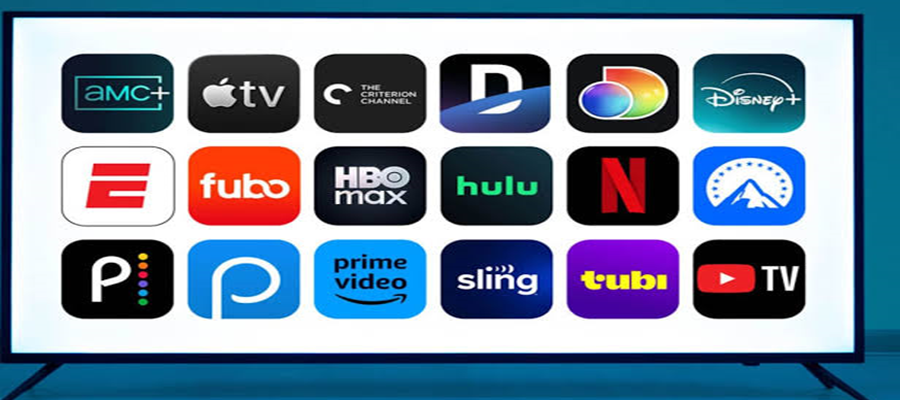
Nigeria’s pay-TV industry is facing one of its toughest periods in years as consumers increasingly migrate from conventional antenna and decoder-based television services to cheaper, more flexible and on-demand streaming platforms

The shift is putting pressure on established operators, such as MultiChoice, owners of DStv and GOtv; StarTimes and other traditional pay-TV providers, whose business models have long depended on recurring monthly subscriptions as per report by Business Hallmark.
According to Business Hallmark, the changing consumer behaviour is being driven by a combination of factors, including demographic transition, rising subscription costs, declining household purchasing power, improved internet access and the growing popularity of streaming services that allow viewers to pay for specific content or watch programmes at their convenience.
Streaming platforms are steadily expanding their appeal, offering consumers access to movies, sports (especially football matches and wrestling bouts), local content and international programs through smartphones, smart televisions and other internet-enabled devices.
Also, the proliferation of affordable data packages and connected devices has lowered the barrier to entry, allowing consumers to bypass traditional decoders altogether and consume content directly online.

Three of the major factors behind the changing behaviour of Nigerian television consumers are growing internet access, economic squeeze and changing demography.
Pay-TV subscriptions, once regarded by many households as a relatively affordable source of entertainment, are now competing with several other demands on disposable income.
For instance, entertainment spending are increasingly being subjected to tougher scrutiny with household budgets under pressure from food, tuition, transportation, electricity, housing and other essential costs.
Business Hallmark checks revealed that frequent price reviews by MultiChoice Nigeria’s have pushed the firm’s products beyond the reach of many Nigerians.
One of its products, GOtv, initially designed for average Nigerians, has six packages, namely GOtv Supa Plus, GOtv Supa, Gotv Max, GOtv Jolli, GOtv Jinja and GOtv Smallie.
GOtv Supa Plus with over 85+ channels currently goes for a monthly subscription fee of N16,800; GOtv Supa N11,400; Gotv Max N8,500; GOtv Jolli N5,800; GOtv Jinja N3,900, while GOtv Smallie subscribers choose between the N1,900/monthly, N5,100/quarterly and N15,000/annually options.
Similarly, following multiple tariff reviews, DStv Premium currently goes for N44,500 monthly; DStv Compact Plus N30,000; DStv Compact N19,000; DStv Confam N11,000; DStv Yanga N6,000 and DStv Padi N4,400.
On the other hand, StarTimes, which serves its customers through antenna signal transmission and satellite transmission, has only three bouquets, Nova, Basic, and Classic.
While Classic, the most expensive bouquet on the StarTimes’ shelf currently cost N6,000 monthly, Basic costs N4,000, while Nova costs N2,100.
While speaking to our correspondent on the major shift, some consumers explained that the choice is no longer between different pay-TV providers but between maintaining a television subscription and cancelling it altogether.
Eighty-two Nigerians, representing 68% of the 120 Pay-TV subscribers, who participated in an online survey conducted by Business Hallmark, said they opted for less expensive and more flexible alternatives, including YouTube and a growing range of streaming platforms, using smartphones, laptops, smart televisions and other internet-enabled devices to access entertainment.Geographic Reference
According to the respondents, the shift towards streaming lies partly in its flexibility. Instead of waiting for a program to be broadcast at a scheduled time, viewers now search for specific films, series, sporting events or other contents, which can be watched immediately, or downloaded to be watched or listened to later.
“I now watch contents when I want, across multiple devices, without necessarily being tied to the traditional channel and time-based television experience”, said Tolu Olamiti, an accountant in an audit firm in Lagos.
Another factor that is fueling the exodus from pay-TV model is the growing youth population. Checks revealed that online streaming is particularly attractive to phone-savvy younger viewers, whose television consumption habits are markedly different from those of previous generations.
While underage children watch cartoons and educational programs mostly from their parents or older siblings internet-enabled gadgets, teenagers and adults now watch news, sports programs and films through live streaming or download preferred programs to be watched later.
“With N200 data, I can download several new films to be watched at my convenience, instead of the old films, which providers always repeat on their channels. I also listen to music through out the day without worrying about electricity as my phone can go 2 days after full charge”, said Chukwuemeka Ibe, a student of Lagos State University (LASU).
In the same vein, access to fast and cheap internet plans is helping to drive the streaming surge. For instance, a subscriber can get a daily 1G data plan on the MTN Nigeria platform for just N200. This data plan can be used to download up to 1,000MB movies, or for streaming several hours of music online.
According to official statistics from the Nigerian Communications Commission (NCC), internet consumption in Nigeria reached 13.2 million terabytes in 2025, representing a 35 per cent increase from 2024, while average monthly data usage per active subscriber increased from 3.3 gigabytes in January 2023 to 7.4 gigabytes by May 2025.Geographic Reference
The NCC data indicates growing reliance on mobile internet services and digital platforms across the country with active internet subscriptions rising from 169.3 million in January 2025 to 182.2 million by January 2026.
Also, active internet subscriptions also surpassed 142 million.
Before the advent of internet, traditional pay-TV operators had ruled the television viewing industry largely through channel packages, exclusive content and decoder penetration. However, the rise of streaming has fundamentally altered the competitive landscape of Nigeria’s entertainment industry.
Fueled by the spread of smart devices and improved internet connectivity, streaming companies have been able to compete with traditional TV and radio providers through original programming, on-demand access, convenient timing and increased personalized viewing experiences.
A subscriber, who previously needed a satellite dish or digital terrestrial television decoder to access premium entertainment, can now use a smartphone or smart television and an internet connection.
The proliferation of affordable smartphones has further accelerated the process. Mobile phones have become entertainment devices for millions of Nigerians, particularly younger consumers, who spend more time watching short-form videos, movies and online programs than conventional television.
Also, social media platforms have become important competitors for consumers’ limited attention. YouTube, Facebook, Instagram, TikTok and other digital platforms provide enormous volumes of free or relatively inexpensive video content, forcing traditional broadcasters to compete not only for subscribers but also for viewers’ time.
Several pay-TV subscribers, who spoke to our correspondent on the matter, said providers can no longer justify the traditional model of paying a fixed monthly fee for hundreds of channels they rarely watch.

Federal Ministry of Finance has halted enforcement of about N680 million in disputed fees imposed by the National Insurance Commission (NAICOM) on NICON Insurance Limited and Nigeria Reinsurance Corporation (Nig Re) as part of the ongoing insurance industry recapitalisation exercise.

The Ministry also directed NAICOM to suspend its demand that the two companies transfer their entire recapitalisation funds into an escrow account with the Central Bank of Nigeria (CBN), pending determination of a petition challenging the legality of the charges and the directive.
The intervention followed a July 27, 2026 petition by NICON and Nig Re over what they described as unlawful fees and regulatory demands arising from the implementation of the Nigerian Insurance Industry Reform Act (NIIRA) 2025.
In a letter to the Commissioner for Insurance, Raymond Omachi, permanent secretary, Federal Ministry of Finance, on behalf of Taiwo Oyedele, minister of Finance and coordinating minister of the Economy, requested that NAICOM provide a detailed response and legal justification for the disputed requirements.
The Ministry specifically directed the Commission to suspend enforcement of the contested processing and verification fees, the one per cent Capital Injection Fee, and the directive requiring the companies to transfer their full recapitalisation funds to a CBN escrow account.
The dispute centres on NAICOM’s assessment of a one per cent fee on capital injected by operators, alongside additional processing and verification charges prescribed under Appendix 2 of the Commission’s Minimum Capital Requirement Guidelines.
According to the petition, the combined assessments amounted to N305 million for NICON and N375 million for Nig Re, bringing the disputed charges to N680 million.
The companies are also challenging what they described as an unconstitutional requirement to transfer more than the statutory proportion of their recapitalisation funds to the CBN.
They contend that Section 16(3) of NIIRA 2025 provides for a 10 per cent statutory deposit, and not the transfer of the entire capital injection into an escrow account.
The companies told the Ministry that they had already met the July 31, 2026 recapitalisation deadline.
NICON said it injected N420 billion, while Nig Re injected N30 billion into Mudaraba Term Deposit accounts with Lotus Bank Limited. The companies maintained that the amounts exceeded their adjusted recapitalisation requirements of N16 billion and N28 billion, respectively.
They further stated that they had deposited N42.5 billion and N43.5 billion respectively with the CBN, in compliance with the statutory deposit requirement under Section 16(3) of the new law.
The companies also disclosed that they had made initial payments of N480 million and N75 million, respectively, in fees.
The Finance Ministry’s directive effectively places the disputed charges and escrow requirement on hold while NAICOM is expected to justify the legal and regulatory basis for its actions.
The intervention could have wider implications for the insurance industry’s recapitalisation programme, particularly as operators face regulatory deadlines to strengthen their capital base under the new insurance law.
The controversy also raises questions about the extent to which regulatory guidelines can impose additional financial obligations on operators beyond those expressly provided for under the enabling legislation.
NAICOM is now expected to respond to the Ministry’s request and explain the statutory basis for the one per cent capital injection fee, the additional processing and verification charges, and the requirement for the full capital injection to be transferred into a CBN escrow account.

Federal government recently received a proposed protocol agreement from India that could pave the way for agricultural cooperation between the two countries.

Abishek Singh, India’s high commissioner to Nigeria, announced the proposal recently n Abuja during the India-Nigeria Business Forum on Agriculture and Allied Sectors.
New Delhi’s proposed cooperation would support Nigeria’s food security efforts, with the goal of reducing post-harvest losses by nearly 50% and expanding agricultural processing.
It would also cover technology transfers, mechanization, financing solutions and capacity building.
Abuja has opened similar discussions with China.
Only recently, Mukhtar Muhammed, permanent secretary at the Ministry of Innovation, Science and Technology, said Nigeria wanted to deepen scientific and technological cooperation with Beijing in agriculture.
The discussions with China have focused on developing low-cost, solar-powered cold storage facilities and transferring food-processing technologies.
Nigeria, also wants to work with Chinese research institutes to develop infrastructure that can improve the preservation of perishable products.
Nigeria’s outreach to its Asian partners addresses a major problem for the agricultural sector.
The Bank of Agriculture (BoA) estimates that Africa’s most populous country loses 30 million to 40 million tons of food each year before it reaches consumers.
Those losses are worth an average of about N3.5 trillion ($2.5 billion) annually, according to data the institution presented at a workshop in Kaduna in July 2026.
Perishable products are particularly vulnerable, according to local media reports, with fruits and vegetables accounting for an estimated 40% to 50% of total losses.
The government has already launched its own response to the problem.

Affordable, Flexible Streaming Platforms May Kill PAYtv – Report

FG Suspends NAICOM’s N680m Insurance Recapitalisation Fees

FG Taps Indian, Chinese Technologies to Tackle $2.5Bn in Food Losses

MTN Nigeria Clocks 25, Connects over 90m People

Subscribers to Seek Legal Redress if Poor Quality of Service Continue in September

EFCC Busts NIS Visa Overstay Racket, Uncovers N700m in an Account

Fact-Check: Elon Musk’s “Tesla Pi Phone” is Internet Rumor

NBC Tasks Broadcasting Stations over 2028 DSO Global Deadline

NBC Scraps Annual Digital Access Fee on DSO

Glo Sponsored African Voices to Feature Netflix’s “The Polygamist” Stars




 E-Business1 day ago
X Replaces Revenue Sharing wit New Creator Rewards Programme

 Telecom1 day ago
MTN Alerts Subscribers over Fake 25GB Anniversary MTN Data Giveaway

 E-Financial1 day ago
Interswitch, Temenos Commit to Advancing Nigeria’s Digital Banking Technology

 General News1 day ago
Fake Agency: ICPC Indicts NITDA, Others over Inadequate Due Diligence

 E-Financial1 day ago
FG Spent N3.1 Trillion on Domestic Debt Servicing in Q1- DMO

 General News1 day ago
UNESCO Taps Oguamanam,Nigerian Scholar to Advisory Body on Science, Tech Ethics

 General News1 day ago
Tax Reform Built on Taxing Prosperity, Not Poverty– Adedeji

 Broadcasting1 day ago
Awba-Ofemili Unveils 2026 Health Campaign, Offers Free Medical Screening