

E-Financial
O’Neill, World Renowned Economist Invests in Paga


Mr. Jim O’Neill, former chairman, Goldman Sachs Asset Management and chief economist, popularly known for his coinage of ‘BRIC’ acronym in 2001, has invested in Paga, an indigenous mobile payments service company.
Tayo Oviosu, founder and chief executive officer of the firm, announced his in a statement at the weekend.
He said the investment was coming at a time when the company was celebrating its 5th anniversary.
O’Neill coined the ‘BRIC’ acronym in 2001, which was derived from his thesis that Brazil, Russia, India and China would dominate growth in emerging markets.
He was said to have first shown interest in Paga when he interviewed Oviosu as part of a series on British Broadcasting Corporation’s radio discussing the MINT group – a new acronym O’Neill had coined to represent Mexico, Indonesia, Nigeria, Turkey.
The MINT countries, according to him, are the next set of countries he believes will be the growth markets that will shape the world’s economy in the coming decades.
O’Neill, the statement said, expressed confidence that the entrepreneurial abilities of Nigeria’s younger demographic would be a catalyst for growth over the next 20 years.
He added that indigenous startups, such as Paga, which were focused on a key sector – payments, would be the major drivers of growth.
On his decision to invest in Paga, O’Neill was quoted as saying, “On meeting the founder of Paga and understanding his vision for Paga, it was very obvious that we both shared the belief that with the right approach, Nigeria possessed the potential for huge economic growth. It is clear to me that Nigeria, Africa’s largest economy, needs payment systems that work for both businesses and individuals for her to reach her potential.”
He also said, “Paga delivers greater convenience to businesses and individuals whether they are banked or un-banked. I have chosen to invest in Paga because the team has demonstrated their ability to execute on a bold vision that can have catalytic impact. It is an exciting time for Nigeria and I believe in this vision and the team to achieve their bold vision to become the number one way to pay and get paid in Nigeria.”
In the same vein, Oviosu, said, “We are absolutely thrilled that a leading growth investor like Jim O’Neill has spotted Paga’s potential to transform the lives of millions of Nigerians by delivering the best and most convenient payment system for both businesses and individuals.
“Jim’s investment is a testament to the great work of our 205-person team. We are honoured to have Jim as a partner and we will continue to work tirelessly until Paga is the defacto way to pay or get paid in Nigeria,” he added.



The Nigeria Inter-Bank Settlement System (NIBSS) is looking into offline payment solutions as part of its efforts to increase financial inclusion and reach Nigerians who have limited or no access to mobile data.

The project was announced by Ngover Nwankwo, NIBSS executive director for business and products, at the 2026 CHBO Conference in Lagos.
Nwankwo pointed out that the rapid expansion of digital payments must be matched by purposeful inclusion initiatives, cautioning that innovation should not exclude groups of the population that still rely largely on cash.
She emphasised that cash is still an important element of Nigeria’s economy and that digital and cash-based payments must coexist to safeguard disadvantaged users while boosting efficiency for digitally connected customers.
Nwanko also commended banks for operational performance, particularly during the December 2025 cash demand period, which she said was met with few public complaints.
Lloyd Onaghinon, Bankers Warehouse Plc,had similar sentiments on the enduring need of cash. He explained that cash usage remained high globally due to cultural, demographic, and trust-related factors
However, he cautioned that surplus currency outside the banking system undermines financial intermediation and monetary policy efficacy, demanding greater cooperation among regulators, banks, and other stakeholders.
Director Solaja Olayemi, representing the Central Bank of Nigeria, stated that around 90% of Nigeria’s cash remained outside the banking system and encouraged banks to collaborate with fintechs and microfinance institutions..
He added that fintechs with substantial agent networks, such as Moniepoint, OPay, and Kuda, are better positioned to drive inclusion, with some companies now holding national licenses.


At least 13,417 individuals linked to fraudulent activities in Nigeria’s financial system have been captured on the Person of Interest Portal jointly developed by the Nigeria Inter Bank Settlement System (NIBSS) in collaboration with the Central Bank of Nigeria (CBN), security agencies and other stakeholders.

Premier Oiwoh, managing director of NIBSS, disclosed this while speaking on ongoing efforts to curb fraud in the payments ecosystem, noting that the portal which contains names and photographs of suspects has been actively used by law enforcement agencies since it began capturing data from 2019.
Oiwoh, while noting that fraud management remains a core responsibility of NIBSS, noted that the number of reported fraud cases has declined over the past five years, the value of losses remains a key concern for regulators and operators.
According to him, actual fraud losses stood at about N17.67 billion in 2023 before rising sharply to N52.26 billion in 2024, mainly due to a single incident involving N31.1 billion by one entity. He noted, however, that losses dropped significantly in 2025, reflecting tighter controls and improved collaboration across the industry.
He explained that Lagos continues to account for the highest concentration of fraud cases due to its position as the country’s commercial hub, while Abuja has also recorded a notable rise, with other states still featuring in reported incidents.
By transaction channel, Oiwoh said fraud is most prevalent in e-commerce and internet banking, followed by POS, mobile and web platforms.
He identified social engineering as the most common technique used by fraudsters, warning that insider abuse now poses the greatest threat to the system.
“Insider involvement is high, and recent investigations have confirmed this. Many of the fraud cases we are seeing today involve insiders, including former bankers,” he stated, noting that coordinated industry action has yielded results, and that joint efforts last year alone prevented losses of about N20 billion that could have been lost to fraud.
He raised concern over non-reporting of fraud incidents revealing that fraud reporting declined by about 34 per cent in the last quarter of 2025.
He warned that failure to report allows perpetrators to move freely between institutions undetected.
“In several cases investigated last year, individuals involved in fraud simply moved to other institutions because incidents were not reported. Non-reporting is unacceptable,” he said.
He said NIBSS, working with the CBN, the Nigerian Financial Intelligence Unit, and security agencies, has integrated centralised data systems, including industry watch lists, politically exposed persons databases, and customer account repositories, into the Person of Interest Portal to strengthen monitoring, identity management, and fraud prevention.
Credit… Leadership
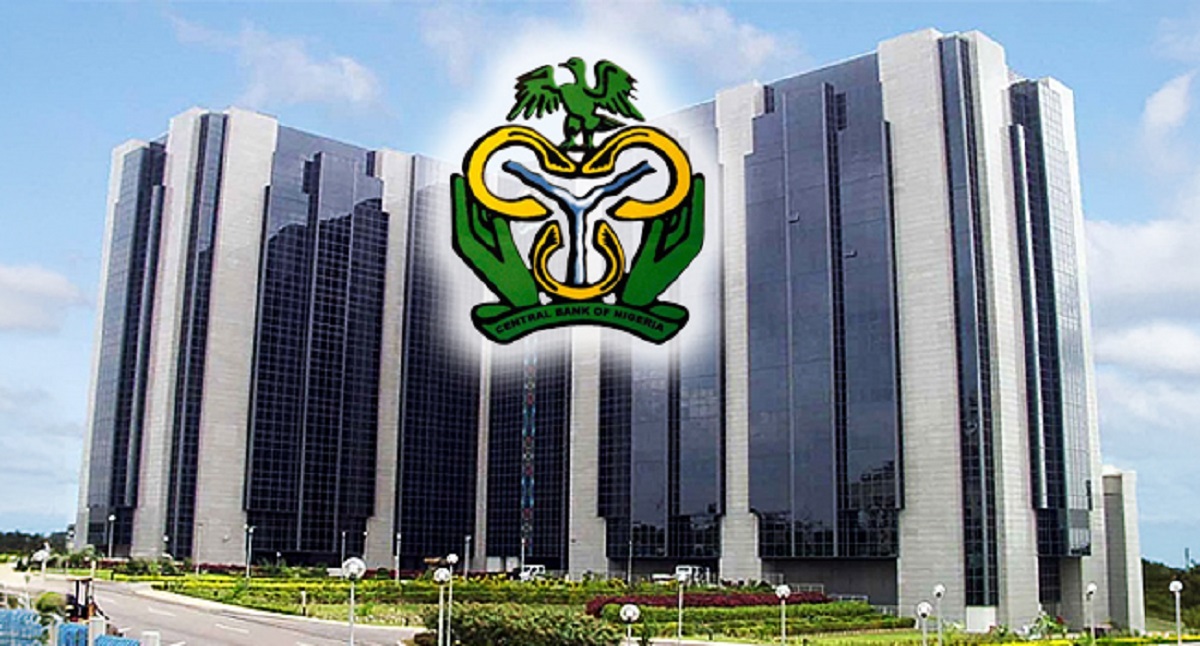
Central Bank of Nigeria (CBN) is to introduce new rules to improve how debit cards and Automated Teller Machines (ATMs) work in Nigeria, according to Olayemi Cardoso, governor of the apex bank.

Cardoso, made this known through Fatai Karim, his special adviser, at an event held over the weekend.
According to him, the new rules are meant to solve ongoing problems with cash withdrawals and to restore public trust in electronic payment systems.
The CBN explained that banks will now be required to issue debit cards based on the number of ATMs they have installed. This means a bank should not issue too many cards if it does not have enough ATMs to support them.
The policy is expected to reduce long queues at ATMs, frequent machine breakdowns, and uneven access to cash across the country.
The CBN noted that repeated ATM failures and cash shortages have made many Nigerians lose confidence in digital banking, even though electronic transactions are increasing.
The Governor said the new policy will soon be introduced to clean up the system and ensure banks properly balance the number of debit cards they issue with the ATMs they operate.

Tech Executives Double Down on AI, Talent and Adaptive Strategies to Lead in the Intelligence Age

Firm Identifies AI as Common Denominator in Entertainment Industry’s 2026 Security Threats

NIBBS to Boost Financial Inclusion with Offline Payment Solutions

WEBINAR: Techeconomy Business Series Hosts Experts from MTN, Interswitch, BusinessPlus, others this Wednesday

LIRS to Invoke NTAA to Recover Unpaid Taxes from Bank Accounts, Others

19 Nigerian Banks Meet CBN Recapitalization Targets Ahead of March Deadline

Jumia CEO says Black Friday Signals Nigeria’s E-Commerce Maturity

Galaxy Backbone Celebrates the Federal Government’s Paperless Civil Service Milestone

DStv Offers Instant Package Upgrade for Customers from January to February

Banks to Impose N50 Stamp Duty on Transfers of N10,000 and Above from January 1




 News1 day ago
Anambra Cuts Monday Pay to Kill Sit-at-Home

 E-Financial1 day ago
First Asset Management Receives Upgraded Ratings from Agusto &Co and DataPro

 General News1 day ago
Nigeria Treats Religious Violence as Attack on State – NSA Ribadu

 E-Financial1 day ago
CBN Prepares Fresh Debit Card Rules to Improve ATM Services

 E-Financial1 day ago
NIBSS, Others Flag 13,417 Nigerian Fraudsters on Person of Interest Portal
 News1 day ago
LIRS to Invoke NTAA to Recover Unpaid Taxes from Bank Accounts, Others
 E-Financial2 hours ago
NIBBS to Boost Financial Inclusion with Offline Payment Solutions
 General News2 hours ago
WEBINAR: Techeconomy Business Series Hosts Experts from MTN, Interswitch, BusinessPlus, others this Wednesday