

General News
Our 2023 Ads Safety Report


By Duncan Lennox, VP & GM of Ads Privacy and Safety
Billions of people around the world rely on Google products to provide relevant and trustworthy information, including ads. That’s why we have thousands of people working around the clock to safeguard the digital advertising ecosystem. Today, we are releasing our annual Ads Safety Report to share the progress we’ve made in enforcing our advertiser and publisher policies and to hold ourselves accountable in our work of maintaining a healthy ad-supported internet.

The key trend in 2023 was the impact of generative AI. This new technology introduced significant and exciting changes to the digital advertising industry, from performance optimization to image editing. Of course, generative AI also presents new challenges. We take these challenges seriously and will outline the work we are doing to address them head-on.
Just as importantly, generative AI presents a unique opportunity to improve our enforcement efforts significantly. Our teams are embracing this transformative technology, specifically Large Language Models (LLMs), so that we can better keep people safe online.
Gen AI Bolsters Enforcement
Our safety teams have long used AI-driven machine learning systems to enforce our policies at scale. It’s how, for years, we’ve been able to detect and block billions of bad ads before a person ever sees them. But, while still highly sophisticated, these machine learning models have historically needed to be trained extensively – they often rely on hundreds of thousands, if not millions of examples of violative content.
LLMs, on the other hand, are able to rapidly review and interpret content at a high volume, while also capturing important nuances within that content. These advanced reasoning capabilities have already resulted in larger-scale and more precise enforcement decisions on some of our more complex policies. Take, for example, our policy against Unreliable Financial Claims which includes ads promoting get-rich-quick schemes. The bad actors behind these types of ads have grown more sophisticated. They adjust their tactics and tailor ads around new financial services or products, such as investment advice or digital currencies, to scam users.
To be sure, traditional machine learning models are trained to detect these policy violations. Yet, the fast-paced and ever-changing nature of financial trends make it, at times, harder to differentiate between legitimate and fake services and quickly scale our automated enforcement systems to combat scams. LLMs are more capable of quickly recognizing new trends in financial services, identifying the patterns of bad actors who are abusing those trends and distinguishing a legitimate business from a get-rich-quick scam. This has helped our teams become even more nimble in confronting emerging threats of all kinds.
We’ve only just begun to leverage the power of LLMs for ads safety. Gemini, launched publicly last year, is Google’s most capable AI modeI. We’re excited to have started bringing its sophisticated reasoning capabilities into our ads safety and enforcement efforts.
Our Work to Prevent Fraud and Scams
In 2023, scams and fraud across all online platforms were on the rise. Bad actors are constantly evolving their tactics to manipulate digital advertising in order to scam people and legitimate businesses alike. To counter these ever-shifting threats, we quickly updated policies, deployed rapid-response enforcement teams and sharpened our detection techniques.
In November, we launched our Limited Ads Serving policy, which is designed to protect users by limiting the reach of advertisers with whom we are less familiar. Under this policy, we’ve implemented a “get-to-know-you” period for advertisers who don’t yet have an established track record of good behavior, during which impressions for their ads might be limited in certain circumstances–for example, when there is an unclear relationship between the advertiser and a brand they are referencing. Ultimately, Limited Ads Serving, which is still in its early stages, will help ensure well-intentioned advertisers are able to build up trust with users, while limiting the reach of bad actors and reducing the risk of scams and misleading ads.
A critical part of protecting people from online harm hinges on our ability to respond to new abuse trends quickly. Toward the end of 2023 and into 2024, we faced a targeted campaign of ads featuring the likeness of public figures to scam users, often through the use of deepfakes. When we detected this threat, we created a dedicated team to respond immediately. We pinpointed patterns in the bad actors’ behavior, trained our automated enforcement models to detect similar ads and began removing them at scale. We also updated our misrepresentation policy to better enable us to rapidly suspend the accounts of bad actors.
Overall, we blocked or removed 206.5 million advertisements for violating our misrepresentation policy, which includes many scam tactics and 273.4 million advertisements for violating our financial services policy. We also blocked or removed over 1 billion advertisements for violating our policy against abusing the ad network, which includes promoting malware.
The fight against scam ads is an ongoing effort, as we see bad actors operating with more sophistication, at a greater scale, using new tactics such as deepfakes to deceive people. We’ll continue to dedicate extensive resources, making significant investments in detection technology and partnering with organizations like the Global Anti-Scam Alliance and Stop Scams UK to facilitate information sharing and protect consumers worldwide.
Investing in Election Integrity
Political ads are an important part of democratic elections. Candidates and parties use ads to raise awareness, share information and engage potential voters. In a year with several major elections around the world, we want to make sure voters continue to trust the election ads they may see on our platforms. That’s why we have long-standing identity verification and transparency requirements for election advertisers, as well as restrictions on how these advertisers can target their election ads. All election ads must also include a “paid for by” disclosure and are compiled in our publicly available transparency report. In 2023, we verified more than 5,000 new election advertisers and removed more than 7.3M election ads that came from advertisers who did not complete verification.
Last year, we were the first tech company to launch a new disclosure requirement for election ads containing synthetic content. As more advertisers leverage the power and opportunity of AI, we want to make sure we continue to provide people with the greater transparency and the information they need to make informed decisions.
Additionally, we’ve continued to enforce our policies against ads that promote demonstrably false election claims that could undermine trust or participation in democratic processes.
Overall 2023 Numbers
Our goal is to catch bad ads and suspend fraudulent accounts before they make it onto our platforms or remove them immediately once detected. AI is improving our enforcement on all these fronts. In 2023, we blocked or removed over 5.5 billion ads, slightly up from the prior year, and 12.7 million advertiser accounts, nearly double from the previous year. Similarly, we work to protect advertisers and people by removing our ads from publisher pages and sites that violate our policies, such as sexually explicit content or dangerous products. In 2023, we blocked or restricted ads from serving on more than 2.1 billion publisher pages, up slightly from 2022. We are also getting better at tackling pervasive or egregious violations. We took broader site-level enforcement action on more than 395,000 publisher sites, up markedly from 2022.
To put the impact of AI on this work into perspective: last year more than 90% of our publisher page level enforcement started with the use of machine learning models, including our latest LLMs. Of course, any advertiser or publisher can still appeal an enforcement action if they think we got it wrong. Our teams will review it and, in the cases where we find errors, use it to improve our systems.
Staying Nimble and Looking Ahead
When it comes to ads safety, a lot can change over the course of a year: the introduction of new technology such as generative AI to novel abuse trends and global conflicts. And the digital advertising space has to be nimble and ready to react. That’s why we are continuously developing new policies, strengthening our enforcement systems, deepening cross-industry collaboration and offering more control to people, publishers and advertisers.
In 2023, for example, we launched the Ads Transparency Center, a searchable hub of all ads from verified advertisers, which helps people quickly and easily learn more about the ads they see on Search, YouTube and Display. We also updated our suitability controls to make it simpler and quicker for advertisers to exclude topics that they wish to avoid across YouTube and Display inventory. Overall, we made 31 updates to our Ads and Publisher policies.
Though we don’t yet know what the rest of 2024 has in store for us, we are confident that our investments in policy, detection and enforcement will prepare us for any challenges ahead.


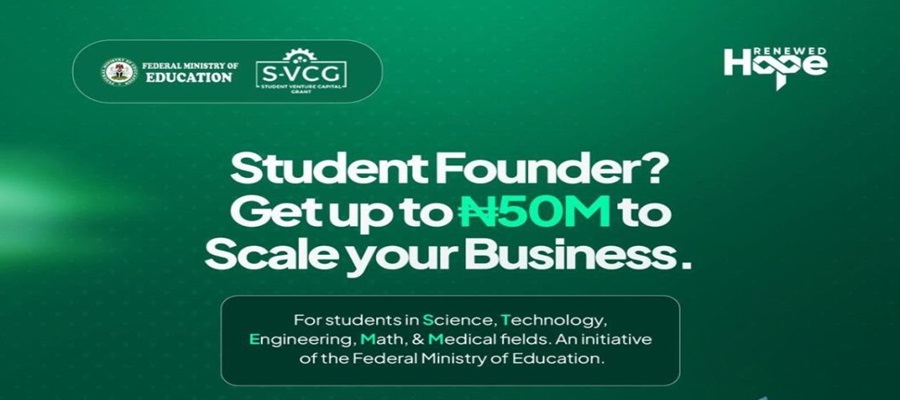
Federal government has awarded N50 million each to 45 students selected from 65 finalists drawn from public and private tertiary institutions nationwide under the Student Venture Capital Grant (S-VCG).

Tunji Alausa, minister of Education, unveiled the initiative at the weekend at the United Nations Development Programme Innovation Hub in Ikoyi, Lagos, describing it as a bold step toward positioning Nigerian youth as drivers of global innovation.
Alausa said the programme marked a significant shift in education policy, aimed at empowering students through innovation, entrepreneurship, and skills development. He noted that the grant offers equity-free funding, mentorship, incubation, and access to digital tools.
He explained that the beneficiaries emerged after a rigorous selection process involving over 30,000 applicants from more than 400 tertiary institutions across the country, culminating in a three-day bootcamp and pitch session before industry experts.
According to the minister, the initiative is designed to transform tertiary institutions into hubs of innovation and economic development, enabling students to move from ideation to commercialisation and become job creators.
“Today is not just another programme event. We are activating a new future for Nigerian students where great ideas are nurtured into impactful solutions,” he said.
Also speaking, Suwaiba Ahmad, minister of State for Education, described student entrepreneurship as a critical national strategy for job creation and economic growth. She emphasised the need for institutions to move beyond theory and support students in translating ideas into viable enterprises.
Similarly, Bosun Tijani, minister of Communications and Digital Economy, commended the initiative, urging beneficiaries to focus on building sustainable and impactful solutions rather than pursuing short-term gains.
He advised students to adopt consistency and long-term thinking, noting that small, sustained efforts could lead to meaningful innovation and societal impact.
In her goodwill message, Elsie Attafuah reaffirmed the commitment of the United Nations to supporting Nigeria’s innovation ecosystem.
She encouraged beneficiaries to refine their ideas, respond to market needs, and contribute meaningfully to national development through innovative solutions.
The minister acknowledged key partners, including the UNDP, Google, and the Bank of Industry, for their support in implementing the initiative and expanding opportunities for young innovators across Nigeria.
The Federal Government has launched the ‘Cross-Border Digital Payments and Identity in Nigeria under the AfCFTA’ report, urging stakeholders to unlock trade opportunities for Micro, Small and Medium Enterprises (MSMEs) to access the $3.5 trillion African Continental Free Trade Area (AfCFTA) market.

The high-level report, hosted by the Office of the Vice-President in collaboration with ODI Global under the Supporting Investment and Trade in Africa (SITA) programme, was unveiled on Monday by the Deputy Chief of Staff to the President, Ibrahim Hassan Hadejia, in Abuja.
Hadejia described the research as both timely and strategic, noting the strong coordination by the Office of the Vice-President and the leadership of the Federal Ministry of Industry, Trade and Investment.
He revealed that the cross-border payments report followed earlier milestones, including the development and launch of Nigeria’s Digital Trade Strategy and a capacity-building programme for subnational leaders.
According to him, Nigeria is increasingly assuming a leading role in shaping the digital trade agenda across the African continent, necessitating that the country remains at the forefront of AfCFTA implementation.
He noted that deepening engagement with AfCFTA and enabling businesses, particularly SMEs, to conduct seamless cross-border transactions will be critical to unlocking trade, fostering growth, and creating jobs.
He further stated that efficient cross-border payments, supported by trusted digital identity systems as recommended in the report, will be key to realising President Bola Ahmed Tinubu’s Renewed Hope vision for Nigerian MSMEs.
Hadejia also observed that while the report identifies the Pan-African Payment and Settlement System as a critical platform for cross-border digital payments, Nigerian fintech firms such as PalmPay and Moniepoint, which have some of the largest and most active user bases, will play a pivotal role in driving adoption.
He assured the audience that the Federal Government remains committed to strengthening critical infrastructure, regulatory frameworks, and partnerships to ensure Nigeria is not only ready for digital trade but continues to lead.
“I appreciate the efforts of all stakeholders and urge us to move AfCFTA beyond a continental agreement to a $3.5 trillion trade juggernaut that will reinvigorate our industries, unlock intra-African trade, and domesticate African prosperity,” he added.
Hadejia stated that intra-African trade will be driven not only by large corporations but by small businesses empowered through digital trade and e-commerce, while noting that issues of trust, identity and logistics, as highlighted in the report, must be addressed.
Commenting on the report, the Special Adviser to the President on Job Creation and MSMEs, Temitola Adekunle-Johnson, said the report – developed under the purview of the Office of the Vice-President – would significantly strengthen the MSME ecosystem.
He explained that cross-border payments in Nigeria and across Africa have historically been largely informal and inefficient but noted that the emergence of the Bank Verification Number (BVN) and National Identification Number (NIN) systems is changing the landscape.
Adekunle-Johnson expressed optimism that the report’s findings and recommendations would enable Nigerian SMEs to achieve seamless access to continental markets.
Earlier, the Special Assistant to the President on ICT Policy, Office of the Vice-President, Salihu Dasuki, disclosed that the office, in partnership with development partners, has developed a framework to fast-track seamless cross-border payments for MSMEs.
He added that a key pillar of President Tinubu’s Renewed Hope Agenda is enabling Nigerians to access digital trade, which informed the capacity-building programme conducted for subnational governments last year.
Also speaking, Special Assistant to the President on Project Support, Office of the Vice-President, Shuda Ahmed, commended ODI Global for leading the research underpinning the report.
She noted that without seamless and affordable cross-border payment systems, MSMEs across the continent would be unable to scale beyond their domestic markets.
The event was attended by officials of ODI Global, representatives of AfCFTA, the National Information Technology Development Agency (NITDA), National Identity Management Commission (NIMC), Nigerian Petroleum Development Company (NPDC), Federal Competition and Consumer Protection Commission (FCCPC), and MSMEs, among other key stakeholders.
General News
Moniepoint Launches Sixth Edition of Women in Tech Internship with “There Is Space for You” Campaign


Moniepoint Inc., a digital financial services provider and Africa’s fastest-growing financial institution, has announced the opening of applications for the 2026 edition of its Women in Tech internship programme, now in its sixth year and continuing to expand its reach across the country.

Launched under the theme, There is Space for You, this year’s campaign is a direct invitation to women across Nigeria who have the talent, the drive, and the ambition but access has been a challenge.
The choice of the theme reflects intentionality as despite significant progress in recent years, women continue to account for just 25% of Nigeria’s tech workforce, even as they represent nearly half the population and 22% of annual STEM graduates. Moniepoint’s Women in Tech programme has spent five years working to close the gap and facilitate access for women.
Building on the success of last year’s “Dream 15” cohort, the programme’s largest intake to date, the 2026 edition continues to scale, offering an expanded number of roles across some of the most sought-after disciplines in the industry which include Cloud Engineering, Frontend and Backend Engineering, Data Engineering,, Systems Administration, Product Management, Information Security, Mobile Engineering, Site Reliability Engineering, These roles represent the technical foundations on which the future of digital finance in Africa is being built, and Moniepoint wants women at the centre of that work.
Successful applicants will receive a competitive salary, work tools, branded merchandise, and direct mentorship from experienced practitioners across the business. As with previous cohorts, participants who demonstrate strong performance will be considered for full-time employment, a pathway that has already transformed the careers of women from the programme’s earliest editions.
The human evidence of that transformation is what anchors this year’s campaign. With over 8,000 applications received last year, and 15 interns selected, young women like Uzoamaka Anyaegbuna, Adaeze Ugwumba, Iyinoluwa Akenroye, Loveth Abang, and Bisola Abimbola joined the programme as interns and have since become what Moniepoint calls “DreamMakers”, full-time employees who are building technical systems, leading projects, and shaping the company’s product from the inside..
A common critique of internships is that they lack substance. Bisola Abimbola’s experience at Moniepoint was the opposite; she was treated as a peer from day one.
“I can confidently say the internship was one of the best things that’s happened in my career. I was given real product ownership, working on multiple projects and driving them forward like an actual product manager, not just observing from the sidelines. Projects were thrown at me with an implicit question: ‘Can you handle this?’ I had to step up, own the outcomes, and actually deliver. That experience made me comfortable with the autonomy and accountability I now have. This hands-on experience made all the difference and solidified my resolve that this is exactly where I’m meant to be.”
Chinaza Nduka-Dike, Head, People Operations at Moniepoint Inc., expressed the company’s continued commitment to the initiative. “With the Women in Tech programme, we are not just inspiring inclusion, we are actively creating sustainable pathways for women to thrive in the tech industry.
“This is a space where diversity fuels innovation, and through programmes like this, we are empowering women to take on leadership roles, develop crucial skills, and shape the future of technology. The progress we have seen across five cohorts, where alumni have gone on to make significant contributions to the company and the wider tech ecosystem, fills us with pride. There is space for the next generation, and we are ready for them.”
The launch of the 2026 campaign arrives at the close of Women’s Month, and forms part of Moniepoint’s broader commitment to the United Nations Sustainable Development Goal 5 on Gender Equality. These initiatives reflect a consistent institutional conviction: that empowering women is not a check box or tokenistic gesture, but an ongoing responsibility that demands sustained investment across access, skills, and belonging.
Applications open March 30, 2026. The programme is open to women across Nigeria who are looking to begin or pivot their careers in technology, whether self-taught or formally trained. Further information on available roles and how to apply is available at the Women in Tech website, https://womenintech.moniepoint.com

Dangote Refinery Debunks Speculations on IPO

FG Awards N50m Each to 45 Students under S-VCG

NGX REGCO Fines 5 Firms N291m for Market Manipulation

FG Launches Cross-Border Digital Payments Report

FG Urges Stakeholders to Unlock Trade Opportunities for MSMEs To $3.5trn AfCFTA Market

Spotify’s Loud & Clear Report Reveals Over ₦60Bn Revenue for Nigerian Artists in 2025

Madonna University Taps Tech Guru Adote for Strategic Board Role

China Threatens to Shut Nigeria’s Satellite Over $11.44m Unpaid Debt

Jumia Tech Week 2026 Begins with Tech Deals on Smartphones, Electronics, and Everyday Technology

FCCPC Bans Lagos ‘No Refund’ Policy, Vows Fines and Shutdowns for Traders




 General News3 days ago
Anti Graft Agencies Raise Alarm over Rising Crypto-Linked Financial Crimes

 E-Business3 days ago
NITDA Takes Over National Digital Architecture System

 E-Financial1 day ago
CBN bars large‑ticket loan defaulters from banking services in tough new crackdown

 General News1 day ago
ARN Rejects Medical Bill over Attempt to ‘Scrap’ Profession

 Telecom1 day ago
NIGCOMSAT Supports Startups Growth with the Launch of Accelerator 3.0

 Telecom1 day ago
FG Unveils Digital Economy Research Fund Scheme

 News1 day ago
Meningitis Kills a Quarter Million People a Year -Study

 News1 day ago
Stakeholder says AI is Crucial to Nigerian Data Centres Amid Persistent Grid Collapse