

General News
Our Mission is to Provide Broadband Penetration and Other Telecom Services Across Remote Areas in Africa – Wole Abu, CEO, Pan African Towers


Wole Abu is the Chief Executive Officer of Pan African Towers Limited, an indigenous infrastructure company in the African telecoms market.
In this interview with Nigeria CommunicationsWeek team, Abu discloses the circumstances that gave birth to his company two years ago and the impetus behind its fast-pervading footprints in Nigeria and Ghana as well as the aspirations of the company to disrupt more African telecoms markets in the coming years. As he fielded questions at his Lekki Lagos office, Abu also dissects some government policies, opportunities and challenges in the African telecoms market while he proffers solutions where necessary. Excerpts:
PAT belongs to the infrastructure segment of the African telecoms market. What’s your general assessment of the market?
The infrastructure segment of the African telecoms market has actually seen a lot of growth since the entrance of major players in the global level into Africa around 2012. From then, infrastructure and tower deals have grown year on year. Also, it is beginning to see cloud and fibre deployment at an increasing rate in Africa. So, infrastructure for telecommunication is growing and this is being driven by demand. In terms of adequacy, off course, there is still a demand-supply gap. Infrastructure is still not adequate. We still have a huge gap in that space. In Nigeria, filling the gap will demand an estimated investment worth $136 billion, according tothe Ministry of Communication and Digital Economy, and the Nigerian Communications Commission (NCC).
Over the years, and even before the coming of Pan African Towers, deploying infrastructure has been faced with some bottlenecks, what are those challenges that you have identified since coming into the industry?
Truly, many challenges are bedeviling the sector. There are the social problems: theft, vandalism, community issues and so on. And also, there are the business environment issues: multiple taxation, unfavourable or harsh government policies, forex scarcity and lack of long-term capital for investment in infrastructure in local currency. All these are the issues. Then of course, you also look at failure in power supply. Availability of power is important since telecoms infrastructure which is distributed across the country all rely on energy. So, we have to now invest additionally in providing energy for our customers. This actually drives up the cost and it makes us susceptible to all the shocks in the energy market and that, sometimes, makes our business difficult. If you look at it, the environment of doing business, capital adequacy, and power infrastructure, those are the things that are really affecting the growth of our sector.
Focusing on the power challenge as you have just mentioned, how much of the cost of operation do you expend on providing power to run telecoms infrastructure?
Let me say that power is both a challenge and an opportunity. It is a challenge in the sense that we are currently relying on a grid that is epileptic and non-available in certain areas; and on diesel generators which make us susceptible to volatility of diesel supply and off course, all the issues around constant maintenance of generators, noise pollution, environmental pollution and everything that is associated with running the generator for 24hours. It is a challenge. In terms of capital expenditure (CAPEX), we are talking about putting in probably 50 per cent of your CAPEX into power equipment, which you would otherwise have saved. On the other hand, even in operating expenditure (OPEX), you will also see that you are spending a lot of money, say another 50 per cent on your OPEX. The cost is a significant part of our operations, both CAPEX and OPEX, which is the challenging part.
However, the opportunity is that with the rise in and reliability on renewable energy, you can provide that power service at a lower rate than using diesel generators. The opportunity there is to save cost and reduce replacement, but it is still a CAPEX that ordinarily, we would not have incurred if the country’s power system is in good state.
In the face of the current accelerated migration to the online space, people working from home, businesses digitising operations and all that, experts have observed there will be increasing pressure on available telecoms infrastructure. What can quickly be done to avoid service breakdown in this situation?
The mobile network operators (MNOs), who are the people that deliver the last-mile service to customers, are experts and they always know how to handle the situation. Remember we just serve them and they are the ones that serve the customers. The MNOs are global experts and they know how to plan demand and uptime very easily. They have tools for all that. So, the uptake in data traffic, for example, is not unanticipated. You know that people are going to use more data. It has been rising for a long time. What has just happened is a shift in usage.
For instance, people working more from home means that residential areas during the day will see more data traffic than they would have normally seen. Those people ideally would have been in the office. So that capacity is there, it is just that it is in a different place. An example is that if you shut down the markets in some areas, what you are going to see is that because the businesses are not working there, the traffic will reduce there. But the people are still doing something: they are working from home. The tendency is that you now see the traffic go up in areas where people live. But it is still the same Internet and everything will still aggregate. For the MNOs, they have a way of shifting capacity.
Where the challenge is, is for us that we provide the infrastructure. Infrastructure cannot be shifted over the internet. Infrastructure is hard and you must dig something. If it is fibre, you must put the physical duct, put the cable inside and terminate it somewhere. It is not something you can do overnight. It is not software-driven. If you are going to build a tower, the process is the same thing. You have to secure a location, construct the mast and get the work done.
So, for us, where I think the change is and what should be done, based on your question, is to deal with what is slowing us down to deploy infrastructure more speedily. It boils down to government’s permit, attitude of landlord, attitude of estate agents. I will give you an example, everybody wants better service but if you want to put a mast in an estate, you will have people who will insist that they do not want the mast in their backyard because of their uninformed positions that telecommunication is linked to disease. You have people who want their children to learn on the Internet but they do not allow the mast anywhere close to them. How then will they have access to the Internet? People need to change. From the landlords, there is need to change their attitude and know that development of infrastructure should be everybody’s concern.
If everyone keeps saying they do not want a mast in their backyard, then, whose backyard should we put it? People need to be enlightened. We try and do our enlightenment but we need people like you in the media to understand that if I want to construct a road, there will be inconveniences and cars may pass by your backyard during the period. But if you do not want to permit that, how is development going to happen. This is Africa. We are only 2 per cent of global trade. We are backwards and somebody is still saying they do not want infrastructure. We need the infrastructure. In certain parts of the world, that decision is not left to you as an infrastructure company alone because the government knows that we need that infrastructure and nobody can unduly just do anything he wants in a way that can hinder deployment.
Number two factor is the communities who resist you and put unnecessary demand on tower projects or fibre. When you begin to build your tower or lay your fibre, they place unreasonable demands on you to come and pay some money. You are an investor. You are just making an investment and then, they just want you to come and invest in some other things. They want you to come and build a palace, give away scholarships and all of that. What we encounter sometimes is that people do not understand that by bringing that investment there, you have actually helped the community.
But they will leave the substance which is the site that you are bringing and start pursuing shadow. Some people want the money in their pockets and somebody else wants you to build road for them. Why we are mindful of our corporate social responsibility (CSR) initiative which is robust and well done, we want to create jobs. We do not want to be giving people fish; teaching them how to fish is more valuable. By the time you are bringing infrastructure in a community, you have enabled all the businesses in that place because you have created a platform for them to connect.
The third challenge to quick deployment is the government angle. We can work quickly and fast but you have government offices that do not work at the same pace. Even when our customers, for example, really want tower facilities in a particular place, and you manage to go round the landlord issues and the community issues, you still have the government issue to deal with because without government’s permits, you run the risk of sanctions but some of these permits do not come at the right time. You barely have three or four weeks to deliver a site. The actual construction process does not take time. But sometimes, these other issues that have to do with a lot of moving parts can delay your site for months. From a technology perspective, we know what a site is – Concrete and civil works. It is all these other parts that are left to different interpretations in our country that is creating the problem. We think that this is the area where we all should work together to create more understanding.
Recently, federal government’s agents, particularly the Nigerian Communications Commission (NCC) and the Ministry of Communication and Digital Economy, have been seen to be thorough in ensuring that state governors soft pedal on the issue of Right of Way charges (RoW). How do you see this impacting on the growth of the sector?
It has been a very welcome development. I think six states or so have aligned with the charges recommended by the federal government. At least, prima facie, addressing the RoW charges brings down the cost. But as I told you, there is a plan. If you are going to run fibre from the landing point in Lagos to Abuja, you will probably pass through eight to ten states. Along that road, maybe it is just only one state that has reduced RoW charges to the N145 per linear metre stipulated by the federal government. But you cannot fly to avoid other states that have not aligned with the price. You still have to deal with other people that have not done it. That is one thing about the fibre infrastructure.
Fibre is a point to point connection. If I am running from Lagos through Ogun State, through Oyo State, to Osun and to Ekiti; even if Ekiti has done the needful, what about these other ones? If I am running, let say, a 300 kilometre fibre, it is over the 50 kilometres inside Ekiti that I will enjoy reduced charges; the remaining 250 kilometres will still be at high rates. In this kind of arrangement, Ekiti State may still not reap that reward internally. That is why all the state governors have to align with the agreed charges. That is the challenge. When people are deploying fibre, you are hearing 20,000km, 2,000km; it is a large number. So, these few states are the beginning but we need others to follow because the investment is not in one place. Yes, what we have had will benefit those few states if we want to do metro fibre within those states. But typically, the way fibre is deployed, you are taking traffic from one place to somewhere else. We need other states to come onboard.
However, there are other charges; the RoW is just one charge. If you really look at what goes into it, there are many other hidden charges that are not spoken about. It came up at the last meeting and we need to consider that. When you say the charges is N145, then it should be N145. Do not add this and that charges again. It is like when you have just moved right of way from on cell to another cell. What that means is that, if you tell me to pay you N145 for right of way that you have reduced it from N14,000. Other charges that will still cost me the N14,000 should not be introduced.
Else, what you have just done is that you have put additional balance N13,855 into other headers. Some people have actually tried to do that. But be that as it may, the investments are coming and that is a positive thing. When you see that that has happened, it signifies that at least, people are beginning to understand. But you know we still have some governors that have not come to understand all these things yet. So, we are happy about what we have seen regarding RoW, because it signals to other people that they should also think along the same line.
The NCC introduced infrastructure sharing as a policy to help in broadening deployment of telecom infrastructure, what opportunity has this created for operators such as the Pan African Towers?
Infrastructure sharing is a global trend and the NCC has done very well by bringing it here so that people can be served better. First, it is good for the environment and it is also good for the business because with it, one tower can now serve various operators. You do not need four or five towers again. To build about four towers in Nigeria is money but with the policy, the forex we use to get tower equipment would be diligently utilised.
What the policy also means is that most of the services have significantly improved because of the efficiency around infrastructure sharing. It has also created an industry for some operators, which is widening the telecoms value chain. So, instead of just having the MNOs, we now have the towercos and also the Infracos. And if you look at the collective investment that each of them has done in these areas, it is very significant. This will also make our telecoms industry more resilient from shocks, unlike if you have concentrated all the investments, resources and risks in one leg the way it used to be when the MNOs were the telcos, the infracos and they have to do everything. Now, it has been broken down into more efficient work streams. People who are focused on infrastructure are there; we have the ones who are focusing on customer service qualities, and many other divisions that are also there. So, that is how it should be. Infrastructure sharing is a welcome development and we hope to see more in that area.
The 5G network is not yet available in Nigeria but obviously, efforts are being made towards its deployment in the country. What new demands does this put on you as an infrastructure company?
Like every other technology, 5G is going to come. It has already been deployed in some part of the world and even in some African countries. If you look at it, Nigeria is the largest market in Africa, and definitely, 5G is going to take off here. If it can work in South Africa, it can work here. What we need to start looking at is that 5G is not just a technology, 5G is a complete disruptive technology because the reason why you are having 5G is because of Internet of Things (IoT); it is being driven by the shared amount of devices that are internet enabled that are coming into the market. You have street lights that are Intelligent and smart. You do not just have passive street cameras that are just there anymore, they are connected to the Internet. Also, you have autonomous vehicle that is coming. The mobile industry is changing.
5G is actually all about smart cities. I know that Lagos state even has a smart city plan, what this means is that you will have to restructure your entire community and regulatory systems for 5G to take root. It is not just for us building stuff using the current model. We are going to look at the entire ecosystem. Lagos wants to be a smart city because they want to control traffic; they want to control crime and so on. It means that all street furniture, that is anything that can support active equipment which can be building, streetlight, billboard, power line or anything like that, is designed to work better. If you are still having issue with micro site today, imagine what if you now go to picocells that will be all over the place? There will be massive education and that is the first thing that needs to go out. During the initial stage of Coronavirus pandemic, out of fear and mischief, certain people started spreading rumours that the virus was being caused by communications equipment. This is not the first time they have said it. In the past, they have linked communications to cancer.
There are people who believe that anything technology is to be suspected. Although, there are legitimate concerns about a disruptive technology but the truth is that artificial intelligence did not just start today. Machine learning has started about 40 years ago; it is just getting better. You now have robots that can do different tasks. As a country, we must compete with people who are using technology to fight our industry because that is our job and we are supposed to make it available. If you want to do 3D printing and somebody sends it to you, you should be able to do it here instantly. Otherwise, we will keep importing and continue killing our own industry. So, 5G must be done. For me, it is a golden opportunity for Nigeria.
In fact, I am an apostle of 5G because I believe that technology, especially this technology that have evolved in the past 10 years – blockchain, fibre, security, artificial intelligence, cloud and co – they are all sitting on top of this 5G. Things are being able to talk to each other. We have seen towercos in China, laying their fibres and towers along expressways in anticipation of autonomous vehicles, driverless cars. You can now imagine Nigeria, if we really want to have a smart city and you have Ikorodu road with all these vehicles that are usually on the road. It will be a serious work for use and we have to really think ahead. You have the issue of accident and all taken care of because you now have something that works round the clock. You can programme it; you can see what is happening. People can go in and out and before you know it, with the help of 5G, you would have solved most of these social problems.
So, it is not me or the infrastructure company alone that will do it, it is a collaborative effort. Where the government should come in is that they should not see 5G as another opportunity for them to rake in money. 5G is much more than that. If you are talking about security now for example, we see things happening every day. The police do not even have a place to start: kidnapping, robbery, murders and all that. The world has moved beyond that and for me, 5G is the opportunity that we have especially for places like Lagos, Abuja, Port Harcourt, Kano and all those densely populated places where there are a lot of industries. Even all these industries that have died, just by having the right technology, they can all wake up. Africa has cheap labour, coupled with very willing people, but what we do not have is the right technology. And we can no longer continue to play in the manual era.
For me, Nigeria is ready for 5G, and if you say you are not ready, make yourself ready for 5G. We cannot wait for five years. I think because 5G is such a new thing, even the advanced countries do not all have it yet. But imagine if we have 5G, what it means is that we can catch up immediately. If you recall, we did not have copper telephone line, we did not have telephone lines laid all over the place, but because there is a new technology called GSM, what happened? We just put towers and co, and we became a mobile first country. What took them 100 years to be laying wires to peoples’ houses, we caught up in 20 years.
If you just think about 5G, you will see that all these industries that we have been building are prone to die. Those industries are not using smart equipment. Instead of us to wait and the developed world will trick us and start sending their old equipment to us as they start using new ones there, let us go for 5G, then buy an equipment that you can give command like human beings and it will executive it without error because it is intelligence. Those are the kind of machines that exists today. But they work on a certain level of data and intelligence that are not supported by the kind of connectivity technology we have now. We need to invest in that massively, so that if we can have a smart industry, it will be efficient. If you want to do anything, your machine will just tell you what it needs to execute the command you have given it.
The old industry is fading out and that is why you will see most of them dropping and tech companies are taking over. I want Nigeria to be a tech country because we have 70 per cent of our population as young people, and they all like technology. Instead of them to be using their love for technology to do cybercrime, we should galvanise that energy into creativity. With that, we can take over the world. If you look at India, they are leveraging technology and most people there are becoming IT professionals. What has driving and helping the Indian economy today is the sheer fact that almost every chief technology officer (CTO) in various companies is an Indian. Let us do the same thing and make sure that we use the 5G technology to that effect. Like I said, 5G is not just the radio, it is the whole ecosystem; it is the whole digital transformation.
Pan African Towers entered the Nigerian market in 2018, how has the journey been?
Well, the journey has been challenging and rewarding at the same time. We have tried to prove that Nigerian companies can also compete in the space and we have been able to win the confidence of the market. We have been able to put together a team that can deliver world class services in this area. The journey has really been interesting for us, we just celebrated two years of business operations in Africa and we have been able to make some strides in the industry despite the challenges we face. There are also huge opportunities as we move and we have come this far because of our mission to provide broadband penetration and other telecom services across Africa especially to remote areas.
There are people who do not have the network to make a phone call and so they do not have GSM phones. They have no access to quality education, healthcare services, and other critical infrastructural services that foster their livelihoods. Imagine these people being completely cut off from the global world? This is why we do what we do. We need to build more towers in these remote areas so these people can access life-enhancing services and get connected to the global community. Technology makes the world better and erecting towers in these areas, could be a life-changing moment for a whole community. So, the journey has been really interesting for us at Pan African Towers.
What actually motivated your decision to go for a towerco license and not other categories of telecoms operations in the industry?
Well, there are opportunities everywhere in the industry and its various segments. However, based on the vision of the founders, this is an area that needed the most attention and it is a good sustainable asset class. So, it is not something that you do and go away. It requires long term planning and it has long term rewards. If you look at the environment of business, people who build infrastructure have long term vision. As I said earlier, in Africa and Nigeria, there is huge infrastructure gap and this makes this segment as an area that has not really been tapped and it is an underserved area. There are many areas where you still do not have telecoms service coverage today and there are areas where you have capacity deficit that someone has to build up.
For us, it is a good business opportunity and it also resonates with us as citizens where we do not just do short end trading type of activities, which most people try and do because they do not have long term fate in the country. We are just like Dangote and other indigenous companies, once they put a factory down, you know they are not going anywhere. But when you see someone who is just importing containers, the moment they see there is a problem, they stop and ship their containers to the next city. But this is infrastructures and we are building it in every part of the country. So, we all have to join our hands and build the country together. We have both nationalistic and African business orientation. It is a good business and our vision is to help fill that $136 Billion telecommunication infrastructure gap that already exists in Nigeria
Within a space of two years, Pan African Towers has built over 1,000 towers and 300 towers in Nigeria and Ghana respectively. What other countries are you targeting next?
We have planned to go into about three other countries based on the opportunities that we have identified over the next couple of years. Off course, Nigeria, as a large market, will be a key focus for us but there are many other areas that are underserved around us in West Africa and Africa as a whole that we have identified and are in the process of executing market entry and it will just be done in phases because it is capital intensive and we have to take a lot of environmental factors into consideration.
For indigenous companies like you, what do you think the government can do to further strengthen you in the face of competition with foreign counterparts?
Well, it is expected that foreign companies will have an advantage because if you look at the kind of company that come to Nigeria, they have access to long term funds. They have access to expertise. They probably are also coming in as a global partnership with companies they want to serve in Nigeria. So, when they buy a portfolio, Nigeria just happens to be one of the places they are coming to. That is welcomed frankly because most Nigerian companies do not have what it takes here to cease the whole opportunities in Nigeria. So, we would always need that. And if you look at our particular sector, the technology sector has no colour, it has no country; it just has to do with the resource.
Regardless, where the government should look at, first and foremost, is helping with the right policies for the Nigerian companies who want to do this to grow. For instance, we have got funds earmarked for certain sectors of the economy to cushion Coronavirus pandemic effects, government should earmark for infrastructure companies as well. The Central Bank of Nigeria (CBN) is intervening in almost everywhere but in a key sector like this, they expect us to go and be looking for Dollars. One of the risks that have happened here is that long term funding at dollar rate is a problem but the CBN, I think based on what they have been doing recently, is trying to drive the interest rate down in local currency.
Hopefully, a lot of local long term lending will start happening and that is a good thing. But the other issue is around cohesion around government agencies, so that the issue of taxation, stoppage of works and co should be eliminated so that people can actually deploy this infrastructure quickly. That is for everybody though, not just for Nigerian companies. And there should be some incentives for people who are willing to deploy their time and capital into this area to grow. For example, government should increase resources for theUniversal Service Provision Fund (USPF)to increase funding so that the rural connectivity target can be met. People in the rural areas also need access to the internet, and access to telephone. But what is earmarked for them is just too small.
Pandemic has come and it is still here. As everyone keeps the hope to see a post pandemic era, what opportunities have you seen as the bright side of the situation?
We thank God that we are alive and that is first and foremost. Nobody saw the pandemic coming. No analysts forewarned us about it. It is quite unfortunate that quite a number of people have paid the ultimate price. However, there are many lessons to be learned from it. One is that our health infrastructure in Nigeria and transportation infrastructure have no resilience at all. People were unable to really keep themselves going during the period of the pandemic. Technology cannot replace all those things, and neither can the towercos do all those things.
Also, the government cannot do everything. It is expected to create an enabling environment so that people can come in and build all this infrastructure that is missing. For our own industry, we are negatively correlated to the pandemic in the sense that people now realise what essential service really is. They want to talk and be able to communicate with people and the way it is done today, that is where the services that we render come in. So, we are part of essential service. Again, the government needs to look at what they have been classifying as essential service using this pandemic as a case study. If you know that when you were locked down at home and you had nowhere to go, you needed a telephone, you needed to talk to the external world as you could not fly down there but you were able to talk to them via telephone, that should let you know the importance you should attach to the sector that is making that possible. For example, if you have $30 million and you are thinking of investing in aviation, because you think it is essential, maybe you should think twice and divide it into two and put some in the telecoms sector.
Even if you remove telecoms from other sectors, including aviation, there will be problem. Telecoms contribution to the GDP has been growing year after year. In Q2 of 2020, it grew by 18.10% according to the National Bureau of Statistics, helping the ICT sector to contribute 17.83% to Nigeria’s GDP. Its impact on other sector is important such that a one percent growth in broadband leads to 5 per cent growth in GDP. So, I am happy that there is a dynamic Minister of Communication and Digital Economy. He has been engaging with the industry and we believe the government is listening to him. If he is able to win the heart of the government, governors and the private sector, I believe the telecoms sector will continue to be better.


Jumia Nigeria has launched its highly anticipated December Holiday Sale, unlocking a wide range of festive deals and savings for shoppers across the country from December 2 to December 28.

This year’s campaign goes beyond seasonal discounts, introducing a special sub-series titled “Celebrate Naija / Naija is Game,” running from December 15 to January 18. The initiative spotlights uniquely Nigerian themes and experiences, infusing the holiday season with cultural relevance and local inspiration.
The December Holiday Sale delivers a compelling mix of value, quality, and discovery, featuring the popular 12 Days of Christmas promotions, exclusive Brand Days, and deep-discount Anchor Deals across multiple product categories.
Speaking on the campaign, Temidayo Ojo, Chief Executive Officer, Jumia Nigeria, said the sale reflects the platform’s commitment to meeting the evolving needs of Nigerian consumers.
“The December Holiday Sale is our way of helping Nigerians celebrate the season without compromise. Today’s shoppers are value-driven, they want quality, convenience, and affordability. This campaign brings all three together with festive deals that address real household needs and aspirations,” Ojo said.
He added that strong Black Friday momentum continues on the platform, offering customers extended savings opportunities throughout the festive period.
On the creative direction behind the campaign, Lere Awokoya, Chief Marketing Officer, Jumia Nigeria, noted that the 2025 holiday sale is rooted in everyday moments that matter to customers.
“This year’s campaign is built around the joy of giving and daily value. ‘Celebrate Naija’ brings that spirit to life through culturally relevant themes and surprises that resonate across regions and lifestyles. We’re excited for Nigerians to discover everything we’ve curated—from gifts and essentials to dream purchases,” Awokoya said.
Shoppers can access deals across key categories including electronics, home and kitchen, fashion, beauty and personal care, and everyday essentials, with seamless online price discovery supported by Jumia’s nationwide logistics network.
Extending beyond major urban centres, Jumia’s fulfilment and pick-up infrastructure ensures customers in secondary cities and peri-urban communities enjoy the same festive prices without additional travel costs, turning convenience into tangible value.
With thousands of deals going live throughout the season, customers can expect faster deliveries, extensive pick-up options, and transparent pricing, making holiday shopping simpler and more affordable nationwide.
By Blaise Udunze
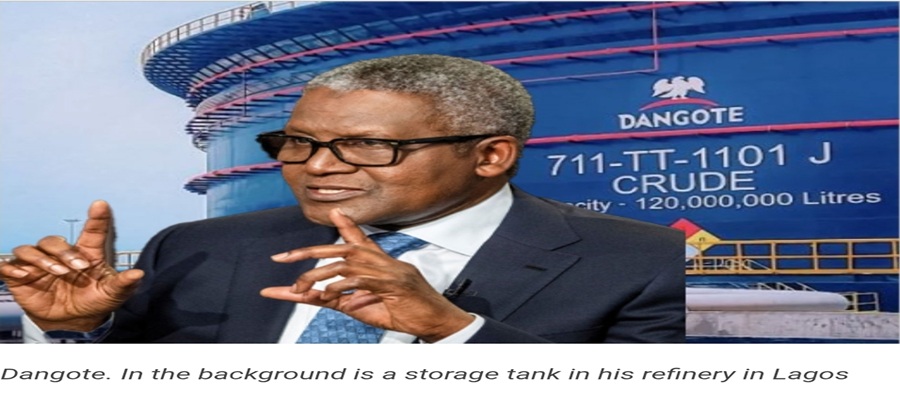
Nigeria’s refining crisis is one of the country’s most enduring economic contradictions. Africa’s largest crude oil producer, strategically located on the Atlantic coast and home to over 200 million people, has for decades depended on imported refined petroleum products. This illogicality has drained foreign exchange, weakened the naira, distorted investment incentives, and hollowed out state institutions. Instead of catalysing industrialisation, Nigeria’s oil wealth became a mechanism for capital flight, rent-seeking, and institutional decay.

Dangote
With the challenges surrounding the refining of crude oil, the establishment of Dangote Refinery signifies an important historic moment. The refinery promises to reduce fuel imports to a bare minimum, sustain foreign exchange growth, ensure there is constant fuel domestically, and strategically position Nigeria as a regional exporter of refined oil products if functioned at full capacity. Dangote Refinery symbolises what private capital, technology, and ambition can achieve in Africa following years of fuel queues, subsidy scandals, and global embarrassment.
Nigerians must have a rethink in the cause of celebration. Nigeria’s refining problem is not simply about capacity; it is about systems. Without addressing the policy failures and institutional weaknesses that made Dangote an exception rather than the rule, the country risks replacing one failure with another, this time cloaked in private-sector success.
For a fact, Nigeria desperately needs the emergence of Dangote refinery, and its success is in the national interest. Hence, this is not an argument against the Dangote Refinery. But history warns that structural failures are not solved by scale alone. Over the year, situations have shown that without competition and strong institutions, concentrated market power, whether public or private, can undermine price stability, energy security, and consumer welfare.
The Long Silence of Refinery Investments
Perhaps the most troubling question in Nigeria’s oil history is why none of the global oil majors like Shell, ExxonMobil, Chevron, Total, or Agip has built a major refinery in Nigeria for over four decades. These companies operated profitably in Nigeria, extracted their crude, and sold refined products back to the country, yet never committed capital to domestic refining.
Over the period, it has been shown that policy incoherence has been the cause, not a matter of technical incapacity, such as price controls, resistant licensing processes, subsidy arrears, frequent regulatory changes, and political interference, which made refining an unattractive investment. Importation, by contrast, offered quick returns, lower political risk, and guaranteed margins, often backed by government subsidies.
Nigeria carelessly designed a system that rather rewarded importers and punished refiners. Dangote did not succeed because the system improved; he succeeded despite it. His refinery exists largely because of the concessions from the government, exceptional financial capacity, political access, and a willingness to absorb risks that institutions should ordinarily mitigate. This raises a deeper concern; when institutions fail, progress becomes dependent on extraordinary individuals rather than predictable systems.
The Tragedy of NNPC Refineries
If private investors stayed away, Nigeria’s state-owned refineries should have filled the gap. Instead, the Port Harcourt, Warri, and Kaduna refineries became monuments to mismanagement. Records have shown that between 2010 and 2025, Nigeria reportedly wasted between $18 billion and $25 billion, over N11 trillion, just for Turn Around Maintenance and rehabilitation. Kaduna Refinery alone is estimated to have consumed over N2.2 trillion in a decade.
Despite these expenditures, output remained negligible. This was not merely a technical failure but a governance one. Contracts were poorly monitored, accountability was absent, and consequences were nonexistent. In functional systems, such outcomes trigger investigations, sanctions, and reforms. In Nigeria, the cycle simply repeated itself, eroding public trust and deepening dependence on imports.
Where Is BUA?
Dangote is not the only Nigerian conglomerate to announce refinery ambitions. In 2020, BUA Group unveiled plans for a 200,000-barrels-per-day refinery. Years later, progress remains unclear, timelines have shifted, and execution appears stalled.
This pattern is revealing. When multiple large investors struggle to translate plans into reality, the issue is not ambition but environment. Refinery projects in Nigeria appear viable only at a massive scale and with extraordinary political leverage. Smaller or mid-sized players are effectively crowded out, not by market forces, but by systemic dysfunction.
Policy Failure and the Singapore Comparison
Nigeria often aspires to emulate Singapore’s refining and petrochemical success. The comparison is instructive. Singapore has no crude oil, yet built one of the world’s most sophisticated refining hubs through consistent policy, investor protection, infrastructure planning, and regulatory certainty.
Nigeria chose a different path: price controls, subsidies, weak contract enforcement, and politically motivated policy reversals. Refineries became tools of patronage rather than productivity. Capital exited, infrastructure decayed, and import dependence deepened. The outcome was predictable.
The Cost of Import Dependence
For years, Nigeria spent billions of dollars annually importing petrol, diesel, and aviation fuel. This placed constant pressure on foreign reserves and the naira. Petrol subsidies alone were estimated at N4-N6 trillion per year, often exceeding national spending on health, education, or infrastructure.
Even after subsidy removal, legacy costs remain: distorted consumption patterns, weakened public finances, and entrenched interests built around importation. These interests did not disappear quietly.
Who Really Benefited from the Subsidy?
Although framed as pro-poor, fuel subsidies disproportionately benefited importers, traders, shipping firms, depot owners, financiers, and politically connected intermediaries. Smuggling across borders meant Nigerians subsidised fuel consumption in neighbouring countries.
Ordinary citizens received marginal relief at the pump but paid far more through inflation, deteriorating infrastructure, and underfunded public services. The subsidy system functioned less as social protection and more as elite redistribution.
The Traders’ Dilemma
Why did major fuel marketers like Oando invest in refineries abroad but not in Nigeria? Again, incentives explain behaviour. Importation offered faster returns, lower capital requirements, and political insulation. Domestic refining demanded long-term investment under unstable rules.
In an irrational system, rational actors optimise accordingly. Importation thrived not because it was efficient, but because policy made it so.
FDI and the Confidence Problem
Sustainable Foreign Direct Investment follows domestic confidence. When local investors, who best understand political and regulatory risks, avoid long-term industrial projects, foreign investors take note. Capital flows to environments with predictable pricing, rule of law, and policy consistency.
Nigeria’s challenge is not attracting speculative capital, but building conditions for patient, productive investment.
Dangote and the Monopoly Question
Dangote Refinery deserves credit. But scale brings power, and power demands oversight. If importers exit and no competing refineries emerge, Dangote could dominate refining, pricing, and supply. Nigeria’s experience with cement, where domestic production rose but prices soared due to limited competition, offers a cautionary tale.
Markets function best with competition. Without it, price manipulation, supply risks, and weakened energy security become real dangers, especially in countries with fragile regulatory institutions.
The Way Forward: Competition, Not Replacement
Nigeria does not need to weaken Dangote; it needs to multiply Dangotes. The goal should be a competitive refining ecosystem, not a replacement of a public monopoly with a private monopoly.
This requires transparent crude allocation, open access to pipelines and storage, fair pricing mechanisms, and strong antitrust enforcement. State refineries must either be professionally concessional or decisively restructured. Stalled projects like BUA’s should be unblocked, and modular refineries should be supported.
The Litmus Test
Nigeria’s refining crisis was decades in the making and cannot be solved by one refinery, however large. Dangote Refinery is a turning point, but only if embedded within systemic reform. Otherwise, Nigeria risks trading one form of dependency for another.
The true test is not whether Nigeria can refine fuel, but whether it can build fair, open, and resilient institutions that serve the public interest. In refining, as in democracy, excessive concentration of power is dangerous. Competition remains the strongest safeguard.
Blaise, a journalist and PR professional, writes from Lagos and can be reached via: [email protected]

Mr. Tim Akano, renowned entrepreneur, technologist, and philanthropist, has been honoured with two Distinguished Alumnus Awards by Obafemi Awolowo University (OAU) and Baptist Day School, Oluponna, in recognition of his outstanding contributions to education, mentorship, technology, innovation, and community development at large.

Both awards were conferred in November 2025, and this mark a significant milestone in Mr. Akano’s lifelong commitment to human capital development and social impact.
Mr. Akano, a 1983 graduate of Obafemi Awolowo University, was recognized by the university for his global impact in entrepreneurship, technology and innovation, as well as his sustained mentorship of students.
In 2023, he awarded 1,000 scholarships that was worth ₦60 million to OAU students for them to study Artificial Intelligence. Since then, he has consistently adopted five students from the Department of International Relations annually under his structured mentorship initiative.
In the same vein, at Baptist Day School, Oluponna, Mr. Akano received a historic honour as the first alumnus ever to be decorated with a Distinguished Alumnus Award since the school was established in the 1930s. During a recent visit to the school, Mr. Akano inspected several infrastructural projects financed by him through the Tim Akano Foundation three years ago.
These include the construction of a borehole, modern toilet facilities for teachers and pupils, and the erection of a perimeter fence and gate around the school which has prevented incessant disturbance of pupils by Fulani Herdsmen who previously engaged in reckless grazing within the school premises, polluted the environment with cow waste, and exposed the children to security risk. All these challenges have since become a thing of the past following the erection of the perimeter fence.
In addition, the School Principal recounted a tragic incident that occurred before the fence was built, when a nine-year-old pupil was kidnapped within the school premises and was never found. According to the Principal, the pupil had gone into a nearby bush to answer the call of nature, unaware that kidnappers were hiding there. Since the completion of the fence three years ago, no case of pupil kidnapping has been recorded in the school.
The principal further disclosed that the school has experienced a geometric increase in enrolment since Mr. Akano’s intervention. In 2025 alone, over 30 new pupils were enrolled. This is a trend that has been consistent over the past three years.
To further enhance safety and learning conditions, the Tim Akano Foundation pledged to provide a grass-cutting machine to maintain the expansive school compound, noting that the pupils are fragile and overgrown vegetation could expose them to snake bites. The Foundation also announced the adoption of 10 best graduating pupils, committing to sponsor their secondary school education.
Furthermore, in a move to motivate and support teachers, the Foundation introduced a monthly cash incentive for all teachers, aimed at complementing the modest government salaries. The November incentive was paid immediately, with assurances that the initiative would continue in perpetuity.
In a symbolic and emotional moment, Mr. Akano presented the pupils with the glazed copy of his Primary School Leaving Certificate, issued by Baptist Day School in 1975. All pupils were invited to hold the certificate as a powerful reminder that “if I can do it, you can do even more.” In appreciation, the school management presented Mr. Akano with the Distinguished Alumnus Award, celebrating his transformative impact on the institution and its pupils.
Similarly, at Obafemi Awolowo University, Mr. Akano was honoured with the Distinguished Alumnus Award for his sustained mentorship of students and his contributions to entrepreneurship development, technology, and innovation within Nigeria and the global community.
The double recognition underscores Mr. Tim Akano’s enduring legacy as a bridge between education, opportunity, and societal transformation.

Access Holdings Shareholders Approved to Raise N40bn Capital Through Private Placement

Jumia Kicks Off December Holiday Sale, Bringing Festive Deals to Shoppers Nationwide

Dangote, Monopoly Power, and Political Economy of Failure

OAU, Baptist Day School Oluponna honour Akano with Distinguished Alumnus Awards

NIMC rolls out Pre-Enrolment Portal for seamless NIN registration

Nigeria Records Highest Weekly Cyberattacks in Africa — Report

Cyber Tsunami Hits Nigeria as Breaches Surge 1,047%, esentry Q3 Report Reveals

Jumia’s Data Shows Nigerians Turning to Digital Retail to Navigate Inflation Pressures

GenAI Adoption Among African workers Outpace Global Peers

How Insecurity is Bleeding Nigeria about $15bn Annually and Destroying Its Economic Future




 General News3 days ago
FirstCap Acts as Joint Issuing House on Veritasi Homes & Properties Plc’s ₦30 Billion Bond Programme

 News3 days ago
PalmPay Launches N400 Million World Travel Carnival, Rewarding Users with Free Global Trips

 Telecom3 days ago
Qualcomm Completes Third Edition of Make in Africa Startup Mentorship Program

 E-Business3 days ago
Nigeria Takes the Lead in the Global WSIS+20 Digital Agenda

 Telecom3 days ago
Mastercard Expands Africa Acceptance Network by 45% in 2025, Driving Digital Economy Growth

 Telecom3 days ago
Fynd Expands Global Footprint, Adds Africa With Surtee Group Partnership

 Telecom3 days ago
AI Meets Governance: Anambra Rolls Out SmartGov for Seamless Citizen Interaction

 E-Business2 days ago
Nigeria Police Arrest Okitipi, Nigerian Allegedly Linked to Microsoft 365 Hack