

General News
Over 50% of African Countries do not have National Privacy Legislation – Jean-Francois


Jean-Francois’s career in ICT spans 20 years mostly in international roles with a focus on public policies and regulatory affairs.
Before joining GSMA as Policy Director for Sub-Saharan Africa in November 2017, Jean-Francois was Regulatory Affairs Director for Africa at Millicom supporting all its Tigo operations across the continentsince 2015.
He shares his thoughts with UgoOnwuaso on the data protection laws in Africa and a whole lot on issues affecting national privacy legislations
You were in Mauritius recently for the Data protection summit; could you tell us the relevance of this summit viz-a-viz absence of data protection law in some African countries?
I think that a fair majority of the African population are concerned that more than 50% of African countries do not have national privacy legislation in place. We are witnessing several governments from around the continent rallying to put such legislation in place with Nigeria, Kenya, Tanzania and Rwanda either amending or seeking to implement the much needed legislation. We foresee a trend over the next 12 months whereby more African governments will follow suit as data protection laws play a vital role in the safety and security of our continent.
This is important because cross border data flow internationally has a direct impact on GDP growth. Furthermore, Africa’s digital future will depend on countries that are taking action in order to avoid any violations in data protection laws that could hinder trade or innovation.
About cross border data flow, what arethe challenges of cross border data transfer?
Cross border data transfer has some inherent challenges including the lack of uniform standards and legislationspertaining to protection. Consent would also need to be sought by the person sending the data so that it can be utilized as intended andthe same levels of data protection applied in the countries in question.
This is wherelegal provisionsthat ensure uniform level of protection to the consumerwhen data is transferred within and outside of the country come into play. Regional frameworks are useful for this, and ECOWAS for example, has a supplementary act on data protectionfor this type of transaction.
Could you explain the role of data protection in facilitating the African Single Digit Market?
Data protection is vital in facilitating the African Single Digital Market.If the objective is to have services addressing a variety of African markets at the same time, one needs to make sure that digital services are able to share data across borders.Cross border data costs are really critical to establish the African single digital market and that is where the importance of data protection comes into play.
Looking at GDPR, how would you assess African data protection landscape in view of implementations of European Union Data Protection Regulation (GDPR)?
I believethat the focus on protection and privacy legislation today in Africa is thanks to the external push that we’ve seen through the enforcement and enactment of GDPR. It’s important for African countries to take what is good from GDPR and also pass a solution that’s robust enough to work intheir realities.
Today what’s interesting with the enforcement and enactment of GDPR is that a lot of African governments realize they need to close the gap; equip themselves with national legislation if they haven’t done so and strike a balance between the burdens put on SMEs to register with personal dataregistrars. This iscompared tothe industryapproach being enforced by theGDPR sothat if a data breach occurs, companies are able to document the level of protection they had in place.
There are also other regional frameworks that are interesting, such as the Asian circular framework which supports cross border privacy rules to enable uniform level of protection in the regions that have privacy legislation in place. There are different models and it’s important for Africa to identify and utilize what is relevant.
Is Africa ripe for continental data protection regulation?
I will defer the question to you as a Nigerian citizen and consumer, are you ready to have your personal data protected? I’m sure your answer will be yes. I imagine the judiciary has embarked on a project to pass a national legislation on data protection. I think it’s in the interest of consumers, businesses, companies, and individuals. Mobile network operators are also keen to have clear rules to abide by.The worst thing that can happen for businesses is when the rules of the game are not clear, orthere is a legal vacuum.So, I think there is a call for the adoption ofgood, smart national privacy legislation and options to make sure that data can flow and fuel the digital economy.
Today there’s a mobile economy in sub-Saharan Africa made up of 440 million unique mobile subscribers. This is larger than $10 billion in terms of economic value last year and its 7.1% of sub-Sahara Africa’s GDP.
The mobile and digital economies haveanopportunity to play a strong role in our region. Internet subscribers have quadrupled in the region since 2010so mobile is really transforming lives in an increasingly connected world.
Looking more specifically at what it means for the data economy, and international data flows have increased the global GDP by 10% and if we consider their contribution to a new global GDP which is expected to be around 2.8 Trillion, it’s a larger share than the global trade in goods.
Coming back to your question about the African single market, its digital dimension has a high probability to groweven quicker than the physical goods component which has been historically low in Africa.
You talked about data privacy, what should we do in order to create data management framework that will protect citizen’s privacy?
On one hand, we havethe legislation and the regulatory framework but another important factor is the actual data management and how companies go about it.
I will go back to the Asian model I was referring to earlier. The cross border privacy rule is a model or approach where companies can commit to each other, even though there is no national legislation on what level of protection they will give to data protection.The data management framework which you’re referring to, can be set up in the private sector in practical ways.
I think it’s also important for governments and we usually insist that the rules of data protection are the same for private businesses and government alike. This is because we see in some legislative projects different sets of obligations applicable to private and public sectors. Itneeds to be a cross cutting, andoverarching approachwith rules applicable to both because I forecast that data management frameworks will have to talk to each other.
What are some of the adverse effects, if Africa does not create a strong data protection landscape?
Absence of a conducive and smart data privacy law implemented ora protectionframework will hinder trade and innovation. Mobile and digital technology presents a lot of opportunity for growth across the African continent. It is providing a platform for innovation, creating new companies, new services and providing employment opportunities.So in order to be able to join the fourth industrial revolution data protection needs to become a reality.Furthermore, we need to be able to leverage the economic power with reference to data growth.Regulating people’s informationwith a patchwork of geographically born privacy laws will only restrict how African companies can innovate and bring better products and services to consumers in the future.
It’s an important time for all countries to take actions to bridge the differences in their privacy regulations if any, and to acknowledge the fact that a regional approach is important in the process to equip themselves with national legislation. So embracing the existing regional privacy framework is very important and working towards a Pan African approach to data privacy is critical to protecting the rights of individuals and unlocking their economic potential.
Where do you see Africa in the next few years with regards to data privacy policies?
I wish to see all African countries havingtheir data privacylegislationsenforcedand I’m confident that we will see in the very near future, a significant number of African countries passing privacy legislations.
There is a need to update data frameworks, as some of them have remained in use for over 10 years.
Regional economic communities will also have an opportunity to review those frameworks and provide a new template for the remaining countries to adopt national legislation.
There is anongoing discussion around which level of data localization should be implemented and the value of cross border data flows. I think it’s easier for neighboring countries to recognize the value of those cross border data flows, so ECOWAS started it and we hope that in otherAfrican countries where no regional framework has been adopted yet, one will be put into place soon.
The question has also been raised as to the slow pace of signatories joining the African Union core convention on cyber security and professional data protection.Whether International public law instruments are the right solution because of the heavy processfor adoption, what opportunities exist for more modern legislations orfast law approaches to supplement at aPan- African level and what can be done to speed up the process?The right answers to these questions canbe explored by the network of African data protection authorities and these answers couldshape discussions moving forward.
In Nigeria, there is a litany of information silos here and there, they not harmonized. How can all of these data sets be harmonized and protected?
I think you are referring to data collected by multiple agencies. The general challenge in data protection and privacy is that when you interconnect different data sets, the rule that’s applicable to one data set is sometimes not sufficient to guarantee the interconnection of a variety of data sets. Therefore, for data sets to be combined, it’s important to review the situation for the data subject – the owners of the personal data – and it’s important that they are aware,so that there will be a more general approach to the pursuit. This is why those principles need to be enshrined in national legislation.


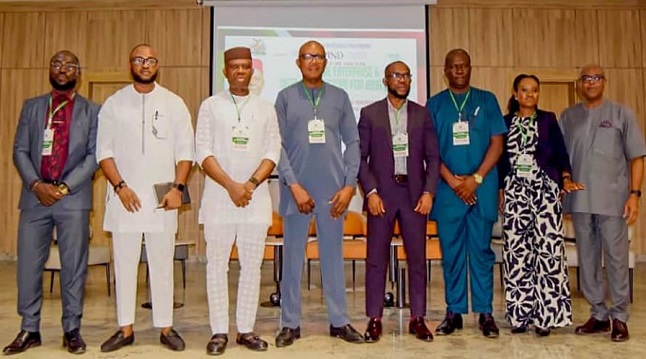
In alignment with President Bola Ahmed Tinubu’s priority areas of economic reform, digital innovation, and improved governance, the National Information Technology Development Agency (NITDA) has reiterated its commitment to supporting sub-national governments in building integrated, data-driven systems that enhance service delivery and drive sustainable growth.

This commitment was reinforced at the Future Enterprise & Data Architecture of Abia State workshop themed “One Citizen, One Identity: Unlocking Data-Driven Governance.” The high-level engagement brought together policymakers, technocrats, and development partners to chart a pathway toward a unified digital public sector anchored on interoperability and citizen-centric governance.
The workshop, organised by the state’s Ministry of Budget and Planning and declared open by Governor Alex Otti, who was represented by the Deputy Governor, Engr Ikechukwu Emetu, focused on strengthening interoperability among Ministries, Departments, and Agencies (MDAs) to enhance revenue generation and improve service delivery across the state.
Speaking during a panel session titled “Breaking Silos, Building One Government,” the Director General of NITDA, Kashifu Inuwa CCIE, who was represented by the Agency’s Director of Stakeholder Management and Partnership, Dr Aristotle Onumo, emphasised that collaboration remains the cornerstone of successful digital transformation.
“One thing that is very clear is partnership and collaboration. If you want to take advantage of collective intelligence, then partnership is the key. If you want to succeed in building a unified government system, collaboration is the way to go,” he stated.
He stressed that digital transformation is not merely about deploying technology but about transforming people and culture. According to him, resistance to change and entrenched institutional silos can undermine even the most sophisticated technological frameworks if mindset shifts are not prioritised.
“Digital transformation is as much about people as it is about process and technology. If culture resists change, it can undermine strategy at every level. We must move from control to collaboration, and from isolation to integration,” he added.
Highlighting NITDA’s strategic direction, the DG noted that the Agency’s action plan prioritises digital literacy as a foundational pillar for national development. He disclosed that NITDA is targeting 70 per cent digital literacy nationwide through structured interventions, including training 30 million Nigerians across formal and informal sectors using digital learning platforms deployed through community and institutional partnerships.
He further revealed that digital education is being integrated into school curricula at primary, secondary, and tertiary levels, while civil servants across the federal public service are undergoing digital capacity development programmes to enhance institutional efficiency and readiness for interoperable governance systems.
On interoperability, Inuwa described it as “not optional but a necessity” for achieving data integrity, efficiency, and innovation in governance. He explained that NITDA is developing a national interoperability framework and advancing Enterprise Architecture (EA) initiatives across government institutions to ensure seamless data exchange.
“When we talk about interoperability, we mean that data generated in one agency should be accessible and usable by another in a consistent and secure format, without contradiction or confusion. That is how you build one government, not multiple disconnected systems,” he explained.
He added that a robust interoperability framework would not only improve internal government efficiency but also create a platform for innovation, enabling startups and young innovators to build solutions on structured public datasets.
While commending the state’s leadership for its vision and commission, he said, “If we achieve even 80 per cent of what has been presented here, Abia will not only lead among states, but it will also become a national reference point for digital innovation.”
The workshop concluded with a renewed call for stronger federal–state collaboration, policy alignment, and sustained investment in digital capacity to ensure that the vision of “One Citizen, One Identity” translates into tangible socio-economic impact.
General News
Zinox Technologies and TD Africa Forge Strategic Partnership to Revolutionize African Tech Ecosystem
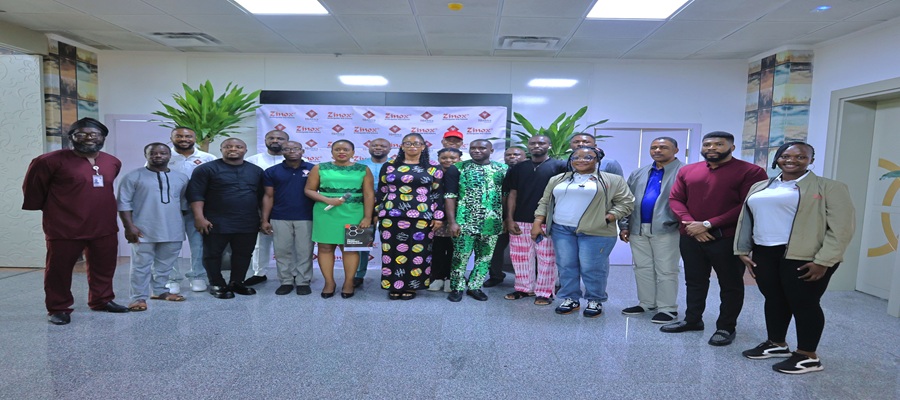
In a landmark development set to reshape Africa’s technology landscape, Zinox Technologies, the continent’s leading manufacturer of trusted technology solutions, and TD Africa, Africa’s largest technology and lifestyle distribution powerhouse, formalized a strategic partnership on Friday at an exclusive press conference attended by industry journalists, key stakeholders, and partners from both organizations.

Zinox Technologies and TD Africa
The event, held to officially announce the collaboration and address stakeholder concerns, marks a pivotal moment in the evolution of indigenous African technology, signalling a new era of continental self-reliance and technological excellence.
The partnership brings together two industry titans whose complementary strengths promise to deliver unprecedented value to the African market.
Zinox Technologies has established itself as Sub-Saharan Africa’s premier indigenous technology manufacturer, producing internationally certified devices that rival global brands while addressing Africa’s unique technological needs.
TD Africa, with its extensive distribution network spanning 43 nations in the continent and expanding, has become the preferred gateway for leading global technology brands including HP, Microsoft, Dell, and Cisco.
This alliance represents more than a business transaction; it harmonizes Zinox’s precision-engineered hardware with TD’s formidable distribution infrastructure to bridge the digital divide, deliver rugged, energy-efficient innovation to the very heart of Africa’s schools, industries, and homes.
Speaking at the event, Chioma Chimere, Coordinating Managing Director of TD Africa, articulated the strategic rationale behind the partnership with evident conviction. “Today represents a moment where Africa meets Africa,” she declared, emphasizing Zinox’s distinction as an indigenous brand that truly understands and produces to meet the unique needs of the continent.
Chimere highlighted Zinox’s comprehensive product range and their remarkable efficiency, noting that the company’s Made-for-Nigeria approach addresses challenges that foreign manufacturers often overlook.
“We are proud to partner with a brand that doesn’t just import solutions but engineers them specifically for our reality,” she added, expressing gratitude to all stakeholders for participating in this historic collaboration.
The event’s opening address set the tone for what promises to be a transformative partnership. The gathering provided partners and the public with comprehensive insights into how this alliance will enhance market access, product availability, and technological solutions across the continent.
Chioma Nwoke, Executive Director, Human Resources Head at Zinox Technologies, offered a compelling vision of the partnership’s broader implications for African technological sovereignty.
She articulated Zinox’s founding vision, to create dependable standards of technology, and traced the company’s evolution from its inception to its current position as a leader in indigenous manufacturing.
“This partnership sends a powerful signal to the market that African technology can compete, innovate, and lead,” Nwoke emphasized.
She stressed that this collaboration transcends mere commercial transactions, encompassing digital education, enterprise development, and nation-building through technology.
“Zinox will continue manufacturing global-standard products, and Africa will be sustained by partnerships like this that demonstrate our capability and commitment to technological independence,” she affirmed.
Moses Edoh, Head of Research and Development at Zinox Technologies, provided technical insights into the company’s diverse product portfolio and the philosophy driving their design approach.
He explained how Zinox, iTEC, and iPower brands compete successfully with foreign manufacturers by creating products tailored to specific customer needs.
“We were the first to produce and introduce hybrid inverters in Nigeria,” Edoh noted, “and every product in our lineup is designed to address the unique challenges Nigerians face daily.”
The Zinox product ecosystem showcases remarkable breadth and innovation. Their technology lineup features cutting-edge All-in-One Smart Boards, PCs with various specifications, tablets, desktops, monitors, and Point-of-Sale systems.
The iPower renewable energy division offers an impressive array of solutions including the Megaforce 125W, GridPro 50KW, Bijimi 30KW, Premium 11KW, Infiniti, Plus, iPower X, iPower Ascend All-in-One, Ascend, Matrix All-in-One, 3KG MPPT Solar Charge Controller, 665 Watts Bifacial Topcon Panel, various monocrystalline panels ranging from 320-550 Watts, multiple battery technologies (lithium, tubular, gel), solar street lights, and portable power banks.
The iTEC brand delivers power generating sets with 100% copper winding, while their consumer electronics range includes AI QLED Smart TVs from 33″ to 95″, microwave ovens, and rechargeable fans.
The testimonials from existing partners underscored the quality and durability of Zinox products. Engineer Anthony Anigbogu, Chief Executive Officer of Orbit Business shared his remarkable experience with an iPower hybrid inverter that served him faithfully for twelve years, only requiring replacement when he needed higher capacity. Such testimonials validate Zinox’s commitment to manufacturing products built for longevity.
Partners called for increased awareness campaigns, noting that many Nigerians continue relying on foreign brands despite having access to Nigerian-made solutions tailored to their unique needs. They pledged to actively promote these indigenous products within their networks.
With TD Africa’s expansive distribution network now channelling Zinox’s comprehensive product range, customers across the continent gain expanded access to world-class, Africa-optimized technology solutions.
Partners of both organizations stand to benefit enormously from this synergy, gaining access to innovative offerings including JOI (Just Own It) for individual consumers, TaaS (Technology as a Service) for corporate clients, and PaS (Product as a Service), among other solutions designed to make technology more accessible and affordable.
For organizations and individuals interested in exploring partnership opportunities or learning more about these innovative solutions, you can send an email to [email protected], with comprehensive information also available on their website.
This partnership represents not just a business alliance but a declaration of African technological capability, a testament that the continent can manufacture, distribute, and sustain world-class technology solutions designed by Africans, for Africans.


One a quiet Wednesday, February 22, 1956, in Ubomiri, Mbaitoli, Imo State, the family of Chief and Lolo Ebenezer Ekeh leaped for joy at the birth of Leonard Stanley Nnamdi Ekeh- their second son.

Leonard Stanley Nnamdi Ekeh
His birth was both cosmic, and disruptive as his journey down this 70 years on earth has proven.
Leonard Stanley Nnamdi Ekeh, popularly know as Leo Stan Ekeh or LSE is human by birth but profound, rare and has higher consciousness.
Imbued with deep intuition, intense creativity, and compassionate nature, Leo Stan possesses critical thinking ability.
He has relentless drive to succeed across multiple facets of life. This is a self-made construct driven by his deep spiritual and purposeful living, rather than just mere survival.
Despite the recurring and abrupt reversal of government policies, which leave companies including his hemorrhaging, Leo Stan has remained committed and actively participate in the development and nation-building of Nigeria.
Am one of the lucky people to have known him up close and personal for nearly 30 years.
He has endured lots of back biting and campaigns of calumny from competitors and even betrayals from least expected people.
But his tenacity makes him stand firm on his beliefs regardless of feelings, or circumstances.
He has stumbled in businesses, failed in some ventures; but he always get right up. At one point, he nearly lost his head selling international commodities.
LSE takes every loss with equanimity as a dogged fighter.
A serial entrepreneur and with eyes for great minds, Leo Stan does not just walk through life; he leaves a trail of light, lifting everyone around him with kindness and wisdom. And there are testimonials.
For me, he is a pillar of strength and a beacon of hope. My benefactor.
He is also a benefactor to many. He has a way of making associates feel vital, loved, and valued.
Today is his Platinum Birthday but his roads have not always been paved with gold.
His early life was as ordinary as it can be, LSE attended Holy Ghost College, Owerri for his secondary education.
During his early years, he wanted to own the biggest transport company in Nigeria.
He later went to India for his university education, where he received a Bachelor of Science degree in Economics from Punjab University.
Leo Stan believes that studying in India was a great turning point in his life because he found the economy of India a realistic economy”.
He later also earned an MSc in Risk Management from the University of Nottingham.
At 70, he attained his height by trust in God, determination and CAN DO attitude.
Today, his business opinions and advisory are welcome around the world.
Leo Stan once told me “I saw myself from the beginning even when my parents were alive as an orphan. It drives me.”
He has three brothers and two sisters, His mother was a dietitian, and his father was a nurse
“I come from a lineage of people who served God dedicatedly. I am a miracle child and I remember my mother had always predicted that I would be great. I have siblings but I live my life as if I am the only child of my parents” he said
He believes that technology makes life more exciting and helps improve the lives of people around Nigeria and indeed the world.
His solid prints in the business world is well documented. He has his hands in his hands in several businesses including ICT, e-commerce, broadcasting, oil and gas, media publishing and real estate.
Leo Stan is a man of many firsts: he pioneered a new world of digital economy at a time the country was deeply analogue both in the workplace and in schools.
The Nigerian media industry, from advertising to newspapers, owes him much gratitude for changing their operational processes and methodologies from mundane, medieval analogue to the robust and elegant digital platform.
Within 30 years, he has transformed a start-up that sprouted from a make-shift apartment that also doubled as his home into a digital conglomerate with incursions into oil and gas, entertainment and property.
Leo Stan started Zinox Technologies Limited in 2001 to manufacture computers.
He ensured that at launch Zinox Computers already had the WHQL certification, the first in sub-Saharan Africa, consolidated 5 years later with the attainment of the NIS ISO 2000: 9001 QMS Certification.
In October 2013, the company announced the production of its computer tablet line named Zipad
Task Systems, Technology Distributions Limited, Konga (Africa’s foremost truly composite e-commerce outpost combining offline-online mix in service delivery), Konga Radio, and TD Mobile, to name a few, complete the ensemble of businesses in his thriving conglomerate.
In all his companies, there is a growth pathway for every employee.
He deliberately creates a system that rewards every hardworking and dedicated employee.
From drivers sponsored to universities and returning to the conglomerate as degree holders to persons who joined the organisation as janitors working their way up the corporate ladder, he has brought his humanity to bear on people around him.
Making some lowly staff home-owners and sponsoring indigent students to universities at home and abroad comes to him as a routine.
Just a few days ago, ahead of his 70th birthday, he offered University scholarships to additional 1,000 Nigerian indigent wizkids to study Computer Science in Federal Universities. He is committing about N10 billion to the scholarship scheme.
This is so the country’s private and public sectors have a new generation of tech wizkids to support the economy’s growth.
Recall that his group has trained and retrained over 3000 Nigerians and donated tech centres to over 25 institutions nationwide just to mention a few.
The former alter boy and chorister in his local community Catholic Church at Ubomiri, now a multi-billionaire, has stayed humble.
He draws a distinct line between capitalism and welfarism.
Leo Stan is great man, a leader with unparalleled integrity and a heart of gold.
He has earned over 6o international and local awards over many years of incisive entrepreneurship, was equally singled out and honoured by former President Olusegun Obasanjo on the occasion of Nigeria’s Independence Anniversary on October 1, 2001 with an ICON OF HOPE award as a pride to modern Nigeria and as a model for Nigerian youths.
Again, President Obasanjo honoured him with another national award – the Order of the Federal Republic (OFR) in 2003.
A Fellow of the Nigeria Computer Society, the umbrella body of all computer associations in Nigeria, he was also awarded the pioneer ICT Personality of the Year by this professional body.
In November 2019, Ekeh was honoured by President Muhammadu Buhari with the National Productivity Order of Merit award for his sustained leadership in the area of Information and Communications Technology (ICT).
With over four Doctorate Degrees (Honorary) and fifteen fellowships from recognized institutions and as a former global advisor to Microsoft, as well as Forbes Best of Africa Leading Tech Icon Award his outstanding entrepreneurship.
Leo Stan is Ochiririozuo Ubomiri, Ebekuo Dike, Ideato and Iyi of Mbaitoli

NITDA, Abia Partner on Enterprise Architecture Reform

Interswitch Partners Abia to Digitise Public Hospitals

Cyber Immunity Emerges as Shield for Nigerians Amid Rising Scams

WIEG 2026 Summit Shifts to April 22-23 for Maximum Impact

$214Bn Missing, Institutions Silent: Is Accountability Dead in Nigeria?
Nigeria’s 9 Top FinTech Firms Valued at $10.6Bn in January 2026

Kaspersky Launches OT Calculator to Align Cybersecurity Investments with Business Goals

CBN Upgrades Licences of Opay, Moniepoint, Kuda, Palmpay, Paga to National Status

NITDA, NBC Explore Strategic Collaboration on Digital Transformation, Media Regulation

Accidental Billionaire Opts for Jail Instead of Returning Money Credited Him by Mistake




 Telecom3 days ago
Group Condemns Gabon’s Social Media Shutdown Amid Protests

 Telecom3 days ago
IXPN Positions as the Regional Internet Exchange Hub for West Africa

 General News3 days ago
How JustMarkets Is Empowering African Traders with Global Market Access

 E-Business3 days ago
Mutual Benefits Assurance Settles ₦5.9bn Claims in January 2026

 Telecom3 days ago
Menxtt NG Emerges as Nigeria’s Virtual IT Hub for Premium Devices, Solutions

 Broadcasting3 days ago
Pheelz Shares His Journey on Glo-Sponsored African Voices

 E-Business3 days ago
NITDA DG Reaffirms FG Commitment to Responsible and Inclusive AI

 News3 days ago
AI-Driven Memory Chip Fuels Global Phone Price Surge