

Telecom
IWD: Paradigm Initiative calls for Digital Gender Equality for Women

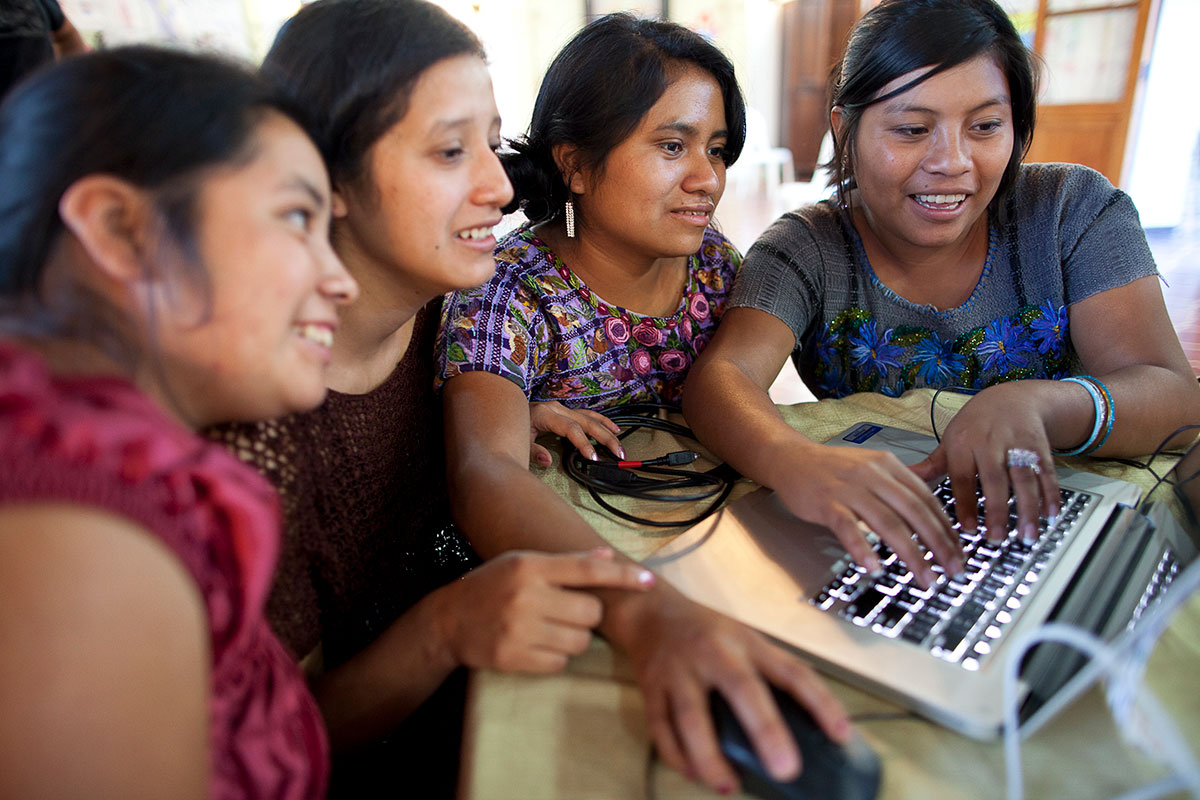
Paradigm Initiative (PIN), a leading Pan African organisation advocating for digital rights and inclusion in the region, has called on African Governments to urgently initiate reforms aimed at bridging the digital gender divide currently being experienced on the continent.

PIN made the call as it joined countries across the world in commemorating International Women’s Day under the theme, DigitALL: Innovation and technology for gender equality. A common form of equality breach is the widened access gap to digital technologies, termed the digital divide and, more emphatically, digital exclusion.
“Today, we bemoan the extent of the digital divide across Africa and call for urgent reforms. We note with concern the online barriers that violently expel women from participating meaningfully on the Internet and call for policies and practices that enable women to connect and stay on board, without digital discrimination.”
Paradigm Initiative, which every year publishes Londa, a report highlighting the state of digital rights and inclusion in Africa, said women in their diverse capacities, including women journalists, politicians and celebrities are subjected to various attacks manifesting in the form of cyber harassment, non-consensual sharing of intimate images and trolling, pushing many from the Internet.
The 2021 edition of the report elaborates on the realities of the rampant exclusion of women from online platforms due to online gender-based violence and poor access to digital technologies. Without digital security, women cannot engage meaningfully online.
Ms. Thobekile Matimbe, the organisation’s Senior Manager, Partnerships and Engagements was categorical that for women to be safe online, a dual approach is imperative. “We need legislative frameworks that create a safe space for women online and hold perpetrators accountable on one hand and security sector practices that acknowledge the problem and hold perpetrators to account,” she said.
In addition to the above, government policies and budgeting, as highlighted in Londa 2021, should reflect a conscious effort to address digital inequalities as this ensures women have better access to devices such as smartphones and affordable data to be online.
PIN researches women’s rights online, including access issues and online gender-based violence, to provide facts and figures in an otherwise under-reported area. It also provides litigation support and guidance to help navigate the legal system where rights have been violated and reported on the organisation’s digital reporting platform, ripoti.africa.
Paradigm Initiative, which believes that access to digital technologies and the internet are fundamental enabling rights, is committed to working with partners in Africa to bridge the digital divide and empower women.
According to the International Telecommunication Union (ITU), in 2022, 62% of men were using the Internet compared with 57% of women globally, while in the least developed countries, 19 % of women used the Internet in 2020, compared with 86 % in developed countries in 2019.
Gaps in Internet access, digital skills and participation in science, technology, engineering and maths (STEM) fields were cited by ITU as some categories of the global digital gender divide. This divide is particularly stark in rural areas, where women often have limited access to education and economic opportunities.
The organisation further urged African governments to adhere to Resolution 522 on the Protection of Women Against Digital Violence in Africa passed by the African Commission on Human and Peoples’ Rights at the 72nd Ordinary Session in 2022, which, among other things:
- Calls on the states to review and adopt legislation that counteracts all forms of violence, including online gender-based violence
- Protect women from online gender-based violence and conduct research on digital violence against women
- Close the digital gender divide by empowering women with digital technology education and include adequate budget allocations within national budgets that address digital inequalities.


French media group Canal+ has announced a €100 million turnaround plan to revive growth at MultiChoice, Africa’s largest pay-TV operator, after the DStv owner lost hundreds of thousands of subscribers and suffered a decline in revenue in 2025.

MultiChoice
The move follows Canal+’s full takeover of the South Africa-based broadcaster, which has been squeezed by weaker household purchasing power across Africa and intensifying competition from global streaming platforms.
According to Canal+’s latest financial disclosures, MultiChoice ended 2025 with 14.4 million subscribers, down from 14.9 million a year earlier, while revenue fell 6 per cent to €2.4 billion.
Adjusted earnings before interest and tax dropped 14 per cent to €159 million, prompting Canal+ to describe 2025 as “another challenging year” marked by falling subscriber numbers and an unsustainably high cost base.
The group cited currency depreciation in key markets such as Nigeria and persistent electricity shortages as major headwinds making it harder for households to maintain pay-TV subscriptions.
Canal+ also pointed to problems at Showmax, MultiChoice’s streaming service, describing one of its key contracts as an “expensive failure” and confirming that the arrangement is being shut down as part of a wider refocus on the core pay-TV business.
Under the new “boost plan,” which will roll out from 2026, Canal+ aims to restart subscriber growth and improve profitability across MultiChoice’s footprint by investing in content, pricing, distribution and sales.
On content, the French group says it plans to assemble the “best content on the African continent” by blending premium international programmes with more locally produced films, series and sports tailored to African audiences.
It will also simplify subscription packages and adjust pricing structures to make DStv and related offerings easier for customers to understand and afford.
To expand reach, Canal+ intends to subsidise hardware such as decoders and satellite dishes, lowering entry costs for new users.
In addition, the company will recruit more than 1,000 sales staff across African markets as it shifts MultiChoice towards a more aggressive, “sales-focused” model designed to win back and attract subscribers.
Alongside this investment push, Canal+ is embarking on significant cost-cutting measures, including a voluntary severance plan for some MultiChoice support staff and a restructuring of Irdeto, its technology and cybersecurity subsidiary.
Canal+ now expects to generate over €250 million in synergies by 2026, up from an earlier €150 million estimate, driven by the shutdown of loss-making Showmax contracts, operational restructuring at MultiChoice and rationalisation of company-owned properties.
The cost of delivering these savings is projected at between €70 million and €100 million. Despite the planned reforms, the group still anticipates a slight further decline in MultiChoice’s subscriber base in 2026, though the pace of losses is expected to slow, with adjusted earnings before interest and tax forecast to rise modestly to about €170 million as cost savings begin to offset weaker revenue and higher expenses.
Canal+ gained effective control of MultiChoice on 20 September 2025 after acquiring a majority stake, later buying out remaining shareholders and delisting the company from the Johannesburg Stock Exchange in December 2025.
The French media group has said it intends to complete a secondary listing on the JSE before June 2026 to reinforce its presence in Africa’s fast-growing media and entertainment market.
The €100 million boost plan underlines the mounting pressure on traditional pay-TV operators across the continent as currency weakness, rising living costs and rapid expansion of streaming services force a strategic rethink of legacy television business models.


Starting February 2027, Nigerian Communications Commission (NCC), has mandated mobile network operators and other communications service providers to notify it within four hours of detecting any cyberattack.

This is aimed at strengthening the protection of telecom infrastructure and subscriber data.
The directive is contained in the Cyber Resilience Framework for the Nigerian Communications Sector (CRF-NCS) released by the NCC last month.
According to the NCC, the rule will take effect in February 2027, giving operators a year to put in place the necessary monitoring and reporting systems.
Under the framework, telecommunications companies must alert the regulator within four hours of detecting a cyber incident and continue to provide updates every four hours until the situation is contained.
Operators are also required to submit a confirmation report within 24 hours through a dedicated reporting portal.
The commission said the framework is designed to strengthen cybersecurity oversight in a sector that handles vast volumes of sensitive consumer and national infrastructure data.
Cyber threats targeting telecom networks can lead to service disruptions, data breaches affecting subscriber information, malware infections and other attacks capable of crippling communications systems, according to the regulator.
By introducing faster reporting timelines, the commission said it hopes to improve sector-wide situational awareness and ensure quicker response to threats before they escalate into major outages or data compromises.
The framework also requires telecommunications companies to establish dedicated Security Operations Centres (SOC) to monitor networks continuously for suspicious activity and cyber threats.
These centres are expected to detect and report malicious activities promptly while coordinating responses internally.
In addition, each operator must designate a cybersecurity lead responsible for working with the commission’s Computer Security Incident Response Team (CSIRT) to share intelligence and coordinate responses to incidents affecting the communications ecosystem.
The NCC said the new framework forms part of broader efforts to strengthen resilience across Nigeria’s communications infrastructure and promote a unified cybersecurity posture in the sector.
The measures come amid growing global and domestic concern over data breaches and cyber intrusions targeting companies that manage large volumes of digital information.
Telecommunications companies, which serve as gateways for internet traffic, mobile banking, messaging and other digital services, are increasingly seen as critical infrastructure vulnerable to cyber threats.
Nigeria’s telecom regulator has in recent years tightened rules around data protection and network security as the country’s digital economy expands.

A United States federal court in the Southern District of New York has comprehensively dismissed all claims against Binance, the world’s largest cryptocurrency exchange by registered users, in a high-profile lawsuit under the Anti-Terrorism Act (ATA).

Binance
The 62-page decision represents a decisive legal victory, rejecting allegations from 535 plaintiffs who claimed the platform provided material support linked to 64 terrorist attacks.
The court meticulously examined and dismissed every central allegation, ruling that plaintiffs failed to establish Binance assisted terrorists, associated itself with the attacks, participated in or sought to advance them, or engaged in any conspiracy with terrorist organisations.
This full dismissal underscores the absence of evidence supporting the claims, affirming Binance’s long-standing position that the suit was meritless.
Binance General Counsel Eleanor Hughes described the outcome as “a complete vindication of all false allegations.” She emphasised: “The court has unambiguously rejected the false and damaging narrative that Binance assisted terrorists.
“We have always maintained these claims were without merit, and today’s ruling confirms that. We will continue to defend ourselves aggressively against any litigation or reporting that misrepresents who we are and how we operate.”
While the ruling grants plaintiffs 60 days to file an amended complaint in light of a recent appellate decision, Binance expressed strong confidence that no revisions can remedy the “fundamental deficiencies” identified by the court. The exchange views this as a thorough examination and rejection of the underlying assertions.
Binance reaffirmed its commitment to industry-leading compliance infrastructure, proactive regulatory engagement, and robust legal governance worldwide.
The company stressed that its operations do not support, facilitate, or enable terrorism in any form, and it plans to maintain constructive dialogue with regulators while pursuing vigorous defences against misleading narratives.
This development bolsters Binance’s position amid ongoing global scrutiny of crypto platforms, highlighting its operational integrity in a sector often targeted by unsubstantiated claims.

How Africa Can Turn the AI Wave into Inclusive Growth

CBN Directs Banks to Activate Anti-Money Laundering Systems

FG to Connect Schools Nationwide to Internet – Education Minister

FG Moves to Strengthen Children’s Online Safety

WhatsApp Launches Parent-managed Accounts for Pre-teens Amid Safety Concerns

Dr. Cairo Ojougboh Foundation Bolsters Nigeria’s Education Drive with ₦2.7m Student Support

Kaspersky Brings more Transparency to Threat Detection with New Hunt Hub

Kaspersky Discovers New Phishing Campaign Exploiting Google Tasks Notifications to Steal Corporate Credentials

esentry 2025 Report Shows Healthcare, Financial Services and Telecoms as Staging Grounds for Increased Cyberattacks in Africa

AfDB, UNDP Launch $10Bn AI Initiative for Africa




 General News2 days ago
Zedvance Hits ₦96bn Lending Milestone, Eyes ₦250bn Target in 2026

 Broadcasting2 days ago
Madonna University Taps Tech Guru Adote for Strategic Board Role

 News2 days ago
Another Oil Boom: Will Nigeria’s Government Turn Windfall into Growth or Squander it?

 Telecom2 days ago
Starlink Rolls Out V2 Satellites for Direct 5G Connectivity to Smartphones, Eyes Nigeria’s Rural Gaps

 Telecom2 days ago
Education Priorities to Help Young People Shape Africa’s Future

 E-Financial2 days ago
First Asset Management Secures Ratings Upgrade

 Telecom1 day ago
US Court Dismisses All Claims Against Binance in Major Anti-Terrorism Lawsuit Victory

 Broadcasting2 days ago
Healthcare Under Attack: Why Cybersecurity is Now Critical Care