

Telecom
Patronage, Multiple Taxation Hobble Broadband Network Expansion


Lack of state governments’ patronage of broadband services to enhance their operations of governance as well as multiple taxes have been identified as major obstacles to broadband expansion drive of telecommunications operators.
Myke Ofili, general manager, Coloplus Nigeria Limited, explained that expansion of broadband network of operators does not require building of physical infrastructure such as towers but expansion of existing network through laying of fibre and upgrade to deliver broadband services.
He noted that most state government are reluctant in buying into operators broadband services required to enhance online service delivery of governance.
“State governments can approach operators to lay fibre around their state which will enhance broadband service for their citizens to access government services online. Forensic audits are made possible with ubiquitous broadband service in a state among other services. These are in addition to right of way issues and multiple taxes that have made business environment in most states non conducive for operators to invest their money in expansion,” he added.
He commended operators over their recent efforts in extending coverage to rural areas through the support of Universal Service Provision Fund (USPF) of federal government.
“There has been a lot of drive towards expanding coverage to underserved areas with the assistance from government. They are doing this to help government because providing telecommunications services to rural areas is not commercially viable,” he said.
Also responding, Engr. Ike Nnamani, first vice president, Association of Telecommunications Companies of Nigeria (ATCON) identified funding as a challenge to operators’ quest to expand their network for broadband services.
“Source of funding for building of telecommunications infrastructure has been a challenge for operators as Nigerian banks are not willing to give operators long term long loan and foreign investors are sceptical on investing in the country because of bad image of the country. It is against this backdrop that MTN Nigeria and Airtel are listing in Nigeria Stock Exchange to get fund for network expansion among others,” he said.
Engr. Samuel Adeleke, managing director, Steineng Ltd, said: “As an operator in the market, I’m unwilling to invest in the telecom space because of the present climate. Mobile operators are behaving as if the market is saturated; they are looking at bulk of the population in the urban areas that have been covered and turning away from potential 80% of rural dwellers that are yet to be penetrated.
“There is no urge for them to invest in providing coverage to 80% rural dwellers that are unpenetrated like they are investing in providing services to the financial sector, instead operators are busy upgrading their networks from 3G to 4G not making available data for the technology,” he said.


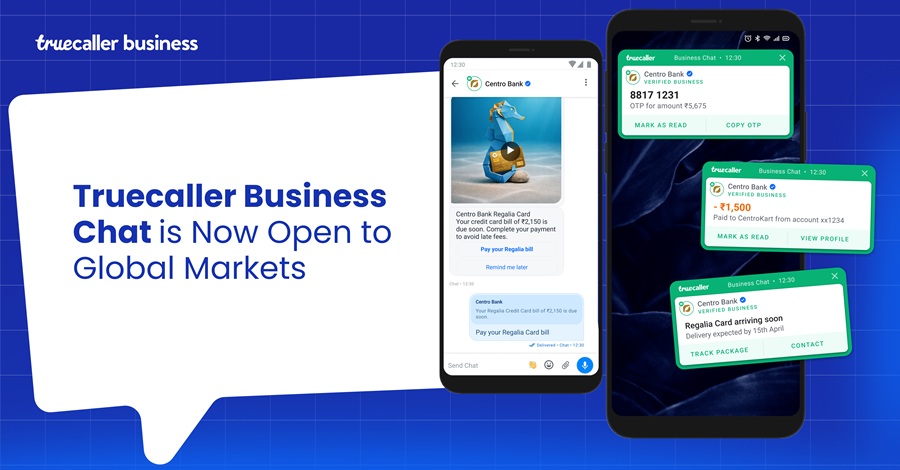
Truecaller, the leading global communications platform, today announced the expansion of its Business Chat platform, making it accessible to global channel partners and enterprise solution providers. By “opening up” market access to its platform, Truecaller is empowering partners to transition their enterprise clients from legacy, low-trust SMS to a verified, smart, media-rich, and conversational communication experience.

Truecaller
Through this partner-led expansion, Truecaller empowers businesses to reclaim customer attention and establish immediate trust and credibility.
“The definition of success for modern enterprises has fundamentally evolved. It’s no longer just about delivery – it’s about earning attention, establishing credibility, and driving meaningful conversion,” said Priyam Bose, Global Head, GTM at Truecaller.
“By opening up market access to our global partners, we’ve created a powerful gateway for brands to engage with over 500 million active users where they already interact daily through communication that is contextual, trusted, free from clutter, and designed to initiate actions. For existing customers, the outreach opportunity extends to an additional high-impact channel, strengthening the overall customer experience journey.”
Truecaller Business Chat enables a clutter-free, high-trust conversational experience between businesses and consumers. The Business Chat platform equips partners with actionable insights, including real-time data and rich engagement metrics. This facilitates a more sophisticated, data-driven communication strategy that adapts at every stage of the customer journey.
Partners, including Gupshup and OneXtel, are already live in India along with Globe Teleservices, Cloudcom, and Sling Africa in other global markets, rapidly scaling the product in their respective regions. Global partners can now leverage Truecaller’s massive footprint to offer their clients a trustworthy engagement channel in an increasingly crowded digital world.

MTN Nigeria has opened applications for the fifth edition of its Media Innovation Programme (MIP), expanding the cohort to 25 fellows from 20 in previous years to mark the company’s 25th anniversary and bolster the media sector.

MTN Nigeria
The initiative highlights MTN Nigeria’s 25-year milestone in connecting Nigerians, paralleling investment in storytellers who amplify these connections across society and foster a vibrant media industry amid digital evolution.
“The Media Innovation Programme reflects our commitment to supporting the growth and evolution of the media industry by providing access to knowledge, exposure, and meaningful engagement with the realities shaping it,” said Tobe Okigbo, Chief Corporate Services and Sustainability Officer at MTN Nigeria.
“The expansion to 25 fellows this year is a deliberate reflection of our 25-year milestone, and a reminder that as the media industry continues to evolve, there is a continued need to invest in the people and ideas that will shape its future.”
Applications close April 22, 2026; aspiring fellows can apply at mtnmip.smc.edu.ng.

Meta Superintelligence Labs (MSL) unveiled Muse Spark Tuesday, its first large language model in a new Muse series, designed from scratch to deliver “personal superintelligence”—an AI assistant tailored to users’ real-world needs like complex reasoning in science, math and health.

Meta AI
A New Model: Muse Spark
Over the last nine months, Meta Superintelligence Labs rebuilt our AI stack from the ground up, moving faster than any development cycle we have run before. Muse Spark is the first model in our new Muse series — a deliberate and scientific approach to model scaling where each generation validates and builds on the last before we go bigger. This initial model is small and fast by design, yet capable enough to reason through complex questions in science, math, and health. It is a powerful foundation, and the next generation is already in development. Muse Spark now powers the Meta AI assistant in the Meta AI app and meta.ai, built to support complex reasoning and multimodal tasks.
What’s Changed with Meta AI
The Meta AI app and meta.ai are getting an upgrade today, along with a new look. Whether you need a quick answer or help with complex problems that need strong reasoning, Meta AI now handles both. You can switch between modes depending on the task, and Meta AI can launch multiple subagents in parallel to tackle your question. Like planning a family trip to Florida where one agent drafts the itinerary, another compares Orlando vs. the Keys, and a third finds kid-friendly activities — all at the same time, giving you a better answer, faster.
Ask Meta AI: It Understands
The real world moves fast, and most of it does not fit into a text box. That is why we built strong multimodal perception into Muse Spark, so Meta AI can see and understand what you are looking at, not just read what you type. Snap a photo of an airport snack shelf and Meta AI can identify and rank the snacks with the most protein — no label-squinting required. Scan a product and ask how it compares to alternatives. It is the difference between an AI that waits for you to explain the world and one that can simply look at the world with you. And when Meta AI powered by Muse Spark comes to our AI glasses, the assistant will be able to better see and understand the world around you.
Multimodal perception is especially valuable for health. With Muse Spark, Meta AI is now able to help you navigate health questions with more detailed responses, including some questions involving images and charts. Health is one of the top reasons people turn to AI, so we worked with a team of physicians to develop the model’s ability to provide helpful information on common health questions and concerns.
Muse Spark excels at visual coding, letting you create custom websites and mini-games straight from a prompt. Ask Meta AI to build a dashboard for planning a big surprise party, spin up a retro arcade game to chase a high score, or launch a whimsical flight simulator — and share any of them with friends.
Ask Meta AI: It’s Plugged Into What You Care About
Meta AI can now help you discover what to wear, how to style a room, or what to buy for someone you know. Shopping mode draws from the styling inspiration and brand storytelling already happening across our apps, surfacing ideas from the creators and communities people already follow.
And when you are looking up a place to go or a topic that is trending, Meta AI surfaces rich and relevant context right alongside the conversation. Tap into a location and see public posts from locals who know the area. Ask what people are buzzing about and get the full picture, pulled from content and community posts. It is context from your people, right where you need it.
Looking Ahead
The Meta AI app and meta.ai will have the upgraded experience with Instant and Thinking modes everywhere they are available today. The new Meta AI features are starting to roll out in the US on both. In the coming weeks, we will bring these new modes and capabilities to more countries and to the places where people use Meta AI, including Instagram, Facebook, Messenger, WhatsApp, and our AI glasses — where these perception capabilities become even more powerful. We are also opening access to the underlying technology. It will be available in private preview via API to select partners, and we hope to open-source future versions of the model.
This is only the start. As we expand these features, expect richer, more visual results, with Reels, photos, and posts woven directly into your answers, with credit back to the content creators. And as our models improve, we’ll continue to build safeguards for things like safety and privacy, starting with the strengthened risk framework and other protections we’re sharing today.
The future of Meta AI is rooted in the relationships and context already at the center of your life. We are building toward personal superintelligence — an AI that does not just answer your questions but truly understands your world because it is built on it.

See Key Changes in BVN Rule from May 1 by CBN

INEC Warns Broadcasters against Misinformation ahead of 2027 Polls

Paga Group Rejigs Leadership as Oviosu, Founder Becomes Group CEO

Reputation: The Real Currency Powering Fintechs

Jumia Expands Nationwide Footprint, Deepens Reach Across Underserved Nigerian Cities

Spotify’s Loud & Clear Report Reveals Over ₦60Bn Revenue for Nigerian Artists in 2025

China Threatens to Shut Nigeria’s Satellite Over $11.44m Unpaid Debt

Why JustMarkets Is a Strong Choice for Gold Trading

Kuda MFB Increases Kuda for Her Business Grants to ₦10 Million

Canal+ to Cut Jobs as Part Sweeping Restructuring




 E-Business3 days ago
Nigeria Cyberattacks: Stronger Collaboration as a Panacea

 Telecom3 days ago
Airtel Becomes World’s Second Largest Telco as Global Customer Base Surpasses 650 Million

 General News3 days ago
NIBSS Says 28 Percent of Nigerians have Registered for BVN

 Telecom2 days ago
From Import Dependency to Local Capacity: Nigeria’s Tech Manufacturing Journey

 E-Business3 days ago
CBN Slams Custodian Investment with N419m Fines over Rule Breaches

 General News3 days ago
NITDA DG Urges Stronger Collaboration to Drive Nigeria’s Digital Economy

 General News3 days ago
Ogun Set for Direct London Flights as Gateway Airport Gains Momentum

 E-Financial2 days ago
How Unethical Deals Triggered CBN Takeover of Union Bank -Forensic Report