

General News
PDP, APC Bicker over $5.6Bn NLNG Dividend


Peoples Democratic Party (PDP) has slammed Nigeria’s ruling the party, All Progressives Congress (APC) for insinuating that the past administration hid the Nigeria Liquefied Natural Gas (NLNG) dividends from Nigerians.
Chief Olisa Metuh, PDP National publicity secretary, in a statement on Sunday in Abuja, stated that none of its (PDP) successive led governments ever tampered with the NLNG dividends in the last 10 years.
Metuh noted said that the fund at the end of President Goodluck Jonathan tenure had risen to a cumulative 5.6 billion dollars.
“It is imperative to note that by the end of the tenure of President Goodluck Jonathan, NLNG dividends had risen to a cumulative $5.6billion and not a single cent was ever taken from the funds,” the statement read.
PDP noted that its attention had been drawn to the “misleading and outright falsehood” by the APC on the issue. “The truth is that the NLNG had been on a 10-year tax haven until 2014.
“Within this period, successive governments, right from President Olusegun Obasanjo, never shared nor tampered with the cumulative dividends over the years.
“Whatever taxes paid from the NLNG go through the Federal Inland Revenue Services (FIRS) and recorded as part of the income of the Federal Government.
The statement said although it was within the rights of the APC administration to spend the funds in any way it might decide, it was, however, wrong for APC to try to insinuate that the past PDP-led governments had hidden the fund.
Meanwhile APC has called on the Federal Government to probe how various revenues and incomes were paid into the federation account during Jonathan’s administration.
The party said president Muhammadu Buhari should urgently uncover how Company Income Tax/Education tax as well as dividends paid to the Nigerian government by the Nigerian Liquefied Natural Gas (NLNG) was utilised.
In a statement issued in Lagos yesterday by Alhaji Lai Mohammed, national publicity secretary, the party said the call for the probe was against the background of published reports that the funds were never paid into the Federation Account as they should have been.
It also described as example of grandstanding opposition, PDP’s move to “distort the facts about the source of the $2.1 billion that was approved for sharing by the three tiers of government by President Muhammadu Buhari.”
It said, “Whereas the Presidency corrected the initial erroneous report that the shared money was sourced from the Excess Crude Account (ECA), the skittish opposition continued to insist it was from the ECA and that it was part of the ‘savings’ by the Jonathan Administration.”
The APC said “in addition to paying it into the Federation Account for sharing, hence those who call it their ‘legitimate’ earnings should be asked why they did not demand the sharing of such ‘legitimate’ earnings in the past.
‘’We can tell Nigerians that apart from the said $1.6 billion NLNG payment for 2015, NLNG also paid $1.4 billion as Income Tax/Education Tax in May 2014, paid $0.3 billion as Education tax to the FG in 2011, 2012 and 2013 and $1.2 billion in VAT and With-holding Tax to the FG since 2009. These payments are just those made in the past six years alone, hence there were other payments before then.”
The ruling party also said “dividend payments totaling $4.7 billion was paid to the FG between 2004 and 2009, out of which only $128 million was credited to the FG’s Independent Account with JP Morgan,” leaving a balance of over $4 billion.
“The questions to ask therefore are why all the past taxes and dividends were neither fully paid into the Federation Account nor shared by the three tiers of government and what happened to the funds,’’ it said.
The party also said that as part of the investigation, the PDP must be asked where it kept the $5.5 billion which it said was the dividend paid to the FG by the NLNG before the 29 May handover.
‘’Since, according to the PDP, President Goodluck Jonathan asked that the money be ‘left for the incoming administration to manage’. it is important for the party, therefore, to tell Nigerians in which account the money was ‘saved’ because it is definitely not in the Federation Account,’’ it said.



President Bola Ahmed Tinubu has directed the immediate installation of 5,000 CCTV cameras across identified flashpoints in Plateau State as part of urgent measures to address the worsening security situation in the state.

The President gave the directive during an emergency visit to Plateau on Thursday, where he held a brief stakeholders’ meeting at the Yakubu Gowon Airport following the recent killings in Angwan Rukuba, Jos, where at least 28 persons were killed by unidentified gunmen.
Tinubu also approved the formation of a delegation of key stakeholders to engage in further deliberations on lasting solutions to the security challenges in the state.
He condoled with families of the victims and directed that support be provided to cushion their losses.
President Bola Tinubu while expressing deep sympathy to families of victims said the installation of surveillance cameras was part of a deliberate move towards addressing the kind of attacks that befell residence of the recent attack in the State.
In his remarks, Governor Caleb Mutfwang appreciated the President’s visit and show of concern, but expressed worry over the recent wave of attacks in the state, describing the situation as disturbing and requiring urgent attention.
The meeting had in attendance, former Governors, serving and former National and State Assembly members, traditional rulers, government appointees as well as relatives of those killed in the Angwan Rukuba attack.


Federal Government yesterday unveiled a N12 billion investment in digital economy research, marking a strategic shift towards knowledge-driven development as Nigeria positions itself as a key player in the global digital landscape.

Declaring the launch of the National Digital Economy Research Clusters under the Building Resilient Digital Infrastructure for Growth (BRIDGE) project, Minister of Communications, Innovation and Digital Economy, Dr Bosun Tijani, said the initiative mobilises over 200 researchers from universities and research institutions nationwide to produce data-driven solutions for pressing national challenges.
Speaking at a press conference in Abuja, Tijani described the programme as an essential complement to infrastructure expansion, including the ongoing deployment of 90,000 kilometres of fibre optic cable across the country.
He stressed that sustainable growth in the digital sector now hinges on robust research, innovation and evidence-based policies rather than infrastructure alone.
“As Nigeria expands its digital economy, attention is shifting from infrastructure to the knowledge that drives it,” the minister stated, adding that the sector was emerging as a major contributor to national GDP.
The research clusters will tackle critical areas including connectivity, digital public infrastructure, skills development, job creation, online safety and emerging technologies such as artificial intelligence.
Tijani explained that the project aims to bolster Nigeria’s research capacity while ensuring local insights guide policy and technology adoption.
The Federal Ministry of Education is collaborating to synchronise academic research with national priorities and advance specialised training.
Minister of Education, Dr Tunji Alausa, underscored universities’ evolving role as hubs of innovation and problem-solving beyond traditional learning.
The BRIDGE project aligns with broader government strategies to promote digital inclusion, spur economic growth and elevate Nigeria’s competitiveness in the global digital economy.
Observers note that the programme’s impact will depend on effectively converting research findings into implementable policies across sectors.
For the administration, the message is clear: a resilient digital economy demands not just infrastructure, but the intelligence to power it.

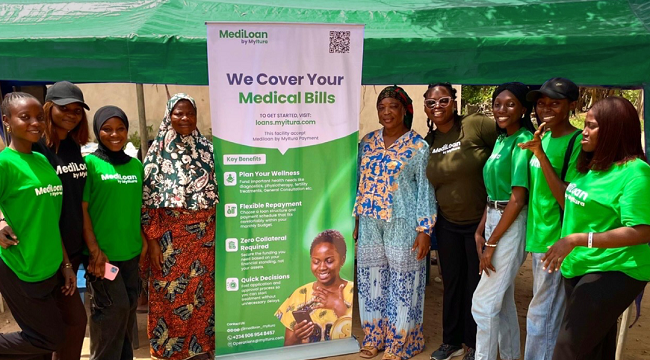
In commemoration of Women’s Month, health-tech platform Myitura has released a new white paper addressing the critical gaps in healthcare financing for women in Nigeria.

Titled “Closing the Gap: Healthcare Financing for Women in Nigeria,” the report highlights how high out-of-pocket costs, limited insurance coverage, and socio-economic factors continue to prevent women from accessing timely healthcare.
According to the report, over 70% of healthcare expenses in Nigeria are paid out-of-pocket, disproportionately affecting women who often delay care due to financial and social constraints.
“When women can afford to take care of their health early, we don’t just save lives; we strengthen families, communities, and the economy,” said Chialuka Kelechi, MyItura’s Chief of Staff.
Key Insights from the White Paper:
- Preventable conditions often escalate due to delayed care
- Women are more likely to deprioritize their own health
- Affordable, structured healthcare financing can significantly improve outcomes
Introducing a Women’s Health Initiative
As part of its commitment, Myitura is launching affordable women-focused health packages (powered by Mediloan), starting at ₦58,180, designed to encourage preventive care and early detection.
The package provides access to:
- Fasting/Random Blood Sugar
- Urinalysis
- Electrolytes
- Urea
- Creatinine
- Pap Smear Submitted slides
- HIV I & II Rapid (Qualitative)
- Hepatitis B Surface Antigen Screening (Rapid)
- Hepatitis C Virus Screening (Rapid)
- Abdominopelvic Ultrasound
- Ongoing support via the Myitura platform
Access:
Women can access these packages by downloading the Myitura app, which makes healthcare more accessible and convenient.
Myitura is a health-tech platform focused on improving access to healthcare through financing, technology, and preventive care solutions.

UBA Beefs Up Mobile App Security to Stop Fraudulent Debits, Withdrawals

Bharti Airtel Crosses 650m Users

FG Orders Installation of 5000 CCTV Cameras for Surveillance in Plateau

CBN Plans New Payment Systems Vision

Ghana Makes History as First African Country to Integrate Payment National Identity Card

Spotify’s Loud & Clear Report Reveals Over ₦60Bn Revenue for Nigerian Artists in 2025

Madonna University Taps Tech Guru Adote for Strategic Board Role

China Threatens to Shut Nigeria’s Satellite Over $11.44m Unpaid Debt

FCCPC Bans Lagos ‘No Refund’ Policy, Vows Fines and Shutdowns for Traders

Healthcare Under Attack: Why Cybersecurity is Now Critical Care




 News2 days ago
Microsoft Revamps Copilot in Workplace AI Push

 E-Business2 days ago
Kaspersky Warns of a New Phishing Technique Leveraging Bubble, a no-code AI Platform

 Telecom2 days ago
How Recycled SIM Card Linked to N50m Kidnapping Nearly Landed me in Jail – Businesswoman

 E-Financial2 days ago
CBN Directs Banks, Fintechs to Complete Cybersecurity Audit Tool

 Telecom2 days ago
Ouranos Technologies Strengthens Board with Key Leadership Appointments

 General News2 days ago
Senate Gives Tinubu Nod to Borrow Fresh $6Bn

 General News2 days ago
FG Launches CLHEEAN to Streamline Access to Government Services

 E-Financial1 day ago
CBN Says 33 Banks Raise Fresh N4.65 Trillion in Recapitalisation Exercise