

E-Financial
Polaris Bank partners UI, NCF on environmental conservation, tree planting

Polaris Bank Limited has collaborated with the University of Ibadan (UI) and the Nigerian Conservation Foundation (NCF) on environmental conservation through a tree planting initiative.

Polaris Bank
This was disclosed during a courtesy visit to the UI Vice Chancellor, Prof. Kayode Adebowale, by representatives of Polaris Bank Ltd and the Nigerian Conservation Foundation (NCF).
During the visit, Polaris Executive Director, Corporate & Investment Banking, Abimbola Ozomah, mentioned that the initiative is part of the bank’s corporate social responsibility efforts.
Ozomah explained that the initiative stemmed from the bank’s desire to continuously contribute positively to the environment and communities, as well as to commemorate World Environment Day on June 5, 2024.
She highlighted that the theme for World Environment Day 2024 centres on land restoration, desertification, and drought resilience, in alignment with the United Nations’ ecosystem restoration goals.
Ozomah said that Polaris Bank Ltd is committed to sustainable practices and land restoration through the nationwide planting of economic trees.
According to her, the bank’s sustainability practices include promoting responsible banking, empowering people and society, addressing environmental issues, and ensuring sustainable economic growth.
Mr. Adedayo Memudu, Senior Manager of the Nigerian Conservation Foundation, stressed that the organization encourages Nigerian citizens to appreciate nature and thrive while living in harmony with it.
He noted that one of the NCF’s core values is its commitment to partnership development, which is why it has partnered with Polaris Bank Ltd to enhance the bank’s corporate social responsibility and sustainability platforms.
The visit culminated in the consequent actual planting of trees at a designated site on the university campus.
A Memorandum of Understanding will later be signed between the University of Ibadan, Polaris Bank Ltd, and the Nigerian Conservation Foundation.
Speaking on behalf of the Vice Chancellor, UI Registrar, Mr. Ganiyu Saliu, reaffirmed the university’s commitment to conserving campus vegetation and promoting a greener environment to improve individuals’ well-being.
Saliu pointed out that the large number of ‘Iroko’ trees on the University of Ibadan campus serves as evidence of the institution’s intentional conservation efforts, despite broader environmental challenges in Nigeria and globally.
He explained that the university does not allow indiscriminate felling of trees but enforces a structured process for tree removal.
The registrar also noted that as part of the UI@75 anniversary celebrations, the university initiated a project to plant 1,000 trees, which will be adopted by well-meaning Nigerians, with the university providing the necessary support for their sustainability.
He stressed the importance of collaboration between the academic community and broader society, stating that both sectors must work together to address shared environmental challenges.
Saliu expressed gratitude for the collective efforts of organizations to tackle common challenges in Nigeria and appreciated Polaris Bank Ltd for partnering with the Nigerian Conservation Foundation in the tree planting initiative.
Polaris Bank kick-started the nationwide tree planting initiative for land restoration on July 1, 2024 at the Tai Solarin University of Education (TASUED), Ijagun, Ijebu Ode, Ogun State; it then Proceeded to Ajingi Community Reserve, Kunkurawa, in Kano, Kano State on August 30, and next at the University of Ibadan on October 3.
Polaris Bank is known for taking proactive measures in addressing challenges of development and sustainability, including environmental and social issues.
The Bank supports the United Nations Sustainable Development Goals (UN-SDGs), Nigerian Sustainable Banking Principles (NSBPs), and the United Nations Environment Programme Finance Initiative (UNEP FI’s) Principles of Responsible Banking.


Central Bank of Nigeria (CBN) has introduced stricter Bank Verification Number (BVN) enrolment and data access rules to prevent suspected fraudulent transactions, effective May 1, 2026.

This was disclosed in a statement issued over the weekend and titled “Addendum to the Revised Regulatory Framework for Bank Verification Number (BVN) Operations and Watchlist for the Nigerian Banking Industry 2021.”
The statement was signed by Musa Jimoh, director of the Payment System Policy Department.
The CBN said it introduced the ‘Revised Regulatory Framework for Bank Verification (BVN) and Watchlist for the Nigerian Banking Industry 2021’, to promote a stable financial system.
The apex bank reiterated that enrollment for the BVN be limited to individuals aged 18 and above, while amendments to phone numbers linked to a BVN will be restricted to a one-time change only.
Financial Institutions are mandated to establish and maintain a temporary watchlist for BVNs implicated in suspected fraudulent transactions reported by a financial institution.
“A BVN may remain on this temporary Watchlist for a maximum period of twenty-four (24) hours. During this period, the BVN owner shall be contacted to clarify the identified transaction(s).
Enrolment for BVN is restricted to individuals who have attained the age of eighteen (18) years and above. Amendments to phone numbers linked to a BVN shall be allowed only once,” the statement read.
The CBN insisted that it maintain an exclusive right to access BVN databases and to approve access to them by financial institutions.
“Access to the BVN databases shall be exclusively granted to Central Bank of Nigeria (CBN) licensed financial institutions. Notwithstanding this provision, the Central Bank of Nigeria (the Bank) reserves the right to approve access to the BVN databases in extenuating circumstances and in accordance with the provisions of extant laws,” the statement said.
The directive was part of the CBN’s recent regulatory amendments in combating fraudulent activities.
On Tuesday, the bank issued new regulations, “Baseline Standards for Automated Anti-Money Laundering (AML) Solution for Financial Institutions in Nigeria’, to all financial institutions, in a bid to automatically counter money laundering and terrorism financing.

NOVA Bank Limited has announced the appointment of Jude Anele as its Managing Director and Chief Executive Officer, following the approval of the Central Bank of Nigeria.

Jude Anele
The appointment comes at a pivotal moment in the Bank’s evolution, following its transition from merchant banking to commercial banking and the successful completion of its recapitalisation programme ahead of the March 31, 2026, regulatory deadline.
Anele brings more than 33 years of banking experience across West and Central Africa, with deep expertise in retail / commercial banking, corporate banking, risk management, institutional transformation and executive leadership.
Over the course of his career, he has led complex banking operations, strengthened governance frameworks, delivered sustainable revenue growth and built high-performance teams.
The appointment reflects the Board’s strategic commitment to consolidating NOVA Bank’s commercial banking platform while accelerating growth across its Corporate, Commercial and Retail segments, as well as priority markets.
Speaking on his appointment, Anele said he was honoured to assume leadership of the Bank at a defining stage of its growth.
“Nova Bank has built a strong institutional foundation defined by regulatory compliance, capital strength, disciplined governance and a clear commercial mandate.
“Our focus now is execution — deepening customer relationships, expanding responsibly across priority markets, strengthening risk discipline and delivering sustainable value to our shareholders,” he said.
The Bank’s Chairman, Phillips Oduoza, also expressed confidence in the new leadership.
“The Board is pleased to welcome Mr. Jude Anele as Managing Director and Chief Executive Officer. His depth of experience, strategic clarity and proven leadership record align strongly with NOVA Bank’s growth ambitions,” Oduoza said.
He added that with recapitalization completed ahead of the regulatory timeline, the Bank is entering a new phase defined by scale, stability and structured expansion.
NOVA Bank also confirmed that it has met the recapitalization requirements set by the Central Bank of Nigeria ahead of the regulatory deadline, reinforcing its capital adequacy and long-term financial stability.
The capital raise, supported by new and existing shareholders, further strengthens the Bank’s balance sheet and positions it for disciplined growth.
In 2025, Global Credit Rating reaffirmed NOVA Commercial Bank’s national scale long- and short-term issuer ratings of BBB(NG) and A3(NG) respectively, while Agusto & Co. reaffirmed the Bank’s “Bbb” rating with a stable outlook, reflecting its strong capital base, sound liquidity position and resilient asset quality relative to its risk profile.
NOVA Bank currently maintains operations in Lagos, Abuja, Owerri and Port Harcourt, with plans to open eight additional branches across key commercial hubs in 2026 as part of its expansion strategy.
The commissioning of the Bank’s regional office in Owerri marked a significant milestone in its South-East and South-South growth strategy.
The event attracted government officials’ business leaders and Nigerians in diaspora and underscored NOVA Bank’s commitment to supporting enterprise development and economic growth.
NOVA Bank Limited is a commercial bank licensed and regulated by the Central Bank of Nigeria. Commencing operations in 2018 as a merchant bank, the institution transitioned to a commercial bank in 2024 and provides retail, SME, corporate and commercial banking services through its Phygital model—an integrated approach combining physical branch presence with digital banking infrastructure.
Central Bank of Nigeria (CBN) has launched simple new rules to make mobile money transfers and online banking safer and give ordinary Nigerians more say over their cash.

CBN
The changes aim to stop fraud in our fast-growing digital money world. A notice dated March 12, signed by Musa Jimoh, says the rules start on July 1 for all banks and payment apps in Nigeria.
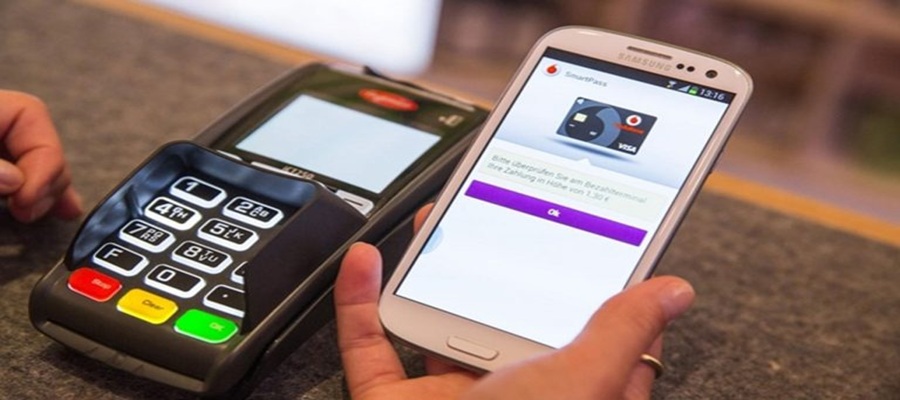
Customers can now choose if they want instant payments turned on or off on their accounts—anytime they like. Banks must let people say yes or no with strong security checks called Multi-Factor Authentication (MFA), like passwords plus phone codes.
New customers start with it on, but can switch it off easily. If off, online transfers stop right away, but you can go to the bank branch to send money the old way.
People can also change their daily spending limits, up to ₦25 million for personal accounts or ₦250 million for businesses—but only after the bank checks risks. Changes happen fast after customer okay via MFA.
CBN wants banks to use big computer systems to watch for funny money moves, like sudden big inflows or outflows that might mean thieves.
For safety, opening or waking up online accounts needs “liveness checks.” This means you prove you’re real-time alive by blinking, smiling, talking, or turning your head on camera—matched to your Bank Verification Number (BVN) and National ID.
Mobile apps lock to one phone or device at a time. No using the same app on two gadgets together. Switching phones? Full check again.
New mobile apps or new devices get tiny limits for the first 24 hours—just ₦20,000 in or out—to test for tricks. Internet banking from a new gadget also needs extra MFA steps first time.
CBN says these are basic must-dos to protect users, catch crooks faster, and let people control their money better.
The rules come as more Nigerians use phones for quick transfers via apps like Opay, Palmpay, and bank wallets—saving time but facing scams.
CBN balances this growth with tough safety to build trust. Banks must follow or face fines, helping everyday workers, traders, and families bank without fear.

Tech Expert Unveils BAT-BOT AI App to Curb Fake News ahead of 2027 Elections

MTN Nigeria Races Ahead in Fibre Broadband Market

CBN Tightens BVN Rules to Curb Fraudulent Banking Transactions

Nova Bank Appoints Jude Anele as Managing Director/CEO

CBN Rolls Out New Rules for Safer Instant Payments, More Customer Control

Kaspersky Discovers New Phishing Campaign Exploiting Google Tasks Notifications to Steal Corporate Credentials

esentry 2025 Report Shows Healthcare, Financial Services and Telecoms as Staging Grounds for Increased Cyberattacks in Africa

AfDB, UNDP Launch $10Bn AI Initiative for Africa

Mutual Benefits Assurance Settles ₦5.9bn Claims in January 2026

Pheelz Shares His Journey on Glo-Sponsored African Voices




 General News2 days ago
Interswitch Advocates Trust-Driven Infrastructure as Cornerstones of Africa’s Cross-Border Capital Future

 News2 days ago
NLNG Advances Media Excellence with Change Your Story Workshop

 E-Business2 days ago
Why JustMarkets Is a Strong Choice for Gold Trading

 E-Financial2 days ago
CBN Orders Banks to Restrict Access to Banking Services for Loan Defaulters

 E-Financial2 days ago
UBA Business Series Celebrates ‘Gen.W: The Evolved Woman’ in Push for Female Empowerment

 Telecom2 days ago
NDPC Warns Content Creators Against Privacy Violations in Viral Videos

 General News2 days ago
FCCPC Launches Fuel Price Surveillance, Probes Airline Price Gouging, Resolves N10bn Complaints

 E-Financial2 days ago
Recapitalisation Without Transformation is a Risk Nigeria Cannot Afford