

News
Power of Women in the 21st Century: The Zinox Group Example


By Dr. AbionaIwajowa
“There’s something so special about a woman who dominates in a man’s world. It takes a certain grace, strength, intelligence, fearlessness, and the nerve to never take no for an answer.’’ – Rihanna

“A 21st Century woman is a privilege and special blessing to a family and society and anointed to lead corporates and countries from the second quarter of this century. Leadership shall demand global knowledge, style, absolute trust, creative energy and faith in God and all these are domiciled as a right in today’s civilized woman.”– LeoStan (2019)
For long, the world has paid lip service to the place of women in the global scheme of things. The situation, although more critically felt in developing economies, Nigeria inclusive, is one that has remained a problem globally.
Indeed, gender equality is a globally-acknowledged human right. Nevertheless, the world today still faces a disturbing and abject reluctance to leverage on the potential of this very important gender in shaping our existential narratives. Put in another way, despite the growing evidence of the sterling qualities and achievements that women have proved capable of delivering, there are still huge gaps in access to opportunities and decision-making power for women.

Globally, women have fewer opportunities for economic participation than men, less access to basic and higher education, greater health and safety risks, and less political representation. The situation is the same in the corporate space where men have been known to dominate leadership positions, even when there are more capable or at best, equally qualified or suited female counterparts.
Today, women leaders are still a pitiable minority in various sectors. Men continue to outstrip women in leadership roles across every sector in the world. This includes government, corporate, non-profit, education, medicine, military and religion. Research also reveals that globally, at Fortune 500 companies, women hold only 19 percent of board seats and 15 percent of executive management positions. In addition, the number of female CEOs at these companies is a paltry four percent. Four percent of 500 companies equals 20 female CEOs, with male CEOs running the remaining 480 companies.
A report published in March 2020 by data mining company PayScale also shows a global disparity in how men and women are paid, even when all compensable factors are controlled, meaning that women are still being paid less than men due to no attributable reason other than gender. In 2020, women make only $0.81 for every dollar a man makes.
As demonstrated above, this is not only a Nigerian problem. It is a global phenomenon.
The foregoing is in contrast to the evidence-based capacity of women to create a positive disruption when placed in leadership positions.
It is an open secret that guaranteeing the rights of women and giving them opportunities to reach their full potential is critical, not only for attaining gender equality, but also for meeting a wide range of international development goals. Research shows that empowered women and girls contribute to the health and productivity of their families, communities and countries, creating a ripple effect that benefits everyone.
As Michelle Obama, former First Lady of the United States of America one famously declared: “There is no limit to what we, as women, can accomplish.”
Numerous examples abound in government circles, with the likes of Angela Merkel, a woman who leads the powerful nation of Germany.In Chile, Michelle Bachelet also distinguished herself as President of the South American country from 2006 to 2010 and again from 2014 to 2018, the first woman to occupy the position. This is just to mention a few.
Here in Africa, women have also shown they have what it takes to lead from the front, with Liberia’s Ellen Johnson Sirleaf covering herself in glory after winning the presidential election in 2006, the first in Africa. She was also re-elected in 2011.
Even in the corporate world, where men have dominated, instances abound of women who have distinguished themselves when appointed to leadership positions.
However, there is still a grudging refusal to empower women with leadership responsibilities, not only in Africa., but the world over. Here in Nigeria, there is often times a shocking mind-set when women assume top roles in an organization. In most cases, there is a belief that she was unfairly favoured or, if she is an attractive woman, then she is deemed to have compromised or slept her way to the top.
This is why the example of Leo Stan Ekeh, Chairman of the Zinox Group is worth mentioning.
Although I have not had the privileged of a one-on-one encounter with the man, I recall that as far back as 2014, he had declared that women will lead the world, not as second class citizens, but in the management of global resources mainly in the corporate marketplace, by the second quarter of the 21st Century which starts by 2026. Ekeh, who was speaking at a Women in ICT event at Sheraton Hotel, Ikeja, had cited the increasingly pivotal role women in the corporate sector are playing in the global arena.
Here is what he had to say: “Women are naturally more structured, trustworthy, less greedy, live longer and more prayerful than men. These innate qualities have strategically endowed women with the basic ingredients for leadership. As entrepreneurs, all you need to do is combine these innate qualities with absolute commitment, capacity for innovation, credibility and sound digital knowledge and very soon, the male folk will be struggling to keep pace with the women in the industry.’’
Fast forward to 2019, I was privileged to attend the Disrupt Africa conference organised by Access Bank in May 2019 where Mr. Ekeh was one of the guest speakers at the event.
This time, he had also preached the gospel of women empowerment to the packed audience at the Landmark Centre, Oniru, Victoria Island. According to him, gone are the days when parents would rather prefer to have male kids, as was in the case in the olden days. Ekeh had stated that women are heavily knowledgeable, highly domesticated, humane, humble and less greedy, even as he noted that current statistics indicate that women have proven to be more knowledgeable and intelligent compared with men in the same age bracket and intelligence quotient (IQ). Further, he cited their concentration power and integrity in managing resources as far higher than those of their male counterparts.
Equally important, he had told the listening audience that the foregoing had nothing to do with Africa, noting that it was a global phenomenon.
I was one of the many who had given him a standing ovation at the end of his moving speech. After the conference, I had engaged a few other participants on the thoughts expressed at the event especially the thought-provoking ones espoused by Mr. Ekeh. I was initially of the impression that he was probably playing to the gallery at the conference, as many are wont to do at such public speaking engagements.
This had made me embark on some sort of mini-research or investigation into the Zinox Group. However, my investigations threw up a startling revelation and actually gave me some hope in the future of the battle for women empowerment in Nigeria and beyond.
Indeed, the Zinox Group, led by Ekeh, remains a shining light and a good example of a conglomerate that has not only justified the power of women as leaders, but also given them an equal playing ground to thrive.
At Technology Distributions Ltd. (TD Africa) which incidentally is arguably the biggest company in the Zinox Group in revenue terms, women occupy the first four management executive positions. The company is led by the CEO, Mrs. Chioma Ekeh, wife of Ekeh, a first-rate mathematician and certified Chartered Accountant who has previously worked in the United Kingdom. Next to her is another woman, the Coordinating Managing Director, Mrs. Chioma Chimere. Following closely is yet another woman, Mrs. Shade Oyebode, who is the Managing Director (Operations) and then, Mrs. Andrea Ijogun who is the Managing Director (Sales). Although I did not succeed in obtaining a clear state of the company’s impressive financial figures, it is worth mentioning here that Technology Distributions Ltd. is credited with pioneering ICT distribution in West Africa and till today, it represents the biggest, globally recognised names in the sector such as Microsoft, IBM, Dell, HP, Samsung, Cisco, Lenovo, to mention a few.
If the example of Technology Distributions is deemed a fluke or a chance occurrence, then let us turn our attentions to Zinox Technologies Ltd., the most popular company in the Zinox Group. In 2006 and 2010, the company had rescued Nigeria from a national embarrassment by overseeing the rollout of the computer hardware, components and software solutions used by INEC for the successful conduct of the general elections, rising to the occasion to deliver after foreign contractors failed. It repeated the feat in 2014when it designed the Direct Data Capture (DDC) machines, Card Readers and worked with INEC in capturing and delivering a credible database of voters – a factor which contributed immensely in reducing post-election litigations.
Zinox Technologies Ltd. is also led by a female Managing Director, Mrs. Kelechi Eze-Okonta – with an M,Sc. in International Business Management from University of Liverpool, United Kingdom – a position she has held, along with all the perks of that office, for the past three years.
Do we still consider that a fluke?
If so, what about Task Systems Ltd., Leo Stan Ekeh’s first company? Incorporated over 30 years ago in 1987, Task Systems Ltd. was the company through which Mr. Ekeh transformed the Nigerian media and publishing landscape, transitioning it from its prevailing analogue state of metal cast style publishing and ushering them into the world of Desktop Publishing and Computer Graphics many years ago. In fact, my late twin brother, who was a top journalist, was one of the witnesses of this revolution which transformed the likes of Punch, Guardian, Sketch, Daily Times, Vanguard, Daily Independent and many others. Back then, he had claimed that Mr. Ekeh was an American whiz-kid! It was until recently that I discovered that he trained in India and the United Kingdom.
For the past five years, Task Systems Ltd. had a woman, Ms. Olufunke Oduntan, as Managing Director. It was only earlier this year that she was replaced by a man, Stanley Okpalaeke with an MBA from LBS as MD after her retirement.
The Group Head, Human Resources, Mrs. Chioma Nwoke, is also female.
Across the Zinox Group, women have not only held top executive management positions; they have also been encouraged to aspire to the very echelon of the corporate ladder. In this remarkable Nigerian example, there are no glass ceilings for the women-folk. At this juncture, it is worth stating that some of these women have worked in the Zinox Group for the past 20 years, growing through the ranks and displaying a high level of integrity, performance and credibility – qualities that have made them undisputable choices for the rarefied positions they occupy.
Indeed, each of these women have merited their appointments.
This is clear when you look at their respective profiles. These are corporate giants who know their onions and who can defend their appointments or distinguish themselves in similar appointments in the global marketplace. These are women who are ethical and spiritually filledand imbued with the right ingredients to drive a business to profitability. Further, their occupancy of those lofty positions is tested on an annual basis, with their unerringly brilliant leadership seeing to the continuous profitability of the Zinox Group.
More remarkable is the fact that the Zinox Group has remained in the forefront of sustaining Nigeria’s march to technological emancipation. The numerous feats recorded by the various companies in the Zinox Group have not only given Nigeria a voice in the technology sphere; but have also gone a long way and still continues to usher millions of Nigerians into the contemporary world mediated by advancements in technology.
But there has hardly been any significant recognition for this Nigerian miracle.
It appears the Nigerian government is more comfortable with recognizing politicians or noise-making institutions and persons who hardly contribute anything of note to the nation’s development. If not, how do we justify the fact that such a gender-sensitive, high-performing entity that has been in business for over 30 years in a difficult terrain such as Nigeria without any major scandal, providing direct and indirect employment opportunities for millions of Nigerians has not received any form of special honour by the Nigerian government?
I put it down to the fact that the Zinox Group is not a noise-making entity, as exemplified by the character of the organization and the fact that its leadership is dominated by women, who are naturally conservative. Perhaps, if the company was into beating the drums of its many achievements they would be identified. Very unfortunate!
Having a man such as Leo Stan Ekeh as a Nigerian is a blessing to this country. These are the kind of leaders that Nigeria needs – people that see beyond today. He has shown remarkable vision in many of his dealings and specifically, with his clarion calls for women empowerment which he has not only preached but implemented across his companies while the country struggles with civilization.
Little wonder, Mr. Ekeh has been at the forefront of driving the charge to computerize Nigeria for the past 30 years, as he has always declared that no nation is truly independent without achieving technological independence.
Despite the non-recognition by the Nigerian government for its many contributions to national development, the Zinox Group has been mightily blessed. In my research, I have followed the growth of this exciting technology group and, despite the difficulties in the operating environment, the Zinox Group has continued to give hope to many Nigerians. No wonder Alhaji Lateef Jakande- the former Governor of Lagos state said at the launch of Task Systems’ Allen Avenue, Ikeja office in 1992, that if the country could have five Leo Stan Ekehs, Nigeria would emerge as a quality representative of Africa in the global community.
Today, a lot of our young ones are out of school without any clarity as to how long this predicament will last. Yet, the government cannot partner with a proudly Nigerian brand such as this to empower these little kids, all of whom will pay taxes in future, with simple gadgets and devices to aid their learning. On the other hand, the government is investing billions in a feeding programme riddled with controversy for out-of-school children.
What a shame!
Dr. Abiona Iwajowa is a policy expert who writes from Kano



ValueJet is set to expand its fleet with the introduction of Boeing aircraft. The airline in a statement said that the introduction of Boeing aircraft was part of its effort at increasing capacity, strengthen its regional operations and position the airline for wider connectivity across Africa.

The acquisition of Boeing aircraft is coming after its successful operations with the Bombardier CRJ aircraft, which have supported its domestic and regional expansion since it commenced commercial operations.
Omololu Majekodunmi, Managing Director of ValueJet, said the move would enable it to accommodate more passengers and cargo, operate longer routes and respond to the growing demand for air travel within Nigeria and across the African continent.
Majekodunmi, also said that the fleet expansion was a defining moment in the company’s journey, noting that the introduction of the Boeing aircraft would open a new chapter for the carrier.
According to him, ValueJet has remained focused on building a safe, reliable and customer-oriented airline since its entry into the market, adding that the transition to Boeing aircraft was being supported by investments in manpower development and technical capacity.
He said: “The arrival of Boeing aircraft into our fleet represents an exciting new chapter for ValueJet. Since commencing operations with our CRJ aircraft, we have remained focused on building a safe, reliable, and customer-centric airline.
“As we prepare to induct the Boeing aircraft, we are also investing in our people by ensuring our engineers receive world-class training that will enable us to maintain the highest standards of safety, reliability, and operational excellence. This investment positions us for the next phase of our growth and reinforces our commitment to delivering an exceptional travel experience.”
According to Majekodunmi, as part of preparations for the fleet upgrade, ValueJet’s aircraft maintenance engineers are already undergoing intensive technical training on Boeing aircraft in Lagos.
The training, delivered by Boeing through its partnership with Nigeria’s Federal Ministry of Aviation and Aerospace Development, focuses on the Boeing 737 Next Generation (737NG), covering aircraft systems, maintenance procedures, safety standards and operational best practices.
The airline said the training would equip its engineers with the required expertise to maintain the new aircraft type in line with global aviation standards, including European Union Aviation Safety Agency (EASA) requirements.
Also speaking, Adekunle Soname, Chairman of ValueJet, said the introduction of Boeing aircraft was not just a fleet expansion programme, but a strategic investment aimed at supporting the airline’s long-term growth ambitions.
With the planned arrival of the Boeing aircraft, ValueJet is targeting expansion into more African destinations, including Abidjan in Côte d’Ivoire, Libreville in Gabon, Douala in Cameroon, as well as cities in Kenya and South Africa.
The airline said the new routes would form part of its strategy to strengthen intra-African connectivity and provide passengers with more travel options.

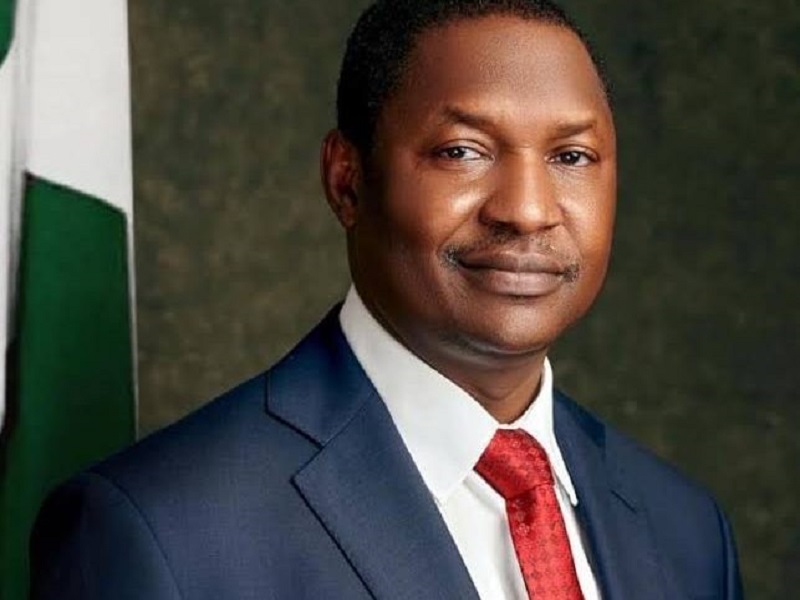
The Federal High Court in Abuja on Wednesday, July 15, ordered the final forfeiture of 48 properties linked to the immediate past Attorney-General of the Federation and Minister of Justice, Mr. Abubakar Malami, who is facing money laundering charges.

Abubakar Malami
The court, in a judgment delivered by Justice Joyce Abdulmalik, held that the properties, allegedly acquired with proceeds of crime, should be permanently seized by the federal government.
It held that Malami, who served as Justice Minister from November 11, 2015, to May 29, 2023, under former President Muhammadu Buhari’s administration, failed to rebut the reasonable suspicion that the properties were acquired through unlawful activities. The court dismissed contentions that some of the affected properties belonged to the larger Malami family in Kebbi State. According to the court, the legal issue was not “who owns the property, but how legitimate were the funds used to acquire them”.
Justice Abdulmalik held that Section 17 of the Advance Fee Fraud and Other Fraud Related Offences Act empowered the court to order the final forfeiture of illicitly acquired assets to the government. The judgment followed an application filed by the Economic and Financial Crimes Commission (EFCC).
Although the anti-graft agency sought the forfeiture of 57 choice properties it said were traced to the former minister, the court held that there was credible evidence establishing the genuine ownership of nine of the listed properties. The EFCC and Malami had adopted their final written addresses in the matter on May 26.
It will be recalled that the anti-graft agency had earlier secured an interim forfeiture order for the assets, valued at over N212 billion. According to the anti-graft agency, the properties, spread across three states (Kebbi, Kano, and Kaduna) as well as the Federal Capital Territory, Abuja—were believed to have been acquired with proceeds of crime. In an ex parte motion brought before the court, the agency said the interim order was needed as a precursor to the final forfeiture of the properties to the federal government.
Malami is currently facing a 16-count money laundering charge. He was arraigned before the court alongside his son, Abdulaziz, and one of his wives, Hajia Bashir Asabe. The defendants were alleged to have laundered public funds totalling about N9 billion.
According to the EFCC, the former Justice Minister, in a bid to hide his proceeds of crime, resorted to acquiring choice properties in various cities and states. Having granted the interim forfeiture order, the court directed the agency to publish, within 14 days, a notice inviting anyone with an interest in any of the properties to appear before it and show cause why they should not be forfeited to the government.
Dissatisfied with the EFCC’s application, Malami’s legal team approached the court to have it set aside, insisting the properties were legitimately acquired. He told the court that the properties were appropriately listed in various asset declaration forms he filed with the Code of Conduct Bureau (CCB), insisting the EFCC had failed to adduce any prima facie evidence that they were acquired through proceeds of crime.
Accusing the EFCC of suppressing material facts, Malami maintained that the agency moved against him over properties that “were lawfully acquired post-appointment of the respondent/applicant and declared with the Code of Conduct Bureau as legitimate assets of the respondent/applicant, in compliance with the 5th Schedule to the Constitution of the Federal Republic of Nigeria, in 2019 and 2023”.
He argued that the interim forfeiture order was obtained through “manifest exaggeration, malicious inflation of the value of the assets, and unreasonable and incompetent valuation deliberately manipulated to mislead the court, negatively affecting its discretion in granting an order based on manipulated facts and conclusions deliberately cooked up by the applicant/respondent (EFCC)”.
While adopting his final brief of argument, counsel to the EFCC prayed the court to grant the final forfeiture order, relying on a 47-paragraph affidavit and 46 exhibits filed in support of the motion. The EFCC counsel argued that Malami had failed to satisfactorily explain the legitimate sources of the assets and urged the court to order their permanent forfeiture.
In response, the counsel representing the former AGF urged the court to dismiss the application and set aside the interim forfeiture order earlier granted. The defense counsel relied on a counter-affidavit deposed to by Malami to argue that the EFCC’s case was founded on suspicion rather than credible evidence.
The court-ordered list of confiscated properties includes:
A luxury duplex at Amazon Street within Cadastral Zone A06, Maitama, purchased in December 2022 at N500,000,000.00 (value after enhancement, N5,950,000,000).
A two-wing, large storey building situated at No. 3, Onitsha Crescent, Area 11, Garki, Cadastral Zone A03, Abuja (formerly Harmonia Hotels Limited), FCT, purchased in December 2018 at N7,000,000,000.00.
Plot 683, Jabi District, Cadastral Zone B04, comprising a five-storey building (now Luxurious Meethaq Hotels Ltd, Jabi, with 53 rooms/suites), purchased in September 2020 at carcass level at N850,000,000.00, with an additional N300,000,000 to take possession (value after completion, N8,400,000,000).
Property No. 3130, within Cadastral Zone A04, Asokoro District, FCT, Abuja, comprising terraces, purchased in January 2021 at N360,000,000.00.
Property No. 3, Rhine Street, Maitama, Abuja (Meethaq Hotels Ltd, Maitama, with 15 rooms), purchased in February 2018 at N430,000,000.00 (current value after rehabilitation, N12,950,000,000).
Plot No. 1241B, Asokoro District Zone (No. 11A Yakubu Gowon Crescent), Asokoro District, purchased in July 2021 at N325,000,000.00.
Shop No. C82, Citiscape — Shariff Plaza, Plot 739, Cadastral Zone A07, Aminu Kano Crescent, Wuse II, FCT, Abuja, purchased in March 2024 at N120,000,000.00.
No. 4, Ahmadu Bello Way, Nasarawa GRA, Kano, purchased in December 2022 at N300,000,000.00.
Plot 157, Lamido Crescent, Nasarawa GRA, Kano, purchased in July 2019.
A plaza, commercial toilets, laundry facility, and warehouse tanks adjacent to Birnin Kebbi Market, purchased in 2021 at N100,000,000.00.
100 hectares of land along Birnin Kebbi–Jega Road, purchased in 2020 at N100,000,000.00.
A four-bedroom bungalow, Gesse Phase, Birnin Kebbi, purchased in 2023 at N101,000,000.00.
Shops Nos. A36 and B3, Vegas Mall, Wuse 2, Abuja, purchased in July 2023 at N158,000,000.00.
No. 26, Babbi Drive, BUA Estate, Abuja, purchased in 2022 at N136,000,000.00.
No. 27, Efab Estates Avenue, 59th Crescent, Gwarimpa, Abuja, purchased in January 2016 at N120,000,000.00.
A four-bedroom house with two-room boys’ quarters at No. 10B, Doka Crescent, Abakpa GRA, Kaduna, purchased in January 2018 at N40,000,000.00.
Plot No. 13, Ipent 7 Estate, Karsana District, Abuja, purchased in June 2018 at N85,000,000.00.
A four-bedroom duplex with boys’ quarters at No. 12, Yalinga Street, off Adetokunbo Ademola Crescent, Wuse II, Abuja, purchased in October 2018 at N150,000,000.00.
Two warehouse shops, B40 and B46, Wuse Market, Abuja, purchased in July 2020 at N50,000,000.00.
Twin houses at Zone E, Apo Legislative Quarters, Cadastral Zone B01, Plot 14014, Gudu District, Abuja, purchased between February and May 2017 at N250,000,000.00.
Properties acquired by the Khadimiyya for Justice & Development Initiative at Academic Garden City, Birnin Kebbi, sold by the Federal Housing Authority Mortgage.
Nine units of three-bedroom bungalows, three units of two-bedroom bungalows, and 5.4 hectares of land, purchased between February and September 2023 at N187 million.
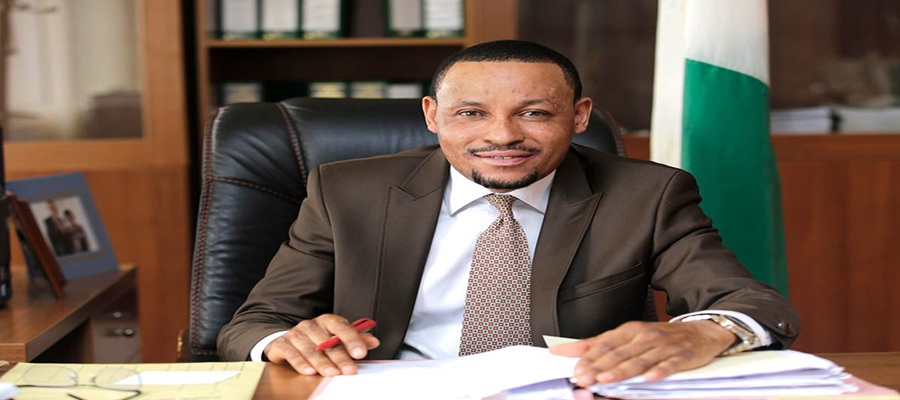
A Federal Capital Territory (FCT) High Court sitting in Maitama has granted bail to former Chairman of the Code of Conduct Tribunal (CCT), Mr Danladi Umar, in the sum of N100 million with one surety in like sum.

Danladi Umar
Justice Peter Kekemeke granted the bail on Wednesday following Umar’s arraignment by the Economic and Financial Crimes Commission (EFCC) on a four-count charge bordering on alleged abuse of office and conferring undue advantage on himself while serving as Chairman of the CCT and Chairman of the CCT Tender Board.
Umar was arraigned by the EFCC on July 9.
During Wednesday’s proceedings, counsel to the defendant, Mr Sunday Edward, urged the court to admit his client to bail pending the determination of the case, citing relevant provisions of the 1999 Constitution and the Administration of Criminal Justice Act (ACJA).
Edward argued that the defendant was entitled to bail as guaranteed under the law.
However, EFCC counsel, Mr Christopher Mshelia, opposed the bail application, urging the court to deny bail and order an accelerated hearing of the matter.
In his ruling, Justice Kekemeke held that bail could not be denied based on mere suspicion that an accused person might commit another offence if released.
The judge said bail could only be refused on established grounds, including the likelihood of the defendant evading trial or interfering with witnesses.
Justice Kekemeke noted that Umar was no longer in a position to intimidate witnesses, adding that the prosecution failed to provide sufficient evidence showing that he would abscond or interfere with the trial process.
He held that it would be wrong for the court to deny bail based on an unsubstantiated belief.
Consequently, the judge admitted Umar to bail in the sum of N100 million with one surety in like sum.
The court directed that the surety must own a property within the jurisdiction of the court.
The matter was adjourned until Oct. 29 for trial.
Umar served as Chairman of the Code of Conduct Tribunal from 2011 until 2024, when he was removed from office by President Bola Tinubu following recommendations by the National Judicial Council.

NBC Scraps Annual Digital Access Fee on DSO

Surge in Fibre Cuts Hobbles Service Provisioning

Why Bandits, Kidnappers are Hard to Trace despite NIN-SIM Linkage – FG

First Securities Brokers Empowers Nigerians to Trade in the Stock Market with the Launch of FirstInvest App

Quest Merchant Bank Hosts Great Place to Work® Nigeria Study Mission

NRC, Ponzi Scheme Collapses Resulting Loss of Billions of Naira
Nigeria Launches FreeTV Nationwide

NASENI Moves to Digitize CCB’s 5m Assets Declaration and Operations

Lebara Nigeria Launches Lebara Play, Africa’s First Telecom-Owned Micro-Drama Platform

CANAL+ Partners Samsung to Pre-Load DStv Stream on New Samsung TVs In Nigeria, Other African Countries




 Telecom3 days ago
MTN Nigeria Slashes Cost of Broadband Internet Router, Unwraps New Data Bundles for Low-Budget Users

 E-Financial3 days ago
Nigerians Accumulate $59Bn in Cryptocurrency Assets —FDC

 E-Financial3 days ago
Flutterwave Partners Xoom on Transfers into Nigeria

 General News3 days ago
Nearpays, Nigerian Fintech Becomes First African Startup to Win UN’s AI for Good Innovation Factory

 News3 days ago
DataPro Upgrades Dangote Cement’s Credit Rating to AA+

 E-Business3 days ago
Tinubu Orders NIMC to Enrol Every Nigerian by End of this Year – DG

 Telecom3 days ago
Nokia’s 14 Years of Mobile-Phone Supremacy Ended in an Afternoon

 E-Business2 days ago
TD Africa Sponsors Check Point Secure 360 Summit to Boost Cybersecurity in Nigeria