

Broadcasting
Preparing for Digital Disruptions During Africa’s Year of Elections

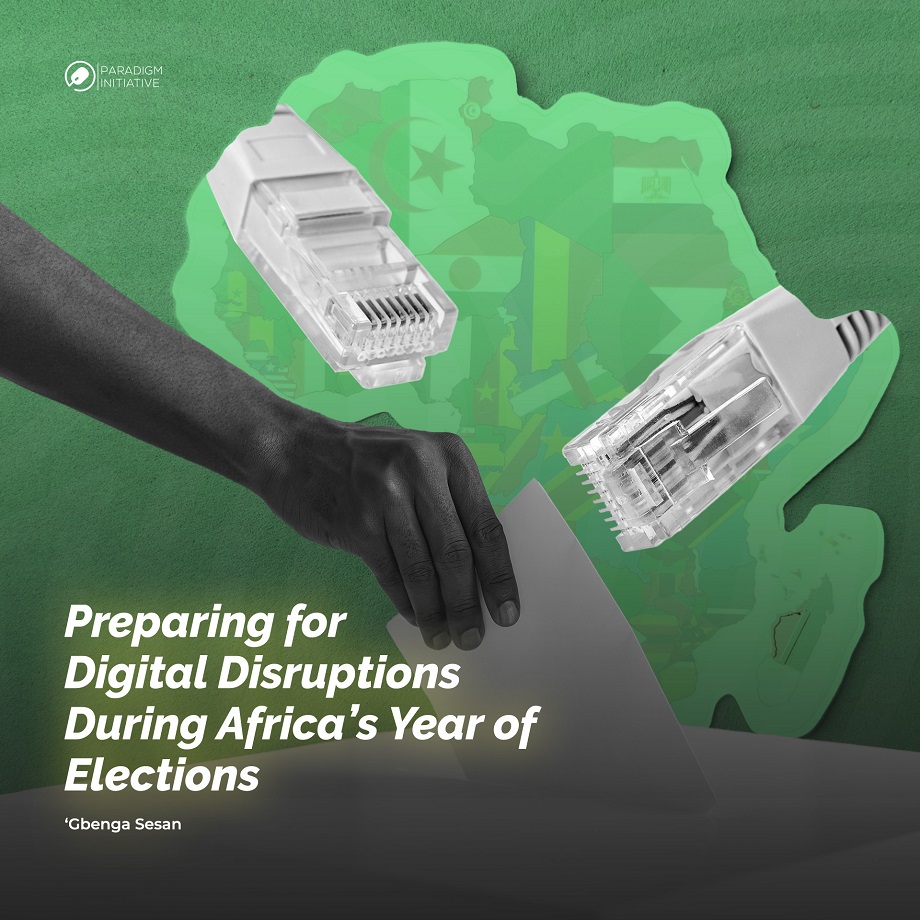
By ‘Gbenga Sesan
This year, 23 African countries will hold elections – ranging from local to parliamentary and presidential. Considering that election seasons are known to come with many digital rights violations, including internet shutdowns, digital platform clampdowns, privacy breaches and other digital restrictions, it is essential to pay attention, anticipate likely infringements and work to ensure the respect of citizen rights in the digital sphere, alongside others.

Over the last two years, the internet has been shut down by the governments of the Republic of the Congo, Niger, Uganda and Zambia during election periods. Of the five African countries that shut down the internet in 2022, one of them (Somalia) held elections the same year, while three (Sierra Leone, Sudan and Zimbabwe) have elections planned for 2023. Burkina Faso’s shutdown may not be directly linked to elections, but it is connected to the country’s January 2022 coup d’état.
In 2023, presidential elections will hold in Gabon, Liberia, Libya, Madagascar, Nigeria, Sierra Leone, South Sudan, Sudan and Zimbabwe. All of them, except Madagascar, have shut down the internet or restricted the use of digital platforms. Apart from Libya, all the other countries that have elections in 2023 and have disrupted access to the internet or digital platforms before did so within the last three years. Will they do so again, under the guise of preventing the spread of misinformation, countering dangerous speech, possible violence or any other excuse used in the past, as they approach elections in 2023?
Gabon has had the same president since October 2009. After Omar Bongo – who had been the country’s president for 42 years – died in June 2009, his son, Ali Bongo Ondimba, Minister of Defense at the time, won the elections conducted four months later. The January 2019 internet shutdown in Gabon happened during a military coup attempt, and the government refused to respond to civil society enquiry on the reason for the shutdown.
Liberia cut off access to its most popular social media platform during protests in June 2019. Libya’s disputed elections have been postponed three times in the past four years. Still, the country is no stranger to digital rights violations during public interest events, beginning with its February 2011 shutdown of internet and international phone services in response to protests.
In June 2021, Nigeria announced a nationwide shutdown of access to a social media platform considered one of the country’s last-standing civic spaces. Even though an Economic Community of West African States (ECOWAS) Court of Justice ruling declared the government’s decision to suspend Twitter “unlawful and inconsistent with the country’s international obligations” and “ ordered Nigeria to ensure the unlawful suspension would not reoccur and to take necessary steps to amend its laws to be in conformity with the rights and freedoms enshrined in the ACHPR and ICCPR”, the government has refused to confirm that such violations will not reoccur.
In August 2022, Paradigm Initiative (PIN), a Pan African organization that advocates for digital rights and inclusion, and other digital rights stakeholders condemned an internet shutdown that followed during citizen protests in Sierra Leone. Even for a country where only 6.5% of the population has access to the Internet, South Sudan shut down the internet ahead of planned protests in August 2021. Even though a Sudan court ordered the end of the internet shutdown that followed protests against a military coup in October 2021, it did not stop the country from repeating the violation again in June 2022, ahead of planned protests. Speaking on the June 2022 shutdown, the Sudanese Engineers Syndicate said, “…cutting off internet and communication services in Sudan has become a pattern and led to many violations.
In January 2019, Zimbabwe shut down the internet in response to citizens’ protests. At the end of the three-day closure ordered by the government, it asked telecommunications companies to implement shutdowns a second time in the same week. A judge ruled that the shutdown was illegal but that did not stop another shutdown at the end of July 2020.
For countries that have developed the habit of disrupting digital access during significant democratic events, it appears that judicial pronouncements, civil society condemnation or citizen dissent are never enough to prevent future violations. However, it is important to prepare for the likelihood of such violations of digital rights and challenge them to prevent impunity.
As all twenty-three African countries go to the polls, the task of protecting citizen rights – including preventing, condemning and/or seeking redress – does not rest on civil society organisations and activists alone. We must all work to ensure that a continent that lost $261 million to internet shutdowns in 2022 and desperately needs to maximise digital opportunities for its citizens stays off the path of digital clampdowns that do not serve anyone’s interest.
We must support the work of digital rights actors who continue to document evidence of digital rights infractions, provide information on how to stay safe and help citizens seek redress when violations happen. Through the annual Londa report, PIN has documented digital rights violations and significant policy updates across African countries since 2016. Each year since 2019, Londa, which included 22 independent country reports in 2021, forms the basis of short films produced by PIN to condense the message into less than thirty minutes of infotainment.
The short film based on the 2021 report, Finding Diana , is available on PIN’s YouTube page, as well as the 2020 film, Focus, and 2019 film, Training Day. Building on information from the reports and short films that expose violations and deliberate bad practices, PIN developed a digital rights toolkit, Ayeta, to educate digital rights actors and other citizens on how to protect themselves in digital spaces. If violations happen despite citizen action to protect themselves, the Ripoti platform provides an opportunity to report incidents and seek legal redress.
During elections, PIN provides country-specific information on how to stay online if digital clampdowns happen. The first edition of the Digital Rights and Elections in Africa Meetings (DREAM) was held in Abuja on February 7, 2023, ahead of Nigeria’s February 25 and March 11 general elections. Similar editions are planned to hold ahead of elections in other countries. We know that election seasons are fraught with violations and so we must prepare for digital disruptions.
However, as it happened in 2020 in Ghana and 2022 in Kenya, it is possible that no digital disruptions will be reported in most countries. Civil society organisations working in both countries will tell you that it requires a lot of work to avoid disruptions. Eternal vigilance is the price of liberty, in this case, because there are many competing interests during elections, and even in countries with no record of digital rights violations, some of those interests are served by clampdowns on the opposition and dissenting voices.
The best time to prepare for likely violations is before they happen, and it is your duty and mine to make that preparation happen across the African countries that will hold elections in 2023.
The writer is the Executive Director of Paradigm Initiative and a member of the United Nations Secretary General’s Internet Governance Forum (IGF) Leadership Panel.



Mr. Tim Akano, New Horizons Chief Executive Officer, took centre stage at the Nigerian Information Technology Reporters’ Association (NITRA) annual end-of-year meeting on Thursday, December 18, 2025, recounting the company’s remarkable growth and reaffirming free IT training for journalists.

Tim Akano, New Horizons Chief Executive Officer, in a group photograph with NITRA Members
Speaking directly to IT media members at the company’s training facility in Lagos, Akano acknowledged the critical role journalists played in supporting New Horizons during its formative years two decades ago.
He detailed how the firm evolved from a handful of staff to one of Africa’s leading ICT skills training organisations, now employing about 500 staff across multiple training centres nationwide.
Akano Spotlights Youth Training, University Partnerships
Akano highlighted that New Horizons has trained over 500,000 youths, particularly tertiary institution students, equipping them with practical IT skills essential for Nigeria’s digital economy.
He announced recent partnerships with universities, including a new agreement with Afe Babalola University, to scale hands-on training programmes for students.
“This growth would not have been possible without the media’s support in documenting our journey,” Akano stated, pledging continued free IT skills training for media members to remain competitive in the evolving digital landscape.
Reciprocal Support Defines Long-Standing Partnership
The venue hosting the NITRA meeting underscored Akano’s generosity; NITRA Secretary Chidiebere Nwankwo secured the free facility after contacting him—a gesture consistent with New Horizons hosting multiple association events and training IT journalists since its inception 20 years ago.
Participants shared personal testimonies of Akano’s support, including veteran journalist Aaron Ukodie, whose daughter—an Accounting graduate from the University of Johannesburg—received NYSC placement and IT scholarship at New Horizons.
The Guardian’s Yemi Adeyemi recounted Akano accommodating his editor’s child for mandatory IT training after other firms declined.
Members praised Akano’s commitment to human capital development as evidence of deep appreciation for the media community that chronicled New Horizons’ success over two decades.
National Identity Management Commission (NIMC) has launched the NIMC Pre-Enrolment Portal to revolutionise the National Identification Number (NIN) enrolment process, enabling applicants within Nigeria and in the Diaspora to capture biodata online prior to biometric verification at enrolment centres.

NIMC
Accessible via penrol.nimc.gov.ng, the platform allows users to fill enrolment forms, schedule appointments, upload supporting documents securely, and manage personal details directly, thereby slashing congestion, minimising wait times, boosting data accuracy and enhancing overall service efficiency at centres nationwide.
NIMC Director-General and CEO, Engr. (Dr) Abisoye Coker-Odusote, spearheaded the initiative as part of the Commission’s technology-driven strategy to fortify institutional performance, aligning with President Bola Ahmed Tinubu’s Renewed Hope Agenda that emphasises digital transformation, efficient public service delivery and inclusive national development.
Dr Kayode Adegoke, Head of Corporate Communications, highlighted key benefits including simplified biodata handling, confidential data protection through robust security measures, reduced physical centre visits and heightened operational effectiveness, urging all prospective enrollees to adopt the portal for a faster, citizen-friendly experience.[conversation_history]
The move underscores NIMC’s mandate under the NIMC Act No. 23 of 2007 to manage the National Identity Database, issue NINs and foster a reliable digital identity ecosystem vital for national planning, with users advised to complete pre-enrolment online before heading to selected centres for biometrics.

MultiChoice Talent Factory (MTF), a Pan-African film and television training institution, has announced the opening of applications for its 2026 intake.

MultiChoice
The fully funded programme is open to African graduates aspiring to become directors, filmmakers, scriptwriters, producers and storytellers.
According to MultiChoice, the nine-month accredited curriculum combines online learning with intensive in-person training, and is designed to balance theoretical knowledge with practical immersion.
MTF academies are located in Kenya, Nigeria and Zambia, and serve aspiring filmmakers from 14 African countries. Since its inception in 2018, the initiative has trained 296 filmmakers, with graduates producing more than 42 movies aired on DStv, GOtv and Showmax platforms.
Organisers said alumni of the programme have gone on to establish over 50 production companies, while many continue to work within the MultiChoice ecosystem.
Graduates have also won accolades at the Africa Magic Viewers’ Choice Awards, Kalasha Awards, Uganda Film Festival and Women in Film Awards.
Applications for the 2026 intake close on Feb. 27, 2026. Interested candidates can visit https://apo-opa.co/3XW53oE for programme requirements.

US Okays $2.1Bn for Christian Healthcare in Nigeria

Leo Stan Ekeh: A “Rare Avis”, an Unconquerable Entrepreneur

SERAP Asks Tinubu to Release CTC of Tax Bill

Tim Akano Recounts 20-Year Growth, Media Support at NITRA End-of-Year Meet

Sterling Bank, Water.org, Sterling One Foundation Partner on WASH Loan for Millions

Nigeria Records Highest Weekly Cyberattacks in Africa — Report

Cyber Tsunami Hits Nigeria as Breaches Surge 1,047%, esentry Q3 Report Reveals

Jumia’s Data Shows Nigerians Turning to Digital Retail to Navigate Inflation Pressures

GenAI Adoption Among African workers Outpace Global Peers

How Insecurity is Bleeding Nigeria about $15bn Annually and Destroying Its Economic Future




 General News2 days ago
Jumia Kicks Off December Holiday Sale, Bringing Festive Deals to Shoppers Nationwide

 E-Financial2 days ago
Access Holdings Shareholders Approved to Raise N40bn Capital Through Private Placement

 Broadcasting2 days ago
NIMC rolls out Pre-Enrolment Portal for seamless NIN registration

 General News2 days ago
Dangote, Monopoly Power, and Political Economy of Failure

 General News2 days ago
OAU, Baptist Day School Oluponna honour Akano with Distinguished Alumnus Awards

 General News8 hours ago
The Mood Market to Light Up Lagos with a Rooftop Gifting, Food & Lifestyle Fair this Christmas
 Broadcasting2 hours ago
Tim Akano Recounts 20-Year Growth, Media Support at NITRA End-of-Year Meet
 General News2 hours ago
Leo Stan Ekeh: A “Rare Avis”, an Unconquerable Entrepreneur