

Telecom
Quanta Monitor Can Now Tell Level of Radiation from Your Cellphone

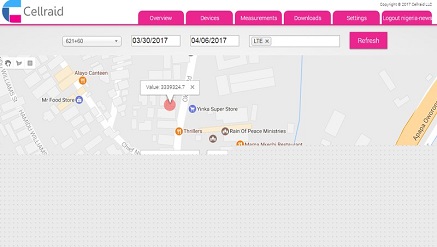
Cellphone Radiation (CR) in a very hot topic multi-billion-dollar smartphone industry do not like to talk about, however, the issue is existing and now telecom regulators, operators and big public can start to use an innovation, and be aware about the level the radiation, and take some actions accordingly.
Obviously, there are growing concerns that electromagnetic radiation from one’s cellphone is absorbed by the head and body.
Exposure to such radio frequency energy has the potential to cause cancer, as indicated by the World Health Organization (WHO) since 2011.
Young, growing children, many of which are becoming addicted to social media and games have been identified as most vulnerable to the potentially damaging effects of cellphone radiation.
Thus, a Finnish startup- Cellraid, has taken up the challenge by developing unique applications to measure, monitor and also reduce exposure to cellphone radiation.
According to health experts, cell phones emit radiofrequency energy (radio waves), a form of non-ionizing radiation, from their antennas, but now, Cellraid is saying it is only small part of the radiation you should actively worry about.
Pasi Ala-Mieto, CEO Cellraid in a chat with Nigeria CommunicationsWeek, said they are quite concerned about the high level of exposure to radiation coming from cellphones hence they developed the world’s first apps for measuring mobile phone radiation.
Quanta Monitor is a free Android app that measures the SAR (Specific Absorption Rate) output, power density, and cumulative exposure to radiofrequency emissions from your phone.
Quanta Guard takes things a step further by automatically cutting off your data connection if safe SAR limits are exceeded. “We tried both apps out to see how they work and learn just how much radiation we’re exposed to on a daily basis,” he said.
Pasi Ala-Mieto states further, “Our development is good news for, not only the 5 billion cellphone users, but also telecom operators, phone manufacturers and telecom authorities, all of which have the potential to benefit from our ability to make cellphone use less risky, especially the increasing number of very young users of smartphones.”
Researches
Recently, scientists engaged in the study of biological and health effects of non-ionizing electromagnetic fields (EMF) raised fresh alarm based on their peer-reviewed, published research.
The scientists said they have serious concerns regarding the ubiquitous and increasing exposure to EMF generated by electric and wireless devices.
According to a report by guardian.ng, these include–but are not limited to–radiofrequency radiation (RFR) emitting devices, such as cellular and cordless phones and their base stations, Wi-Fi, broadcast antennas, smart meters, and baby monitors as well as electric devices and infra-structures used in the delivery of electricity that generate extremely-low frequency electromagnetic field (ELF EMF).
The scientists were joined by Professor of Radiation & Health Physics, Ladoke Akintola University of Technology, Ogbomoso, Oyo State; and Dr.Idowu Ayisat Obe, Department of Zoology, Faculty of Science, University of Lagos, Akoka, Lagos State.
Nigeria CommunicationsWeek found that the concerns over cell phones and other wireless devices prompted Toronto’s Department of Public Health to warn teenagers and young children to limit their use of cell phones.
The International Commission on Non-Ionizing Radiation Protection (ICNIRP) established in 1998 the “Guidelines For Limiting Exposure To Time-Varying Electric, Magnetic, and Electromagnetic Fields (up to 300 GHz)”. The WHO and numerous countries around the world accept these guidelines.
The WHO has also called for all nations to adopt the ICNIRP guidelines to encourage international harmonization of standards.
Nigerian Government’s Position
But, the Nigerian Communications Commission (NCC) has consistently refuted claims about telecoms equipment posing health hazards to the public. Though, the industry regulator has limited the discussions to telecom masts and towers, efforts to get the views of other industry player proved abortive as they were sceptical about commenting on the subject.
The Commission has severally relaxed the tension over the speculated health hazards that may arise as a result of erecting telecommunication masts near residential areas.
According to NCC, no research whatever had proved that Radio Frequency Exposure could enhance the possibility of contracting any disease.
They maintained that masts were not hazardous, saying that such fear was no scientific backup and urged participants at the event to pay less attention to such speculation and think more on how to move the industry forward.
How Cellphone Radiation Occurs
The CEO of Cellraid explains further “There are 5B phones causing non-necessary ‘extra radiation’ which means very fast battery consumption, which again means needs to burn coil, to charge these phones again. So far there is no institution which is really monitoring the RF exposure levels.
“Now when little kids are using their smartphones 24/7, phones in their pockets, data always on, and phone 0-10mm distance from their body hours, every day..and night…the 20 years old regulations to control SAR & power density (radiation levels) are not updated to face the real use of smartphones. Old regulation still suppose that the phone is at 15mm distance from the skull and only for voice talks, even the phone is on hand, pocket or close to body, rather than on the ear.
“We have developed Quanta Pro, that is for telecom operators and regulators to make RF Exposure measurements from the user perspective, to ensure that their operations are respecting the set limits. We are monitoring both uplink (phone), downlink (base station antennas) and additionally also wifi – just like the user is experiencing the ‘radiation’.
“In addition, we have developed solution for the consumers too; As, our technology is noting when the phone is close to body, head or hand, it can monitor the SAR level on real-time, and also limit the exposure levels, when certain thresholds are exceeded”.
How Quanta Operates
The solution, Quanta Pro, measures RF exposure level of the user in the field, streets, buildings, homes and places of work. The software runs on any Android device. It provides a low cost measurement solution for Telecom Authorities and Operators to identify high RF Exposure locations.
Quanta Pro is able to measure the combined level of radiation from the cellphone, network antennas and even Wi-Fi. At present network operators only measure radiation from network antennas (downlink). However, the main source of RF is the phone itself, which represents 99,9989% of all exposure.
“The strange thing is that telecom authorities and operators are focusing today on antennas that represent only 0,001% of the exposure”, CEO Ala-Mieto said. “I believe that soon every operator will measure the total level of RF exposure. And a real opportunity arises, when they compete to be “the healthiest choice” for their customers.
In addition, the company has developed Quanta Monitor, which is a free app for consumers, to monitor personal RF exposure levels, in real-time.“At last the user is able to know more about their own level of exposure to radio frequencies, at home and work, Quanta Monitor gives them the ability to compare networks, and keep a history of their accumulated exposure.”
Quanta Monitor and Quanta Guard are available in the Google Play Store for Android phones.
“We look forward co-operating with cellphone manufacturers like Apple and Samsung, as well as telecom operators and authorities”, said CEO Ala-Mieto respectfully and with the goal of “making all our communication life better”.



Bureau of Public Service Reforms (BPSR) has named the Nigerian Communications Commission (NCC) among the top three Ministries, Departments and Agencies (MDAs) of the Federal Government with the Best Ranking in Website Performance for 2025.

L-R: Head Special Projects, Nigerian Export Promotion Council (NEPC), Salamatu Andu; Executive Commissioner, Technical Services, Nigerian Communication Commission (NCC), Engr. Abaraham Oshadame; Director General Bureau of Public Service Reforms (BPSR), Head Customer Support Service, Galaxy Backbone, Rosemary Ehize; Secretary to the ES. Nigerian Content Development and Monitoring Board, Tahir Aminu at the BPSR award ceremony for top four MDAs in BPSR Website Performance and Ranking 2025 at the BPSR office on Tuesday, 23rd December, 2025.
This is coming barely three weeks after the telecom regulator was recognized as one of the top five best-performing Federal Government agencies for 2025 by the Presidential Enabling Business Environment Council (PEBEC) – a testament to the Commission’s consistency in investment in technology for ensuring efficient service delivery.
In the BPSR 2024/2025 scorecard ranking of agencies’ websites, the NCC came second in the ranking, trailing behind Galaxy Backbone Limited, which came first while the Nigeria Export Promotion Council (NEPC) clinched the third position, from a pool of 235 MDAs, whose website were evaluated.
BPSR deployed 14 evaluation criteria in include MDA’s website compliance with .gov.ng domain name, appearance and aesthetics (look and feel) of the website, content, relevance to MDAs mandate/government policy and the website’ structure.
Others include website’s responsiveness (device compatibility), security, load time, usability/ease of navigation, availability/uptime, functionality, interactivity, accessibility and capacity building.
The recognition was announced at the official release of Federal Government 2024/2025 Scorecard Ranking for MDAs’ Website held at the Federal Ministry of Finance Auditorium in Abuja on Monday (December 22, 2025) while the award presentation took place at BPSR’s Office on Tuesday (December 23, 2025).
The award, which is an important index metric of the National e-Government Masterplan for determining the Nigeria e-Government Status, was received by the Commission in recognition of its commitment to maintaining a world-class website that enhances service delivery to the citizens.
Receiving the award on behalf of the Executive Vice Chairman of the NCC, Dr. Aminu Maida, the NCC’s Executive Commissioner, Technical Services, Abraham Oshadami, appreciated the BPSR for the recognition, describing the award as “another encouragement for the Commission to be a better public service institution leveraging digital platforms such as our web presence to enhance public service delivery to our various stakeholders, thereby implementing the Federal Government’s Ease of Doing Business policy direction.”
While presenting the award to the NCC, alongside other two agencies, BPSR’s Director-General, Mr. Dasuki Arabi, commended the top three for their proactive decisions in maintaining world-class websites, which are compliant with the Federal Government’s policy direction in effective and efficient service delivery to the citizens.
According to the DG, the 2024/2025 MDA’s websites’ ranking represents a collective effort of federal public institutions in Nigeria to be transparent, accountable and open in governance, as well as a confirmation to align with global best practices in service delivery to the citizens.
Developed about six years ago, Arabi said as a result of the annual ranking, more public institutions have indicated readiness to embrace reforms, and align with the policy direction of the current administration’s Renewed Hope agenda on improve governance for effective service delivery, as introduced by His Excellency President Bola Ahmed Tinubu.
“The ideals of harnessing and deploying technological tools for service delivery has become imperative following the COVID pandemic, and distortions of socio-economic system of nations, culminating in the evolution of competitiveness, cost effectiveness, and agile governance.
“As engine room of governance, it behoves on us in the public service to perform our statutory duties and we must put in place technological innovations and standardized websites to operate services as well as deliver service needs to citizens,” he said.
The Scorecard exercise, he said, is part of the BPSR reform broader function of conducting research on reform implementation efforts and presenting ‘best practice’ models to the entire Public Service, and to among others, improve access to government information, facilitate seamless financial transaction, eliminate corruption and cyber theft, as well as facilitate access to government services.
Speaking on the rigorous nature of the exercise that produced the top three winners, the DG said “in the past few weeks members of the Scorecard Jury drawn from inter-Ministerial Agencies, had worked tirelessly to mill websites of selected MDAs through a rigorous process of enduring criteria for the ranking and the outcome had also passed through a quality assurance mechanism to validate the outcome.”

Taiwo Oyedele, Chairman of the Presidential Committee on Fiscal Policy and Tax Reforms, has dismissed reports that bank accounts not linked to a Tax Identification Number (TIN) will be frozen or automatically debited from January 1, 2026.

Taiwo Oyedele
Oyedele described the claims as false and misleading, warning Nigerians against panic over misinformation surrounding recent tax and financial reforms.
In a post on his X handle Tuesday morning, he wrote: “Don’t let anyone manipulate you. Your bank account is safe. Misinformation makes you panic and fear a reform that is designed to help you.
“When they tell you that your account will be frozen or automatically debited from January 2026, ask them for the evidence in the new law. Be wise.”
He stressed that no provision in the new tax laws authorises the freezing of bank accounts, adding that the rumours are part of widespread misrepresentation of the reforms.
The committee chairman reiterated that the reforms are intended to simplify Nigeria’s tax system and ease the burden on ordinary citizens, not to impose punitive measures on bank customers.

US tech giant, Amazon has disclosed that it blocked more than 1,800 North Koreans from applying for jobs, amid growing concerns that Pyongyang is deploying large numbers of IT workers overseas to earn and launder funds.

Amazon
In a LinkedIn post, Amazon’s Chief Security Officer, Stephen Schmidt, said North Korean nationals have been attempting to secure remote IT roles with companies around the world, particularly in the United States.
He noted that the company recorded nearly a one-third increase in such applications over the past year.
According to Schmidt, many of the applicants operate through so-called “laptop farms” — computers physically located in the US but remotely controlled from abroad.
He warned that the issue is not unique to Amazon and is likely occurring at scale across the tech industry.
He added that common red flags include incorrectly formatted phone numbers and questionable academic credentials.
The issue has previously drawn the attention of US authorities. In July, a woman in Arizona was sentenced to more than eight years in prison for running a laptop farm that helped North Korean IT workers obtain remote jobs at more than 300 US companies.
Officials said the scheme generated over $17 million in revenue for both the woman and North Korea.
Last year, South Korea’s intelligence agency also warned that North Korean operatives were using LinkedIn to pose as recruiters, approaching South Koreans working at defence companies in an attempt to steal sensitive technological information.
“North Korea is actively training cyber personnel and infiltrating key locations worldwide,” Hong Min, an analyst at the Korea Institute for National Unification, told AFP.
He added that, given Amazon’s business model, the motivation behind such operations is largely economic, with a high likelihood of attempts to steal financial assets.
North Korea’s cyber warfare programme dates back to at least the mid-1990s and has since expanded into a cyber unit of about 6,000 personnel known as Bureau 121, according to a 2020 US military report.
In November, Washington announced sanctions against eight individuals accused of being state-sponsored hackers, alleging their illicit activities were carried out to fund North Korea’s nuclear weapons programme.
The US Treasury has also accused North Korea-linked cybercriminals of stealing more than $3 billion over the past three years, primarily through cryptocurrency-related crimes.

World Bank Reveals Obstacles to Growth of Mobile Money Accounts in Sub-Saharan Africa

NCC Ranked Among Top 3 MDAs for Best Website Performance in 2025

FIRS Declares NIN, CAC Numbers as Tax IDs from 2026

Woherem Proposes Pragmatic Roadmap to End Terrorism and Banditry in Nigeria

AfDB Group Mobilises Global Private Capital to Close Africa’s Financing Gap

Nigeria Records Highest Weekly Cyberattacks in Africa — Report

Cyber Tsunami Hits Nigeria as Breaches Surge 1,047%, esentry Q3 Report Reveals

Minister Claims Bandits Exploit Poor Network, Bounce Calls Off Multiple Towers

GenAI Adoption Among African workers Outpace Global Peers

Jumia’s Data Shows Nigerians Turning to Digital Retail to Navigate Inflation Pressures




 E-Financial2 days ago
FIRS says NIN, CAC Numbers to Serve as Tax IDs from 2026

 Telecom2 days ago
Oyedele Dismisses Claims Bank Accounts Without TIN Will Be Frozen
 E-Financial2 days ago
AfDB Group Mobilises Global Private Capital to Close Africa’s Financing Gap

 E-Financial2 days ago
Fidelity Bank Bolsters Ikoyi Fire Station with Hoses, Pumps for Safer Communities

 Telecom2 days ago
Amazon Blocks 1,800 North Koreans From Job Applications
 General News2 days ago
Woherem Proposes Pragmatic Roadmap to End Terrorism and Banditry in Nigeria

 E-Financial2 days ago
After the Capital Rush: Who Really Wins Nigeria’s Bank Recapitalisation?

 General News2 days ago
REDAN Seals Landmark MoU, Validates Sytemap’s Real Estate Infrastructure