

E-Financial
Recapitalisation Without Transformation is a Risk Nigeria Cannot Afford

By Blaise Udunze
In barely two weeks, Nigeria’s banking sector will once again be at a historic turning point. As the deadline for the latest recapitalisation exercise approaches on March 31, 2026, with no fewer than 31 banks having met the new capital rule, leaving out two that are reportedly awaiting verification. As exercise progresses and draws to an end, policymakers are optimistic that stronger banks will anchor financial stability and support the country’s ambition of building a $1 trillion economy.

CBN
The reform, driven by the Central Bank of Nigeria (CBN) under Governor Olayemi Cardoso, requires banks to significantly raise their capital thresholds, which are set at N500 billion for international banks, N200 billion for national banks, and N50 billion for regional lenders. According to the apex bank, 33 banks have already tapped the capital market through rights issues and public offerings; collectively, the total verified and approved capital raised by the banks amounts to N4.05 trillion.
No doubt, at first glance, the strategy definitely appears straightforward with the idea that bigger capital means stronger banks, and stronger banks should finance economic growth. But history offers a cautionary reminder that capital alone does not guarantee resilience, as it would be recalled that Nigeria has travelled this road before.
During the 2004-2005 consolidation led by former CBN Governor Charles Soludo, the number of banks in the country shrank dramatically from 89 to 25. The reform created larger institutions that were celebrated as national champions. The truth is that Nigeria has been here before because, despite all said and done, barely five years later, the banking system plunged into crisis, forcing regulatory intervention, bailouts, and the creation of the Asset Management Corporation of Nigeria (AMCON) to absorb toxic assets.
The lesson from that experience is simple in the sense that recapitalisation without structural reform only postpones deeper problems.

Today, as banks race to meet the new capital thresholds, the real question is not how much capital has been raised but whether the reform will transform the fundamentals of Nigerian banking. The underlying fact is that if the exercise merely inflates balance sheets without addressing deeper vulnerabilities, Nigeria risks repeating a familiar cycle of apparent stability followed by systemic stress, as the resultant effect will be distressed banks less capable of bringing the economy out of the woods.
The real measure of success is far simpler. That is to say, stronger banks must stimulate economic productivity, stabilise the financial system, and expand access to credit for businesses and households. Anything less will amount to a missed opportunity.
One of the most critical issues surrounding the recapitalisation drive is the quality of the capital being raised.
Nigeria’s banking sector has reportedly secured more than N4.5 trillion in new capital commitments across different categories of banks. No doubt, on paper, these numbers may appear impressive. Going by the trends of events in Nigeria’s economy, numbers alone can be deceptive.
Past recapitalisation cycles revealed troubling practices, whereby funds raised through related-party transactions, borrowed money disguised as equity, or complex financial arrangements that recycled risks back into the banking system. If such practices resurface, recapitalisation becomes little more than an accounting exercise.
To avert a repeat of failure, the CBN must therefore ensure that every naira raised represents genuine, loss-absorbing capital. Transparency around capital sources, ownership structures, and funding arrangements must be non-negotiable. Without credible capital, balance sheet strength becomes an illusion that will make every recapitalization exercise futile.
In financial systems, credibility is itself a form of capital. If there is one recurring factor behind banking crises in Nigeria, it is corporate governance failure.
Many past collapses were not triggered by global shocks but by insider lending, weak board oversight, excessive executive power, and poor risk culture. Recapitalisation provides regulators with a rare opportunity to reset governance standards across the industry.
Boards must be independent not only in structure but also in substance. Risk committees must be empowered to challenge executive decisions. Insider lending rules must be enforced without compromise because, over the years, they have proven to be an anathema against the stability of the financial sector. The stakes are high.
When governance fails, fresh capital can quickly become fresh fuel for old excesses. Without governance reform, recapitalisation risks reinforcing the very weaknesses it seeks to eliminate.
Another structural vulnerability lies in Nigeria’s increasing amount of non-performing loans (NPLs), which recently caused the CBN to raise concerns, as Nigeria experiences a rise in bad loans threatening banking stability.
Industry data suggests that the banking sector’s NPL ratio has climbed above the prudential benchmark of 5 percent, reaching roughly 7 percent in recent assessments. Many of these troubled loans are concentrated in sectors such as oil and gas, power, and government-linked infrastructure projects, alongside other factors such as FX instability, high interest rates, and the withdrawal of Covid-era forbearance, which threaten bank stability.
While regulatory forbearance has helped maintain short-term stability, it has also obscured deeper asset-quality concerns. A credible recapitalisation process must confront this reality directly.
Loan classification standards must reflect economic truth rather than regulatory convenience. Banks should not carry impaired assets indefinitely while presenting healthy balance sheets to investors and depositors.
Transparency about asset quality strengthens trust. Concealment destroys it. Few forces have disrupted Nigerian bank balance sheets in recent years as severely as exchange-rate volatility.
Many banks still operate with significant foreign exchange mismatches, borrowing short-term in foreign currencies while lending long-term to clients earning revenues in naira. When the naira depreciates sharply, these mismatches can erode capital faster than any credit loss.
Recapitalisation must therefore be accompanied by stricter supervision of foreign exchange exposure, as this part calls for the regulator to heighten its supervision. Banks should be required to disclose currency risks more transparently and undergo rigorous stress testing at intervals that assume adverse currency scenarios rather than best-case outcomes. In a structurally import-dependent economy, ignoring FX risk is no longer an option.
Nigeria’s banking system has long been characterised by excessive concentration in a few sectors and corporate clients, which calls for adequate monitoring and the need to be addressed quickly for the recapitalization drive to yield maximum results.
Growth in most advanced economies comes from the small and medium-sized enterprises that are well-funded. Anything short of this undermines it, since the concentration of huge loans to large oil and gas companies, government-related entities, and major conglomerates absorbs a disproportionate share of bank lending. This has continued to pose a major threat to the system, as the case is with small and medium-sized enterprises, the backbone of job creation, which remain chronically underfinanced. This imbalance weakens the economy.
Recapitalisation should therefore be tied to policies that encourage credit diversification and risk-sharing mechanisms that allow banks to lend more confidently to productive sectors such as agriculture, manufacturing, and technology rather than investing their funds into the government’s securities. Bigger banks that remain narrowly exposed do not strengthen the economy. They amplify its fragilities.
Nigeria’s macroeconomic conditions, which are its broad economic settings, are defined by frequent and sometimes sharp changes or instability rather than stability.
Inflation shocks, interest-rate swings, fiscal pressures, and currency adjustments are not rare disruptions; but they have now become a normal part of the economic environment. Despite all these adverse factors, many banks still operate risk models that assume relative stability. Perhaps unbeknownst to the stakeholders, this disconnect is dangerous.
Owing to possible shocks, and when banks increase their capital (recapitalization), it is required that banks adopt more sophisticated risk-management frameworks capable of withstanding severe economic scenarios, with the expectation that stronger banks should also have stronger systems to manage risks and survive economic crises. In Nigeria today, every financial institution’s stress testing must be performed in the face of the economy facing severe shocks like currency depreciation, sovereign debt pressures, and sudden interest-rate spikes.
Risk management should evolve from a compliance obligation into a strategic discipline embedded in every lending decision.
Public confidence in the banking system depends heavily on credible financial reporting.
Investors, analysts, and depositors need to be able to understand banks’ true financial positions without navigating non-transparent disclosures or creative accounting practices, which means the industry must be liberated to an extent that gives room for access to information.
Recapitalisation provides an opportunity to strengthen the enforcement of international financial reporting standards, enhance audit quality, and require clearer disclosure of capital adequacy, asset quality, and related-party transactions. Transparency should not be feared. It is the foundation of trust.
One thing that must be corrected is that while recapitalisation often focuses on financial metrics, the banking sector ultimately runs on human capital.
Another fearful aspect of this exercise for the economy is that consolidation and mergers triggered by the reform could lead to workforce disruptions if not carefully managed. Job losses, casualisation, and declining staff morale can weaken institutional culture and productivity. Strong banks are built by strong people.
If recapitalisation strengthens balance sheets while destabilising the workforce that powers the system, the reform risks undermining its own economic objectives. Human capital stability must therefore form part of the broader reform strategy.
Doubtless, another emerging shift in Nigeria’s financial landscape is the rise of digital financial platforms that are increasingly changing how people access and use money in Nigeria.
Millions of Nigerians are increasingly relying on fintech platforms for payments, microloans, and everyday financial transactions. One of the advantages it offers, is that these services often deliver faster and more user-friendly experiences than traditional banks. While innovation is welcome, it raises important questions about the future structure of financial intermediation.
The point here is that the moment traditional banks retreat from retail banking while fintech platforms dominate customer interactions, systemic liquidity and regulatory oversight could become fragmented.
The CBN must see to it that the recapitalised banks must therefore invest aggressively in digital infrastructure, cybersecurity, and customer experience, while cutting down costs on all less critical areas in the industry.
Nigerians should feel the benefits of recapitalisation not only in stronger balance sheets but also in faster apps, reliable payment systems, and responsive customer service.
As banks grow larger through recapitalisation and consolidation, a new challenge emerges via systemic concentration.
Nigeria’s largest banks already control a significant share of industry assets. Further consolidation could deepen the divide between dominant institutions and smaller players. This creates the risk of “too-big-to-fail” banks whose collapse could threaten the entire financial system.
To address this risk, regulators must strengthen resolution frameworks that allow distressed banks to fail without triggering systemic panic, their collapse does not damage the whole financial system, and do not require taxpayer-funded bailouts to forestall similar mistakes that occurred with the liquidation of Heritage Bank. Market discipline depends on credible failure mechanisms.
It must be understood that Nigeria’s banking recapitalisation is not merely a financial exercise or, better still, increasing banks’ capital. It is a rare opportunity to rebuild trust, strengthen governance, and reposition the financial system as a true engine of economic development.
One fact is that if the reform focuses only on capital numbers, the country risks repeating a familiar pattern of churning out impressive balance sheets followed by another cycle of crisis.
But the actors in this exercise must ensure that the recapitalisation addresses governance failures, asset quality concerns, risk management weaknesses, and transparency gaps; and the moment this is done, the banking sector could emerge stronger and more resilient.
Nigeria does not simply need bigger banks. It needs better banks, institutions capable of financing innovation, supporting entrepreneurs, and building economic opportunity for millions of citizens.
The true capital of any banking system is not just money. It is trust. And whether this recapitalisation ultimately succeeds will depend on whether Nigerians see that trust reflected not only in financial statements but in the everyday experience of saving, borrowing, and investing in the economy. Only then will bigger banks translate into a stronger nation.
Blaise, a journalist and PR professional, writes from Lagos and can be reached via: [email protected]



Federal Ministry of Finance has halted enforcement of about N680 million in disputed fees imposed by the National Insurance Commission (NAICOM) on NICON Insurance Limited and Nigeria Reinsurance Corporation (Nig Re) as part of the ongoing insurance industry recapitalisation exercise.

The Ministry also directed NAICOM to suspend its demand that the two companies transfer their entire recapitalisation funds into an escrow account with the Central Bank of Nigeria (CBN), pending determination of a petition challenging the legality of the charges and the directive.
The intervention followed a July 27, 2026 petition by NICON and Nig Re over what they described as unlawful fees and regulatory demands arising from the implementation of the Nigerian Insurance Industry Reform Act (NIIRA) 2025.
In a letter to the Commissioner for Insurance, Raymond Omachi, permanent secretary, Federal Ministry of Finance, on behalf of Taiwo Oyedele, minister of Finance and coordinating minister of the Economy, requested that NAICOM provide a detailed response and legal justification for the disputed requirements.
The Ministry specifically directed the Commission to suspend enforcement of the contested processing and verification fees, the one per cent Capital Injection Fee, and the directive requiring the companies to transfer their full recapitalisation funds to a CBN escrow account.
The dispute centres on NAICOM’s assessment of a one per cent fee on capital injected by operators, alongside additional processing and verification charges prescribed under Appendix 2 of the Commission’s Minimum Capital Requirement Guidelines.
According to the petition, the combined assessments amounted to N305 million for NICON and N375 million for Nig Re, bringing the disputed charges to N680 million.
The companies are also challenging what they described as an unconstitutional requirement to transfer more than the statutory proportion of their recapitalisation funds to the CBN.
They contend that Section 16(3) of NIIRA 2025 provides for a 10 per cent statutory deposit, and not the transfer of the entire capital injection into an escrow account.
The companies told the Ministry that they had already met the July 31, 2026 recapitalisation deadline.
NICON said it injected N420 billion, while Nig Re injected N30 billion into Mudaraba Term Deposit accounts with Lotus Bank Limited. The companies maintained that the amounts exceeded their adjusted recapitalisation requirements of N16 billion and N28 billion, respectively.
They further stated that they had deposited N42.5 billion and N43.5 billion respectively with the CBN, in compliance with the statutory deposit requirement under Section 16(3) of the new law.
The companies also disclosed that they had made initial payments of N480 million and N75 million, respectively, in fees.
The Finance Ministry’s directive effectively places the disputed charges and escrow requirement on hold while NAICOM is expected to justify the legal and regulatory basis for its actions.
The intervention could have wider implications for the insurance industry’s recapitalisation programme, particularly as operators face regulatory deadlines to strengthen their capital base under the new insurance law.
The controversy also raises questions about the extent to which regulatory guidelines can impose additional financial obligations on operators beyond those expressly provided for under the enabling legislation.
NAICOM is now expected to respond to the Ministry’s request and explain the statutory basis for the one per cent capital injection fee, the additional processing and verification charges, and the requirement for the full capital injection to be transferred into a CBN escrow account.

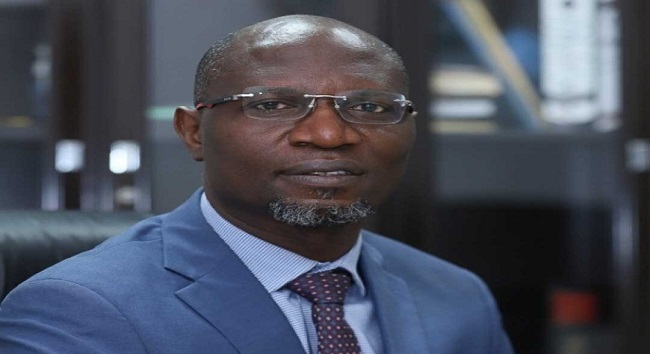
The Securities and Exchange Commission (SEC) has launched a nationwide awareness campaign aimed at helping investors and beneficiaries recover unclaimed dividends and inherited investments, as part of efforts to strengthen investor protection and reduce the volume of dormant assets in Nigeria’s capital market.

The initiative, unveiled in Abuja through the Probate/Unclaimed Monies Awareness and Investor Clinic, seeks to educate investors, beneficiaries and estate executors on probate procedures, estate administration and the processes involved in accessing financial assets left behind by deceased relatives.
Speaking at the event, Dr Emomotimi Agama, the Director-General of the SEC, said the Commission was addressing a long-standing challenge that had prevented many families from accessing investments belonging to deceased relatives.
Agama said many beneficiaries face difficulties obtaining probate, letters of administration, death certificates and other documents required to claim shares, dividends and other financial assets.
“For many Nigerian families, the death of a loved one who held shares, dividends or other investments marks the beginning of a long and often confusing journey,” he said.
According to him, the complexity surrounding estate administration often leaves beneficiaries unable to access legitimate investments and other financial assets inherited from deceased relatives.
He described unclaimed dividends and dormant assets as a major concern for the Nigerian capital market, noting that the funds represent money that should be benefiting families but remains idle because beneficiaries are unable to access them.
“Across our market, unclaimed dividends and dormant assets represent real money—money that belongs to real families, sitting idle, disconnected from the people it was meant to serve,” Agama said.
The SEC DG said the Commission was committed to bridging the gap through policy reforms, investor education and sustained engagement with investors, beneficiaries and other stakeholders in the capital market.
He stressed the importance of ensuring that investors and their families were adequately informed about the procedures for documenting, preserving and transferring financial assets to beneficiaries.
Agama said the awareness campaign would also provide an avenue for members of the public to better understand probate processes and the requirements for recovering unclaimed monies and inherited investments.
Also speaking, the Acting Chief Executive Officer of Meristem Registrars and Probate Services Limited, Ms Nkechinyelu Okoye, identified poor awareness and inadequate estate planning as major factors contributing to the accumulation of unclaimed financial assets.
Okoye said some beneficiaries were unaware that financial assets such as shares and dividends formed part of a deceased person’s estate, while others did not know that their deceased relatives had investments in the capital market.
She added that some beneficiaries were also unfamiliar with the documentation and legal procedures required to establish their entitlement and successfully claim the assets.
According to her, these challenges often result in financial assets remaining unclaimed for extended periods, even when legitimate beneficiaries are available.
The initiative is expected to improve public awareness of probate and estate administration procedures while helping more families identify and recover investments and other financial assets belonging to them.
It is also part of broader efforts to reduce the volume of unclaimed dividends and dormant assets in the capital market and ensure that funds belonging to investors and their beneficiaries are returned to their rightful owners.

United Bank for Africa (UBA) Plc, africa’s global bank, has partnered Mikano Motors to launch an auto financing scheme, themed: ‘Drive Your Dream Today’, specifically designed to ease the purchase of new vehicles by making them more accessible to Nigerians.

General Manager, Mikano Motors, Tarek Mostafa; Executive Director, Personal and Business Banking, United Bank for Africa, Chidi Okpala and National Operations Manager, Syam Abdulkadir, during a partnership signing between both parties, themed: ‘Drive Your Dreams Today’, a Flexible vehicle financing solutions, initiative at the Mikano Showroom in Victoria Island
The flexible Financing solutions Initiative, requires customers to make an initial payment of just 30 percent while the Bank finances the remaining 70 percent.
Unveiled at the Mikano Motors showroom in Victoria Island, Lagos, the scheme allows eligible customers to repay the financed amount in instalments over a period of 36 months at an interest rate of 23 percent.
The financing is available to a broad range of customers, including individuals who are not on a salaried income, providing entrepreneurs, and other eligible Nigerians with a structured pathway to vehicle ownership.
The process begins with a simple eligibility check. Interested customers can visit their nearest UBA branch or email [email protected] to confirm their eligibility. Once approved, customers can proceed to Mikano Motors to obtain a proforma invoice for their preferred vehicle and continue with the financing process.
Speaking at the launch, UBA’s Group Executive Director, designate, Personal and Business Banking, Chidi Okpala, said the partnership reflects the Bank’s commitment to making everyday aspirations more attainable while promoting a stronger credit culture and advancing financial inclusion.
“Owning a car should not be out of reach for hardworking Nigerians, and this partnership makes it far more achievable,” Okpala said. “A customer puts down 30 percent, we finance the rest, and they pay us back comfortably over a three years period. By removing the single biggest barrier to vehicle ownership where a customer just commits with an upfront cost, we are showing what customer-first banking looks like in practice, which is making their lives easier, by meeting our customers where they are and helping them get where they want to be.”
Also speaking, UBA’s Group Head, Consumer Lending, Frank Okoh, said the scheme was designed to make vehicle financing straightforward and accessible to both salaried and self-employed customers.
“We have kept the entry simple and the terms clear, whether you earn a salary or run your own business,” Okoh said. “A short eligibility check at any branch or by email is all it takes to begin, and our team guides the customer through every step to the moment they collect their keys.”
For Mikano Motors, the partnership provides an opportunity to extend its vehicle ownership proposition to a wider pool of Nigerians
The company’s General Manager, Tarek Mostafa, said the collaboration aligns with Mikano Motors’ vision of providing customers with a high-end ownership experience supported by reliable after-sales services.
“Mikano Motors was established to give Nigerians a high-end ownership experience, from the showroom to years down the road,” Mostafa said. “The backbone of any automotive business is not just the sale, but the after-sales service that follows. Every vehicle we sell is backed by genuine spare parts, reliable maintenance and quality service available anywhere in the country. Wherever you are we would come meet you at no extra cost”
“Partnering with UBA lets more customers enjoy that experience, and we are proud to build lasting relationships alongside a bank that shares our commitment to service,” he added.
Established in 2018 under Mikano International, Mikano Motors builds on more than 35 years of the group’s presence in Nigeria. The company offers a diversified portfolio of vehicles supported by nationwide sales and after-sales services.
The partnership further strengthens UBA’s consumer lending proposition, providing customers with structured financing solutions designed around accessibility, affordability and convenience. Through partnerships such as this, the Bank continues to expand access to credit while helping customers meet significant personal and lifestyle needs with ease.
United Bank for Africa is one of the largest employers in the financial sector on the African continent, with 25,000 employees group-wide and serving over 45 million customers globally. Operating in twenty African countries, the United Kingdom, the United States of America, France and the United Arab Emirates, UBA provides retail, commercial and institutional banking services, leading financial inclusion and implementing cutting-edge technology.

Affordable, Flexible Streaming Platforms May Kill PAYtv – Report

FG Suspends NAICOM’s N680m Insurance Recapitalisation Fees

FG Taps Indian, Chinese Technologies to Tackle $2.5Bn in Food Losses

MTN Nigeria Clocks 25, Connects over 90m People

Subscribers to Seek Legal Redress if Poor Quality of Service Continue in September

EFCC Busts NIS Visa Overstay Racket, Uncovers N700m in an Account

Fact-Check: Elon Musk’s “Tesla Pi Phone” is Internet Rumor

NBC Tasks Broadcasting Stations over 2028 DSO Global Deadline

NBC Scraps Annual Digital Access Fee on DSO

Glo Sponsored African Voices to Feature Netflix’s “The Polygamist” Stars




 E-Business2 days ago
X Replaces Revenue Sharing wit New Creator Rewards Programme

 Telecom2 days ago
MTN Alerts Subscribers over Fake 25GB Anniversary MTN Data Giveaway

 E-Financial2 days ago
Interswitch, Temenos Commit to Advancing Nigeria’s Digital Banking Technology

 General News2 days ago
Fake Agency: ICPC Indicts NITDA, Others over Inadequate Due Diligence

 E-Financial2 days ago
FG Spent N3.1 Trillion on Domestic Debt Servicing in Q1- DMO

 General News2 days ago
UNESCO Taps Oguamanam,Nigerian Scholar to Advisory Body on Science, Tech Ethics

 General News2 days ago
Tax Reform Built on Taxing Prosperity, Not Poverty– Adedeji

 Broadcasting2 days ago
Awba-Ofemili Unveils 2026 Health Campaign, Offers Free Medical Screening