

General News
RisingRose Nigeria Wins Big @ BoICT 2014


RisingRose Nigeria Limited, a fast growing courier outfit in Nigeria, was recently crowned the ‘Indigenous Courier Company of the Year’ at this year’s Beacon of Information Communications (BoICT) award held in Lagos recently.
RisingRose, incorporated on September 24, 2009, was licenced by the Nigerian Postal Service (NIPOST) to operate courier services on December 21, 2009.
The Company commenced full scale business operations on August 10, 2010.
With full determination to excel and carve a niche for itself in the industry, at a time when one of the challenges bedeviling the industry was inconsistencies in mails and financial documents delivery, RisingRose came on board with full determination to bring to bear best international practices in the industry.
Ken Nwogbo, publisher and chief executive officer, Communication Week Media, organizers of the award, said that RisingRose distinguished itself in the industry which attracted several of her customers and other Nigerians to vote the Company as an amiable brand in the nation’s courier sector.
He said that during the nomination and voting periods, RisingRose was seen as transparent in its practices, thereby, setting it apart from others.
Nigeria CommunicationsWeek recall that the practice of reporting and recovering missing customer’s package is a tradition that has both endeared as well as led to the quick rise of RisingRose.
In restoring investors’ confidence in the delivery of investors’ documents, RisingRose applies strict business procedures in dealing with its client’s documents.
Speaking on the award, Linda Austin-akuta, managing director of RisingRose Nigeria, said, “We feel highly honored and privileged to be given this award. We thank the organizers of this event, Nigeria communicationsWeek, for this wonderful recognition.
“We are highly humbled for being chosen amongst many indigenous courier companies in Nigeria at the Beacon of ICT 2014 indigenous courier company of the year. We dedicate this award to God Almighty, for He is the foundation of our company and without Him nothing, absolutely nothing could have been possible. Special thanks go to my husband, Mr. Austin Akuta who stood solidly behind RisingRose.
“We wish to express our sincere gratitude to the management and staff of courier regulatory department of NIPOST, management and staff of Bulkpost Venture of NIPOST, for given us the platform and support, to operate courier services in Nigeria and their support and encouragement throughout these years. Also, the past and present leadership of ANCO cannot be thanked enough for recognizing us.
“Also, to the management and staff of RisingRose Ngeria ltd who always work as a team to achieve all our set goals; this award is a testimony of their quality work. To everyone who had made up his or her time and resources to vote for us, we say a big thank you and pray that every good things of life will not elude you all. RisingRose , we will always deliver with a difference”.
RisingRose delivers financial documents such as Annual General Meeting Reports, Dividend Warrants, Share Certificates, e-Bonus Advice, e-Dividend Advice, Invoice, Magazines and other high volume mails for all quoted companies either through their Registrars or if given to us directly.
“Our wealth of experience in delivering investors’ documents has continued to earn the trust, confidence and loyalty of our clients.
“Our strategy in RisingRose is to deliver outstanding customer service that will provide a one-stop-solution, by treating our customers as if they are the only customers we have. We try as much as possible to get deliveries done within a tight contractual timeline,” Austin-akuta added.



President Bola Ahmed Tinubu has directed the immediate installation of 5,000 CCTV cameras across identified flashpoints in Plateau State as part of urgent measures to address the worsening security situation in the state.

The President gave the directive during an emergency visit to Plateau on Thursday, where he held a brief stakeholders’ meeting at the Yakubu Gowon Airport following the recent killings in Angwan Rukuba, Jos, where at least 28 persons were killed by unidentified gunmen.
Tinubu also approved the formation of a delegation of key stakeholders to engage in further deliberations on lasting solutions to the security challenges in the state.
He condoled with families of the victims and directed that support be provided to cushion their losses.
President Bola Tinubu while expressing deep sympathy to families of victims said the installation of surveillance cameras was part of a deliberate move towards addressing the kind of attacks that befell residence of the recent attack in the State.
In his remarks, Governor Caleb Mutfwang appreciated the President’s visit and show of concern, but expressed worry over the recent wave of attacks in the state, describing the situation as disturbing and requiring urgent attention.
The meeting had in attendance, former Governors, serving and former National and State Assembly members, traditional rulers, government appointees as well as relatives of those killed in the Angwan Rukuba attack.


Federal Government yesterday unveiled a N12 billion investment in digital economy research, marking a strategic shift towards knowledge-driven development as Nigeria positions itself as a key player in the global digital landscape.

Declaring the launch of the National Digital Economy Research Clusters under the Building Resilient Digital Infrastructure for Growth (BRIDGE) project, Minister of Communications, Innovation and Digital Economy, Dr Bosun Tijani, said the initiative mobilises over 200 researchers from universities and research institutions nationwide to produce data-driven solutions for pressing national challenges.
Speaking at a press conference in Abuja, Tijani described the programme as an essential complement to infrastructure expansion, including the ongoing deployment of 90,000 kilometres of fibre optic cable across the country.
He stressed that sustainable growth in the digital sector now hinges on robust research, innovation and evidence-based policies rather than infrastructure alone.
“As Nigeria expands its digital economy, attention is shifting from infrastructure to the knowledge that drives it,” the minister stated, adding that the sector was emerging as a major contributor to national GDP.
The research clusters will tackle critical areas including connectivity, digital public infrastructure, skills development, job creation, online safety and emerging technologies such as artificial intelligence.
Tijani explained that the project aims to bolster Nigeria’s research capacity while ensuring local insights guide policy and technology adoption.
The Federal Ministry of Education is collaborating to synchronise academic research with national priorities and advance specialised training.
Minister of Education, Dr Tunji Alausa, underscored universities’ evolving role as hubs of innovation and problem-solving beyond traditional learning.
The BRIDGE project aligns with broader government strategies to promote digital inclusion, spur economic growth and elevate Nigeria’s competitiveness in the global digital economy.
Observers note that the programme’s impact will depend on effectively converting research findings into implementable policies across sectors.
For the administration, the message is clear: a resilient digital economy demands not just infrastructure, but the intelligence to power it.

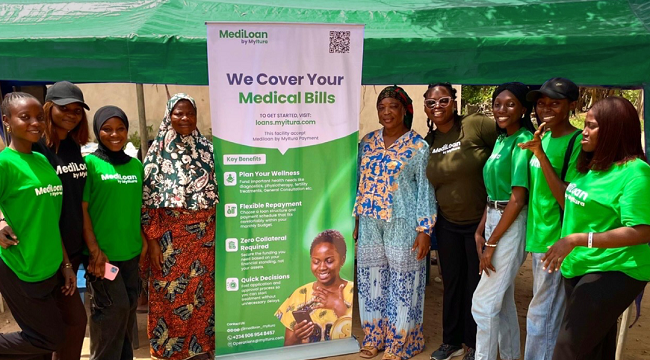
In commemoration of Women’s Month, health-tech platform Myitura has released a new white paper addressing the critical gaps in healthcare financing for women in Nigeria.

Titled “Closing the Gap: Healthcare Financing for Women in Nigeria,” the report highlights how high out-of-pocket costs, limited insurance coverage, and socio-economic factors continue to prevent women from accessing timely healthcare.
According to the report, over 70% of healthcare expenses in Nigeria are paid out-of-pocket, disproportionately affecting women who often delay care due to financial and social constraints.
“When women can afford to take care of their health early, we don’t just save lives; we strengthen families, communities, and the economy,” said Chialuka Kelechi, MyItura’s Chief of Staff.
Key Insights from the White Paper:
- Preventable conditions often escalate due to delayed care
- Women are more likely to deprioritize their own health
- Affordable, structured healthcare financing can significantly improve outcomes
Introducing a Women’s Health Initiative
As part of its commitment, Myitura is launching affordable women-focused health packages (powered by Mediloan), starting at ₦58,180, designed to encourage preventive care and early detection.
The package provides access to:
- Fasting/Random Blood Sugar
- Urinalysis
- Electrolytes
- Urea
- Creatinine
- Pap Smear Submitted slides
- HIV I & II Rapid (Qualitative)
- Hepatitis B Surface Antigen Screening (Rapid)
- Hepatitis C Virus Screening (Rapid)
- Abdominopelvic Ultrasound
- Ongoing support via the Myitura platform
Access:
Women can access these packages by downloading the Myitura app, which makes healthcare more accessible and convenient.
Myitura is a health-tech platform focused on improving access to healthcare through financing, technology, and preventive care solutions.

UBA Beefs Up Mobile App Security to Stop Fraudulent Debits, Withdrawals

Bharti Airtel Crosses 650m Users

FG Orders Installation of 5000 CCTV Cameras for Surveillance in Plateau

CBN Plans New Payment Systems Vision

Ghana Makes History as First African Country to Integrate Payment National Identity Card

Spotify’s Loud & Clear Report Reveals Over ₦60Bn Revenue for Nigerian Artists in 2025

Madonna University Taps Tech Guru Adote for Strategic Board Role

China Threatens to Shut Nigeria’s Satellite Over $11.44m Unpaid Debt

FCCPC Bans Lagos ‘No Refund’ Policy, Vows Fines and Shutdowns for Traders

Healthcare Under Attack: Why Cybersecurity is Now Critical Care




 News3 days ago
Microsoft Revamps Copilot in Workplace AI Push

 E-Business3 days ago
Kaspersky Warns of a New Phishing Technique Leveraging Bubble, a no-code AI Platform

 Telecom3 days ago
How Recycled SIM Card Linked to N50m Kidnapping Nearly Landed me in Jail – Businesswoman

 E-Financial3 days ago
CBN Directs Banks, Fintechs to Complete Cybersecurity Audit Tool

 Telecom3 days ago
Ouranos Technologies Strengthens Board with Key Leadership Appointments

 Telecom2 days ago
NCC Insists Telcos Must Compensate Subscribers for Poor Quality of Service

 E-Financial2 days ago
CBN Says 33 Banks Raise Fresh N4.65 Trillion in Recapitalisation Exercise

 General News3 days ago
Senate Gives Tinubu Nod to Borrow Fresh $6Bn